
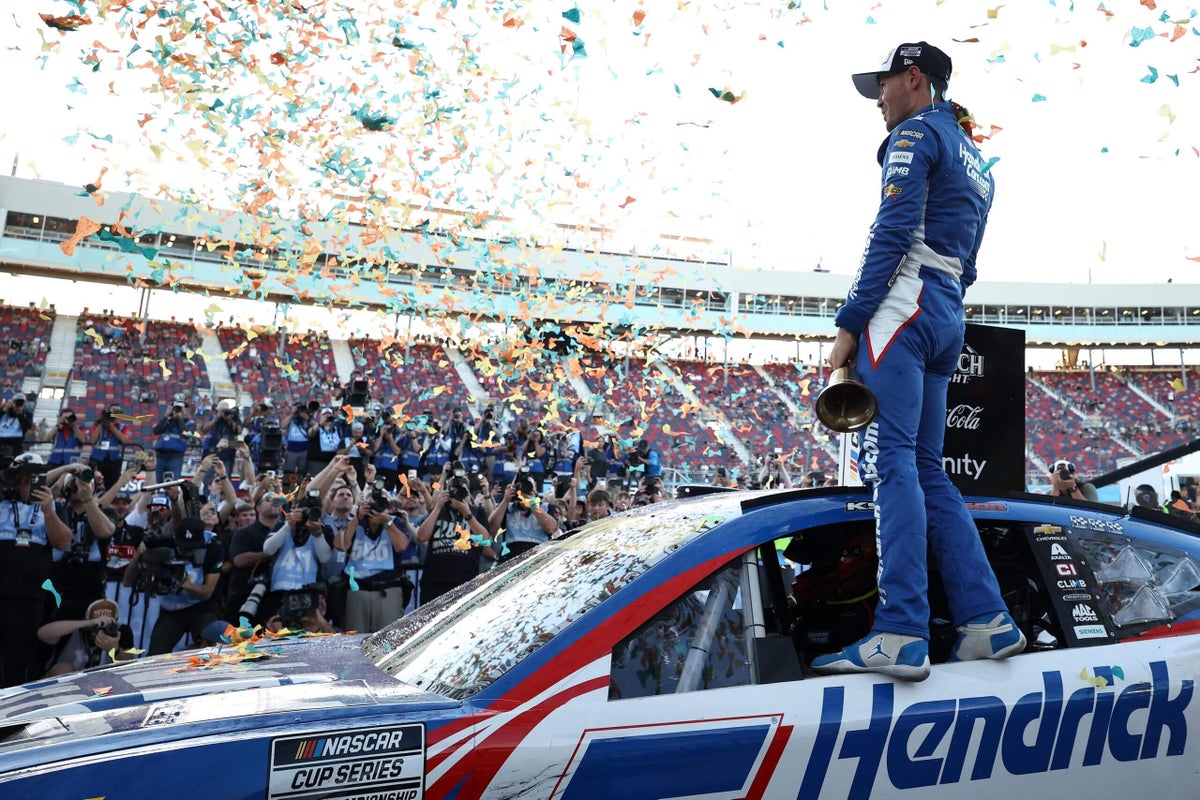
It’s a tough road these days for any NASCAR driver not employed by one of the Cup Series’ “Big Three” organizations.
Despite the original promise of parity from NASCAR’s seventh-generation vehicle, better known as the “Next Gen car,” power has once again been consolidated among the elite, following a brief respite after the car’s debut.
It led veteran driver Michael McDowell, who drives for the mid-tier Spire Motorsports team, to joke earlier this month that the only way to catch the dominant organizations was to “steal their people.”
Even that might not be enough.
The numbers this year were dire for anyone racing for a team other than Hendrick Motorsports, Joe Gibbs Racing or Team Penske (along with its alliance partner, Wood Brothers Racing, which has its cars built in the same shop).
Together, those Big Three teams combined to win an astounding 27 of 30 oval races on the Cup Series schedule. The same teams collected 65 percent of all available top-five finishes — up from 53.9 percent in the first year of the Next Gen car, which teased the dawn of a new, parity-filled era in NASCAR.
In that 2022 debut season of the car, the Cup Series saw a record-tying 19 different winners. The races felt wildly unpredictable and wide open as teams struggled to get a handle on how best to set up their new vehicles.
However, seven months into the car’s life cycle, Hendrick driver Chase Elliott sounded the alarm: Teams were quickly figuring out the Next Gen, and they would only grow closer over time. When all cars go relatively the same speed, it’s more difficult to pass; when it’s more challenging to pass, Elliott said, “you’re going to start to put more pressure on the little details to find an advantage.”
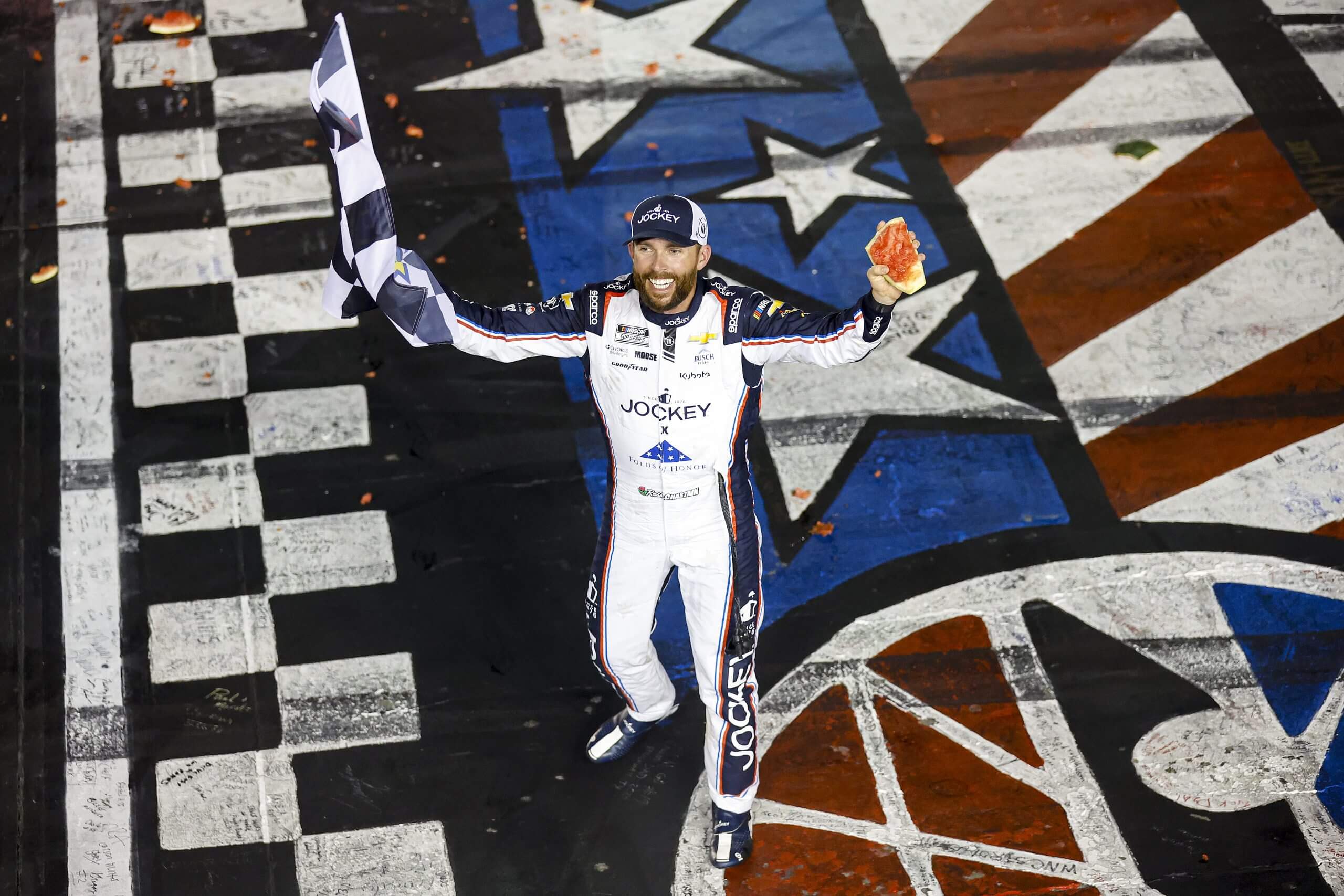
Ross Chastain’s win in the Coca-Cola 600 for Trackhouse Racing was one of just three oval wins this season for a driver outside the Big Three teams. (Logan Riely / Getty Images)
And who is best at finding the little details? It’s the powerhouse teams with the most money and the most resources — whether that’s technology, engineering or manpower. Sure enough, that’s exactly what has unfolded over the last three years.
This season, there were 14 different winners, and 10 of those drivers were linked to the Big Three teams. Only three other organizations — Trackhouse Racing (two drivers), 23XI Racing (one) and Richard Childress Racing (one) — were able to find victory lane.
When it came to the NASCAR championship, the Big Three also claimed all eight of the semifinal round playoff spots. The season’s two winningest organizations (Hendrick and Gibbs, which combined for 21 victories) then swept the Championship 4 berths.
That doesn’t mean other teams can’t catch up. But in the current environment, it’s extremely challenging at best.
“This car still provides a really good platform,” Spire’s McDowell said. “You’ve seen us have speed and run in the top 10 and the top five. Yes, the big teams have separated themselves from an execution and a win standpoint, but the speed is in our cars to do it. We just have to put it all together.”
The Next Gen car requires all teams to purchase their chassis and parts from the same supplier, making them virtually identical, and the larger teams are better at consistently finding an advantage. It does not mean a smaller organization can’t hit on a setup or have a great day and win a race. As Hendrick crew chief Rudy Fugle noted, there were many times this season when a non-Big Three team had “really strong race cars that were as good as ours.”
But he added: “It’s really hard to do it consistently week in and week out, like we can with a bigger team.”
How do the major organizations do it? It’s as small as a count of downforce here, a pound removed from the car there. When those are combined from engineers poring over the minutiae of a spec car, “a very small difference ends up making a big difference, especially if you stack enough of those together,” Fugle said.
It certainly doesn’t hurt that the larger multi-car teams almost always have at least one of their cars hit on something, and that information is shared freely and openly through the organization. Some of that data trickles down to alliance partners, like from Hendrick to Spire, but not all of it.
NASCAR has often said it does not want a top-heavy sport and that it’s essential for the smaller teams to be able to compete for wins. Having so much of the power once again consolidated in NASCAR’s elite, despite a car with the same parts and pieces for everyone, is “definitely a trend we need to be very watchful on,” NASCAR president Steve O’Donnell said.
“Most of the (teams’) spend now is going through simulation, engineering, all these things,” O’Donnell said. “The bigger teams have more resources. Our focus as a competition group really needs to lean into that aspect of it.
“What do the have-nots not have, and what can we do and what rules can we put in place as technology becomes more and more of a factor?”
Some ideas that have been floated include NASCAR allowing teams to work in certain areas of the car that are currently tightly regulated, which would encourage some innovation and create some speed variation in the field. However, NASCAR is concerned about triggering another spending war.
“It’s not lost on us that we do like the storylines of engineers and crew chiefs contributing to making their car go faster and contributing to win,” O’Donnell said. “There’s a lot of discussion going on right now about that.
“But we want to do that in a really smart way so we don’t open up the cost factor, and we go right back to where we were.”
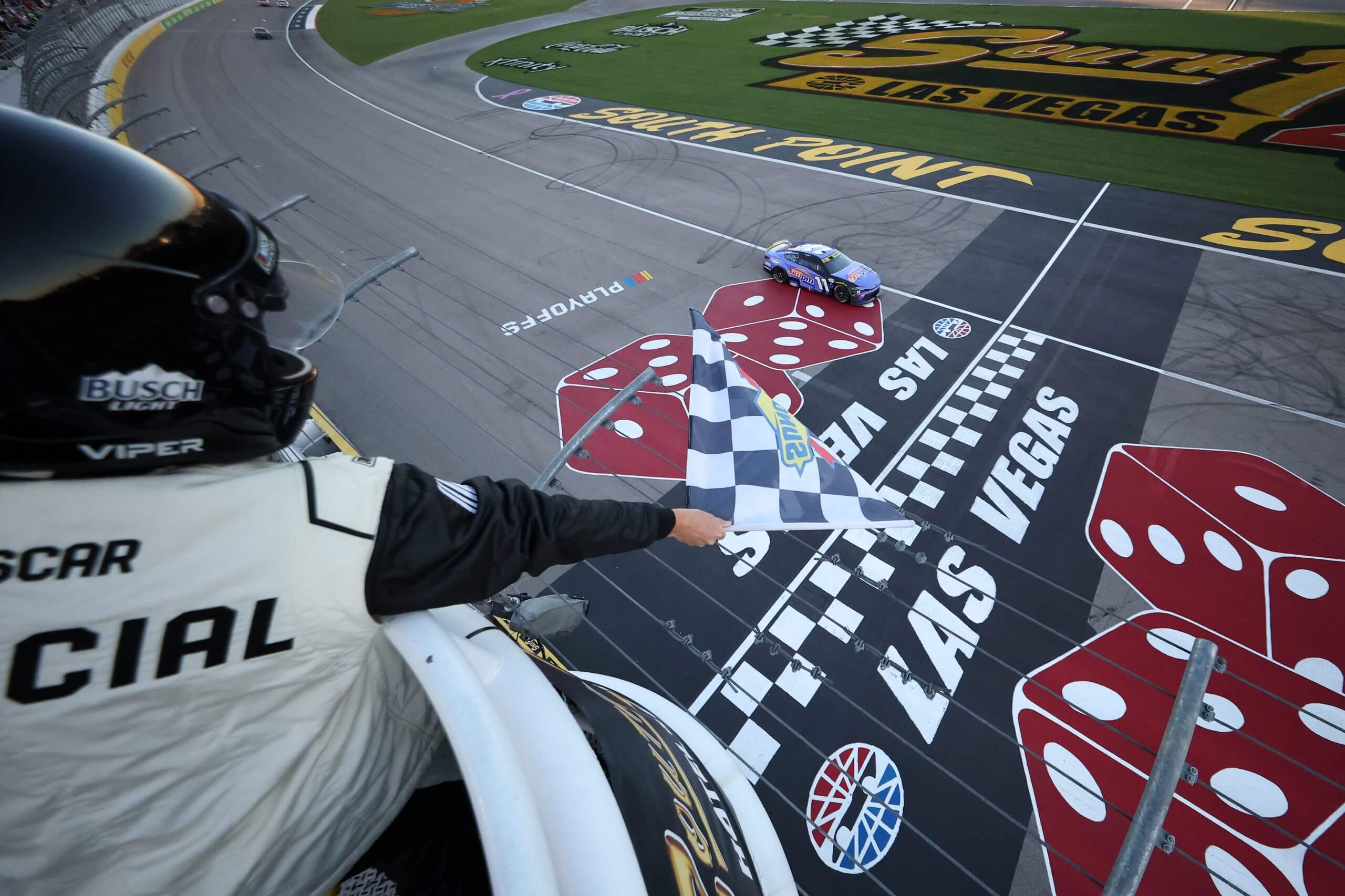
NASCAR is seeking ways to boost parity, but it’s not easy. “We want to do that in a really smart way so we don’t … go right back to where we were,” league president Steve O’Donnell said. (Chris Graythen / Getty Images)
A concept that will likely be implemented at some point is a Formula One-style cost cap, limiting teams’ spending per season and forcing them to allocate resources effectively.
In the meantime, NASCAR is making one notable change for next season: It is increasing horsepower for road courses and short tracks from 670 to 750 (the other tracks will remain the same). Yet there’s skepticism that the move will shake up the field in any meaningful way.
NASCAR is challenged to balance its on-track product with the competition. It wants the races to be as entertaining as possible but also needs to rein in the garage to prevent an F1-type imbalance (only three different teams have won an F1 race this season).
And in terms of the racing itself, the Next Gen made significant gains this season thanks to Goodyear’s more intensive approach to softening the tires at shorter tracks.
Ultimately, though, it’s the Big Three’s world and everyone else is just living in it. Yet even their position is precarious, given how a slight performance gain can make a driver go from zero to hero.
“When we say ‘little changes,’ I mean, the difference between contending for wins and running 15th is small,’ ” Penske crew chief Paul Wolfe said.
Hendrick crew chief Cliff Daniels, who recently won a second Cup Series championship with Kyle Larson, said the dominance exhibited by the big teams has now reached similar levels to the old car. The reason for that was obvious, he said: Just as crews massaged on the previous generation of vehicle and wrung all the speed out of it, there’s now been “enough length of the runway” to allow teams to hone all the significant areas of the Next Gen car.
Part of the reason is that once teams figure out which area to work in, crew members lured by better offers bounce from one organization to another, spreading the word. That’s been a core part of NASCAR for decades, but it’s essential with a spec vehicle.
“It just brings new ideas and thoughts,” Wolfe said. “The next thing you know, everyone’s got the same race car.”
Manufacturers also spend tens of millions of dollars per year to ensure their makes win the most races and championships. Chevrolet, Ford and Toyota race to give their teams the best simulator technology, engine technology and everything data-related in between. It’s no coincidence that the Big Three are each the top recipient of their respective manufacturer’s funding (Hendrick is the top Chevrolet team, Penske the top Ford team and Gibbs the top Toyota team).
On his flight home from the season finale at Phoenix, RFK Racing driver/co-owner Brad Keselowski posed and answered a question on X: “Can someone other than Hendrick, Penske or Gibbs win the cup series championship?” he wrote. “Not realistically with the current (manufacturer) rules.”
Ultimately, teams feel they’ve nearly maximized the Next Gen car to the point they must take chances they might not otherwise try. In the championship race at Phoenix earlier this month, all four title contenders blew tires because they were overly aggressive on their setups.
After all, there aren’t many other places remaining to look for speed.
“Everyone eventually gets in that same area, and then it’s pushing the limits and finding those limits,” Wolfe said. “Unfortunately, we’ve had some issues here in the playoffs with tire failures, but that’s just trying to find that little bit more. That’s what we’re down to.”