
GSMArena Team,
20 November 2025.
1. Introduction, specs, unboxing2. Design, build quality, handling3. Lab tests – display, battery life, charging speed, speakers4. Software, performance5. Camera, photo and video quality6. Competition, verdict, pros and consRealme GT 8 Pro specificationUser opinions and reviewsReview comments (17)
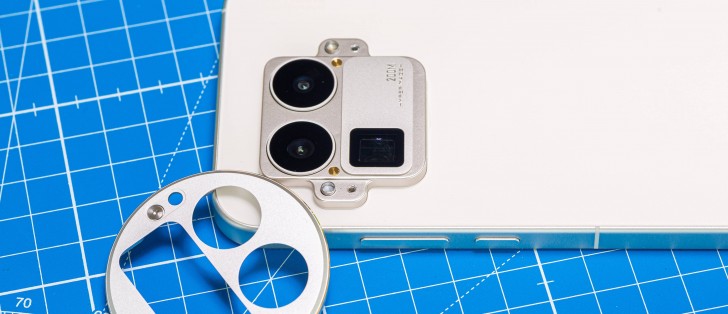
The 6.79-inch OLED display is easy to like
The Realme GT 8 Pro is equipped with one of highest-specced displays in the lineup, and in the sister brands’ lineups too. The 6.79″ OLED panel has a 1440p resolution (1,440×3,136px, 19.5:9 ratio, 508ppi density), a 144Hz maximum refresh rate, Dolby Vision support, and up to 7,000nits of peak brightness.
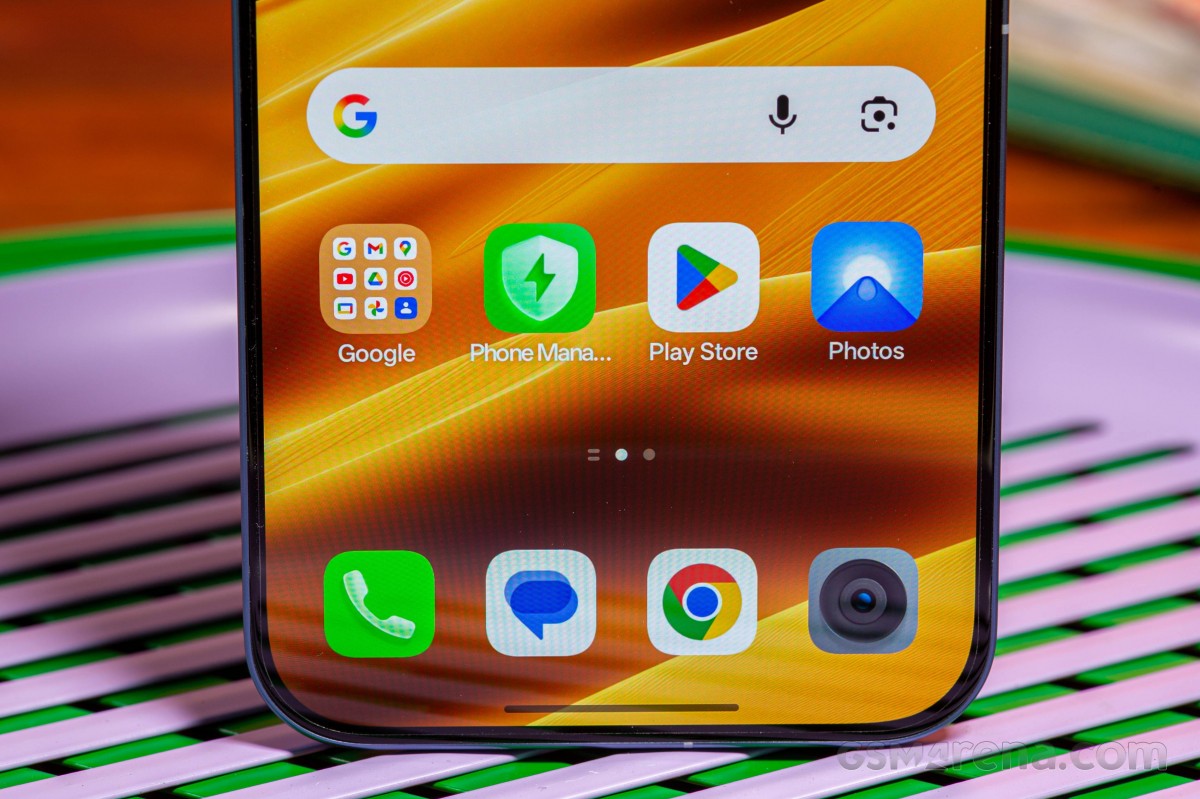
We did get some crazy high brightness out of the GT 8 Pro, admittedly under relatively unusual conditions – we measured just over 4,000nits for an image with a 10% area patch of white in the phone’s gallery app when blasting the ambient light sensor with a flashlight.
In our standardized testing setup, on the other hand, the Realme was good for 1,951nits for a 75% white swatch when under bright light- lower, yes, but still mightily impressive. It was a little brighter for the same swatch in the gallery – 2,262nits. The manually attainable brightness level was 953nits – also an excellent result.
The minimum brightness we measured was also praiseworthy, at 1.6nits.
Refresh rate
The GT 8 Pro boasts a 144Hz maximum refresh rate, but that’s only available in some games (not all games and not outside of games, apparently). The promotional materials promise 144Hz for BGMI, Free Fire and Call of Duty, and we managed to try Call of Duty and it did switch the display into 144Hz mode, though the game maxed out at 90fps with all the phone’s gaming utility settings at the highest performance modes.
We did occasionally got a 144Hz reading in other titles, up to 144fps too, but a lot of the usual games we try that can support high frame rates (simpler arcade titles) were still capped at 60Hz/60fps.
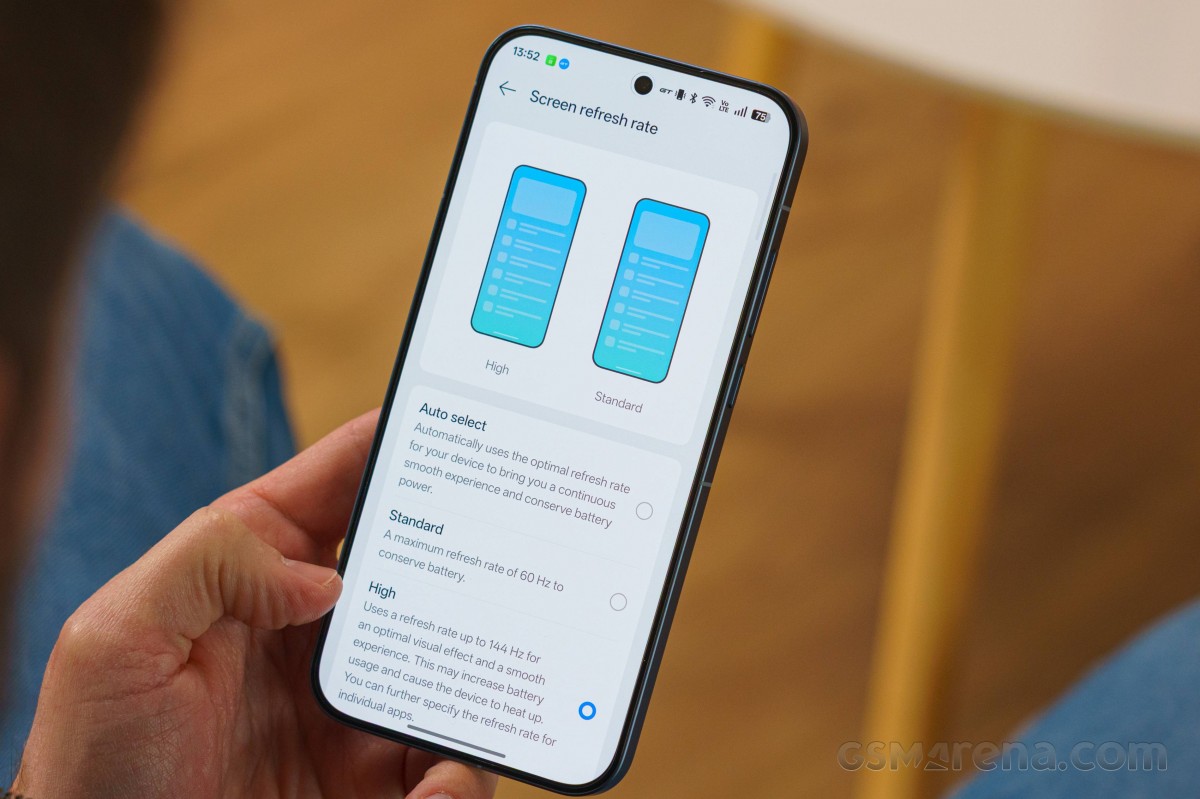
The panel also didn’t behave quite like an LTPO one, and we saw no refresh rate readings other than 120Hz, 90Hz, and 60Hz (and the CoD’s 144Hz) – no 1Hz when idling, and no video frame rate specific modes (like 24Hz or 48Hz). With all that said, things do look nicely smooth in operation, for what that’s worth.
Streaming and HDR
The Realme GT 8 Pro supports HDR10, HDR10+, and Dolby Vision. The Netflix app reported support for all three standards and was happy to serve FullHD streams thanks to the Widevine L1 compliance. YouTube also gave us HDR playback, including in PiP windowed mode.
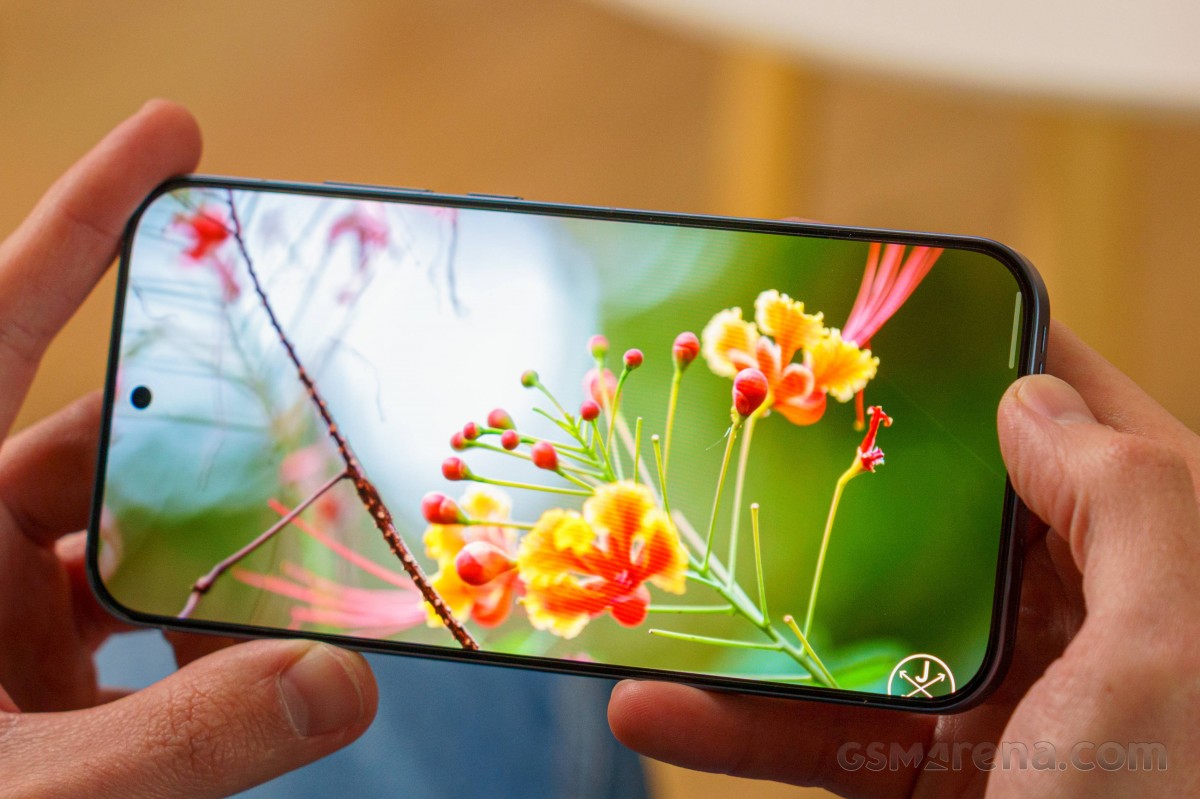
Sure enough, the phone will display Ultra HDR images with a brightness boost for highlights. It’s implemented in the in-house Photos gallery, where you get a button to turn it off on a photo-by-photo basis for comparison, in addition to being able to switch it off globally in settings. It also works in Google Photos (where you don’t get the temporary preview button), and in Chrome – for images from other compliant phones, too.
The Realme GT 8 Pro packs a 7,000mAh battery and, by the looks of it, that’s going to be the capacity in the EU as well. The bloc’s strict regulations on shipping of hazardous goods cause some manufactures to limit capacities (vivo is the latest one we’ve got a beef with), while others are taking the necessary steps to bring users an improved experience (Oppo, OnePlus, and now apparently Realme too – kind of the same thing). In the Realme’s case, it’s a dual-cell battery, which is more of a loophole workaround, but the net result is more battery, and we can all agree that’s a good thing. It’s a silicon carbon type of battery too.
In our testing, the GT 8 Pro got great marks across the board, summed up in an Active Use Score of 20:24h. The Realme may not be quite as long-lasting as the OnePlus 15, but it’s a step up from the already impressive GT 7 Pro and it’s an overall remarkable result. It’s shaping up like a great year to shop for a phone if you’re after endurance.
Our new Active Use Score is an estimate of how long the battery will last if you use the device with a mix of all four test activities. You can adjust the calculation based on your usage pattern using the sliders below. You can read about our current battery life testing procedure here. For a comprehensive list of all tested devices so far, head this way.
The Realme GT 8 Pro is rated for 120W charging with a proprietary SuperVOOC adapter (like the one that came bundled with our review unit, but that may not be the universal experience), or up to 55W with the right PPS-capable USB Power Delivery charger. We tested both scenarios.
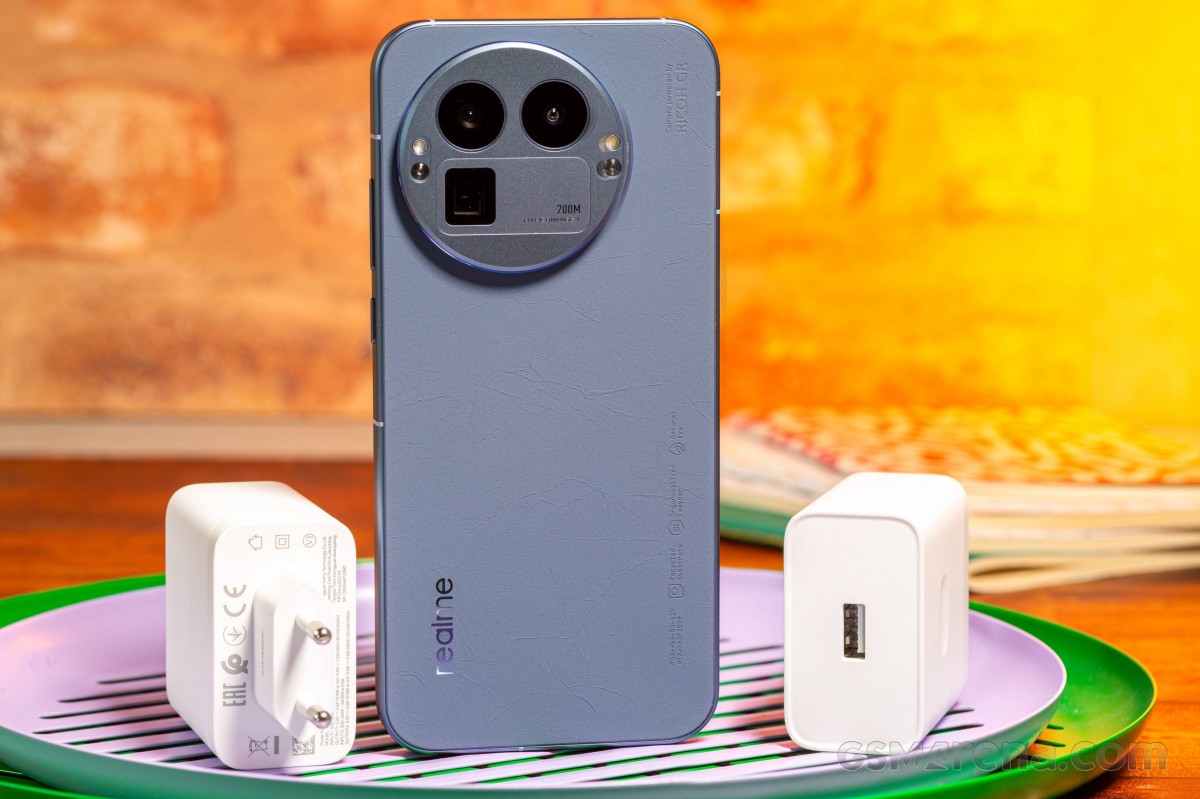
The in-box adapter got us from 1% to 100% in 40 minutes, peaking very briefly at 93W in the beginning. A high-quality third-party USB PD rated for up to 80W when using PPS took a little longer – 53 minutes, with a 45W peak and sustained power above 40W. The bundled adapter also needed 5-8 minutes to actually stop charging after reporting a charged state, while the PD unit needed some 16 extra minutes.
70% in half an hour with an aftermarket PD adapter isn’t half bad for this battery capacity though. Sure, 86% (the 120W SuperVOOC result at the half-hour checkpoint) is more than 70%, so if you often find yourself needing to top up at the very last minute, it may be useful to have the proprietary charger, but for most people a good generic brick will be easily good enough.
The GT 8 Pro is only the second Realme phone to offer wireless charging and it’s the first internationally available one to do so (the GT 5 Pro was China-only). It’s rated for 50W when using proprietary peripherals but we didn’t get to test that.
The ColorOS/RealmeUI battery saver and battery health options are relatively standard. There’s the Smart charging toggle that attempts to learn your charging habits and does the final top off just before it predicts you’ll be needing the phone. It also allows you to set a limit on charging in 5% increments between 80 and 100%. You can also turn off the Smart rapid charging and have the phone charge slower than its maximum capability.
The Realme GT 8 Pro is outfitted with a stereo speaker setup with a symmetrical layout – well, almost symmetrical. It does have identical speakers on each end and both fire outwards from the frame through two dual openings – it’s just that they’re not quite in the same spot. That, and the fact that the top speaker also directs sound forward through a slit above the display to serve as an earpiece. Either way, it’s an unusually good setup from a hardware perspective.
As usual, in portrait orientation the top speaker gets the left channel, and channels are assigned dynamically based on the handset’s position in space when in landscape. Each speaker only plays back its own track.
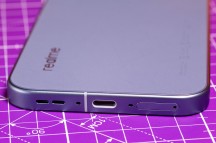

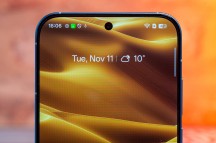
Bottom speaker • Top speaker • Earpiece slit
The GT 8 Pro earned a ‘Very Good’ rating for loudness in our testing – the same badge as the GT 7 Pro before it, but with a meaningfully better numerical result for integrated loudness. It certainly sounds bigger and more dynamic than the old model, cleaner and more composed at high volumes too. It’s not overtly bass-heavy, but it’s not lacking either. Overall, a pretty excellent pair of speakers that’s got an edge over the competition.
Use the Playback controls to listen to the phone sample recordings (best use headphones). We measure the average loudness of the speakers in LUFS. A lower absolute value means a louder sound. A look at the frequency response chart will tell you how far off the ideal “0db” flat line is the reproduction of the bass, treble, and mid frequencies. You can add more phones to compare how they differ. The scores and ratings are not comparable with our older loudspeaker test. Learn more about how we test here.