
GSMArena Team,
20 November 2025.
1. Introduction, specs, unboxing2. Design, build quality, handling3. Lab tests – display, battery life, charging speed, speakers4. Software, performance5. Camera, photo and video quality6. Competition, verdict, pros and consRealme GT 8 Pro specificationUser opinions and reviewsReview comments (32)
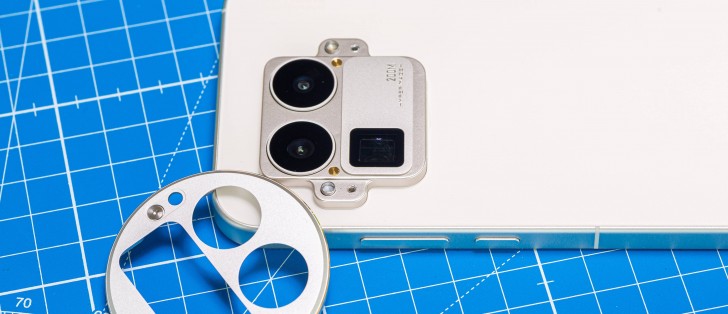
A properly nice telephoto, new ultrawide, Ricoh badge
Probably the most important change on this year’s GT 8 Pro is its shift towards some actual cameraphone chops – the GT 7 Pro was anything but a true cameraphone. This new generation comes with significant hardware improvements and a joint venture with a camera company 4 years in the making.
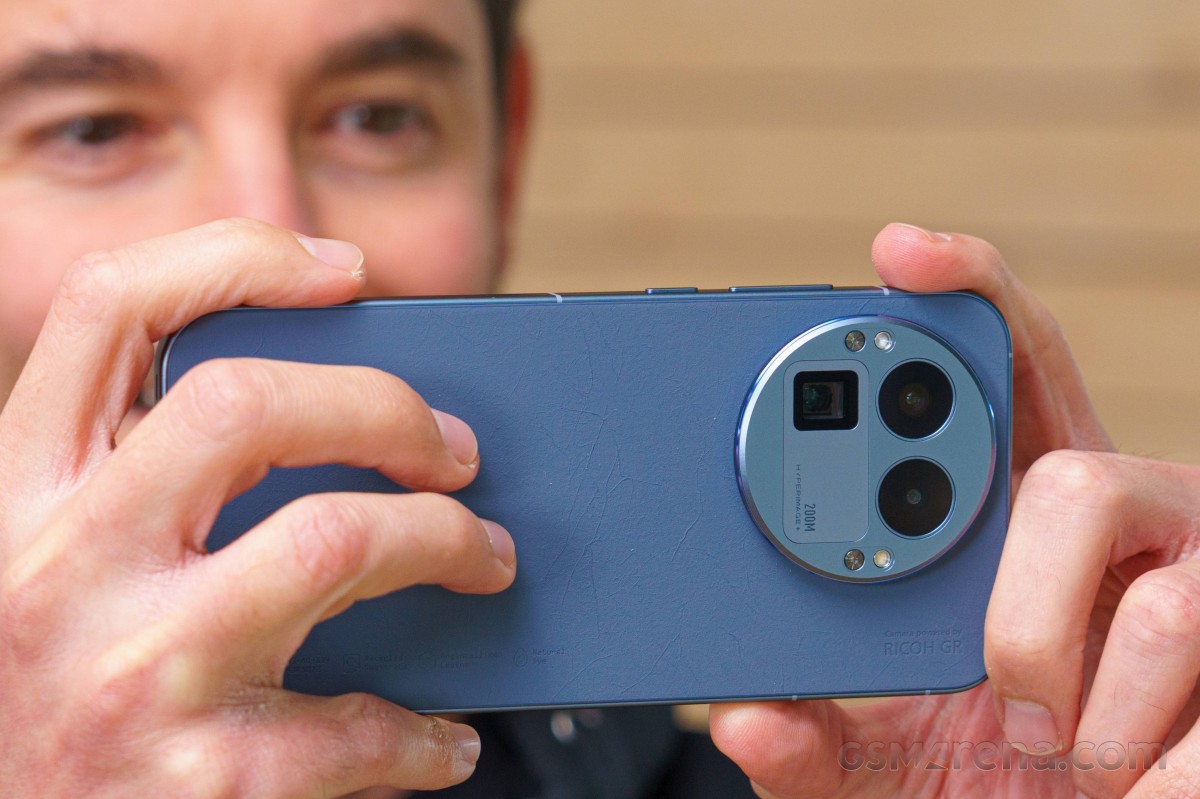
Starting with that last bit, Realme has spent the past 4 years working with Ricoh to come up with a collaboration that has given us what Realme insists is a custom sensor for the main camera, a dedicated camera mode, and a handful of filter presets. The Ricoh GR is a series of cameras with APS-C-sized sensors and fixed lenses that hold a high standing with street photography enthusiasts and the Realme GT 8 Pro is attempting to capitalize on that.
The dedicated Ricoh GR camera mode comes with two zoom presets – 28mm is the classic GR focal length, but there was also a one-off GR IIIx that did 40mm. The Realme has both. There are a few color filter presets available, as well as a couple of B&W modes.
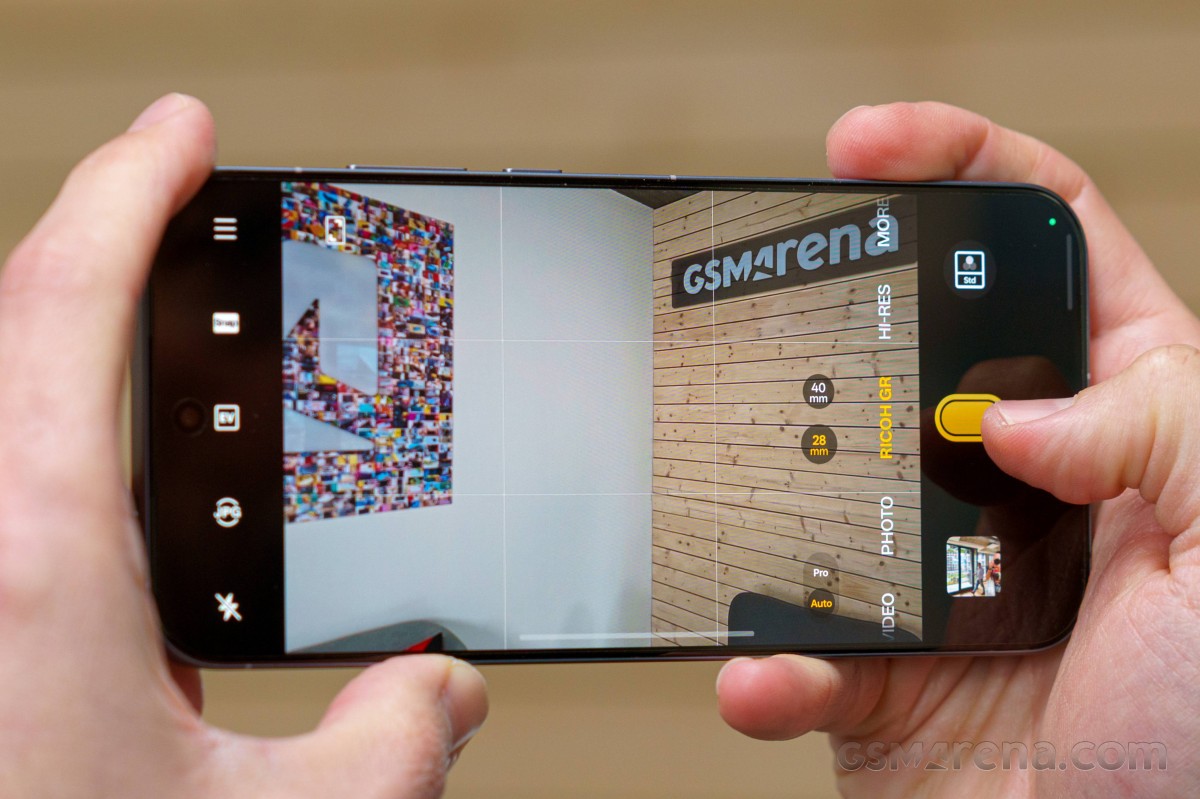
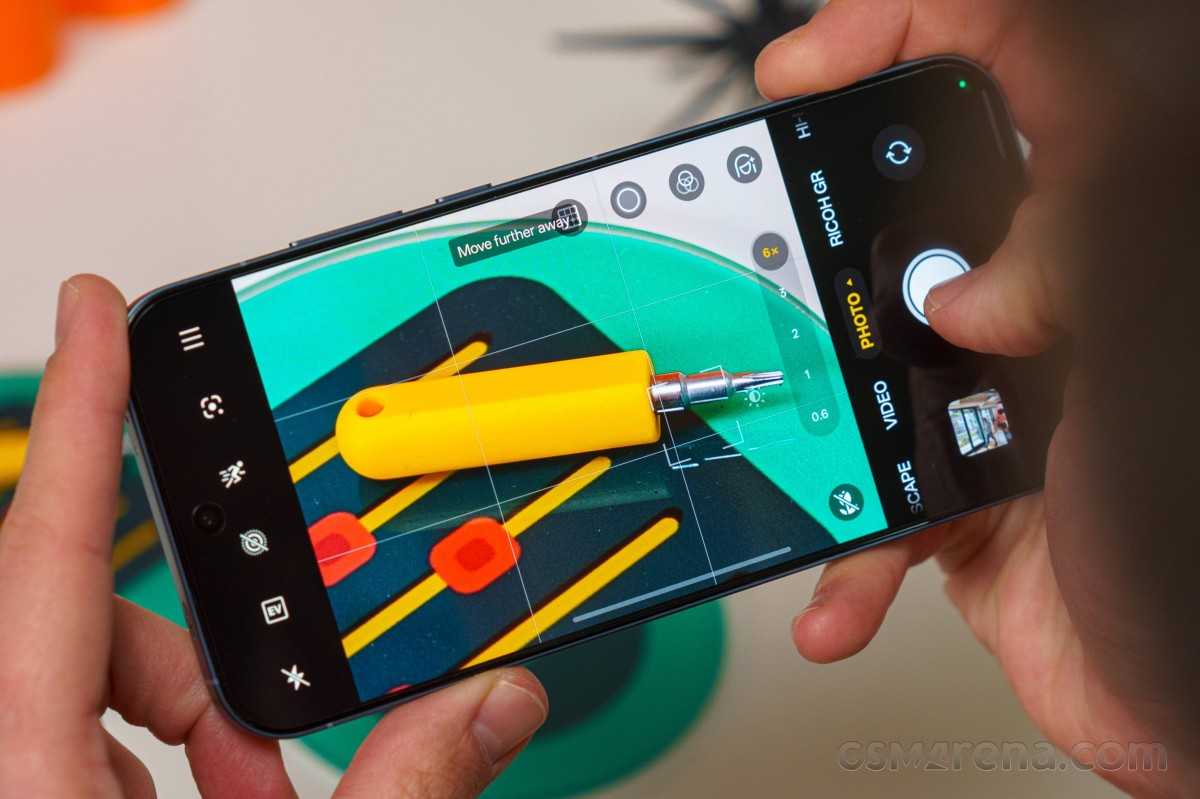
Other than that, it’s the familiar ColorOS camera app, which is no bad thing.
Back to the hardware. The main camera’s sensor is a little bit hard to name, with Realme itself not being too forthcoming – it’s a “Ricoh GR-level main camera”, whatever that means. It’s been confirmed that it’s got a 1/1.56″ optical format, which is what the 50MP Sony IMX 906 in the GT 7 Pro was, but it could be any one from a number of similarly-specced imagers.
The telephoto camera is based on the Samsung HP5 sensor – this much has been explicitly stated. It’s the same one you’d find in the Oppo Find X9 Pro’s telephoto camera, only here the lens is different – a little bit shorter, also dimmer.
The GT 7 Pro’s ultrawide was a basic 8MP unit and even if it punched above its weight, it simply had to be replaced. Replace it Realme did, and fitted a 50MP camera with an OmniVision sensor – not the largest one around, but a significant step up. They still chose not to give it autofocus which rubs us the wrong way for a phone at this price point, but the Find X9s need room to breathe, so the Realme can’t be made all too capable.
We’ve got conflicting data on what sensor the selfie camera is using, but it’s 32MP and the camera’s lens is fixed-focus, which already sets us up for complaints. We could be wrong, who knows.
Wide (main): 50MP (1.56″, 1.0µm – 2.0µm), f/1.8, 24mm, PDAF, Laser AF, OIS; 4K@120fps/8K30fps
Telephoto, 3x: 200MP Samsung ISOCELL HP5 (S5KHP5, 1/1.56″, 0.5µm – 2.0µm), periscope lens, f/2.6, 65mm, multi-directional PDAF (19cm – ∞), OIS; 4K@120fps/8K30fps
Ultrawide: 50MP OmniVision OV50D (1/2.88″, 0.64µm – 1.28µm), f/2.0, 16mm, fixed focus; 4K@60fps
Front camera: 32MP (1/3.1″, 0.7µm – 1.4µm), f/2.4, 24mm, fixed focus; 4K@60fps
Daylight photo quality
Main camera
The regular 12.5MP images from the Realme’s main camera are super nice. They have superb detail and it’s got a really great natural rendition of random intricate textures like grass and foliage. Colors have a very pleasing level of pop which goes well with the auto white balance’s slight lean into warmth. Dynamic range is excellent.








Daylight samples, main camera (1x)
Portraits are also great on the GT 8 Pro with likeable lively skin tones and great detail rendition. The Portrait mode’s added blur is reasonably natural looking too.




Daylight samples, main camera (1x), Photo mode




Daylight samples, main camera (1x), Portrait mode
The main camera’s 26MP images are also looking great (what you may get with the global High-Res setting enabled if the light is right). There’s only a hint of pixelation in some cases if you insist on looking that close.






Daylight samples, main camera (1x), 26MP
There can be more of that pixelation if you shoot in the 50MP mode, but other than some local weirdness here or there, these images are also better than most.
This full-res mode reveals that Realme is doing some shenanigans with the processing and the 12MP and 26MP shots have a narrower field of view than their 50MP counterparts, suggesting that the 50MP mode gets you the native field of view, while the others come with a small crop. All three types are reported as 24mm focal length equivalent, so Realme isn’t too forthcoming about it. We’d normally be calling out makers on such practices with more fervor, but the GT 8 Pro’s photos don’t seem to suffer from that crop, so we’ll make do with just mentioning it.






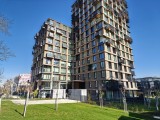

Daylight samples, main camera (1x), 50MP
2x zoom shots are good in most cases, though random detail can look wonky at times.








Daylight samples, main camera (2x)
People shots at 2x remain excellent though, and the 1:1 quality is a welcome sight in addition to the generally superior perspective.




Daylight samples, main camera (2x), Photo mode




Daylight samples, main camera (2x), Portrait mode
Main camera, Ricoh GR mode
We’ll be quick to admit we didn’t do a whole lot of classic street photography with the GT 8 Pro, like the one you’re supposed to use the Ricoh GR camera for. We did shoot the same scenes in the Ricoh GR mode though, at both the 28mm and the 40mm focal lengths. We can’t say we’re thrilled with the output in terms of color rendition and dynamic range – maybe we lack the specific taste that’s needed to appreciate the look. But if that’s your thing, by all means go for it.








Daylight samples, main camera, Ricoh GR mode, 28mm








Daylight samples, main camera, Ricoh GR mode, 40mm
Telephoto camera
Moving on to the telephoto, the 200MP star of this show. Sure enough, you can count on excellent detail from it, even at 12.5MP. Colors are great, dynamic range is great, there’s nothing to complain about. As with other similar cameras, it’s worth making sure you’re focused on what you want to focus on, because depth of field is relatively shallow and in scenes with more depth the phone’s otherwise accurate autofocus could lock onto something other than what you intended.











Daylight samples, telephoto camera (3x)
Photos of people at 3x will also keep you happy, thanks to the combined effects of nice detail and skin tones on the one hand, and the flattering perspective, comfortable shooting distance and hints of subject separation on the other. As usual, Portrait mode will enhance that separation, and it does it quite well too.




Daylight samples, telephoto camera (3x), Photo mode




Daylight samples, telephoto camera (3x), Portrait mode
The 26MP mode photos can be a little softer on occasion, but in general they do tend to add extra definition. We’d be happy to leave the Realme set at Hi-Res, though it wouldn’t hurt if there was any indication in the viewfinder if the scene we’re looking at is appropriate for it to kick in.








Daylight samples, telephoto camera (3x), 26MP
The 50MP mode photos are also packed with detail, even if some types of it can look pixelated, while the processing could smear certain types of textures (brightly lit pavement and gabions in our case).








Daylight samples, telephoto camera (3x), 50MP
You can take that a step further and shoot in the 200MP mode, but that takes a few seconds per shot and you could be looking at 100MB files, and we’re not really seeing the benefits to warrant those.
Both the 50MP and 200MP on the telephoto camera have wider fields of view than the 12.5MP and 26MP ones, just like on the main camera.
Daylight samples, telephoto camera (3x), 200MP
The 6x zoom level will get you great results too, more or less as sharp and detailed as the 3x 50MP shots are on a pixel level. Having the crop done at the time of shooting can mean better tailored metering and exposures though. On the other hand, cropping after the fact does give you more flexibility.








Daylight samples, telephoto camera (6x)
Tapping on the 6x button will get you another pre-set zoom level, at 12x or 289mm. Things are looking quite decent overall, though there can be a bit of jarring mesh-like effect with certain types of detail.






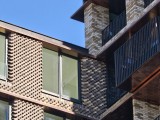
Daylight samples, telephoto camera (6x)
Closeups
The telephoto doesn’t focus quite as close as the 200MP unit on the Find X9 Pro, for example, but at around 19cm of minimum subject distance you can still get some very good close-ups.








Daylight samples, telephoto camera (3x), closeups
If you want more of the frame with your subject, you can count on the 6x zoom level to capture good close-ups too.




Daylight samples, telephoto camera (6x), closeups
Ultrawide camera
The ultrawide camera’s fixed focus may turn out limiting if you want to shoot nearby subjects – we’re not talking about extreme closeups, either. You can see that both the Vespa and the neck lanyards are blurry and we’re not used to that, particularly from phones with any amount of camera greatness aspirations.
On the other hand, with more distant subjects, the GT 8 Pro’s ultrawide does capture superb images with great detail, excellent dynamic range, and pleasing colors.






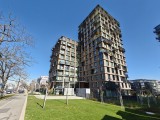

Daylight samples, ultrawide camera (0.6x)
The full-res mode on the ultrawide camera is an upscale job from the binned images. It then makes sense that there’s no 26MP Hi-Res mode for the ultrawide.








Daylight samples, ultrawide camera (0.6x), 50MP
Selfies
Selfies out of the Realme GT 8 Pro are good. Colors are great, dynamic range is nicely wide. Detail is alright, just don’t expect 32MP of it like it says on the tin – by now they could have come up with a solid downscaling algorithm to get you excellent 12MP shots instead of needlessly large 32MP files that aren’t pin sharp. The lack of autofocus is another sore spot.






Selfie samples
Low-light photo quality
Main camera
At night, the GT8 Pro’s main camera is a dependable performer. Its images are well exposed, with excellent dynamic range and great shadow and highlight development. Colors are looking great too – there are no white balance blunders or oversaturation with amber lighting. Detail is generally very good too.











Low-light samples, main camera (1x)
Pixel-level results aren’t quite praiseworthy at 2x zoom, with detail being relatively soft. From a global perspective, the images are as good as they are at 1x, so there’s that.








Low-light samples, main camera (2x)
3x Telephoto camera
You’ll very much prefer the telephoto’s output – its photos have very good detail and noise is well controlled. Exposures and dynamic range are once again top-class, and the color rendition isn’t leaving us wanting either.












Low-light samples, telephoto camera (3x)
The 6x zoom photos aren’t as sharp as the 3x ones, but they’re still very good – certainly better than the 2x ones.








Low-light samples, telephoto camera (6x)
Ultrawide camera
The ultrawide camera is doing a fine job too. Detail is good for an ultrawide, dynamic range is excellent, colors are accurate.










Low-light samples, ultrawide camera (0.6x)
Video recording
The Realme GT 8 Pro has wide-ranging video-recording capabilities. Its main and telephoto cameras can go all the way up to 8K30, as well as 4K120, while the ultrawide and the selfie camera max out at 4K60. The Pro video mode adds a 4K24 option for all cameras, but removes the 8K30 mode.
The default codec is h.265 but you can switch to h.264. Dolby Vision capture is available for all quality settings except 8K and it’s accessible with a tap on the HDR toggle in the viewfinder. The Pro video mode adds a Log option, with a couple of LUTs for live preview.
There’s an always-on regular electronic video stabilization for all resolutions and frame rates plus there’s the Ultra steady mode, which works at up to 4K60 (minus 8K and 4K120). Pro video mode lets you disable the electronic stabilization.
You can check out the playlist below, which includes multiple video samples.
4K videos from the GT 8 Pro’s main camera are very good, with vibrant colors and wide dynamic range and very good detail, if a little heavily sharpened. There’s not much difference between 30fps and 60fps footage, but 120fps clips have slightly softer and more natural-looking detail. Both the 8K at 1x zoom and the 4K at 2x zoom are hard to like, but the modes are there if you absolutely must use them for one reason or another. The telephoto’s 3x clips are very good, without reaching all the way to true excellence.
In the dark, the Realme dials things a notch down – not that it’s bad, it’s just not good enough to jeopardize more premium offerings from sister brands (yes, Oppo). The main camera’s clips at 1x are good but a touch conservative in terms of color and contrast – a bit more punch wouldn’t hurt. Detail can be a little soft in the shadows too. The 2x zoom level is barely usable. The telephoto camera’s results are similarly solid without being truly exciting – we’d have liked a little bit more sharpness, but it’s otherwise quite great. The ultrawide’s footage is good from a global perspective (exposure, colors), but it’s quite soft and noisy.
If you’ve been looking at the samples, you’d know by now that the GT 8 Pro’s stabilization is also a notch or two below ideal. The main camera exhibits this very light but persistent tremor that we find a little annoying. The Ultra Steady mode didn’t appear to fix it for us either. The ultrawide doesn’t have it, and the telephoto, while also not quite perfectly stable, is doing better after all (at least during the day – nighttime clips can be shakier). Pans are quite smooth on all cameras, so that’s a win.