
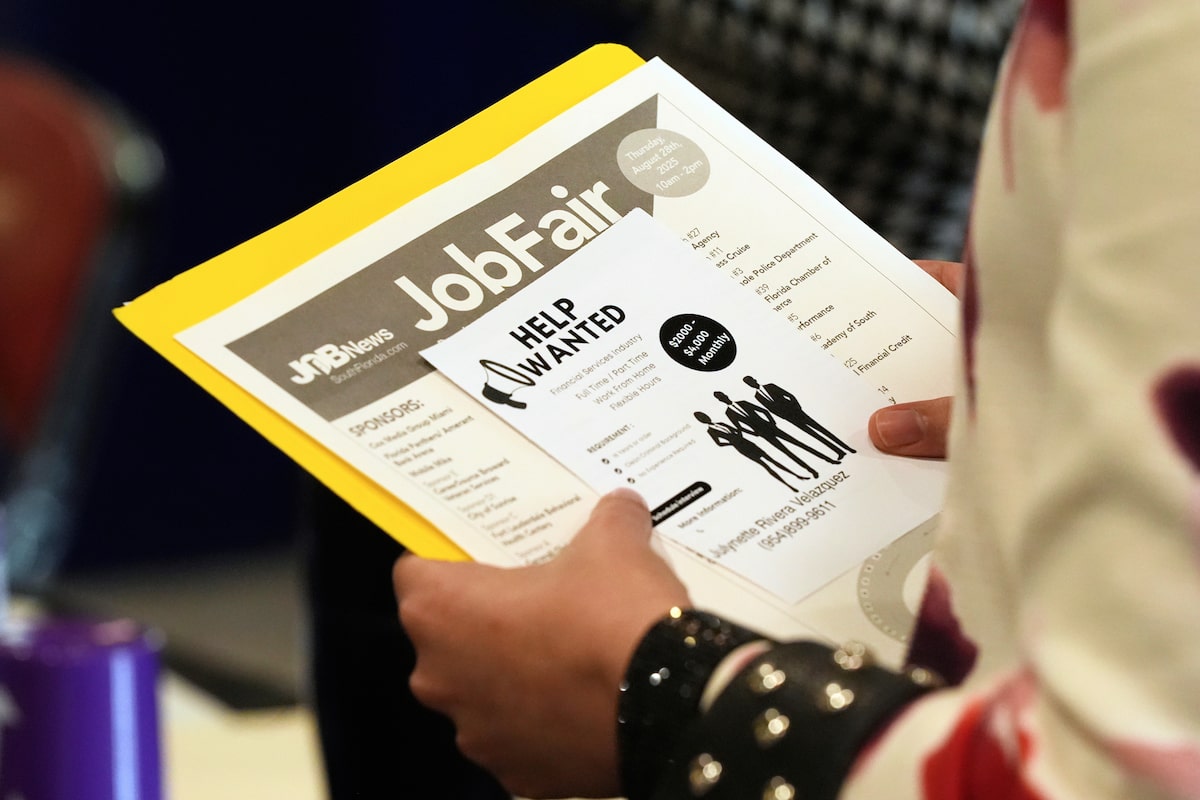
A job seeker waits to speak with a recruiter at a job fair in Sunrise, Fla., in August. A Reuters poll finds U.S. non-farm payrolls likely increased by 50,000 jobs in September.Marta Lavandier/The Associated Press
U.S. job growth accelerated in September, but the unemployment rate rose to 4.4 per cent and the economy shed jobs in the prior month, suggesting labour market conditions remained sluggish.
Nonfarm payrolls increased by 119,000 jobs after a downwardly revised 4,000 drop in August, the Bureau of Labor Statistics said on Thursday. Economists polled by Reuters had forecast 50,000 jobs would be added after a previously reported 22,000 gain in August.
The report was initially due on Oct. 3, but was delayed by the 43-day shutdown of the government. The longest shutdown in history has forced the BLS to cancel the release of October’s report as no data was collected for the household survey to calculate the unemployment rate for that month.
October nonfarm payrolls will instead be combined with November’s employment report now due on Dec. 16, the BLS said. Though the September report is outdated, it suggested little change in the labour market, which has lost significant momentum this year as evidenced by sharp downward revisions to nonfarm payroll counts.
U.S. trade deficit drops 24% in August as Trump’s tariffs reduce imports
Heading into the economic data blackout, the BLS had estimated that about 911,000 fewer jobs were created in the 12 months through March than previously reported. A reduction in immigration that started during the final year of former President Joe Biden’s term and accelerated under President Donald Trump’s administration has depleted labor supply.
Economists estimate the economy now only needs to create between 30,000 and 50,000 jobs per month to keep up with growth in the working-age population, down from about 150,000 in 2024.
The unemployment rate increased from 4.3 per cent in August.
The rising popularity of artificial intelligence is also eroding demand for labour, with most of the hit landing on entry-level positions, and locking recent college graduates out of work. Economists said AI was fueling jobless economic growth.
Others blamed the Trump administration’s trade policy for creating an uncertain economic environment that had hamstrung the ability of businesses, especially small enterprises, to hire. The U.S. Supreme Court early this month heard arguments on the legality of Trump’s import duties, with justices raising doubts about his authority to impose tariffs under the 1977 International Emergency Economic Powers Act.
Despite payrolls remaining positive, some sectors and industries are shedding jobs. Some economists believed the September employment report could still influence the Federal Reserve’s Dec. 9-10 policy meeting.
U.S. central bank officials will not have November’s report in hand at that meeting as the release date has been pushed to Dec. 16 from Dec. 5. Minutes of the Fed’s Oct. 28-29 meeting published Wednesday showed many policymakers cautioned that lowering borrowing costs further could risk undermining the fight to quell inflation.