
 © Jang Mi
Share
Or
https://www.archdaily.com/1036211/design-ethos-of-subtraction-and-addition-10-adaptive-reuse-projects-for-commercial-and-social-spaces-in-asia
While adaptive reuse has been increasingly acknowledged as a vital architectural strategy worldwide, its discourse and implementation in Asia are still expanding—driven by growing ecological awareness and a shifting understanding of architectural knowledge. Rather than accelerating a developmentalist model centered on demolition and new construction, architects today are confronted with a different approach to the built environment: treating the existing structure as a resource—an archive of materials, spatial organizations, and informal histories.
Adaptive reuse is often associated with the preservation of historic buildings and culturally significant heritage. Yet the vast field of seemingly ‘less-valued’ structures—abandoned houses, standard yet old dwellings, non-conforming office buildings, and overlooked urban voids—has become ground for experimentation. These sites challenge architects and designers to reconsider prevailing standards of efficiency and market-driven development, and to imagine spatial and ecological practices that avoid the continual loss of embodied material and cultural knowledge inherent in constant rebuilding.
Often, the practice of repurposing requires an operation within restrictive regulatory frameworks and aged material conditions that encourage inventive, low-impact construction strategies. Given these limitations, the design approach operates through a careful balance of subtraction and addition. Subtraction—removing partitions, stripping finishes, opening facades, and exposing timber frames—creates opportunities for light, ventilation, landscape, and social interaction to re-enter. It reveals the anatomy of old buildings and reclaims spatial clarity from layers of accumulation or decay. In contrast, addition—strategic insertions, new circulation routes, contemporary material—creates refined aesthetics and updated functionality. These interventions rarely aim for full demolition or total preservation. Instead, they establish a nuanced dialogue between what is inherited, what is removed, and what is newly introduced, allowing the space to acquire a sense of temporal depth. Materials become markers of time: century-old timber sits beside lightweight metal reinforcement; limewashed brick coexists with contemporary display volumes; recycled columns reappear as furniture.
Related Article From Silos to Iconic Spaces: 15 Projects That Repurpose Industrial Structures
The 10 projects presented in this article propose an architectural methodology that treats the existing aged building to be reframed, opened, and reoriented. Through deliberate acts of subtraction and addition, these projects transform existing buildings into flexible frameworks that mediate the temporalities of architecture.
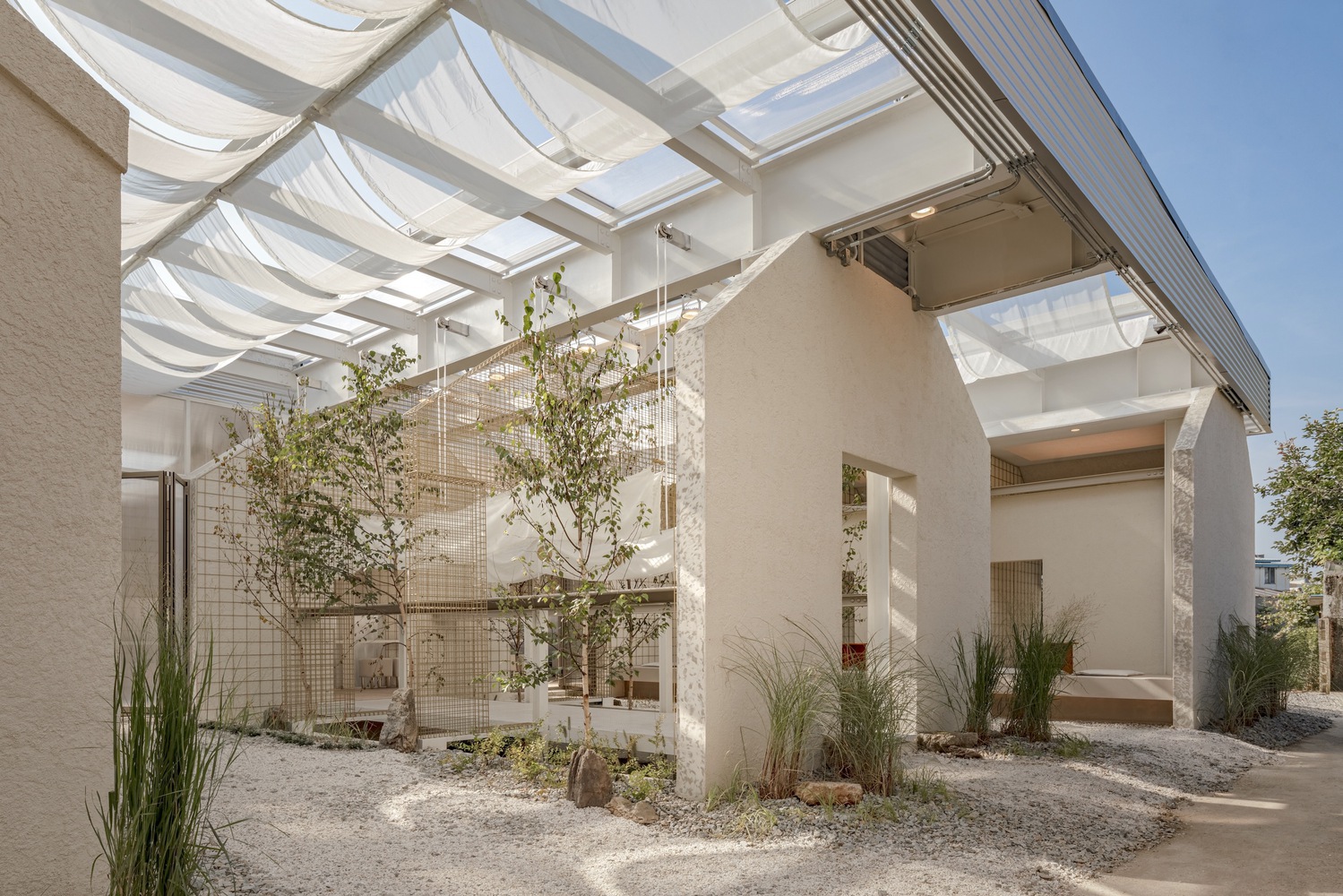
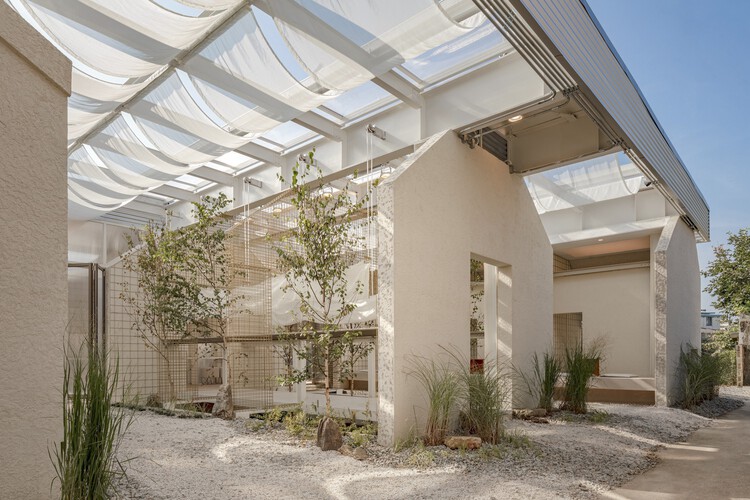
Dabang Café / one-aftr 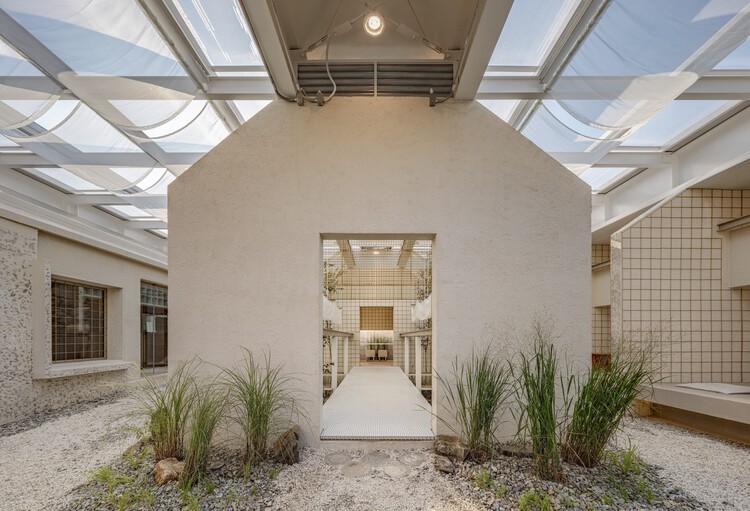 © Jang Mi
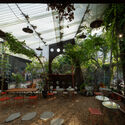
Deliberately embracing the notion of decay and aging of the building, an old worker dormitory in Jeonju, South Korea, already shaped by natural deterioration, was repurposed as a cafe space. Walls and roof segments are removed to open the interior to air, light, and vegetation. New columns and roof structures support the renewed volumes, while one building becomes the insulated café core. The rest remains porous—part ruin, part garden, part social space. The project embodies an understanding of the building’s temporal dimension, where architecture and flora evolve together—as plants grow, the structure subtly ages, accommodating the passage of time.
 © Jang Mi8323. layers of space / sukchulmok
 © Hong Seokgyu
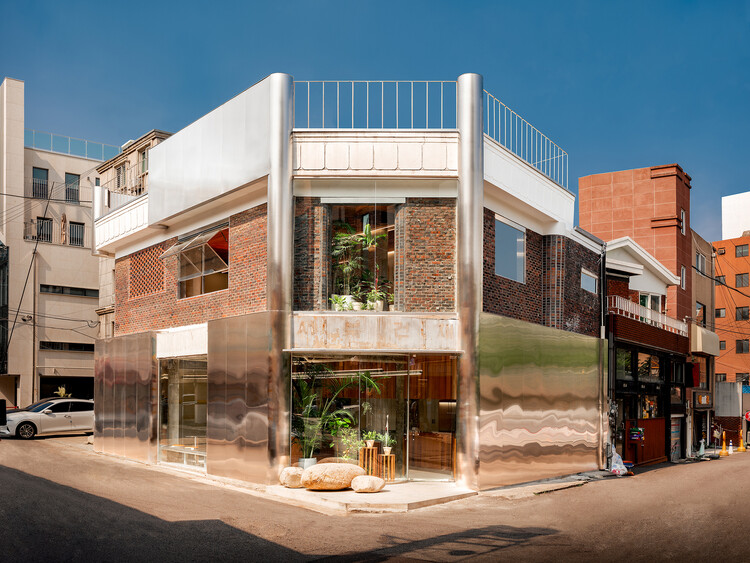
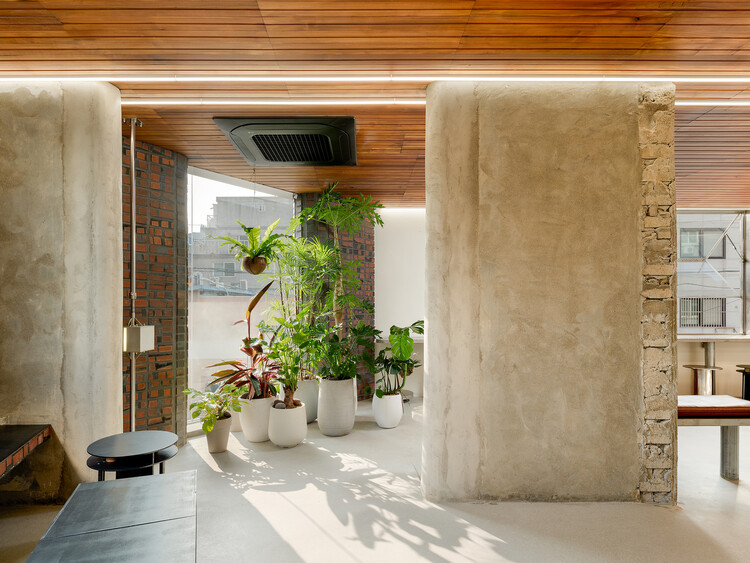
The common detached house in Seoul, originally built in the 1980s, had been expanded, subdivided, and modified repeatedly over time. Sukchulmok continued this lineage, introducing new material layers while respecting the spatial traces of previous renovations, and repurposed the house as a café and bakery.
 © Hong SeokgyuPhum Sambo Café & Eatery / Khoan + Partners
 © Serey Soursdey
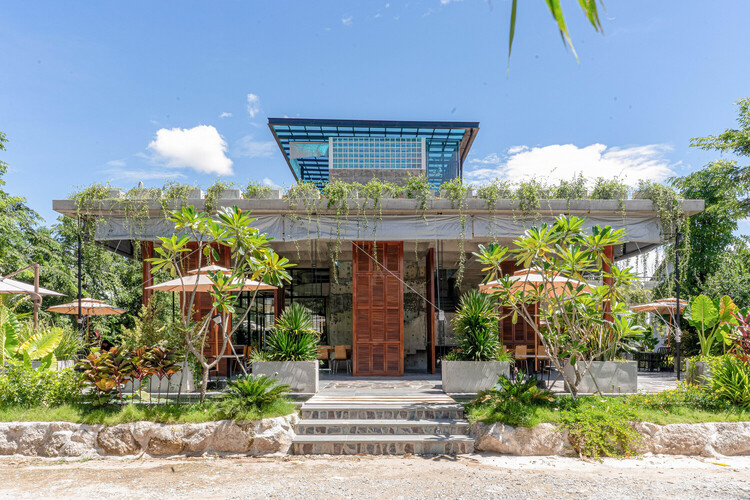
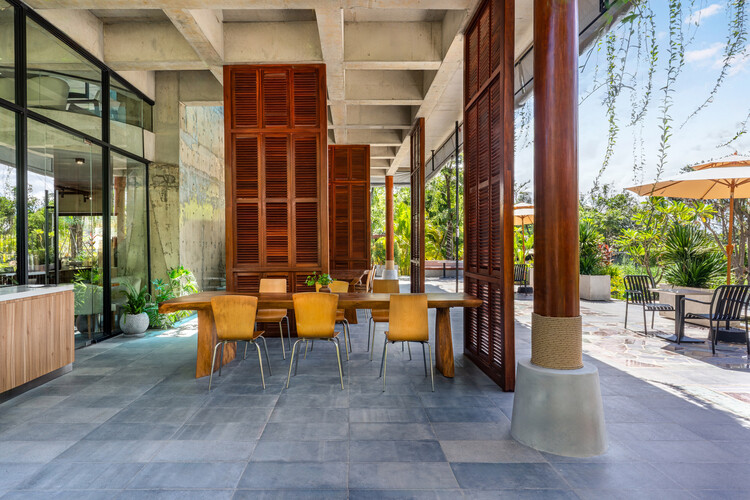
Located in Phnom Penh, the project transformed an unfinished concrete shell into a warm, climate-responsive café through a strategy of adaptation rather than erasure. By preserving the original structural frame and layering it with carefully detailed timber elements—such as louvers, railings, soffits, and cladding—the design softens the building’s raw presence while enhancing comfort and environmental performance.
It is a model of sustainable renovation rooted in context, climate, and character, where architecture listens before it speaks, and grows rather than replaces.
 © Serey SoursdeyO Plant-based Thao Dien Cafe / xưởng xép
 © Quang Dam
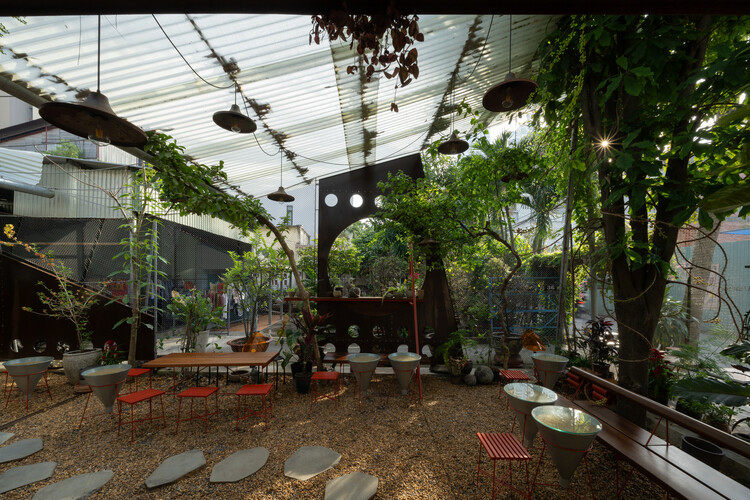
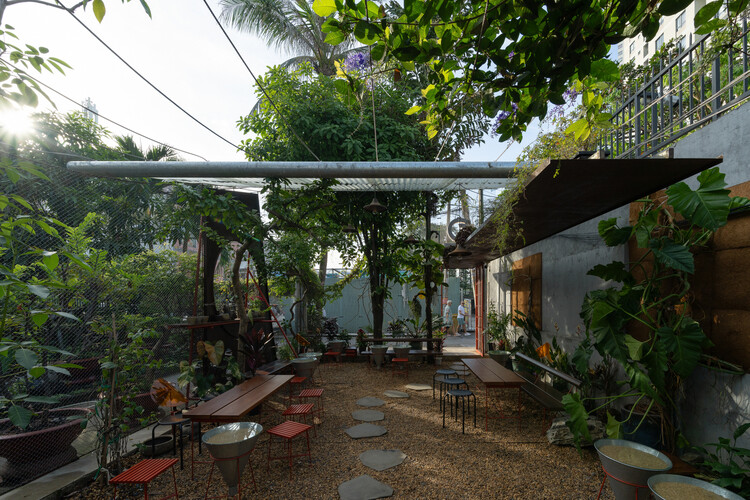
Once a small garden attached to an old house, the site in Ho Chi Minh was transformed into a café through minimal intervention. The architects sought to preserve the garden’s atmosphere rather than overwrite it. Subtraction became the primary design method: unnecessary architectural elements were removed, allowing the garden to remain central while becoming a shared public space.
… instead of adding, we deliberately subtracted artificial interventions (…), gradually eliminating unnecessary elements until the space reached its purest form. Throughout this process, it felt as though the site itself was engaging in a dialogue with us: it did not need more; it needed less—an approach that was lighter, more restrained.
 © Quang DamSPMA Store / Atelier TAO+C
 © Wen Studio
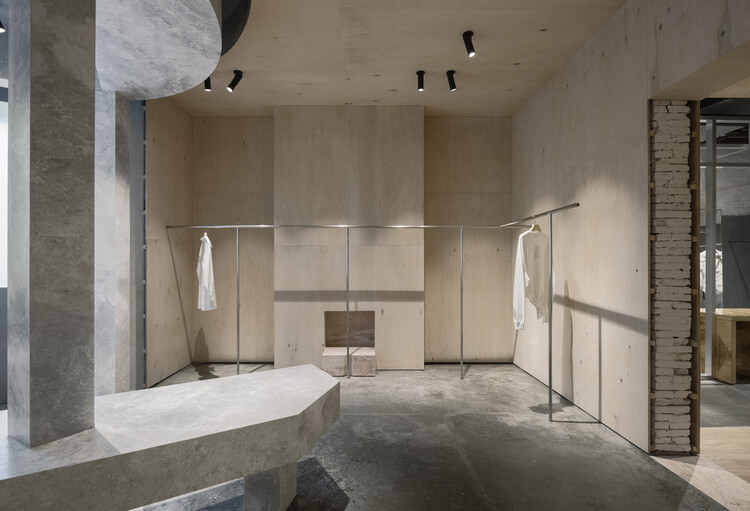
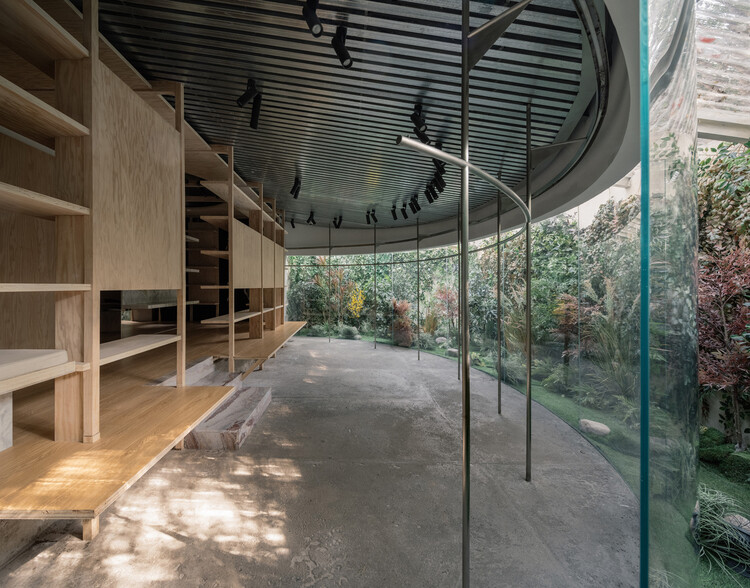
The repurposing retains the wooden ceiling, old doors, and limewashed walls of the original 1930s lane house in Shanghai, making it into a retail store. Instead of fastening new elements to the existing structure, the architects insert free-standing volumes that touch the old as lightly as possible. Layers of textiles, clothing, and architectural surfaces interweave, exposing construction marks and structural stitching like the lining of a garment.
 © Wen StudioJoomak Restaurant / NOMAL
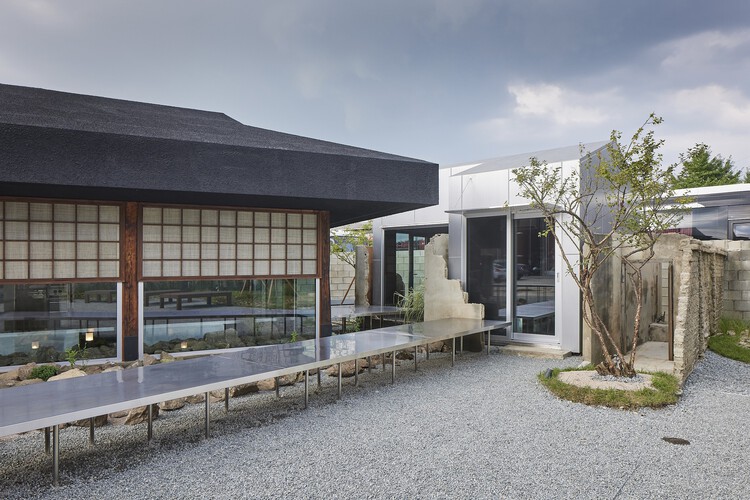 © Roh Kyung
Set within a cluster of decaying factory houses in Jeonju, South Korea, the project reactivates the site as a hospitality facility by removing boundaries between interior and exterior. Walls were opened to create visual continuity with a newly formed village park, effectively giving the restaurant a communal front yard. The hanok roof structure was carefully preserved and reinforced, combining traditional timber with contemporary materials for structural performance.
Commercial Space in Minato / ROOVICE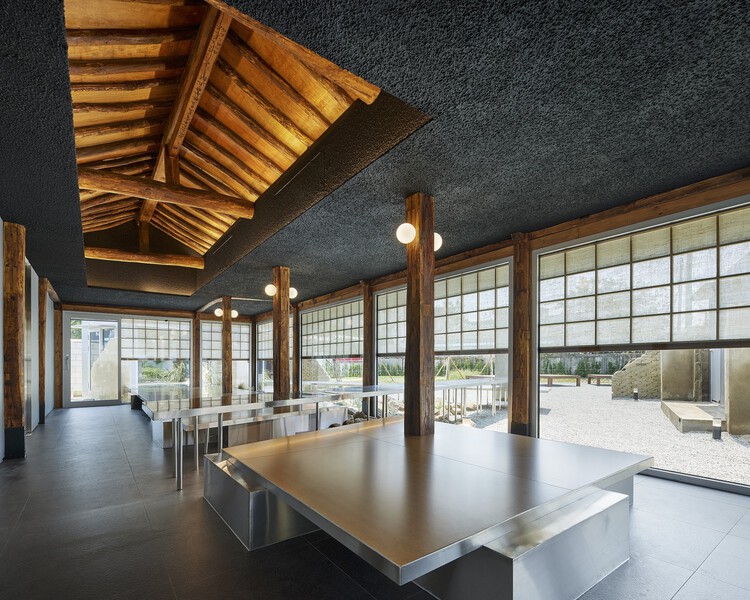 © Roh Kyung
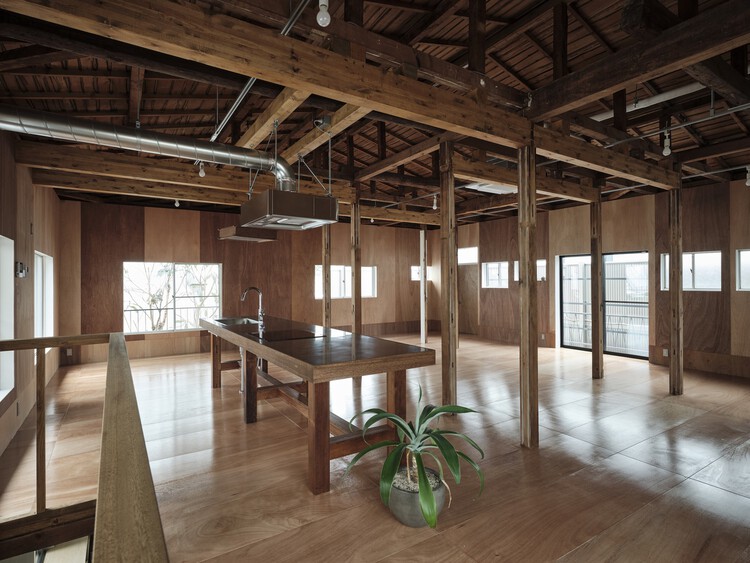
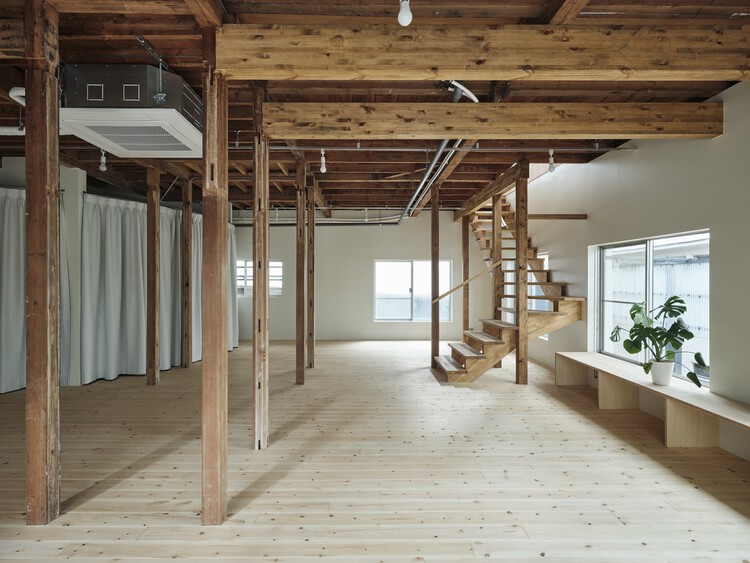 © Akira Nakamura
Located in Tokyo’s Minato Ward, the 1960s wooden apartment has been converted to a flexible rental space. It highlights the original fabric—windows, roof boards, and timber structure—while removing ceiling boards and partitions to enlarge the perception of space. Reinforced beams replace columns strategically; those removed are restored and reused as supports for a central kitchen counter. External roof insulation preserves the exposed roof boards, generating a warm, open interior with minimal material waste.
 © Akira NakamuraSAISEI Office Building in Kandanishikicho / Saisei Kenchiku Laboratory
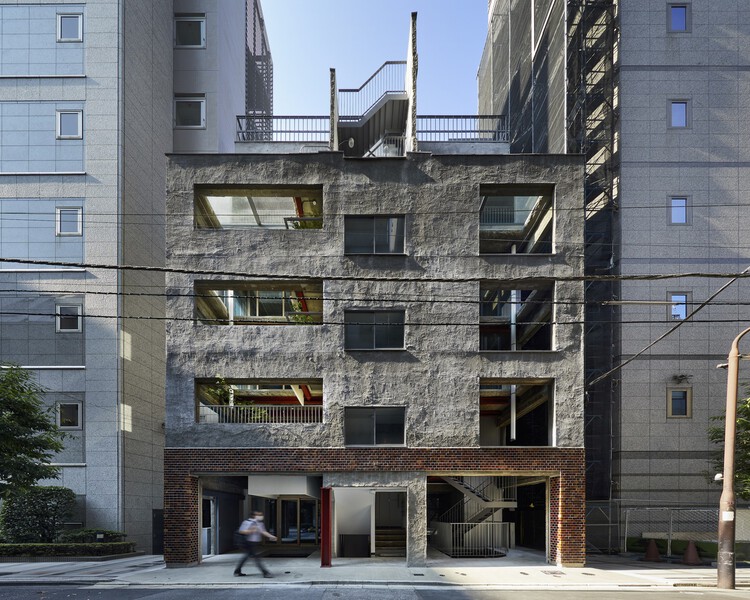 © Tomoyuki Kusunose
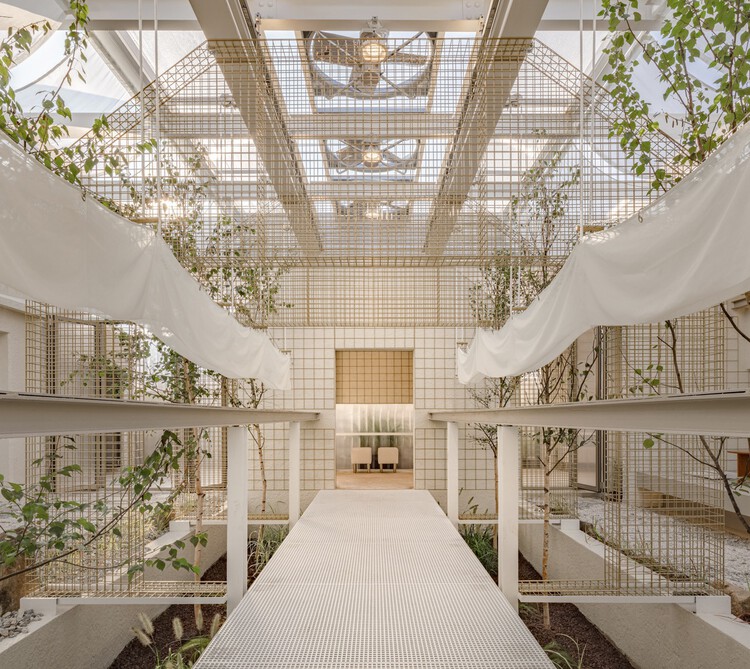
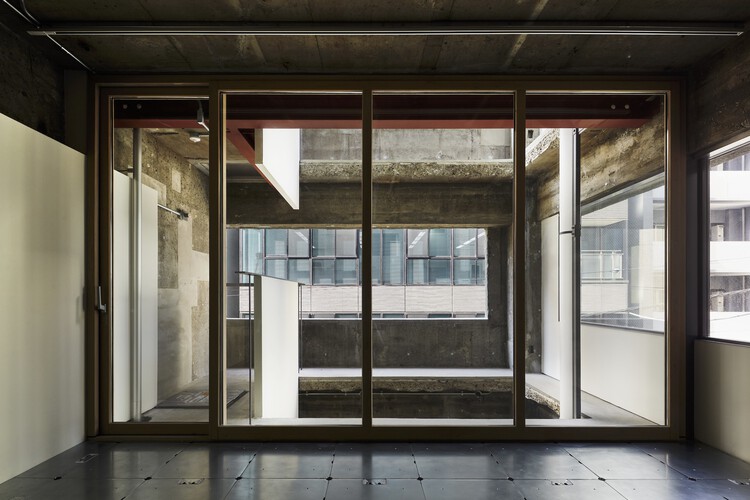
Through the process of reduction, a non-conforming office building in Tokyo was remodelled with a common space. The façade is set back to align with neighbors, floors are reduced, and the original frame becomes a thick surface, mediating between interior and public space. Subtraction creates an atrium that acts as a light well and ventilation shaft, while new balconies operate as hybrid zones—neither fully interior nor exterior.
We try to create a new public façade that would enhance the value of both the building and the surrounding open space through the process of legalizing the illegal state of the building by “reducing the structure.” (… ) The “thicker surface” created by the “reduced structure” creates a public area within the city, a space that enhances the value of offices and existing public open space.
 © Tomoyuki KusunoseREXKL Arts Space and Community Hub / Mentahmatter Design Sdn Bhd
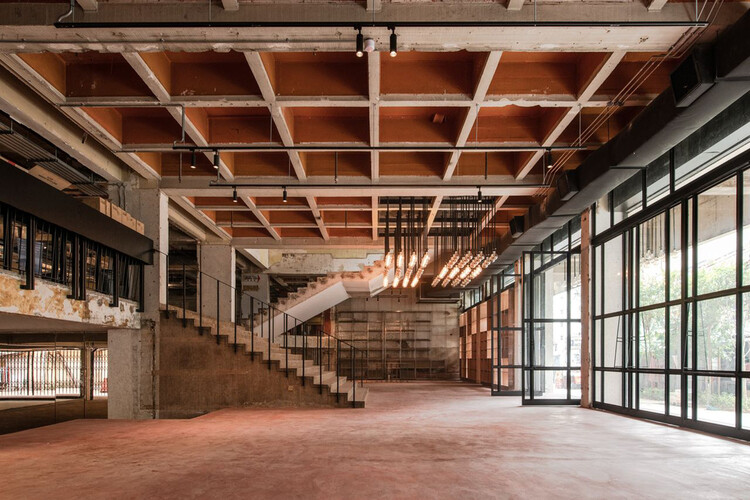 © David Yeow Photography
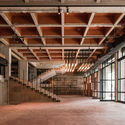
Originally a dilapidated cinema, forgotten and illegally used, the REXKL building in downtown Kuala Lumpur has been transformed into a dynamic 6,000 m² community and cultural hub. This adaptive reuse project preserves the original façade, tiled surfaces, and staircase while re-programming its interior with flexible spaces — such as an event hall, workshops, F&B, retail, and a bookstore — without expanding the building’s footprint while revitalizing side streets as a lively neighborhood.
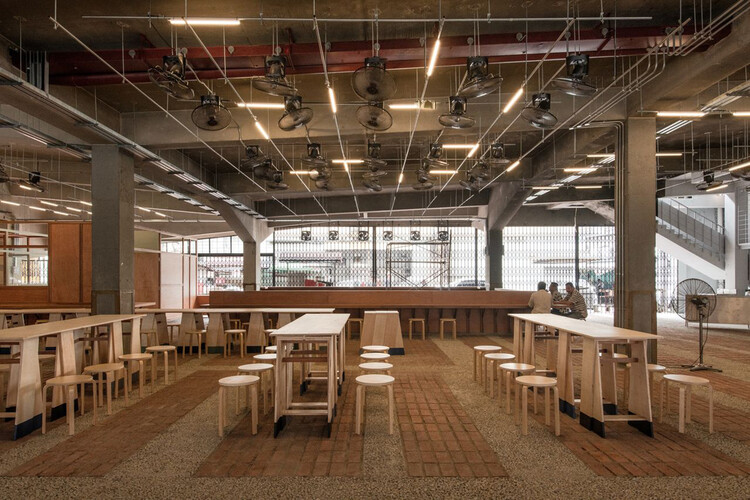 © David Yeow PhotographyCACP Designing / YIIIE Architects
 © Arch-Exist Photography
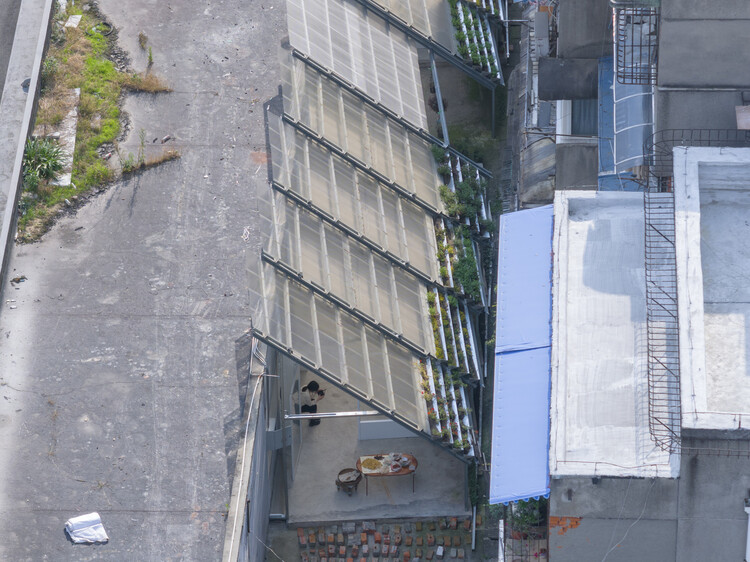
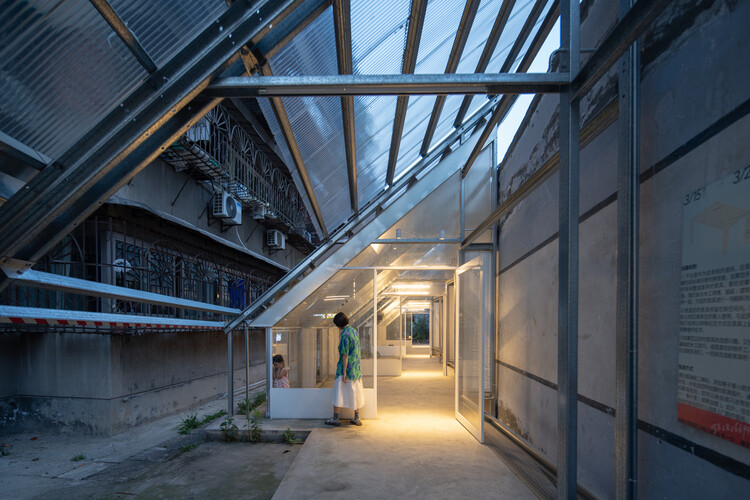
Located in a dense neighborhood marked by partially demolished brick buildings in Chengdu, China, the project transformed an abandoned bicycle shed into a multipurpose public space serving low-income, migrant, and minority communities. Exposed structure allows for ongoing adaptations. A planted roof functions as a community garden and cooling surface, while accordion-like everyday materials create flexible spatial hierarchies adaptable to seasonal or communal needs.
 © Arch-Exist Photography
This article is part of the ArchDaily Topics: Building Less: Rethink, Reuse, Renovate, Repurpose, proudly presented by Schindler Group.
Repurposing sits at the nexus of sustainability and innovation — two values central to the Schindler Group. By championing this topic, we aim to encourage dialogue around the benefits of reusing the existing. We believe that preserving existing structures is one of the many ingredients to a more sustainable city. This commitment aligns with our net zero by 2040 ambitions and our corporate purpose of enhancing quality of life in urban environments.
Every month we explore a topic in-depth through articles, interviews, news, and architecture projects. We invite you to learn more about our ArchDaily Topics. And, as always, at ArchDaily we welcome the contributions of our readers; if you want to submit an article or project, contact us.
Related Article From Silos to Iconic Spaces: 15 Projects That Repurpose Industrial Structures