

Listen to this article
Estimated 4 minutes
The audio version of this article is generated by text-to-speech, a technology based on artificial intelligence.
A London, Ont., chef and high school teacher is hoping to inspire the next generation of food fermenters, as a new national fermentation initiative rolls out across Canada.
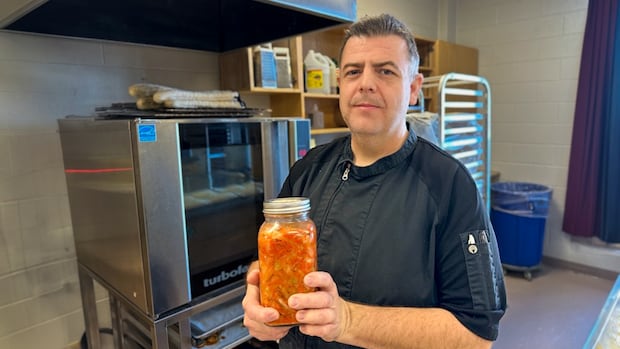
Connor Flynn, a master food preserver and culinary instructor at John Paul II Catholic Secondary School, is one of the contributors to the new Canadian Fermented Foods Initiative (CFFI), a network launched last week to promote “ferment-ceuticals,” research, and easy-to-follow recipes.
“I’m fascinated by what type of flavour profiles and textures you could achieve. And all of this is done by the microbes of the fermentation process,” said Flynn. “I’m fascinated by the fact that you can preserve food when it’s in season and it lasts longer, but then you can develop these really unique flavours that couldn’t be created using culinary skills.”
The CFFI, led by London microbiome researcher Jeremy Burton, brings together scientists, health experts, chefs and industry partners to share reliable information about the health benefits of fermented foods. Studies suggest that people who eat fermented foods tend to have fewer digestive issues and a lower risk of chronic diseases. However, researchers note that there’s still much to learn about how and why fermentation affects the body.
Flynn said he initially tried to find food-preservation training in Canada, only to learn that almost none exists. After health inspectors questioned how schools could safely teach preservation, he sought certification in the United States, completing an intensive four-day program at Cornell University that covered canning, pressure canning, dehydrating, fermenting, freezing, and freeze-drying.
“I discovered there was almost no infrastructure or education here,” he said. “In the U.S., they’ve invested heavily in this, so I went there to learn it properly.”
That training makes him one of only three certified master food preservers in Canada.
A classroom turned into a teaching kitchen
Inside his culinary classroom, filled with mixers, knives, cutting boards and fermentation crocks, Flynn teaches students the process of preparing and fermenting. That includes everything from knife skills to preserving peak-season produce.
During a recent visit, Flynn had three jars bubbling on the counter, including:
Krauchi: A non-traditional kimchi made with green cabbage, ginger, carrot, green onion, garlic and Korean chili powder. Curtido: A fermented El Salvadorian slaw of cabbage, oregano, jalapeño, onion and carrot, typically served on papusas. Pineapple-jalapeño sauerkraut: A sweet-heat twist that has become a favourite with his students.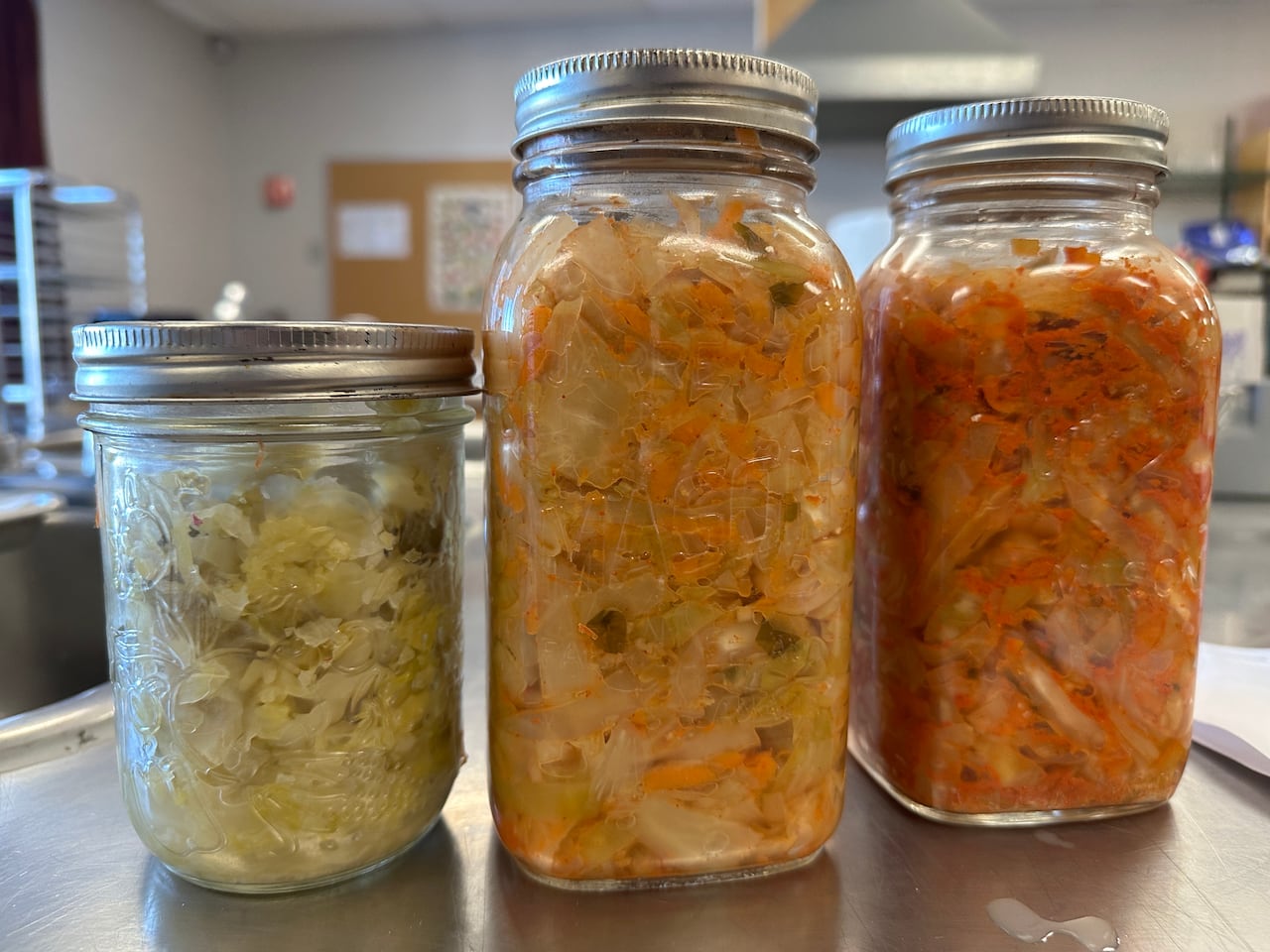 Krauchi, a non-traditional kimchi, Curtido, a fermented El Salvadorian slaw, and pineapple-jalapeño sauerkraut. (Andrew Brown/CBC)
Flynn said students are often overwhelmed at first, but become fascinated once they see fermentation happening in real time.
“The magical part is when the microbes get to work, seeing bubbles, foam, the whole thing comes alive,” he said. “About 20 per cent get deeply into it, but almost all of them will at least try it.”
Easy to make, hard to mess up
While canning is usually a full-day affair, Flynn said most vegetable ferments take just 20 minutes of preparation. Contrary to common fears, he says fermentation is “pretty low risk.”
“If something goes bad, it’s extremely obvious,” he said. “You’ll see mould, and then it goes straight in the garbage. Fermentation has been happening safely for thousands of years.”
At home, Flynn and his family eat fermented foods daily, including everything from sauerkraut to fermented pickles. He said his own gut health improved once he made fermented foods a routine part of meals.
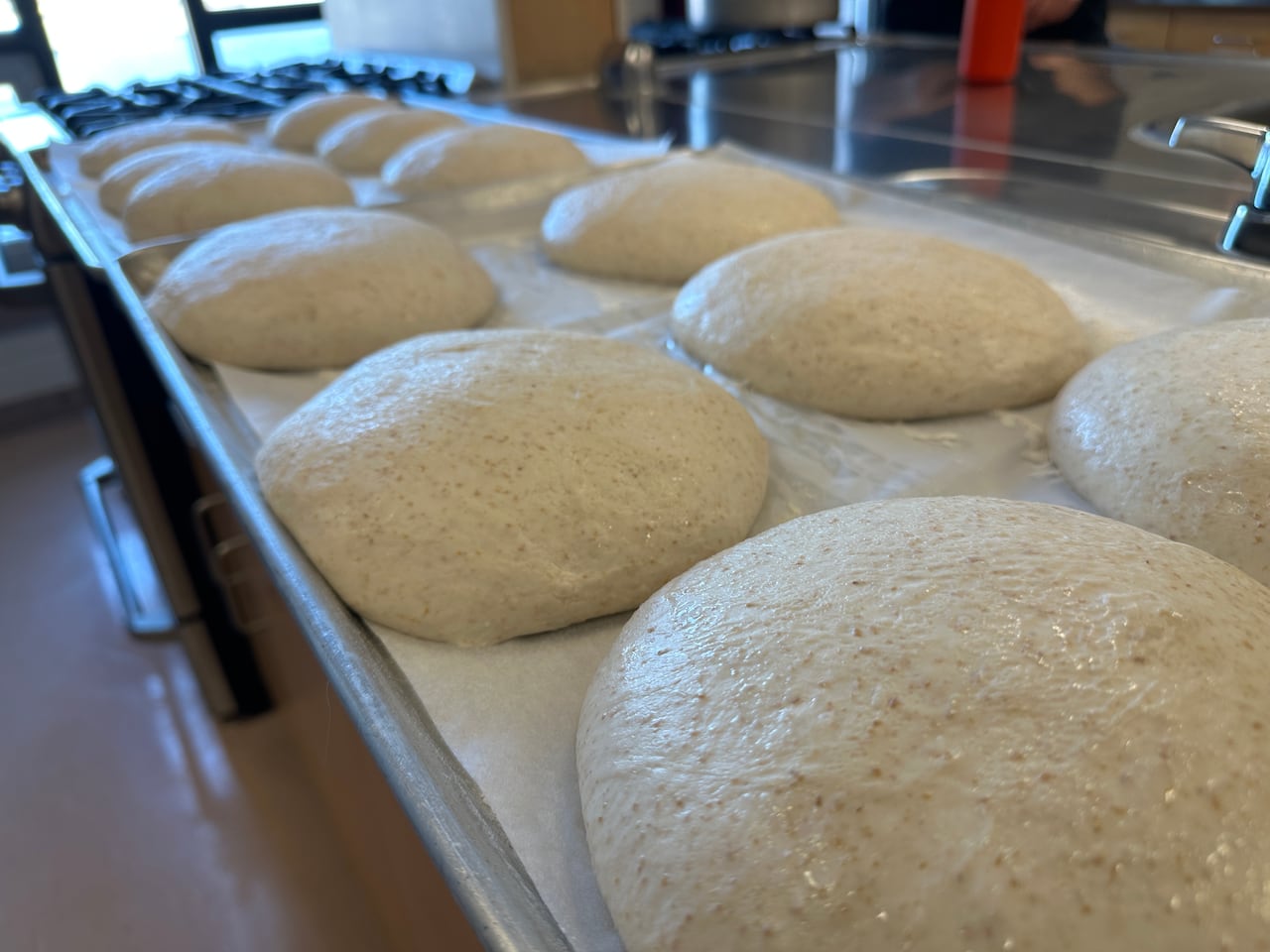 Sourdough bread rises ahead of baking in Connor Flynn’s classroom kitchen. (Andrew Brown/CBC)Inspiring future fermenters
Flynn said he hopes exposure in the classroom sparks curiosity that students carry into adulthood.
While he can’t teach certain ferments, like kombucha, because of trace alcohol levels, he uses the curriculum to show students how fermentation touches nearly everything: bread, cheese, yogurt, sour cream, and even foods they never realized were fermented.
“I hope we’re graduating a generation of fermenters,” he said with a laugh. “The school has been incredibly supportive. It’s exciting to bring this knowledge to young people.”
Flynn also teaches fermentation through his business The Preserving Chef. There are also recipes and resources from Flynn on the CFFI website at fermentedfoods.ca.