
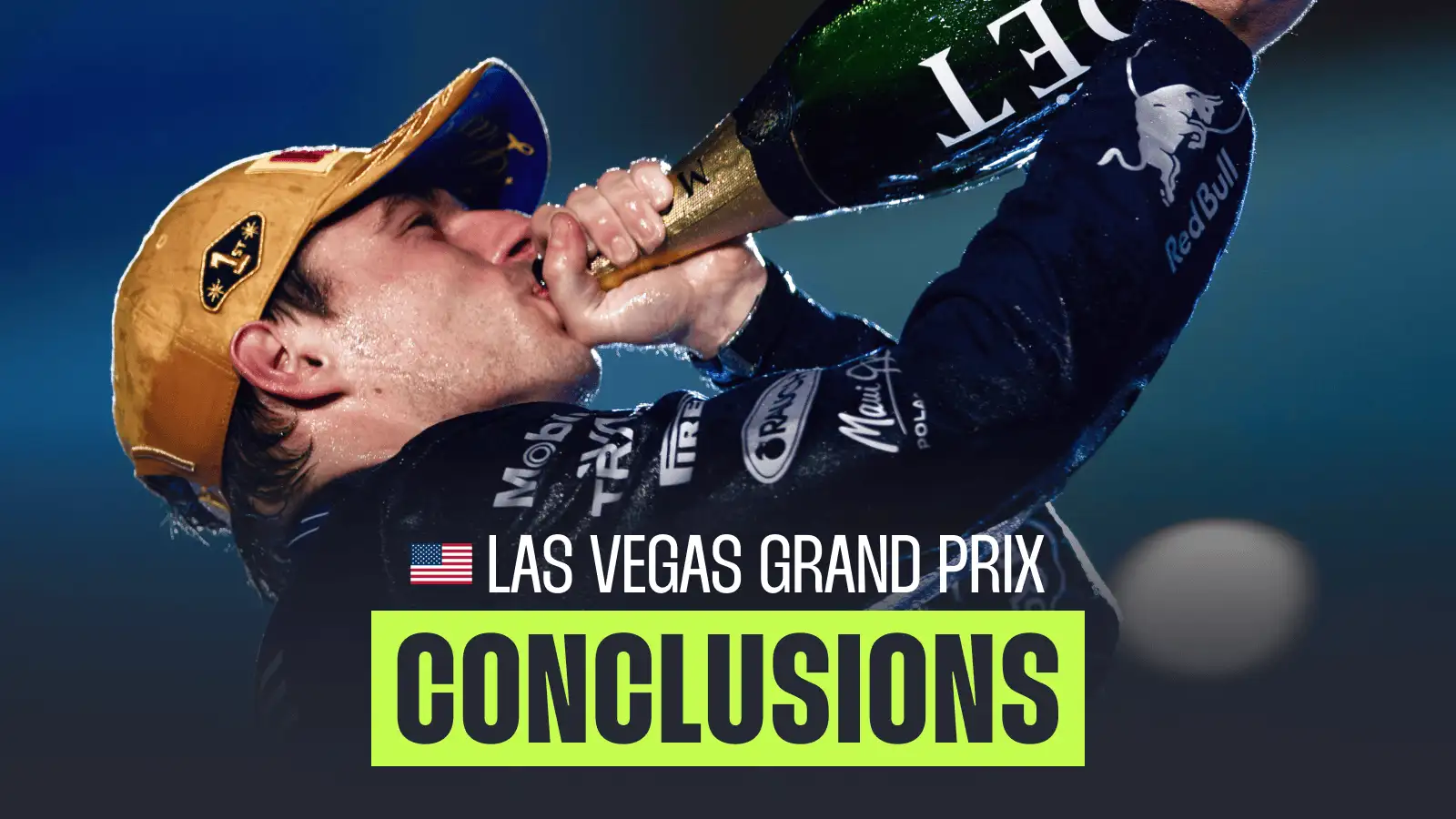
Red Bull driver Max Verstappen claimed his sixth victory of the F1 2025 season at the Las Vegas Grand Prix.
Verstappen dominated after capitalising on a first-corner mistake by Lando Norris, who was disqualified along with McLaren teammate Oscar Piastri after a post-race FIA investigation. That saw Mercedes drivers George Russell and Andrea Kimi Antonelli promoted to second and third respectively. Here are our conclusions from Vegas…
Max Verstappen is Lando Norris’s bogeyman
Why did Max Verstappen make such a concerted effort to mark himself as a tough and uncompromising competitor in his earliest days in F1?
Taking every single opportunity that presented itself to launch a bold, late-braking move down the inside?
Moving unpredictably on the brakes in defence against the Nico Rosbergs, Sebastian Vettels and Lewis Hamiltons of this world, drawing all three world champions into mistakes?
Twitching suddenly in eighth gear on the straight at Spa just as Kimi Raikkonen went in for the kill, leaving him with no option but to back right off or risk eating tree?
Precisely for moments like the start of the Las Vegas Grand Prix.
Go deeper: Understanding Red Bull driver Max Verstappen
👉 Jos Verstappen: The F1 racer turned ruthless mentor behind Max Verstappen’s supreme F1 talent
👉 Revealed: The three rules introduced by the FIA because of Max Verstappen
It messes with the minds of other drivers. Gets them thinking. Overthinking. Keeps them guessing. Second guessing.
Driving unnaturally to combat whatever it is they think Max might – or might not – be about to do.
Would Lando Norris have attempted to cut off any other driver so aggressively – uncharacteristically so for him – off the line in Las Vegas?
Sitting there on the grid, eyeing those five red lights, Max knew he was going to try his luck down the inside at the first corner.
More importantly, though, he knew Lando knew it too.
And just as crucially, Lando knew that Max knew that he knew.
Hence why Norris overdid it, chopping Max too sharply to leave himself on the dirty side of the track, braking too late and at too acute an angle to make the corner.
And, just like that, Lando was spooked and off the road he went. The bogeyman had struck again.
That came just moments after Norris became distracted – too preoccupied with what Verstappen was up to – at the end of the formation lap, leaving the McLaren completing only three burnouts on the approach to his grid slot on this cold Vegas night, none as aggressive as the five completed by Max.
Rent free, you say? Such terms, best left to the anti-social media mob, risk crossing into the territory of disrespectful.
But certainly it is accurate that Norris fears Verstappen more than any other driver.
Understandably so, you might say. He wouldn’t be the only one.
But not when that fear is so palpable – so detectable and easily exploited by an opponent – in racing situations.
Much has been made in this column over recent months, especially following his victories at Monza and Interlagos, of the idea that Verstappen remains the best driver out there even as he stares in the face of defeat in the title race.
Yet here was a snapshot of just how far advanced Max remains compared to the opposition, including the world champion elect.
Be in no doubt that the limitations of his Red Bull is the only thing set to prevent Verstappen from making it five championships in a row in 2025.
Recap: How the F1 2025 title race has unfolded
👉 Mexican GP conclusions: Big Norris chance, Verstappen illusion, new Hamilton document incoming
👉 Brazil GP conclusions: Key Norris change, Max’s big fight, latest Piastri SOS, new Ferrari solution
It was at this race last season that Verstappen secured a fourth consecutive title, finally ending Norris’s hopes a few weeks after breaking his spirit in Brazil.
The 2024 title race, as Norris failed to make much of an imprint on Verstappen’s points lead despite having the faster car for much of the season, came to be symbolised by those famous photographs of Lando and Max back in 2013.
They portray a very young Norris meeting a teenage Verstappen almost twice his size. Fitting.
The world championship is likely to change hands in Qatar this coming weekend and Max’s count will almost certainly be paused, if not quite stopped, at four.
Yet what applied this time last year still applies now.
No need for McLaren to panic despite double DSQ
The one comfort for McLaren, at least, is that a blow like this should be easily cushioned.
Even with both cars disqualified from the Las Vegas Grand Prix, Lando Norris still retains a very healthy 24-point lead in the championship with two races to go.
And one of those races is in Qatar, a McLaren circuit if ever there was one, where the car’s season-long advantage in medium-speed corners promises to be more potent than ever.
And if Qatar doesn’t quite go to plan, there is always Abu Dhabi, where Norris dominated from pole position to bring home last year’s constructors’ title.
So there is no need to panic. Not just yet. Not right now.
No need to question whether it was tempting fate by printing all those ‘Lando Norris: 2025 world champion’ t-shirts probably en route to Lusail right now.
The title race has not just been blown wide open as some have claimed.
The great luxury of Norris and McLaren’s dominance over recent weeks is that they can afford to suffer one – but only one – disaster and still get away with it.
This is the advantage team and driver bought themselves in Mexico and Brazil.
If there is a temptation to change anything at all at this stage, it might be to call off Oscar Piastri’s title hopes once and for all now Verstappen is level on points with him and throw the entire team’s support behind Norris for the last two rounds – just to be sure.
Yet the respective form of both drivers – Piastri somehow remains without a podium finish since his last victory at Zandvoort nearly three months ago – means that situation is taking care of itself naturally anyway.
It was only after qualifying that Andrea Stella, the McLaren team principal, was reflecting on the “important investment” the team had made to solve its performance issues in Las Vegas.
McLaren, he said, had worked hard to understand the requirements of this circuit, both from a technical and driving perspective, having struggled in the first two editions of this event in 2023/24.
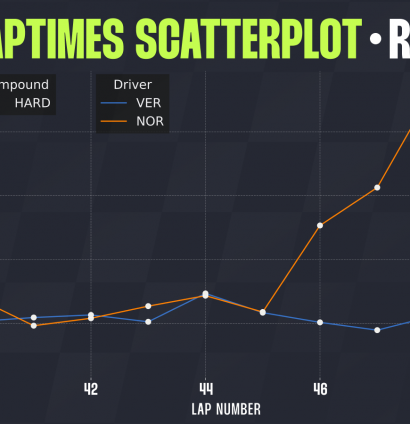
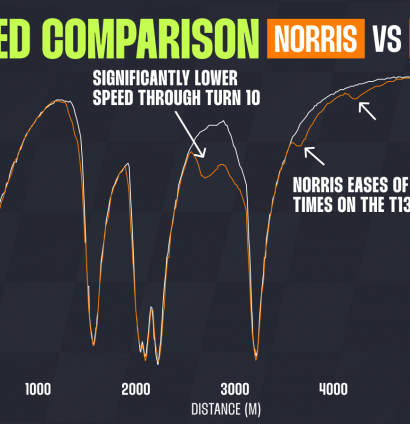
Clearly something – potentially related to the lack of representative running in practice – went wrong, Stella pointing to unexpected levels of porpoising and an increase in the movement of the floor after both cars sustained damage.
It is nothing short of catastrophic – not to mention highly embarrassing – when any team, let alone one of McLaren’s stature, sees both cars thrown out of a race.
And as a result, the pressure and scrutiny on the team heading to Qatar is far higher than it should be.
In Stella, though, McLaren has one of the calmest and studious minds in the pit lane to guide the team through it.
His steady hand will never be more important than over the next seven days.
This will only become a season-defining blow if McLaren allows it to be.
Think Lewis Hamilton regrets his Ferrari switch? Just wait until F1 2026…
Should Lewis Hamilton be regretting his move to Ferrari right now?
It’s a difficult question to answer.
To describe it as a mistake would be to dismiss the very good reasons he had to walk away from Mercedes at the time he did.
This move was all about finally escaping the ghosts of Abu Dhabi 2021, detaching himself from the crushing underachievement of the final years of his Mercedes tenure, breathing different air and completely changing the tone of the tail end of his career.
It was about a search for fulfilment – completion – and being unable to walk away from F1 without first having a taste of life inside the sport’s most sacred team.
Like him or not – and there are many who don’t – there was something irresistibly life affirming about an elite athlete towards the end of his career following his heart and finally turning a long-held ambition into reality.
It has not worked out as he hoped, of course, mostly because of the great irony that the main problem he encountered at Mercedes – a badly born, fundamentally flawed car with its biggest weakness baked in for the season – is identical to the one he has found at Ferrari.
Little wonder, then, that it looks as though the problem lies entirely with him. How could it not when the exact same issues have followed him from team to team, car to car?
Put simply, there were a variety of reasons – not all related to competitiveness – behind Hamilton’s decision to sign on the dotted line with Ferrari in the winter of 2023/24.
To judge it purely through the prism of results on track – even if that, of course, should always be considered the ultimate metric – is to overlook his motive for becoming a Ferrari driver.
So, no, perhaps there will be no regrets from that perspective.
But from a competition standpoint? And his stated desire to get that elusive eighth title?
Then it gets complicated.
Looking for a way out of Mercedes in response to two consecutive winless seasons in 2022/23 seems more than a touch hasty – an emotional spasm of a decision – now that 2026, and the promise offered by the new regulations, is on the horizon.
Who knows? Ferrari might just ace the new rules from the start of next season. Maybe. Possibly. Perhaps.
But it seems quite certain that Mercedes will with rumours persisting for some time that the team’s preparations for 2026 are more advanced than most.
More than once this season Hamilton has spoken of his determination to end his Ferrari career on a happy note and his “refusal” to follow in the footsteps of Fernando Alonso and Sebastian Vettel, established champions who failed to win the title with Ferrari.
The difference on this occasion is that at least Fernando and Seb started well at Ferrari.
Alonso and Ferrari were a united force right up until he lost the title at Abu Dhabi in 2010, after which Fernando could never quite bring himself to forgive and forget.
Vettel, meanwhile, was doomed almost from the beginning after finding that the management team that originally signed him had been replaced by the time he arrived.
Yet his three wins in 2015 made for a happy enough start before the relationship between team and driver never quite recovered after serious reservations – on both sides – developed during a difficult second season in 2016.
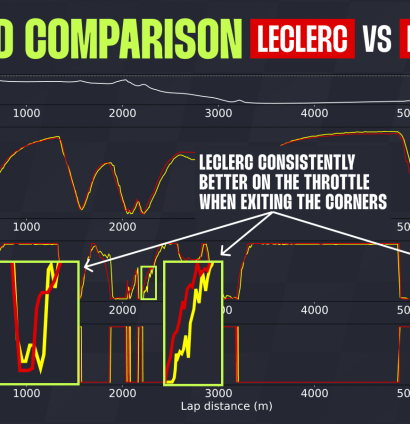
Hamilton’s Ferrari experience, in contrast, has been nothing but misery from the moment the SF-25 was launched in February, resulting in him reaching breaking point in record time.
That they already seem thoroughly fed up of each other even before the end of his first season does not suggest that this situation is salvageable.

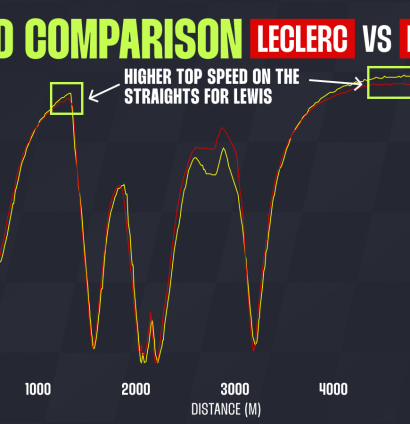
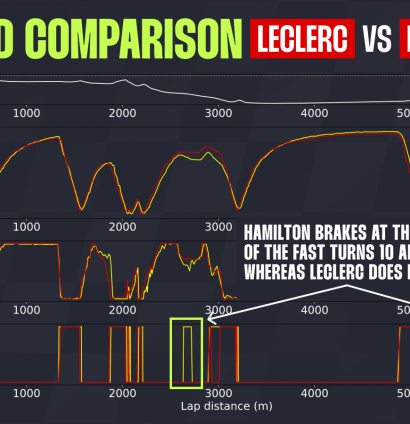
Maybe the real mistake Hamilton made was refusing to accept, as he neared his 40th birthday, that his only shot at an eighth world championship came and went in the concocted drama of Abu Dhabi 2021.
If only he had been more honest with himself – and acknowledged that he was getting old and merely wanted “a blast in the red car and then sayonara”, as Mark Webber famously said of Vettel in 2014 – rather than hanging everything on another championship, his current predicament would have been easier to take for all concerned.
The worst-case scenario for him now?
Watching the car he walked away from, the car that could so easily have been his, storming to the title in George Russell’s hands next season.
Now that would be the final insult.
Think Hamilton regrets his Ferrari move now? Just wait until 2026.
Could Andrea Kimi Antonelli actually win the title next season?
George Russell to storm to the title in an all-conquering Mercedes in 2026, you say? Not so fast.
Mercedes always saw something special in Andrea Kimi Antonelli.
It has taken some time, but now the rest of the world is starting to see it too.
Might the Las Vegas Grand Prix have developed into a straight contest between Old Max and New Max if Antonelli had a cleaner run in qualifying?
As in Brazil, Antonelli was more than a match for Russell in the early stages of the weekend before locking up on his final lap of Q1 and being knocked out.
It was a missed opportunity in conditions not so different from those in which he eliminated many of the doubts about Mercedes’ decision to sign him as Lewis Hamilton’s replacement on debut in Australia at the start of this season, rising to fourth from 16th on the grid.
His recovery from 17th to an eventual third in Vegas – achieved by massaging a set of hard tyres across the final 48 laps, finishing ahead of Oscar Piastri’s McLaren on the road and just seven seconds behind (an albeit compromised) Russell – was arguably more complete.
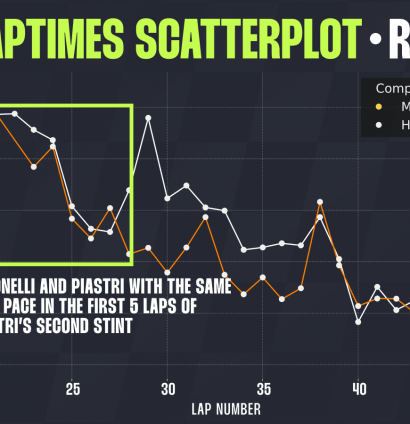
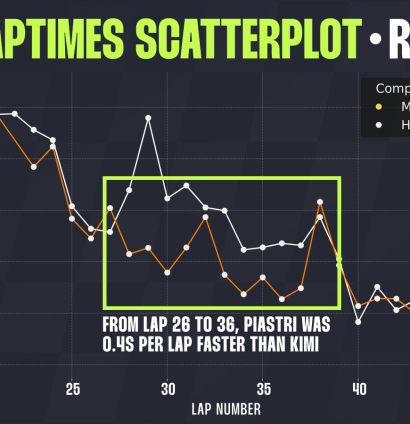
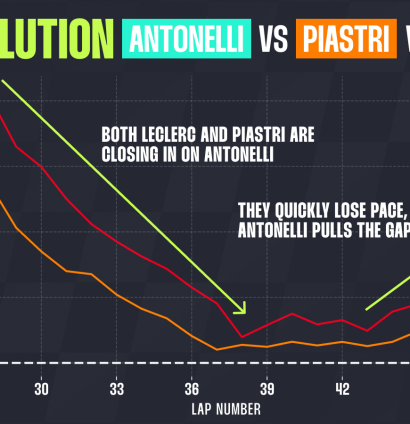
His rate of improvement since the lowest point of his mid-season slump at Spa, where tears were shed after two Q1 exits in the space of 24 hours, has been astonishing.
Yet not so surprising if you happened to read the Gospel of Mercedes, which even before his debut declared Antonelli the most exciting driver to arrive in F1 since Verstappen a decade ago.
The prophecy, it seems, was true.
And how much better will he get from here? Not just over the next five years, but over the coming winter?
How much faster, stronger, resilient will he be in 2026 for the experiences – high and low – of his debut season?
For getting up to speed with life as an F1 driver in 2025 and expanding his data banks with knowledge of each circuit? For going through that difficult summer spell and coming through the other side?
If the Mercedes is half as good as so many expect next season, it is a mouthwatering thought.
It was argued in this column not long ago that Mercedes made a mistake by signing Antonelli for 2025, piling all the pressure of replacing Lewis Hamilton on the shoulders of someone so young, when the sensible thing would have been to place him at Williams for a season or three.
Yet in 2026 Mercedes stands to reap the rewards of the great Antonelli gamble, helped by the reset represented by every driver starting from scratch under the all-new regulations.
This month marked the 15th anniversary of Sebastian Vettel becoming the youngest-ever world champion in F1 history at 23 years and 133 days in 2010.
In an age in which F1 drivers keep getting younger, it is a record destined to fall one of these days.
Verstappen never really stood a chance, in truth, spending the first five years of his career in an era of Hamilton/Mercedes domination and a bunch of unreliable, underpowered, almost-there-but-not-quite Red Bull-Renaults.
Antonelli?
No guarantee, of course, but it’s increasingly plain that he has the raw talent.
And pretty soon he’ll have the car and the experience to go along with it…
Liam Lawson has turned into Daniil Kvyat
You can tell a lot abut a Formula 1 driver by the way his fellow competitors talk about him in public.
Max Verstappen is never paid a bigger compliment than on those days Fernando Alonso, his kindred spirit, speaks almost in awe of him as was the case at Suzuka earlier this season.
In the case of Liam Lawson, the view among his rival drivers – particularly so since he arrived on the grid on a full-time basis at the end of 2024 – has never been especially flattering.
It was Alonso, you’ll recall, who first raised the alarm in Lawson’s first race back in Austin last year, taking exception to his aggressive defensive tactics in the sprint race.
Yet it was Carlos Sainz who summed it up best following his collision with Lawson at Zandvoort earlier this season.
“It’s a corner that allows two cars to race each other without really having to have any unnecessary contact,” Sainz said of the incident at Turn 1.
“But with Liam, it always seems to be very difficult to make that happen.
“He always seems to prefer to have a bit of contact and risk a DNF or a puncture, like we did, than to actually accept having two cars side by side.”
There was another reminder of what Lawson’s peers really think of him at the Brazilian Grand Prix earlier this month when he made contact with Oliver Bearman on the opening lap of the sprint race.
Bearman’s reaction over team radio was as cutting as it was succinct: “Typical Lawson.”
There was a lot to like about Lawson – the confidence, the aggression, the totally unfazed Red Bullness about him – when he made his F1 debut more than two years ago.
His car control, allowing him to qualify high in tricky conditions in Baku and Vegas since the summer break, remains his greatest asset.
Yet too often these days he allows the good he does to be undone by the sort of messy incident that ruined his Las Vegas Grand Prix, piling into Oscar Piastri at the first corner.
It begs the question: what is Liam Lawson now?
What really are his prospects now he bears the scars of being bombed out of Red Bull after just two races of this season?
He is 2025’s answer to Daniil Kvyat, a ghostly figure that casts no shadow on the grid, with zero hope of ever returning to Red Bull’s senior team no matter what he does.
And, crucially, without the consistent, punching-above-his-weight excellence on his return to the junior team that helped Pierre Gasly rebuild his reputation from a similarly perilous position in 2019-22.
It was suggested some weeks ago that even with Red Bull parting ways with Honda at the end of this season, theoretically leaving no reason to retain Yuki Tsunoda, Lawson is the one most likely to be left without a seat for 2026.
A final decision on Red Bull’s driver lineups for next season, widely expected to see Isack Hadjar promoted to Red Bull Racing as Verstappen’s teammate with Arvid Lindblad taking one of the Racing Bulls seats, is set to be made before the Abu Dhabi Grand Prix.
If the next two races prove to be the last of Lawson’s career, be it temporarily or permanently, he can have few complaints having had his chance.
And some of his competitors would not be sad to see him go.
Read next: Andy Cowell set to leave Aston Martin role as Adrian Newey steers F1 2026 direction