
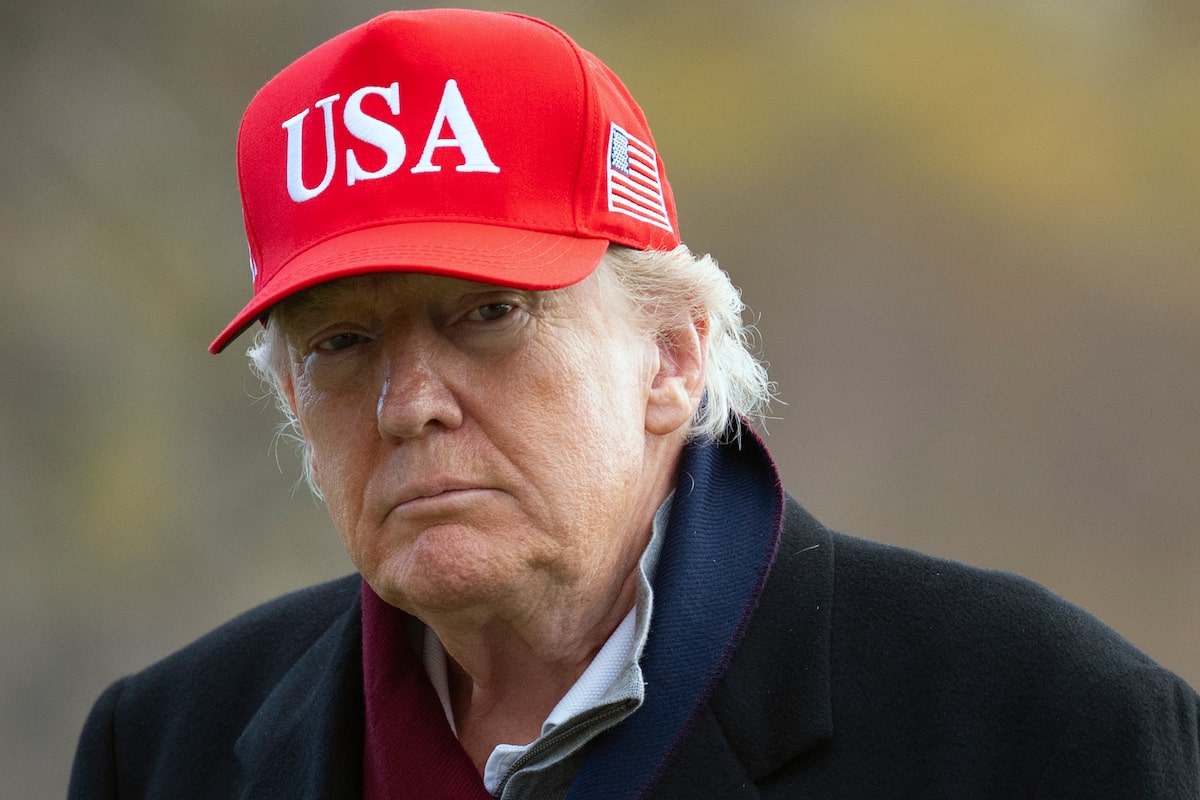
Disapproval of U.S. President Donald Trump’s overall job performance hit record highs among core supporters last week, Fox News reported.John McDonnell/Getty Images
John Turley-Ewart is a contributing columnist for The Globe and Mail, a regulatory compliance consultant and a Canadian banking historian.
The MAGA flashover scorching Canada-U.S. trade relations is being extinguished by America’s own affordability crisis and political burnout. Fox News reported last week that “disapproval of [President Donald Trump’s] overall job performance hit record highs among core supporters.” Fox’s polling shows 76 per cent of U.S. voters have a negative view of the economy and blame Mr. Trump.
To shore up support, Mr. Trump is walking back tariffs on 200 food items, making vague promises to give $2,000 to lower- and middle-income Americans and seeking wiggle room on steel and aluminum tariffs hurting the U.S. auto sector.
Prime Minister Mark Carney’s radio silence approach to trade negotiations plays well at this moment when Mr. Trump’s popularity is sagging across the board. As U.S. economic and political turmoil roils the popularity of Mr. Trump, and U.S. businesses find their voice supporting the U.S.-Mexico-Canada Agreement (USMCA), the more Canada can position itself as a tangible means of addressing America’s affordability crisis.
Canadians know well their own cost-of-living troubles, but less so about those unfolding to the south. Evidence of economic anxiety’s effects are surfacing in reports that U.S. discretionary spending is in decline, that Americans are more likely to eat at home versus restaurants and growing numbers face problems paying essential bills.
Opinion: Trump wants to play God with cheap money. It’s backfiring spectacularly
Editorial: A cornered Donald Trump is dangerous
The most financially exposed, roughly 47 million U.S. subprime borrowers with credit scores below 660, are a barometer of the problem. Subprime auto loan delinquency rates, 60 days or more past due, have risen to 6.6 per cent, surpassing levels seen even during the 2008/09 financial crisis.
Higher borrowing costs, higher prices for new and used cars, reduced savings and wages that do not keep pace – the story is familiar. The typical monthly new- and used-car loan payment in the U.S. increased by more than 30 per cent between 2020 and today.
Unemployment is stoking fear and affecting Mr. Trump and his Republican Party’s popularity. While the U.S. unemployment rate of 4.3 per cent is far better than Canada’s at 6.9 per cent, American layoffs are making headlines. In October, U.S. companies cut more than 153,000 jobs while new job postings are at lows last seen in 2021.
The unemployed are hitting the street and a “no-hire” wall in many instances. It is driving some, desperate for income, into low-paying work to cover essentials. Almost two million Americans have been unemployed for six months or more, an increase of 385,000 over the past year.
There are political consequences that follow economic instability. On Nov. 4 moderate Democrats were elected in the Virginia and New Jersey state governor contests, and a Democratic socialist won the mayoralty in New York.
The Trump administration’s efforts to try and manage these consequences explains, in part, its unhinged response to Ontario Premier Doug Ford’s antitariff advertising campaign before the Nov. 4 elections. U.S. Ambassador to Canada, Pete Hoekstra, cannot let it go, telling an audience in Ottawa last week that “Targeting the president of the United States and his policies 10 days before an election … does not happen in the United States of America.”
The startling transformation of Georgia congresswoman Marjorie Taylor Greene is instructive, too. She was Mr. Trump’s leading sycophant, but is now one of his critics, standing behind Jeffrey Epstein’s victims and their call to release the Epstein files – a demand that, after months of foot-dragging at the behest of Mr. Trump, Congress supported and the President could no longer avoid.
Ms. Taylor Greene didn’t kick her MAGA hat to the curb if she did not see Mr. Trump as a liability going into the Georgia, swing-state 2026 midterm elections. She has apologized for being a toxic voice in American politics and is calling on Washington to restore subsidies that help people secure health insurance in the U.S.
What are Mr. Carney and Canadians to make of all this?
Tariffs have bad economic outcomes, and they are playing out in Mr. Trump’s America, exacerbating the affordability crisis there, disrupting supply chains and squeezing business margins that encourage layoffs and feed economic anxieties.
During the first Trump presidency, Canada’s best trade tactics were patience and time. The 2018 midterm elections saw Democrats gain control of the House of Representatives and Mr. Trump scramble to cobble together a trade deal, the U.S.-Mexico-Canada Agreement, before Democrats could derail his trade strategy.
Time may again be our best tactic today, giving American voters the opportunity to check an unbalanced President’s damaging trade policies in the 2026 midterm elections.
American voters could do for Canada what Mr. Carney could not do himself: drive the U.S. administration back to the table with a better deal for Canada that helps them address their cost-of-living issues.