
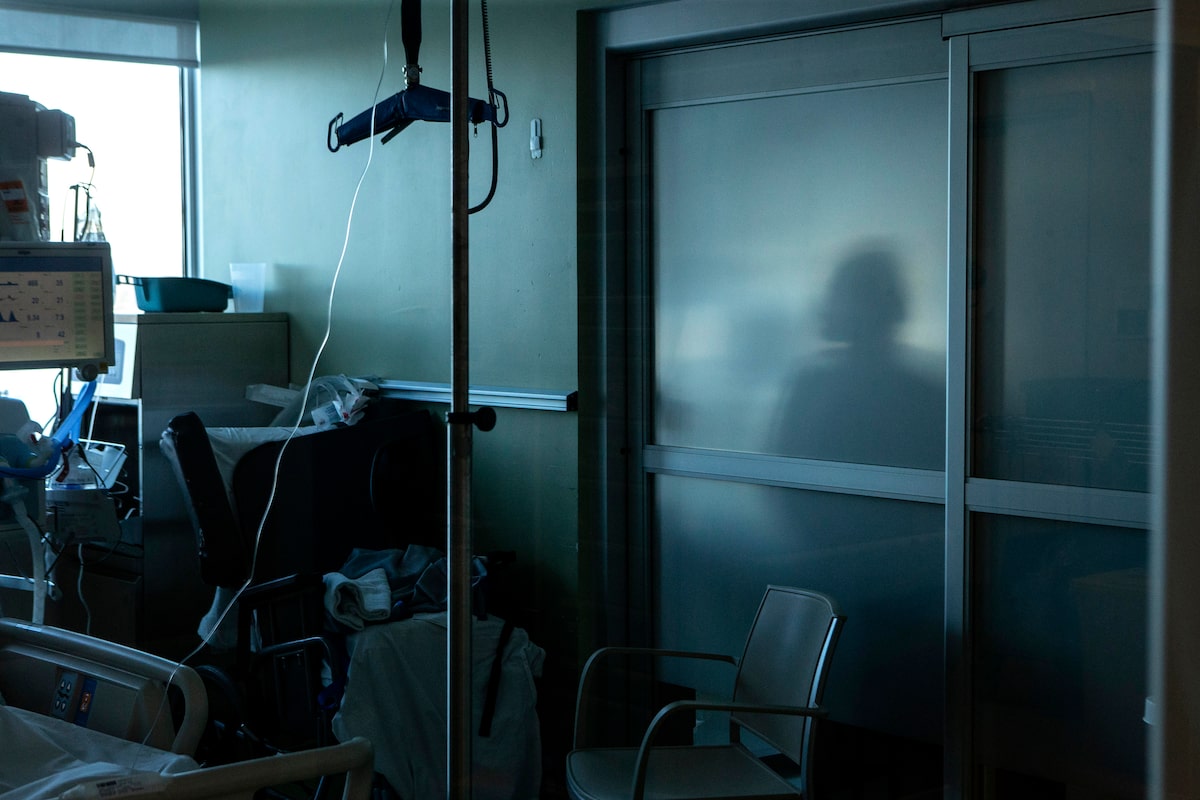
In practice, Canada’s health care system is not universal or egalitarian, argues Robyn Urback.The Canadian Press/The Canadian Press
Canadian health care as an idea, and Canadian health care as an institution, exist in two different universes.
Notionally, health care in Canada is single-payer, universal and egalitarian. No one can jump the line. No one can buy better or faster care. Everyone has reasonably timely access to primary and specialist care, and critical issues are treated as true medical emergencies.
That is not how Canadian health care actually works, obviously. Provincial governments are just one payer among many, which can include individuals and private insurers. Health care is universal only in theory; roughly 20 per cent of Canadians still don’t have regular access to primary care. Wait times – for appointments with specialists, for diagnostics, for nonemergent surgeries – have grown considerably across all provinces over the last three decades. And our systems can’t even reliably treat true emergencies any more; it is no longer unusual to hear stories of patients experiencing heart attacks, sepsis, strokes or other high-acuity conditions waiting hours for treatment in overcrowded emergency rooms. Two-tier health care is openly active in Quebec, where it was greenlit by Canada’s Supreme Court two decades ago, and it is quietly functioning everywhere else in Canada.
Editorial: Alberta’s (welcome) healthcare heresy
The most conspicuous example of two-tier care is when it comes to medical products and services not covered by public insurance plans: prescriptions, orthotics, dental care (for those who are ineligible for the Canadian Dental Care Plan), optometry, mental health care and so on. Canadians who are gainfully employed and covered by private insurers (or else are able to pay out of pocket) have access to a level of comprehensive care that those who are not do not. Those who have the means can also pay for virtual primary care visits through apps like Maple and Felix, which connect them to licensed health care practitioners at any time of day, allowing them to bypass the actual waiting room line and receive care immediately. In terms of more comprehensive care, private clinics like Medcan offer diagnostics, specialist care, and assessments for those who can afford the thousands of dollars it costs to become an annual member. Those who sign up are eligible for benefits like same-day or next-day doctor visits – in their offices or at patients’ homes – which is inconceivable in the grossly overstretched public system. This is pretty much the definition of two-tier care.
There are also two tiers of access within the public system. Those who have friends or family who work in the medical system invariably will, and do, find a way to jump the line. Canadians who also have the luxury of time are better poised to navigate complex bureaucracies to access more timely care; a single mother working two jobs cannot call around to specialists’ offices every day to try to snag a last-minute cancellation, but someone whose calendar consists of hot yoga and sushi dates can.
An Ontario man who needs a hip replacement can fly to B.C. to pay for the procedure immediately, instead of waiting for months for the province to cover the cost at home. A Saskatchewan woman who needs an MRI can pay for one right away, instead of waiting an average time of 81 days. And for any of this, and anything else, wealthy Canadians can travel to the U.S. for faster or more thorough care. Health care is experienced very differently in Canada by those with means and those without. There is nothing really “universal” about what our system currently offers.
Alberta defends public-private health care model as experts say it could violate Canada Health Act
That’s why the collective meltdown about Alberta’s plan to allow doctors to offer their services both publicly and privately is so disingenuous. Dr. Paul Parks, former president of the Alberta Medical Association, told CBC News that “Tommy Douglas would be rolling over in his grave right now.” Naheed Nenshi, Leader of the Alberta NDP, suggested that Premier Danielle Smith was ushering in “American-style health care.” A writer for The Tyee said that Ms. Smith’s plan would “destroy public health care.”
These people are zealously protecting the idea of a health care system that doesn’t actually exist in this country, as if we’re operating a Bentley, when we’re actually driving around in a clunky old Honda Civic (one that keeps breaking down, and actually costs more than a Bentley to maintain). The reality of health care in Canada is that if you are wealthy, well-connected, gainfully employed and/or have the luxury of time, you can get better, faster, more comprehensive treatment than those who are not.
Canadian health care is already two-tier; we just feel better about it when we pretend otherwise.