
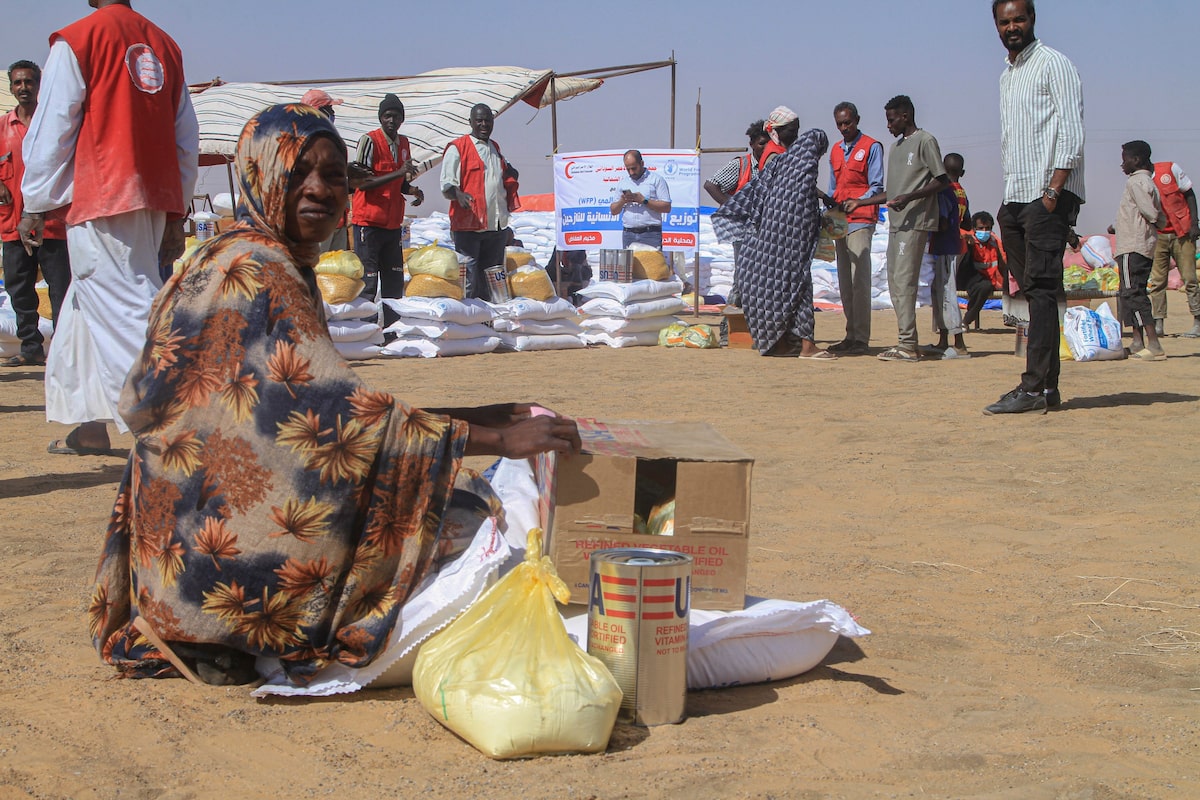
A Sudanese woman who fled El Fasher at the Al Afad camp for displaced people in the town of Al Dabba, northern Sudan, Tuesday. Since Sudan plunged into a civil war in 2023, an estimated 12 million have fled their homes in what the UN has called the world’s worst humanitarian crisis.EBRAHIM HAMID/AFP/Getty Images
The Immigration Minister was urged by MPs and a former justice minister to fast track the applications of Sudanese fleeing a violent conflict to join family in Canada, as the federal government came under pressure to do more to help victims of atrocities in the war-torn country.
MPs, including former Speaker Greg Fergus, on Tuesday launched an all-party parliamentary group on Sudan, which will examine atrocities in Darfur carried out by a powerful militia targeting ethnic groups.
At a press conference in Ottawa, former Liberal justice minister Irwin Cotler said the surge in killings in the Darfur region echoed mass atrocities between 2003 and 2005 against minority ethnic groups there.
Mr. Cotler said the current wave of killings were “a genocide foretold yet ignored” and that Canada must focus its attention on Sudan, adding there has been a “complicity of silence” about the recent atrocities.
An estimated 150,000 people have died since Sudan plunged into a civil war in 2023 following a power struggle between the army and the paramilitary Rapid Support Forces. An estimated 12 million have fled their homes in what the United Nations has called the world’s worst humanitarian crisis.
Opinion: In Sudan, a constant test of the tenacity of hope
Mr. Cotler, international chair at the Raoul Wallenberg Centre for Human Rights, called on Canada to take urgent action to help, including prioritizing applications from Sudanese to join family here. A special humanitarian program was introduced by Immigration, Refugees and Citizenship Canada last year to help Sudanese Canadians bring their relatives to safety.
The program has been beset by delays in processing. But after massacres in El Fasher were reported last month, some received visas and notifications of progress on their files.
Now Sudanese Canadians say, after the publication of the government’s new immigration targets this month, they are being told they may have to wait years for a decision.
Mr. Cotler said he plans to request a meeting with Immigration Minister Lena Diab to discuss how her department could prioritize Canadians’ family members whose lives are at risk in Sudan.
The government’s new immigration targets, launched in the budget, put applications from people fleeing Sudan in a category of people applying to settle here on humanitarian and compassionate grounds. The immigration levels plan allocated only 10,000 permanent spots for groups in that category in 2025, and 6,900 in 2026.
Ranya Elfil, a member of the Sudanese Canadian Community Association, said IRCC had put Sudanese in “a slow processing bucket” in the levels plan. Sudanese who had applied to come here are now facing wait times from IRCC of up to eight years, she said.
She said some who had applied to join family here had died waiting for IRCC to process their applications. They included the sister of a man who lives in Edmonton who was killed in El Fasher in front of her children, one of whom was 10.
Ms. Elfil, who testified in front of the Commons human rights committee on Monday about the situation in Sudan, said if the government had the will to allow family of Sudanese Canadians to come here, they could do so within a month.
Mutasim Ali, Raoul Wallenberg Centre legal adviser, urged Canada to do more, including to help open humanitarian corridors.
He suggested Canada should assume a leadership role alongside international partners to facilitate civilian evacuations, and the provision of food and medicine.
Mr. Ali, who came to Canada from Sudan during the previous civil war, said the militia who attacked El Fasher were terrorizing the same communities attacked 20 years ago.
“The pattern is tragically familiar. They began by targeting ethnic groups, one after another. They used racial slurs, dehumanizing them, calling them slaves and branding them as enemies. This was not random hate. It was a deliberate strategy to prepare fighters psychologically for the violence that followed,” he said.“
Explainer: What to know about the war in Sudan
Ottawa reviewing two Canadian-owned companies over Sudan links
El Fasher, capital of North Darfur region, was surrounded by the paramilitary Rapid Support Forces for more than 500 days, blocking humanitarian supplies, before the RSF militia seized the city at the end of October.
“You believe the worst has already happened. I must tell you, the worst may still be ahead,” Mr. Ali told the press conference.
As of last month, about 2,200 people had arrived in Canada under the special family reunification program for Sudan, which will allow up to 10,000 people to come here.
“Canada remains deeply concerned by the ongoing conflict in Sudan. We empathize with those facing this extremely difficult situation,” Ms. Diab, the Immigration Minister, said in a statement on Tuesday.
“Our government will continue to stand with the people of Sudan, offering support and stability through the temporary measures we’ve developed, along with broader humanitarian efforts.”