
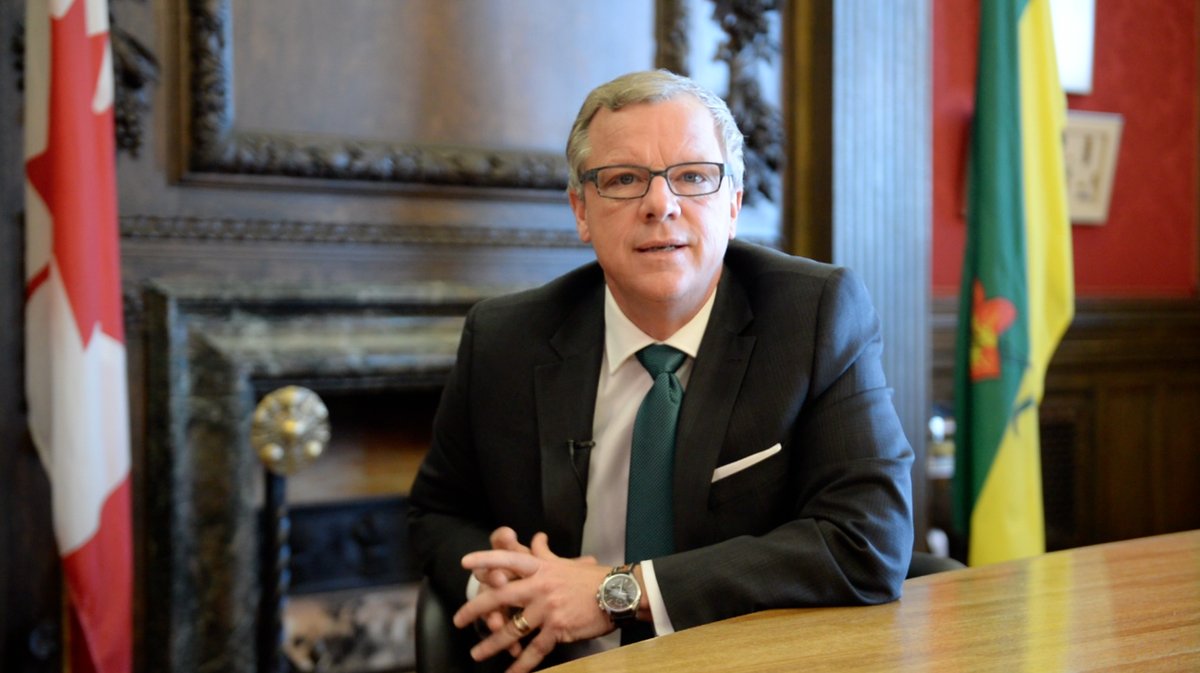
The Canadian Western Agribition is underway at the REAL District in Regina, SK. Agribition has been a pinnacle agricultural event in Saskatchewan for the last 54 years, featuring some of the biggest names in the agriculture sector. One such name is Brad Wall, former Saskatchewan Premier and current rancher in the Cyprus Hills area, joined the 2025 Grain Expo as a keynote speaker earlier this week.
Our own Glenda Lee (Allan) Vossler sat down with Brad Wall earlier this week as well, talking about the current state of agriculture, the issues producers face, and what the future could possibly look like for Western Canadian producers. One thing Wall mentions is the prices, and how cattle to grain operations tell two different stories.
“There’s sort of two tales going on in agriculture, as there often is in terms of prices. On the cattle side, prices have been very strong this year and into the year before that as well. So that’s great to see, frankly, because it was many years of that not being the case, even as input costs rose. On the crop side, there are challenges around commodity prices, of course and the fact that input costs, the cost of land especially, has not sort of followed any downward trend with commodity prices, and that’s presented certain challenges, certainly for agriculture in the province and on the prairies.”
While prices for cattle have remained in good shape over the last couple of years, grain producers haven’t shared the same wealth. Cattle prices have risen roughly $100/cwt from May 2024 to May 2025, while canola prices have remained stagnant and wheat prices have slightly declined. Grain prices are also roughly half of what they were at during their peak back in May 2022.
One thing that certainly hasn’t declined is land prices. According to Farm Credit Canada, cultivated dryland values in Saskatchewan continue to trend upward, with gains of 6.0% over the past six months and 12.0% year-over-year. You pair rising land values with stagnant or declining export values (canola, wheat) and simply put; it’s harder to make a dollar as a farmer.
While lots of these challenges aren’t new, they certainly face producers across many regions and in many different sectors, including cattle and grain producers. One issue producers also face currently is the political climate. Wall says the divide between urban centers particularly in Eastern Canada versus the rural population of Western Canada, has grown.
“There’s no question in my mind that the divide is growing. And not necessarily between, let’s say, the rural or the northern parts of central Canada. But it is very much growing between Western Canada and where all the seats are, where all the votes are in this country that determine the federal government and that would be Vancouver, urban Ontario and urban Quebec.”
Not only the divide between political affiliations from both sides, but also the current political climate across countries. Canada is currently battling the repercussions from tariff wars between China, India, and the United States. With rising inflation, trade disputes, and frustration mounting for Western Canadian producers, Wall says despite a bleak forecast, he’s optimistic in the hard work that Western Canadian producers and provincial governments put into the agriculture sector.
“We ought not never to leave international engagement to the federal government because they’re going to have to worry more about the center, the auto sector, steel sector, those sectors that are in those seat-rich parts of the country. I mean, canola is a huge industry for the country, but we’ve only got 14 federal seats in Saskatchewan. So, we better be prepared to do our own thing and go our own way when it comes to international engagement. And I know Premier (Scott) Moe has; I think Premier (Wab) Kinew has as well, and certainly Premier (Danielle) Smith has.”
While winter settles into the Prairies; cattle producers stay busy feeding and grain producers are getting ready to sell their commodities and plan for the upcoming year; it can feel like a daunting task just making ends meet as a producer. In many ways, it feels like the odds are stacked against the agriculture sector at times. However, producers as well as provincial governments will continue to put in the hard work it takes to make agriculture successful, because life in Western Canada depends on it.
Listen to the full interview between Glenda Lee (Allan) Vossler and former Saskatchewan Premier Brad Wall by clicking play below.