
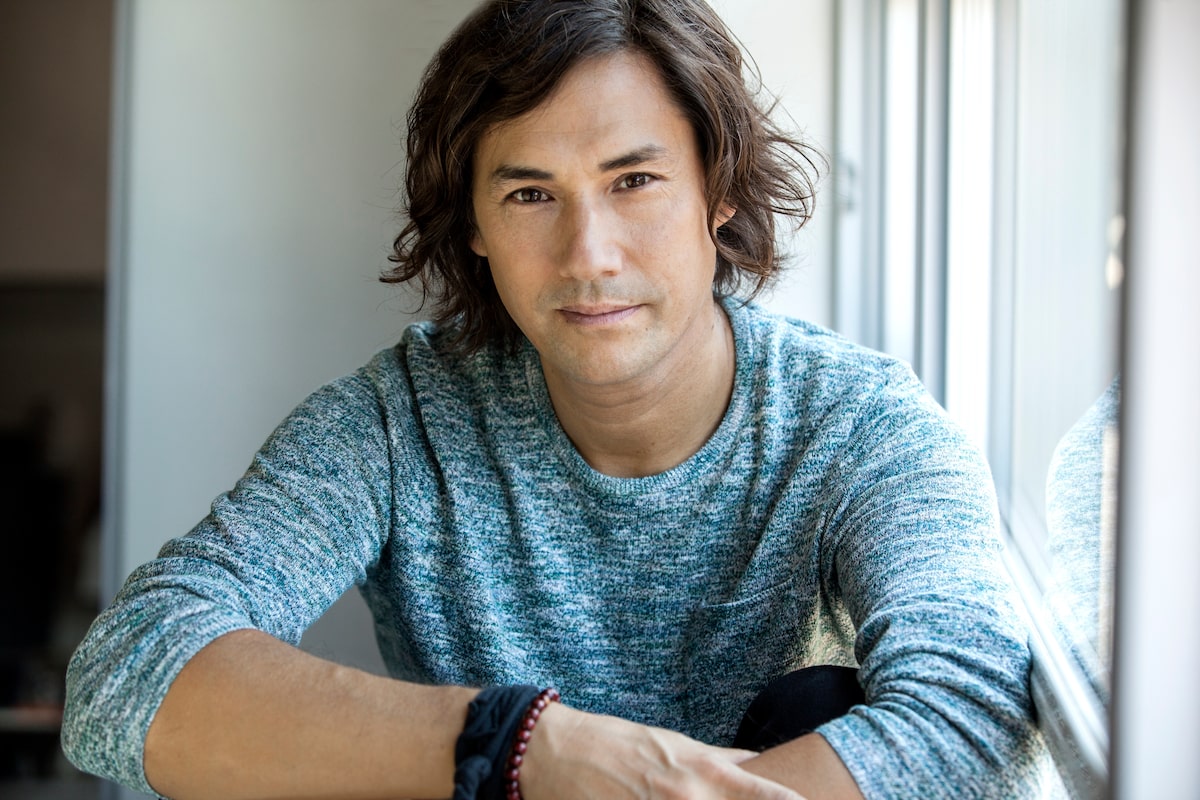
David Usher, musician and founder of Reimagine AI, has spent years exploring how artificial intelligence can support, not replace, creativity in the arts.Supplied
Ahkilo is curious. Cautious but curious. The Toronto-based multi-platinum hip-hop producer with production credits on tracks for Drake, Roy Woods and Jazz Cartier has been experimenting with artificial intelligence in his creative process.
“I’m in the industry, so I understand where it has negatives for sure,” says Ahkilo, whose real name is Deshaun Levy. “But sometimes I get on my laptop and I’m not fully sure what to make, you know? I’m just not sure how to approach it.”
So Ahkilo turns to Staccato, a Canadian AI platform designed to help musicians develop new ideas using machine learning to suggest melodies and musical progressions. Similar to ChatGPT, the platform takes natural prompts such as “give these chords and bass a mellow, nostalgic feel and add a jazzy element” and reworks the existing MIDI – a digital file format that encodes notes, timing and instrument data rather than recorded sound – to generate new musical ideas.
Ahkilo likens it to a collaborator.
“It’s like a friend in the studio, you can ask ‘what do you think about this?’ ” he says. “Then you can rearrange and move stuff around, add your flair to it and it’s yours.”
Ahkilo is part of a growing wave of Canadian musicians and producers experimenting with AI as a creative partner. From Staccato to Canadian artist Grimes’ open-source “Elf.Tech” – an AI voice software she launched in 2023, inviting artists to clone and remix her voice – these tools are reshaping how music is written, produced and even performed. It’s blurring the lines between where inspiration ends and automation begins.
Critics argue that AI risks diluting the human creativity and emotional authenticity that give music its meaning, while flooding music streaming platforms with derivative, machine-made content. Others warn it could undermine artists’ livelihoods and blur long-standing boundaries around authorship, ownership and consent.
Jeff Lupker founded Staccato out of his own creative process as a musician and researcher. While completing his PhD, he built AI software that helped him overcome writer’s block by suggesting what could come next in a composition based only on his own work and public-domain material.
After seeing how much faster he could write, and how the tool helped him break creative blocks instead of second-guessing ideas, he realized other musicians could benefit from the same kind of co-writer tool. He then partnered with his brother-in-law, Jason Kowalczyk, to turn the prototype into a company.
“Training data has become a dirty word,” Mr. Lupker says, referring to the collection of songs, recordings, or other inputs used to teach an AI system how to recognize patterns and generate music in a similar style. Staccato uses public-domain music to avoid copyright issues. “We have checks and balances in the backend that if there’s anything copyrighted, we could block it before it ever comes out,” he says. “That’s another reason we do MIDI over audio – melodies are going to be the most identifiable thing with MIDI, since you’re going to put all your sound design, flavour and colour to it.”
Multi-platinum producer Ahkilo turns to AI as a way to break creative blocks. He compares it to a studio companion that enhances, rather than replaces, his own artistry.Supplied
Ahkilo argues AI-generated vocals and sounds have their place as long as they’re used as a creative tool to sketch or demo a particular style, not to replace real performances.
“There’s AI software that allows you to manipulate vocals, so we could send a song that sounds similar to the artist, to give them quick ideas,” Ahkilo says. “(But) Staccato forces you to make the magic. It’s not giving it to you on a platter … You have to produce the record, to use your taste, your expertise of style and sound choice – the human aspect of it.”
In 2016, David Usher, a musician and frontman of rock band Moist and author of Let the Elephants Run: Unlock Your Creativity and Change Everything, worked with Google to develop Lyric AI.
“It was the first AI agent that could collaborate with humans to write song lyrics,” Mr. Usher says.
It piqued his interest in AI, inspiring him to launch Reimagine AI, a Montreal-based creative studio that develops interactive and generative art experiences. Usher says the company explores how artificial intelligence can augment – rather than replace – human creativity, blending code, music and storytelling in projects for both artists and brands.
However, Mr. Usher says making music with AI doesn’t interest him.
“If we’re using AI to work as a tool within a process, I can see how that could be fun,” he says. “But when you’re just writing in prompts to get music (that’s) not what I want to do with my music time.”
Mr. Usher says he’s not anti-AI – he uses it in most facets of his digital life. But it matters what happens between giving an AI song generator a prompt and the final project.
“When there is no manipulation or very little manipulation between the entry of the prompt and the output of the product, that’s where it gets really tricky,” he says. “Because you don’t really have much influence over the product.”
Jada Watson, a professor of digital humanities in the School of Information Studies at the University of Ottawa, researches the intersection of music and AI. She says ethics are a massive part of the conversation.
“We’re dealing with situations where artists are not able to consent to their life’s work being put in a training data set,” Dr. Watson says.
But there’s an often overlooked component to the debate about AI’s role in music and the creative process. Dr. Watson says AI can allow individuals with a disability to create in a meaningful way. “We can’t disregard that reality. These technologies create pathways to creation that were otherwise not there.”
Even still, Ms. Watson says we need to confront the fact that most of the AI tools that are being used, ultimately, have been stolen from somebody else.
“There needs to be some kind of way of creating training data that is acquired ethically, responsibly, with creative forms of control, compensation, et cetera, so that individuals who are drawn to the technology are able to create as well.”
For Ahkilo, the checks and balances built into Staccato allow him to incorporate AI without feeling like he’s compromising artistic integrity or breaking from his ethics.
“It’s literally just a tool to get started. If the artist likes the melody, we go with what they’re feeling,” he says. “[With AI vocals] artists are not really going to mess around with this stuff, but production-wise, it’s interesting to them.”