
Ryan Modesto, CEO & portfolio manager at i2i Capital Management, joins BNN Bloomberg to share his Hot Picks in ‘dips to buy in AI’.
AI-linked stocks have fallen over the past month as fears of an overheated market sparked a pullback. Despite that slide, demand signals across the sector remain strong, with recent earnings pointing to continued investment and tight supply.
BNN Bloomberg spoke with Ryan Modesto, CEO and portfolio manager at i2i Capital Management, who says sentiment-driven selling has created an opportunity for investors to build exposure to select AI-themed names.
Key TakeawaysRecent AI stock weakness has been driven largely by sentiment rather than deteriorating fundamentals.Demand for AI infrastructure continues to outstrip supply, with companies signalling strong investment plans in recent earnings.Nebius is positioned for rapid revenue expansion as large-scale cloud and AI contracts accelerate.Ouster stands to benefit from rising robotics adoption, where LIDAR sensors enable physical-world AI applications.nVent Electric is gaining momentum as its pivot toward data-centre and AI infrastructure drives growth and margin expansion.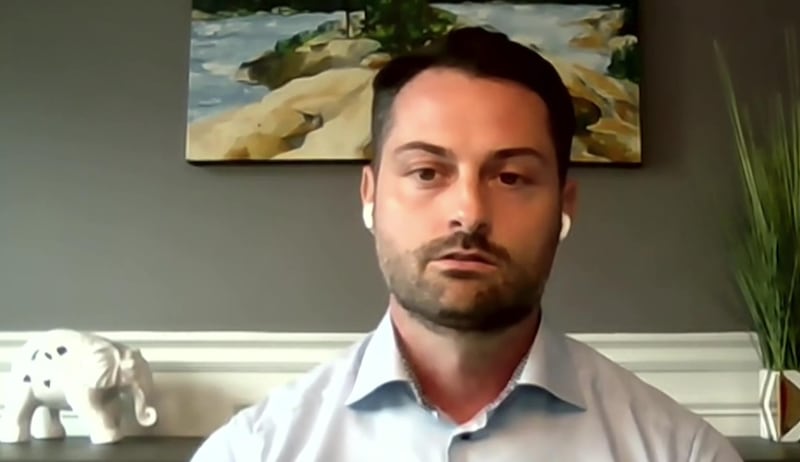 Ryan Modesto, CEO & portfolio manager at i2i Capital Management Ryan Modesto, CEO & portfolio manager at i2i Capital Management
Read the full transcript below:
ANDREW: Now it’s time for Hot Picks. We have seen some of those red-hot AI names come off their peaks over the past month. Our guest says this creates an opportunity to buy some of these names at a discount. We are joined on this theme of “dips to buy in AI” by Ryan Modesto, CEO and portfolio manager at i2i Capital Management. Ryan, great to see you. Thanks very much indeed.
RYAN: Nice to be on. Thanks for having me.
ANDREW: Can we jump in and get to your first name, Nebius? It’s a cloud infrastructure provider. You see promise here. Why do you like it?
RYAN: Yeah. This is a data-centre company providing GPU capacity to large AI companies and smaller AI companies as well. We like it. They’re built a bit differently. We think they’re data-centre companies built with AI in mind from the ground up, where a lot of their competitors have pivoted from Bitcoin mining into the AI data-centre space. So we kind of like the overall setup of Nebius, and their management team has built really large companies before. They’re well entrenched in the tech sector, and we think they’re well set to succeed in this space.
You know, the thesis here, though — really, I don’t want to oversimplify it, but to keep it simple — it’s just exponential revenue growth. I don’t know if we’ve ever seen companies, or a group of companies, that are growing revenues at the rate this group is growing, and at the scale they’re growing as well. In 2024 they did about US$117 million in revenue. In 2026 they’re expected to do US$2.4 billion in revenue. For annual recurring revenue by the end of 2026, they’re expected to do US$7 billion to US$9 billion as well.
So, large numbers. I guess the argument could be, well, anyone can throw big numbers like that around. How do you know they’re going to act on it? But they’re signing contracts that kind of back that up. A couple of months ago, they signed a deal with Microsoft for US$17 billion, and in recent earnings they also announced a US$3 billion contract with Meta as well. They said that contract would have been bigger; they just didn’t have the capacity to service any more at that time.
ANDREW: Your next idea is Ouster, and they’re involved in sensors that can be used in robotics. Tell us what the attraction is here.
RYAN: Yeah. So it’s a bit of a robotics, a bit of an AI company. They do LIDAR sensors. And everybody, when they think of LIDAR, thinks of autonomous vehicles. Ouster can do that in the future, but they’re really focused on the robotics side of things. So think of automating your warehouse — forklifts, robotic arms — but also drones and things like that.
We think robotics, in the next one to three years, is going to have its ChatGPT moment where everybody kind of says, “Whoa — these things are going to become real, and they’re going to be in our houses or wherever.” And Ouster has the ability to be the eyes for robots that allow them to interact with and see their environments.
They’re one of the first companies to get government approval in the U.S. to deploy their sensors on military equipment — things like drones and security uses. Their main competitors tend to be cheaper foreign products coming from other companies, and we think down the road governments are going to crack down on this, because there are real security issues. If foreign companies have LIDAR sensors all throughout your country mapping out surroundings and every move — and Ouster is U.S.-based — we think they’re going to benefit in the future from their geographic location as well.
ANDREW: That’s interesting. So Americans might be wary of Chinese vision equipment spreading through the country because the military, I guess, in theory, could be peeking through.
RYAN: Exactly, yeah. So always a risk, and with heightened geopolitical tensions, we think in the next year or two there will be some movement on that as well.
ANDREW: And finally, you’ve got a company for us called nVent Electric. They’re an equipment supplier.
RYAN: Yeah. So this is more of a traditional capital equipment supplier to the data-centre space, the infrastructure space, doing cooling systems, things like that. And we like this company — they’re in the right place at the right time, and they’re doing all the right things.
They have obvious tailwinds with AI trends and data centres. You also have the infrastructure, onshoring and reshoring tailwinds helping them out. They’ve shifted their business more towards the infrastructure space in the last couple of years, and that’s helping them increase margins. They’re growing organically in the mid-teens range; when you add acquisitions, they’re growing 20 to 30 per cent plus. Their margins are improving, they’re buying back shares, they’re increasing their dividends, and they’re actually trading cheaper than most of their peers as well. They trade at about 26 times forward earnings, and most of their peers in the space trade — probably being generous here — at 30 times earnings or above.
ANDREW: So, yeah. It’s amazing. I wonder — people supplying electrical equipment or expert electrical contractors in the States — they must be just swamped with business right now.
RYAN: Well, that’s a bit of the — almost — the good problem to have, I guess. Yeah, it’s a bit of the issue they’re seeing, where demand is far outstripping supply. And like Nebius as an example, they said, “We have people lined up at the door trying to get access to data-centre capacity.” It just takes time to build it out. Supply-chain constraints and supply-chain issues are really a limiting function right now in the AI space, it seems.
ANDREW: I wonder. I’m sure if you phone them, they say, “Oh, we might be able to get to you in 2029.” It is interesting the way the actual electricity is turning into such a potential roadblock here. Ryan, thank you very much indeed for joining us.
RYAN: Thank you.
ANDREW: Ryan Modesto, CEO and portfolio manager at i2i Capital Management.
DISCLOSUREPERSONALFAMILYPORTFOLIO/FUNDNBIS NASDAQNNYOUST NASDAQNNYNVT NYSENNY
—
This BNN Bloomberg summary and transcript of the Nov. 27, 2025 interview with Ryan Modesto are published with the assistance of AI. Original research, interview questions and added context was created by BNN Bloomberg journalists. An editor also reviewed this material before it was published to ensure its accuracy and adherence with BNN Bloomberg editorial policies and standards.