
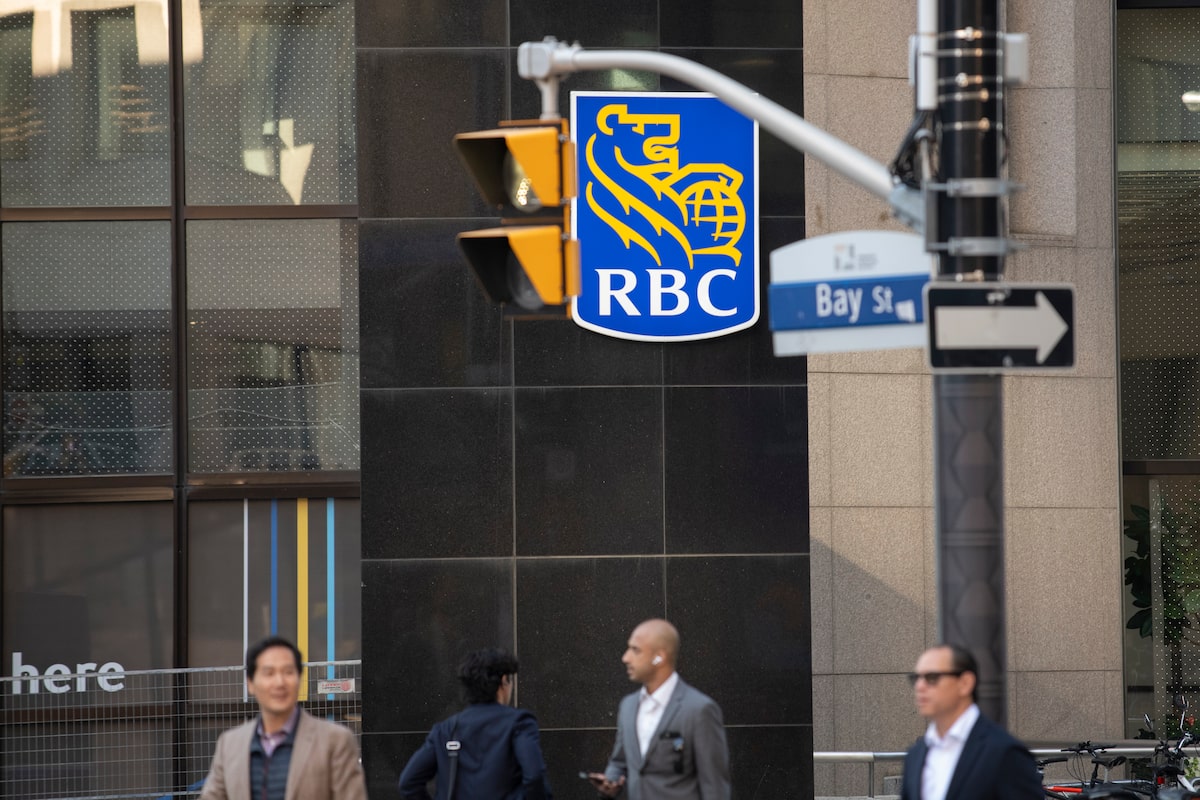
The Royal Bank of Canada’s head office in Toronto’s Financial District.Fred Lum/The Globe and Mail
If you look at the prices of precious metals and cryptocurrency recently, and the huge annual deficit figures coming out of Ottawa and Washington, you might think North America is headed for hyperinflation. But central banks are cutting interest rates to combat economic weakness. What’s an investor to do? We asked Lascelles, chief economist at RBC Global Asset Management.
1. Lascelles knows it’s now kind of a cliché: “History doesn’t repeat itself, but it does rhyme.” Pick a theme: speculation in railway stocks in the 19th century, tariffs imposed in the 1930s, massive government debt after the Second World War, 1970s stagflation, the 1990s tech bubble and more. “You can draw parallels on individual themes,” he says.
2. The trouble is that parallels can be inexact. Yes, tariffs were high in the 1930s, but trade “was a relatively small fraction of the economy,” Lascelles says. Many tech companies went bust in the 1990s, but “a lot of fibre was laid,” he says. So is the artificial intelligence boom that now powers the Magnificent Seven U.S. tech stocks a bubble or the real thing?
3. The Bank of Canada and the Federal Reserve have been cutting policy interest rates since 2024—to 2.25% here and a target of 3.75% to 4% in the United States. “Our forecast is 2%” in Canada, Lascelles says. The Fed may have more wiggle room. “They’re going into the threes. Could they touch the twos?” he asks. Quite possibly.
4. Does fiscal policy—government spending and taxation—matter anymore in an era of massive deficits? Lascelles says he’s still “profoundly dubious” of the argument it’s irrelevant. Central banks have a lot of control over short-term interest rates, but long-term rates remain high—a sign bond markets are still concerned about inflation. “Implicitly, then, bond yields are pricing in some fiscal excesses,” he says.
5. Now is not a time for investors to be taking big swings, Lascelles says. They should be “paying particular attention to diversifying right now.” Worried about high-flying tech stocks in U.S. indexes? Or gold and silver producers in Canadian ones? “In theory, a time of volatility is a time when active money managers can outperform,” he says.