
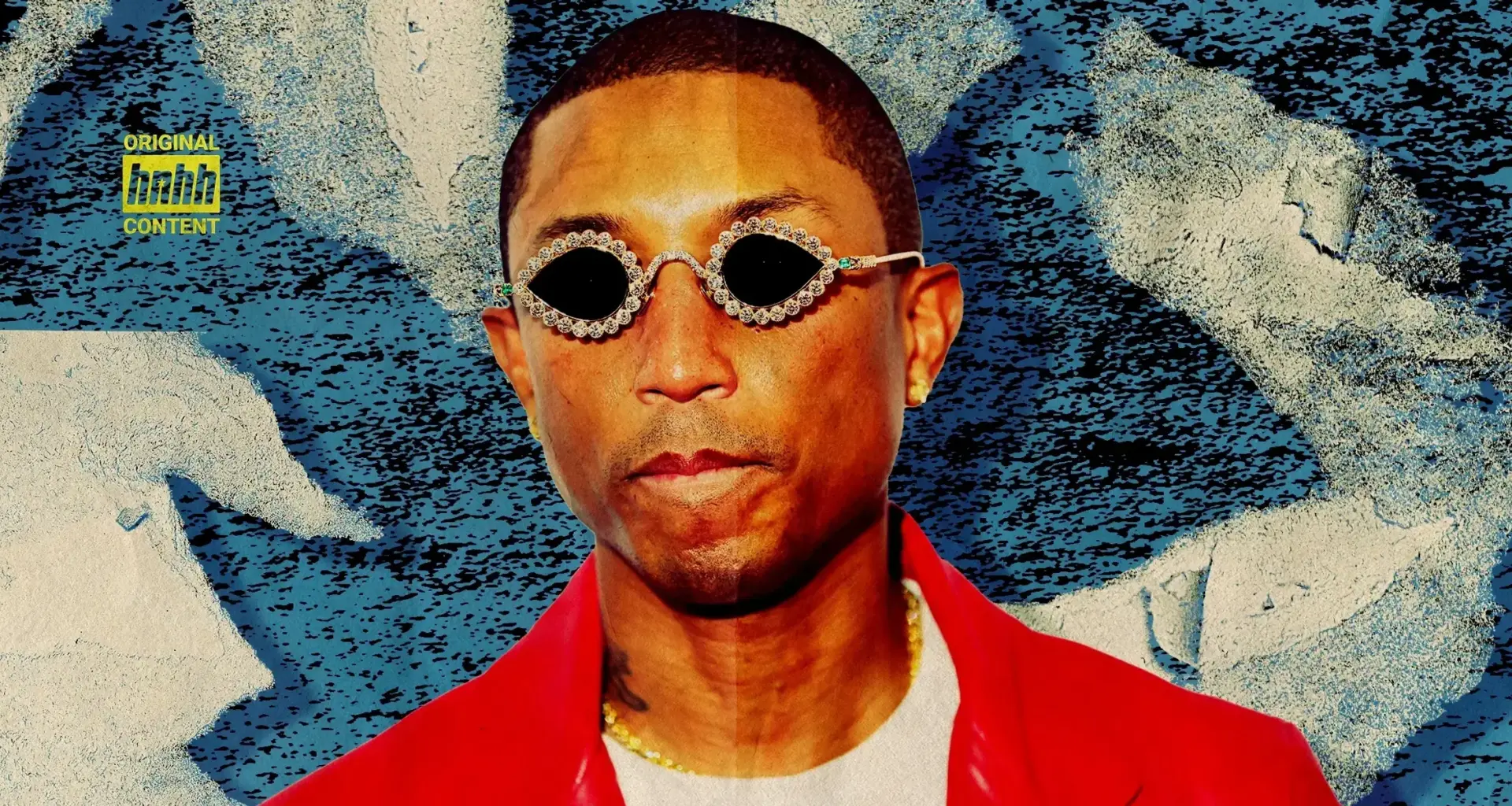
Celebrity endorsements feel like a “damned if you do, damned if you don’t” scenario. The 2024 election cycle felt like a breaking point in that cycle of celebrity and politics overlapping. The star status and unparalleled influence of Beyonce, Taylor Swift, and Megan Thee Stallion combined couldn’t help Harris defeat Trump–and there’s certainly misogyny at play here. But people have grown wary of celebrities whose political advocacy emerges only when it’s advantageous or profitable. Politics has always been a game of self-interest, and celebrity endorsements play like it.
Pharrell Williams exemplifies this dynamic. Once a fixture in the political landscape, helping Obama secure two terms and endorsing Hillary Clinton, he has since adopted a hesitant, almost detached stance as recently as the last federal election cycle. However, his recent comments about politics put his hesitancy into perspective in a way that feels afforded only to those who can reject the lesser of two evils without necessarily dealing with the ramifications directly.
“I hate politics,” Pharrell said during the 5th Annual Black Ambition Demo Day, after acknowledging how unpopular his comments might be. “Like, despise them. It’s a magic trick that it’s… It’s not real. I don’t believe in either side ‘cause I think when you pick a side, you are inadvertently supporting division. Yes, it’s not a popular point of view, but I gotta say, when I think about it, the wells are drying up.” It’s a surface-level observation at best that speaks to the growing frustrations that many people share. While Democrats promised change under Joe Biden, tangible progress on systemic issues has lagged. His criticism—though framed as bipartisan—carries weight because it exists alongside a reality of selective engagement. Pharrell has historically traded cultural capital for political influence, yet his recent remarks suggest a withdrawal from the electoral arena, even as structural inequities persist.
But what made Pharrell’s political commentary even worse was his horrible take on DEI. “Do you want someone to support your startup because you’re Black or because you’re the best? So I think now for me, it’s about us having the best ambition, and that’s the reason why you should support these businesses. Yes, they happen to be Black and brown, but it should be based on the thesis that they’re the best, not because of a shade of skin color,” said Pharrell. While not inherently wrong, his statement oversimplifies a complex problem. DEI programs were created to address systemic exclusion, offering historically overlooked communities access to capital, professional networks, and opportunities. By framing success as purely meritocratic, Pharrell overlooks the structural obstacles Black and Brown entrepreneurs continue to face—a dynamic Black Ambition itself exists to address. Acting as though talent alone can bypass the hurdles DEI efforts aim to address not only feels discouraging, but it also inadvertently reinforces a narrative often pushed by critics of equity initiatives: that being marginalized and exceptional cannot co-exist.
Pharrell’s Missteps On DEI
Pharrell’s ascent—from Billionaire Boys Club to adidas to Louis Vuitton—demonstrates how relentless talent and effort can yield success. But suggesting that sheer excellence is sufficient to overcome systemic barriers undermines the very purpose of DEI, which was designed to mitigate bias and provide opportunities where identity has historically been a barrier. And the stakes of this debate regarding DEI downplay the severity that removing these programs has across the country: the education system and how history is taught, documenting missing and murdered Indigenous people, and the list goes on.
To be clear, it’s not that Pharrell has turned a blind eye to the struggles that Black and Brown folks face in professional settings. Black Ambition itself is a “non-profit initiative working to close the opportunity and wealth gap through entrepreneurship,” according to their website, and his comments were made at one of the company’s events. The non-profit explicitly works to close opportunity and wealth gaps through entrepreneurship, stating that “entrepreneurs historically left out of traditional investment funnels are building the companies of tomorrow.” Yet Pharrell’s DEI remarks risk divorcing meritocracy from equity. Historically, highly qualified Black people have been passed over for opportunities in favor of white counterparts—a pattern observable not only in corporate America but in the media, music, and broader cultural industries. DEI seeks to correct that imbalance and ensure that talent and opportunity can intersect fairly.
In that sense, hip-hop has always been tinged by the politics of the time. YG led the brigade alongside Nipsey Hussle when they released “FDT.” Ye said the quiet part out loud when he said George W. Bush doesn’t care about Black people–and later shifted to the same party that Bush represented. Pharrell’s disengagement feels like a calculated withdrawal: after years of supporting Democratic candidates, he is stepping back from an arena where celebrity voices are expected to be loud and politically aligned. Ahead of the 2024 election, his criticism of celebrity endorsements underscored a desire to separate cultural influence from electoral advocacy.
Disillusionment With Electoral Politics
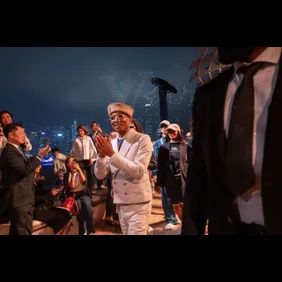
HONG KONG, CHINA – NOVEMBER 30: Pharrell Williams, Men’s Creative Director at Louis Vuitton, attends the Louis Vuitton Men’s Pre-Fall 2024 fashion show on November 30, 2023 in Hong Kong, China. (Photo by Billy H.C. Kwok/Getty Images)
“There are celebrities that I respect that have an opinion, but not all of them. I’m one of them people [who says], ‘What the heck? Shut up. Nobody asked you,’” he said. “When people get out there and get self-righteous and they roll up their sleeves and shit, and they are out there walking around with a placard: ‘Shut up!’ So, no, I would rather stay out of the way, and obviously, I’m going to vote how I’m going to vote. I care about my people, and I care about the country, but I feel there’s a lot of work that needs to be done, and I’m really about the action.” Some thought it was a shot at Taylor Swift’s endorsement of Harris, though a year later, these comments hold more weight than they did then, especially after Nicki Minaj spoke on behalf of Trump administation in front of the U.N. parroted about the persecutions of Christians in Nigeria–a topic that has been contested.
Pharrell’s disillusionment with the system came when there was the utmost pressure among celebrities to speak out as the threat of Trump’s regime returning to office loomed. But the timing of his comments disavowing celebrity endorsements wasn’t coincidental. Biden and Harris earned the last of his Democratic co-signs when the former announced the latter as his running mate in 2020. However, that same Democratic ticket was in power when Pharrell’s cousin, Donovon Lynch, was killed by an officer with the Virginia Beach Police Department. The family reached a $3 million settlement with Virginia Beach, but Pharrell’s calls for a federal investigation into the matter and broader issues related to the VDPD’s conduct have fallen on deaf ears. His cynicism makes sense from this perspective. How much influence does he carry outside of art if, as a multi-millionaire artist and designer who is deeply ingrained in the fabric of American culture, he can’t leverage that influence to see justice for a family member and his community at large?
Corporate Power & Selective Engagement
Yet disengagement in politics does not equate to absence from systems of power. Pharrell’s work in corporate and luxury arenas exposes him to a different kind of political influence with real-world consequences. His appointment as Louis Vuitton Men’s Creative Director, succeeding Virgil Abloh, is celebrated as a diversity milestone. Yet it also situates him within a corporate ecosystem historically resistant to inclusivity. A 2024 lawsuit in California alleged that Louis Vuitton discriminated against Black customers by falsely labeling them as drug dealers, barring entry to the store. Pharrell’s presence in these institutions signals both achievement and contradiction: he benefits from systems designed to include, yet these systems are still embedded within broader inequities.
Similarly, Pharrell’s creative partnerships with Tiffany & Co. reveal complex entanglements. Despite the brand’s claims of ethical sourcing, questions remain about labor and materials, including high-profile campaigns involving Beyoncé and Jay-Z, where she wore a 128.54-carat yellow Tiffany Diamond–a jewel with a deep-rooted history in white supremacy and colonialism in South Africa during the 1800s. Global influence isn’t free from politics, particularly when historical and structural injustices intersect with commercial power. Performing as a creative leader for multinational institutions is a form of political engagement, whether intentionally or not.
At the same time, Pharrell’s corporate and creative work is not devoid of positive impact. His leadership at Louis Vuitton and collaborations with marginalized creatives demonstrate that influence can be exercised outside electoral politics. DEI, mentorship, and strategic investments in entrepreneurship all extend access to opportunities that traditional systems have historically withheld. Supporting Black and Brown talent does not diminish merit; rather, it acknowledges that structural barriers have long prevented a true meritocracy from emerging. Pharrell’s comments embody this paradox: an advocate for inclusion whose comments sound like critiques of mechanisms designed to facilitate it.
The Limits Of Neutrality
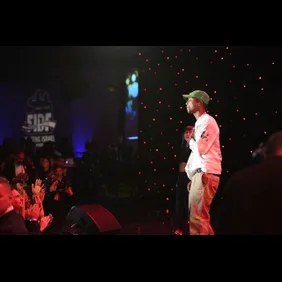
BEVERLY HILLS, CA – NOVEMBER 01: Pharell Williams performs Friends of The Israel Defense Forces (FIDF) Western Region Gala at The Beverly Hilton Hotel on November 1, 2018 in Beverly Hills, California. (Photo by Shahar Azran/Getty Images)
But Pharrell’s most consequential contradiction doesn’t show up in music, fashion, or speeches; it emerges in the geopolitical arena, where his name becomes entangled in institutions far removed from the humanist image he’s built. Most recently, he’s faced further blowback for his performance at the Friends Of The IDF Gala in 2018, especially having kept mum on the genocide that the IDF is currently committing. While he has earned recognition as a UNESCO Goodwill Ambassador for Arts Education and Entrepreneurship, performing for an organization tied to the Israeli military—even before the human rights violations in Palestine and the Middle East have been as broadly broadcast and censored–underscores the limits of trying to appear outside politics. Actions on global stages have consequences that extend beyond American partisan divisions.
With that said, Pharrell has made his political convictions clear throughout his career, and rightfully so. He’s spoken against police brutality, created Black Ambition to provide access to capital for marginalized entrepreneurs, and helped craft “Alright,” one of the defining protest songs of the 2010s. So it’s not that Pharrell is apolitical or unaware. It’s that he may now be operating from a distance that most people don’t have the luxury of. His vantage point has shifted, even if his intentions haven’t. His apolitical posture in electoral matters contrasts with his deep engagement in cultural politics, yet neutrality can’t be bought when you’re aware of what’s at stake.
Pharrell represents a modern dilemma for celebrities: the tension between personal choice, public responsibility, and structural influence. Remaining silent on partisan politics may be a privilege afforded by wealth and cultural capital, but operating in global institutions, mentoring emerging talent, and shaping cultural narratives are inherently political acts. Disengagement cannot exist in a vacuum.
The critique is not that Pharrell is apolitical or spineless—he is acutely aware of systemic inequities and the power dynamics around him. The issue lies in selective engagement, the choices about when, where, and how to exercise influence. His DEI comments, corporate leadership, philanthropic initiatives, and geopolitical performances reflect a multifaceted approach that can appear contradictory to observers expecting consistent alignment across all platforms.
Even after clarifying his comments to Van Lathan, the core issue remains: Pharrell’s framing of DEI separates his own success from the structural obstacles Black Ambition was created to address. And his insistence on staying out of presidential politics feels less like neutrality and more like selective disengagement. Maybe he’ll never endorse another candidate again — and honestly, that’s fine. Artists shouldn’t be forced into political spokesperson roles they don’t want or aren’t prepared for. But if you’re going to embrace the mantle of a global creative force with a humanist mission, as UNESCO Director-General Audrey Azoulay once described him, that ethos has to be consistent. You can’t champion humanity in one room and look away in another.