

November 27, 2025 —
Researchers in the Rady Faculty of Health Sciences are exploring whether a person’s genetic risk for depression can help predict how multiple sclerosis (MS) progresses.
Dr. Kaarina Kowalec, associate professor at the College of Pharmacy, led a study that was recently published in Annals of Neurology and could pave the way for more personalized treatment strategies.
“A lot of people with MS end up having depression as well,” said Kowalec.
“Treating depression is essential, but genetics can offer deeper insights into MS and help guide future care. Genetics are an ideal biomarker because they’re set at birth. Unlike blood proteins, which can vary from hour to hour, your genetic code stays the same.”
The research involved collaborations in Canada, Sweden and the United States. The Canadian and Swedish patient cohorts were part of research studies, while the U.S. cohort came from clinical trials. This work is among the first of its kind in Canada.
What the study uncovered
The team examined depression polygenic scores – a measure that combines thousands of genetic markers across the genome to estimate a person’s genetic tendency toward depression.
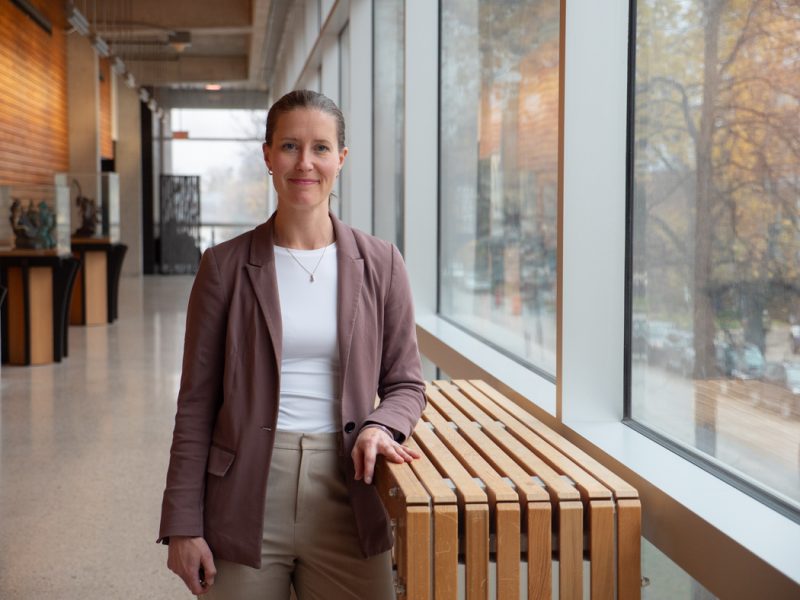
Dr. Kaarina Kowalec at the Apotex Centre on the University of Manitoba’s Bannatyne campus.
“We found that people with a higher genetic risk for depression were more likely to experience relapses and, in some cohorts, faster worsening of MS symptoms and disability,” Kowalec said.
“Importantly, a high genetic risk doesn’t guarantee someone will develop the condition. Depression results from a mix of genetics and environment.”
What surprised researchers was that this genetic risk didn’t just matter if someone developed depression – it had its own direct link to MS outcomes.
“Even if someone never develops depression, having a high genetic risk for it still increases their chances of MS relapses and faster disability progression,” Kowalec said.
Why this matters
While this research is still in early stages and not ready for clinical use, Kowalec believes polygenic scores could eventually help clinicians identify patients who need closer monitoring or stronger treatments sooner – potentially preventing disability before it occurs.
“We wanted to see if, in the future, we could create a test for clinics to identify people with MS who carry these genetic markers,” said Kowalec.
She encourages clinicians to “think outside the box” about what might be driving MS progression, beyond what’s typical or immediately visible.
For people living with MS
MS is a condition with no cure. Patients often face uncertainty about symptoms and treatment outcomes. Kowalec emphasizes the importance of self-advocacy.
“If you experience depression, seek help – it matters for your overall health. MS may feel like the biggest challenge, but depression can make both conditions worse if untreated. The same applies to other health issues like heart disease or cancer.”
****
Read the full study in Annals of Neurology: Depression Polygenicity and Disease Activity and Disability Worsening in Multiple Sclerosis