
Editor’s Note: Help is available if you or someone you know is struggling with suicidal thoughts or mental health matters.
In the US: Call or text 988, the Suicide & Crisis Lifeline.
Globally: The International Association for Suicide Prevention and Befrienders Worldwide have contact information for crisis centers around the world.
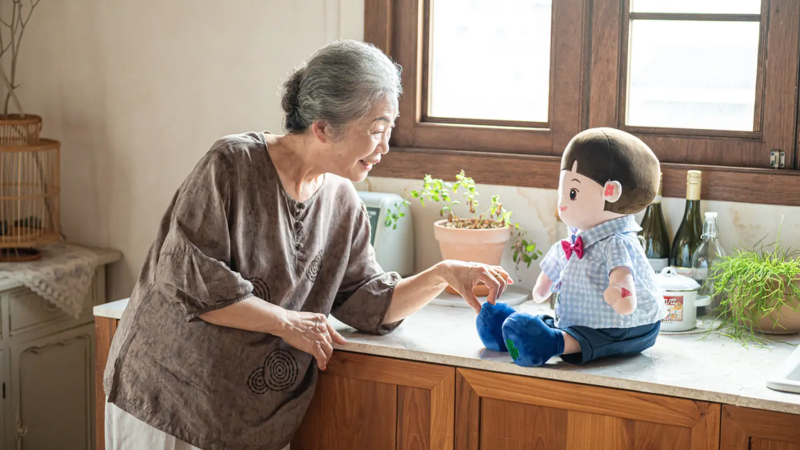
They have big, smiling eyes, ears that stick out, and speak with the cheerful chatter of a seven-year-old. Some wear pink dresses with braids; others sport blue shirts and a bow tie. But these are not typical grandchildren. They are made of cotton and metal, powered by AI, and deployed as a surprising answer to South Korea’s elderly mental health crisis.
Every day, about 10 older adults in South Korea die by suicide.
The figure, from a sobering report published in June 2025 in the Journal of the Korean Medical Association, echoes a persistent and alarming trend across East Asia. Places like Japan and Hong Kong have long documented elevated suicide rates among the elderly. However, the situation in South Korea particularly worries local authorities, as the country ranks one of the highest rates in the developed world and the highest within the Organization for Economic Co-operations and Development (OECD) nations.
“It’s a real crisis,” says Othelia E Lee, professor of social work at the University of North Carolina at Charlotte, who has researched social isolation among older adults in South Korea. The country is classified as a “super-aged” society and has more than 10 million people aged 65 or older. “Now, they represent a fifth of the country’s population,” Lee says. “[It] happened so fast that the Korean government didn’t have time to (set up a) proper pension and support system. Leaving them to struggle is not an option.”
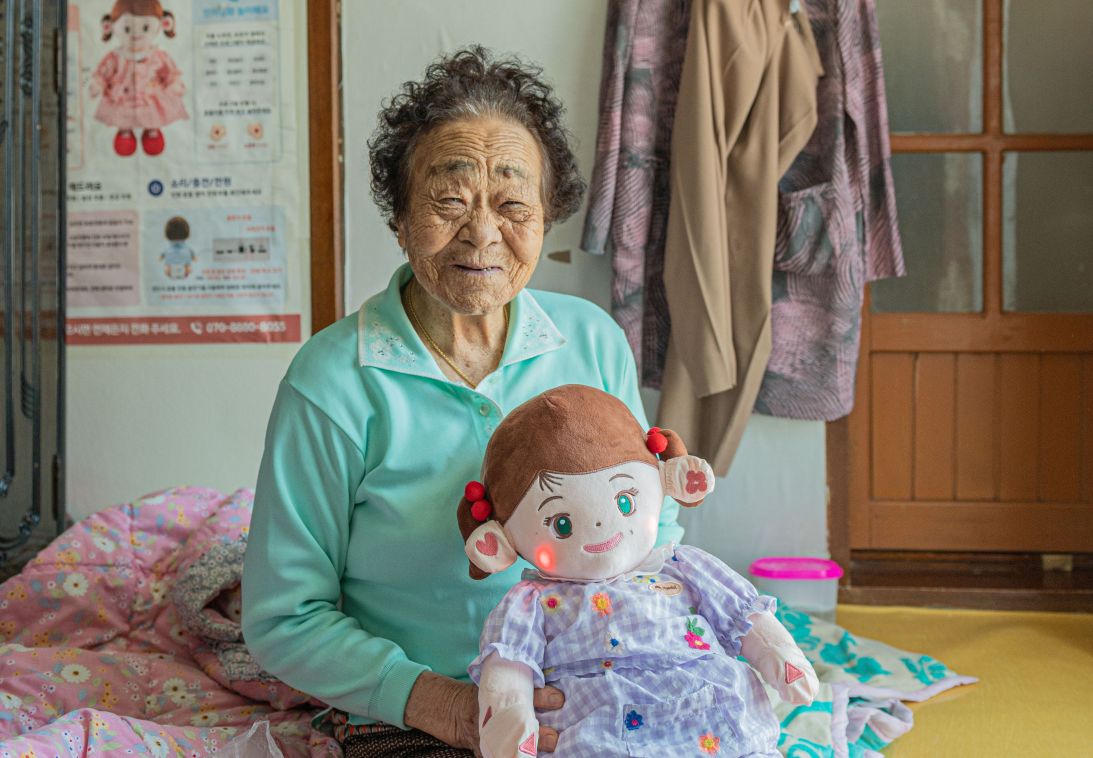
Korean seniors are facing an unprecedented plight: the country’s rapid economic transformation has triggered a fundamental shift in the nation’s traditional social fabric. “We now have fewer multigenerational households and less familial support, leaving one in three South Korean seniors to live alone,” Lee explains. “This isolation directly fosters financial strain, profound loneliness, and a feeling of being a burden, conditions that are directly linked to depression and suicide.”
As a strained public health system struggles to keep pace with this social shift, the South Korean government has increasingly turned to tech companies to address the “K-elderly crisis” and fill a critical gap in the social care workforce. This opened the door for companies like Hyodol, an AI health care and smart home platform centered on a doll-like robot given to elderly people who live alone. The doll-like robot is connected to a phone application and a web monitoring platform for family members or caregivers.
The system serves a dual purpose. The robot provides practical support, from medication reminders to emergency alerts, while also allowing social workers to log daily information like mealtimes remotely. But its biggest benefit may be emotional.
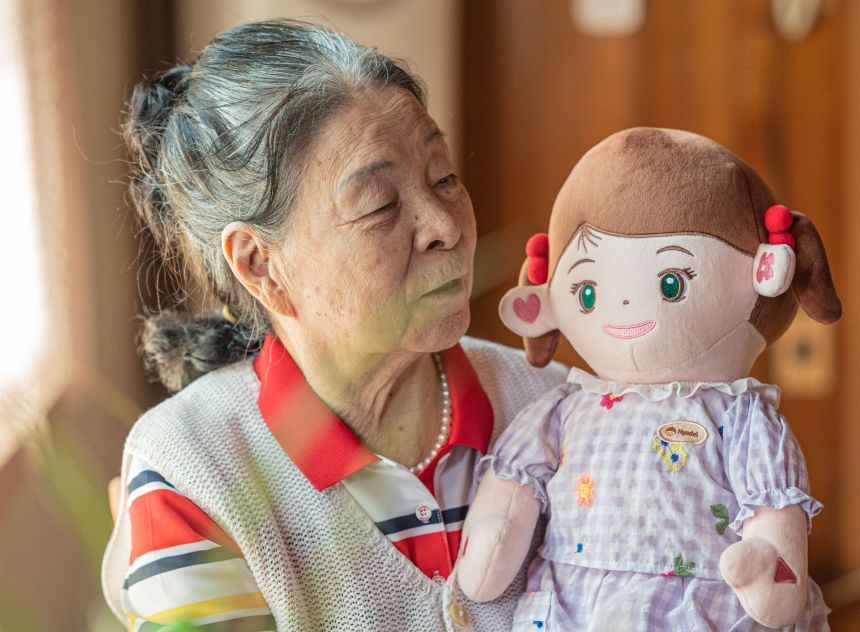
Designed as a 15-to-20-inch huggable soft doll, it responds to a touch on the head or the grasp of a hand. Its AI-powered chat, which speaks with the tone of a seven-year-old, provides music, conversation, and cognitive exercises. Yet, its most powerful feature may be the simplest: the greeting that awaits a senior returning to their home: “Grandma/Grandpa, I’ve been waiting for you all day long.”
“The cute and comforting design of Hyodol was fundamental to its effectiveness,” explains Hyodol CEO Jihee Kim. “The baby-like appearance makes it easier to build a bond and establish trust with the elderly. Its cuteness flattens the learning curve for them, who are often not very tech-savvy.”
As of November 2025, over 12,000 Hyodol robots have been deployed to elderly people living alone across South Korea, primarily distributed through government and public welfare programs. Kim adds that around 1,000 more have been purchased directly by families, with the latest model priced at 1.3 million won (approximately $879).
For one social worker, who asked to remain anonymous to speak freely about her experiences with the elderly, the robot’s benefits are worth the price. She recalls a “very depressed” elderly woman in her care who, before receiving a Hyodol, “would gaze out the window of her 11th-story balcony and contemplate jumping to her death,” she wrote by email. After the robot was introduced, the social worker said she observed a strong bond form, which significantly reduced the woman’s feelings of loneliness and hopelessness.
This isn’t an isolated case. In a 2024 study, Lee reported dozens of seniors giving their robots affectionate nicknames, buying them baby clothes, and tucking them in at night. She also noted that this growing affection correlates with improved mental health, citing a study she carried out on 69 older adults that showed users had reduced depression and improved cognitive scores after using Hyodol for six weeks. “We found that users with mild cognitive impairment who regularly used the robot could delay nursing home admission,” she concluded.
However, the profound attachments formed have also raised ethical questions about emotional dependency and potential infantilization; the use of a baby-like doll monitoring people’s actions and gestures has been perceived by experts and some seniors themselves as diminishing their dignity and autonomy. One case that stood out to Kim involved an elderly woman who named her Hyodol after her late daughter and subsequently withdrew from social life to spend nearly all her time with the robot.
“Hyodol isn’t for everyone,” Kim acknowledges, noting that it should be a support tool, not a replacement for human care. “Seniors who are more physically and mentally independent often perceive it as ‘noisy’ and ‘bothersome.’ That’s why the average age of our users is 82. It typically doesn’t appeal to those who are younger and more independent.”
While devices that collect medical data often raise concerns over privacy and security, Kim states that data is anonymized, with identifying details removed, and voice recordings are used only for internal training.
According to a 2020 study published in the Journal of Alzheimer’s disease, artificial companions are increasingly being used globally to support older adults with cognitive impairment. However, it noted that ethical guidelines had not kept pace with their rapid introduction, and that these technologies created potential challenges around informed consent and deception.
A different approach, one that doesn’t humanize its companion robot, has thrived in Japan, another leader in companion robotics. There, PARO, a therapeutic baby robot seal, has found success as a simpler, nonverbal companion, while retaining a soft, plushie design.
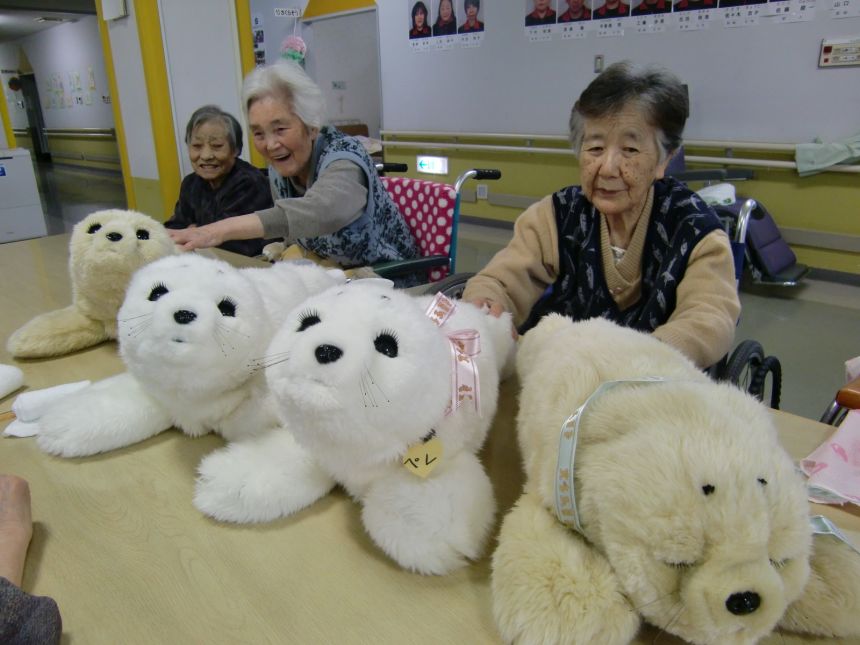
“People may feel verbal communication with robots is not secure, as there is a risk of the conversation being leaked to others,” explains its creator, professor Takanori Shibata by email to CNN. “But PARO, because he’s just like a therapy animal, feels safe for its users. It’s been found effective for the elderly with dementia, veterans with PTSD, and children with developmental disorders,” he adds, noting its regular use improved symptoms of anxiety, depression, and agitation.
Today, the PARO robot companion is used in more than 30 countries, from Japan to Denmark, and a similar global expansion is already underway for Hyodol. The Korean company is now adapting its AI to different cultural nuances as it prepares to enter the broader market, with a commercial launch planned for 2026.
Whether a chatty Korean “grandchild” or a therapeutic seal, such AI-powered companions may become more familiar: The global eldercare robot market is projected to hit $7.7 billion by 2030.