
Of all the organs in the human body, there is none more abused and unappreciated than the brain. This is the organ that is the “command centre,” that controls heartbeat, breathing, body temperature regulation, not to mention movement, coordination, consciousness, speech, memory and emotion. It is the only organ in the body that cannot be replaced.
And yet, we treat ours like they are indestructible.
If the brain were to write a memoir, I think it would be called “You Did What?” and would be a catalogue of all the bizarre and damaging ways we take it for granted.
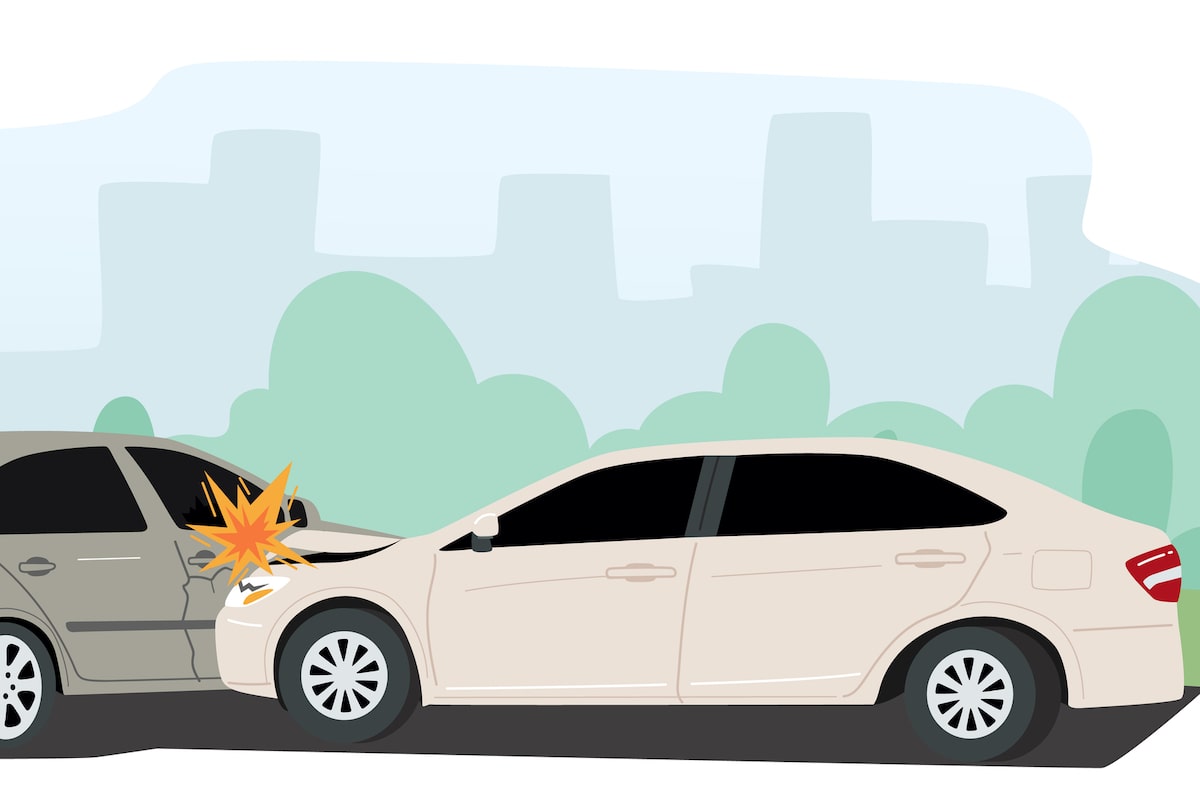
Which brings us to an important study out of Sunnybrook Health Sciences Centre in Toronto that examines the relationship between traffic collisions and concussions. Led by senior scientist and physician in general internal medicine Donald Redelmeier, the study suggests there is a significant increase in the risk of a motor vehicle crash after a concussion.
Dr. Redelmeier and his team found the risk was substantially higher in the first month following injury. Concussions can affect memory, judgment, reflexes, speech, balance and muscle coordination and lead to long-term cognitive and emotional problems. The risk of traffic collision increased by 500 per cent in the month following a concussion and by 50 per cent in the five years following a concussion. Dr. Redelmeier, who has done extensive work related to driving, was inspired to pursue this research by his work in Sunnybrook’s trauma unit.
“I once saw the same patient twice in the same month for two separate concussions,” he said during an interview. “I began to wonder if it was more than a coincidence.”
Researchers performed a population-based longitudinal cohort analysis, a type of research that reveals patterns that only emerge over time. They identified 3,037,028 patients in Ontario between April 2002 and March 2022. Of these, 425,158 had suffered a concussion (the cohort) and 2,611,870 had suffered a sprained ankle (the control group). A total of 200,603 patients were injured in subsequent motor vehicle crashes. Patients who had previously suffered concussions were 50 per cent more likely to have been in a crash.
The heightened crash risk from a concussion was greater than the risk of well-known driving hazards such as sleep apnea and epilepsy. The study found that concussion patients were slightly younger, more likely to have prior mental health diagnoses and to have had previous emergency visits. Concussions were particularly associated with “high-acuity” crashes (most severe injuries), single-vehicle crashes (suggesting driver error rather than multi-car collisions) and late-night crashes.
“It may be that concussions impair the ability to avoid a crash, particularly one that is caused or set up by another driver,” said Dr. Redelmeier, who also attributed the greater risk to a lack of understanding of seriousness of symptoms and damage caused by experiencing a concussion.
“In so many of these movies, the hero gets knocked out and is cracking jokes and doing martial arts in the next scene. You are not Tom Cruise. If you have a concussion, you are not going to snap right out of it. Some patients, after one or two days, they are back at it [driving] with a vengeance. People should give it three or four weeks. It’s ironic, because that’s what they would do if they had a broken rib, but they take concussion more lightly because they feel as if they’re the same.”
Dr. Redelmeier believes the relationship between concussion and traffic collisions deserves more study. His research shows a direct connection between the two, but it recognizes that “correlation does not prove causality.” According to the study, “Factors that predispose patients to concussions may also predispose patients to a traffic crash … The prevailing risk after a concussion, therefore, underscores that some failures to stay out of harm’s way may reflect a general risk seeking attitude, a tendency to attribute fault to others or some other characteristic that leads to a crash that could have been avoided.”
At the very least, the study’s findings suggest that clinicians should warn concussion patients of the risks associated with driving after incurring a concussion. Those patients should take such warnings to heart. “The best thing for those who’ve suffered a concussion to do is be aware and take protective action,” said Dr. Redelmeier. “At the least, avoid high speeds, late-night driving and driving in poor weather conditions.”
In other words, “Use your brain.”
It sounds simple but when you examine the history of humanity you find that “using your brain” is a lot more difficult than it appears, especially when you stick someone behind a steering wheel. Remember, your brain is an organ so vital that if you didn’t have one you wouldn’t know you didn’t have one.
But that probably wouldn’t stop most of us from driving.