

Listen to this article
Estimated 4 minutes
The audio version of this article is generated by text-to-speech, a technology based on artificial intelligence.
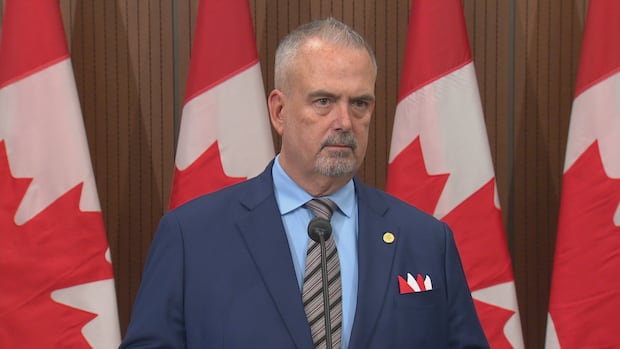
The head of ArcelorMittal Dofasco says he’s “very supportive” of the federal government’s latest push to support the steel sector.
“They’ve been very present in the steel mills across the country listening to the concerns right from the shop floor,” CEO Ron Bedard said of Canada’s leaders following a news conference Wednesday in which Prime Minister Mark Carney introduced new measures.
Carney announced a plan designed to support Canada’s steel and lumber sectors, which have been hurt by U.S. President Donald Trump’s tariffs.
The plan includes decreasing the amount of steel that can be imported from countries Canada doesn’t have free-trade agreements with at a low tariff rate. Carney said limiting foreign steel will increase demand for Canadian steel. He also said the government will make it easier to buy Canadian steel, in part by cutting freight rates for transporting Canadian steel interprovincially by 50 per cent come spring.
Trump placed 25 per cent tariffs on Canadian steel and aluminum in March, then doubled those tariffs to 50 per cent in June.
Maninder Sidhu, Minister of International Trade, spoke Friday at a news conference at the ArcelorMittal Dofasco plant where he said this has been “a challenging time” for steel producers and workers.
“U.S. tariffs and the uncertainty they create hit communities like Hamilton hard. They hit workers, suppliers, and the small businesses that rely on this entire ecosystem,” Sidhu said.
Sidhu, who was joined by Hamilton Centre MP Aslam Rana, Mayor Andrea Horwath and other officials, said the Carney government moved “quickly to protect [the steel] sector and create new opportunities that will last for decades to come.”
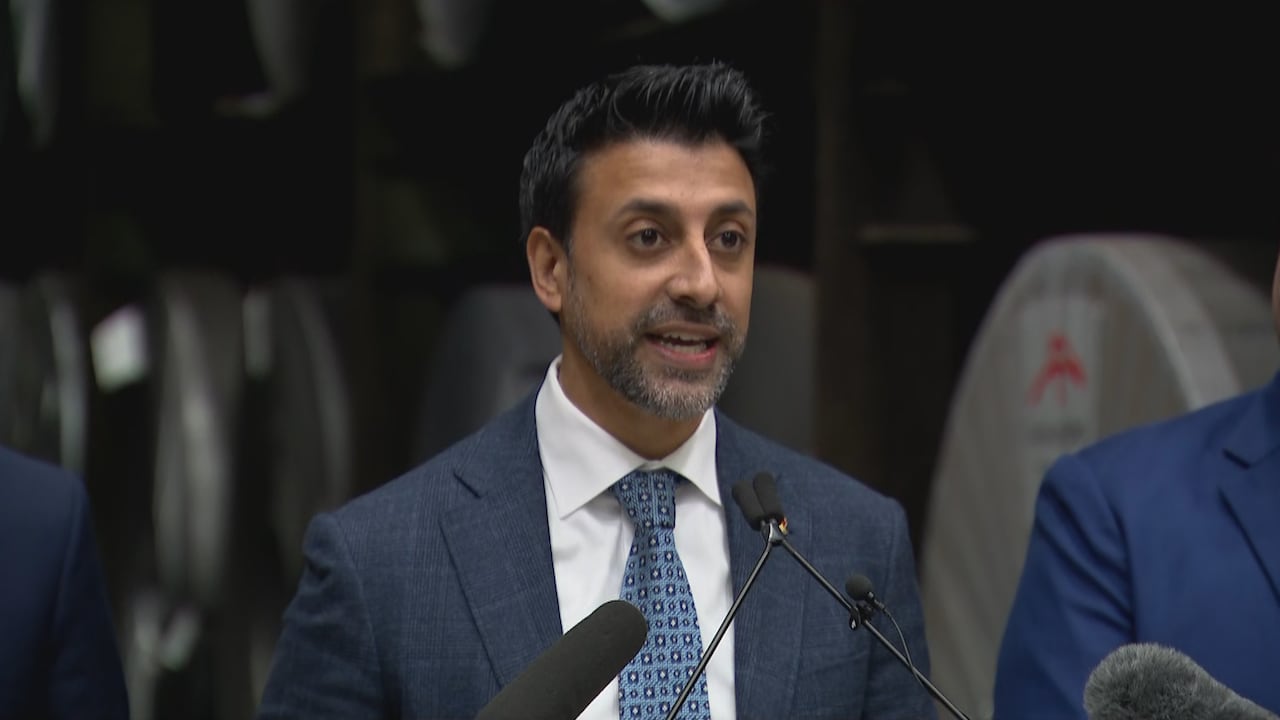 Maninder Sidhu, Minister of International Trade, speaking at a news conference at ArcelorMittal Dofasco in Hamilton on Friday, Nov. 28, 2025. (CBC)
The wellbeing of the steel sector has been of particular concern in Hamilton, which is home to major manufacturers including Stelco and ArcelorMittal Dofasco. According to local officials, about 10,000 Hamilton workers are directly employed by the industry.
“Hamilton families rely on the Canadian steel industry. With continued indifference by the Trump administration, our government is taking decisive action to protect the livelihood of Canadian steelworkers,” Hamilton West—Ancaster—Dundas MP John Paul Danko said in a news release Wednesday. “By standing up to unfair US tariffs and enhancing our domestic market, we’re protecting good jobs and securing a strong future for Hamilton families.”
WATCH | Prime Minister Mark Carney announces help for steel and lumber: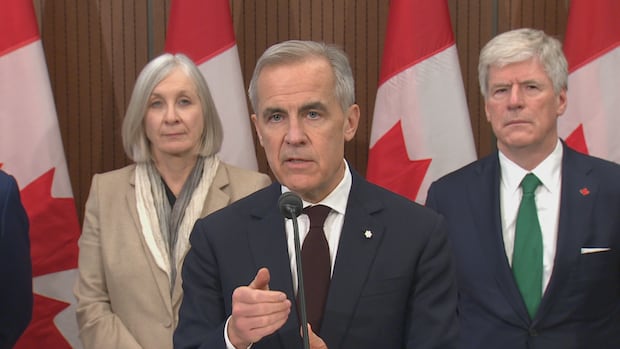
Carney announces supports for steel and lumber sectors hard hit by U.S. tariffs
Prime Minister Mark Carney announced new measures to help the steel and lumber sectors, aiming to limit foreign imports in order to increase domestic production and use. Carney said the new measures will empower Canadian workers and businesses to adapt to the new global landscape.
ArcelorMittal Dofasco’s website says it employs 4,500 people in Hamilton. On Wednesday, Bedard said the company has 10,000 workers overall and hasn’t laid off anyone because of tariffs.
Carney thanked Bedard, saying he’s, “leading one of Canada’s great steel companies” and helping the government design its support measures.
Bedard and his company appear to have been in close contact with Carney’s government as of late.
In July, Industry Minister Mélanie Joly visited Dofasco’s Hamilton plant, calling it the crown jewel of the manufacturing sector and saying she and Bedard were speaking daily about the trade war. In September, then-Transport Minister Chrystia Freeland attended a private meeting at ArcelorMittal Dofasco in Hamilton about building Canadian ferries and rail infrastructure.
Government has been listening, industry leader says
Keanin Loomis, who leads the Canadian Institute of Steel Construction and used to lead Hamilton’s chamber of commerce, said the announcement shows the federal government has been listening to leaders in the steel sector.
Throughout the trade war, he said, there’s been open dialogue resulting in better policies to support the industry.
For example, Loomis said, the changes to tariff rates announced Wednesday are based on data that comes from the sector.
Now, Loomis said, the key will be to manage the impacts of changes. If demand increases for Canadian steel, he said, projects that rely on cheaper foreign steel could be at risk.
“There’s a lot to be worked out,” he said, but generally the federal government “is doing what industry is asking for them to do [and] that’s obviously going to work to the benefit of communities like Hamilton.”