
The high-stakes antitrust battle between 23XI Racing, Front Row Motorsports (FRM), and NASCAR is finally headed to federal court. The trial is scheduled to begin on December 1 and is expected to last 10 days, marking the most significant legal confrontation the sport has faced in decades.
What started as a charter dispute has evolved into a case with the potential to reshape the financial and structural foundation of NASCAR itself.
How Could 23XI Racing and Front Row Motorsports’ Lawsuit Redefine NASCAR Business Structure
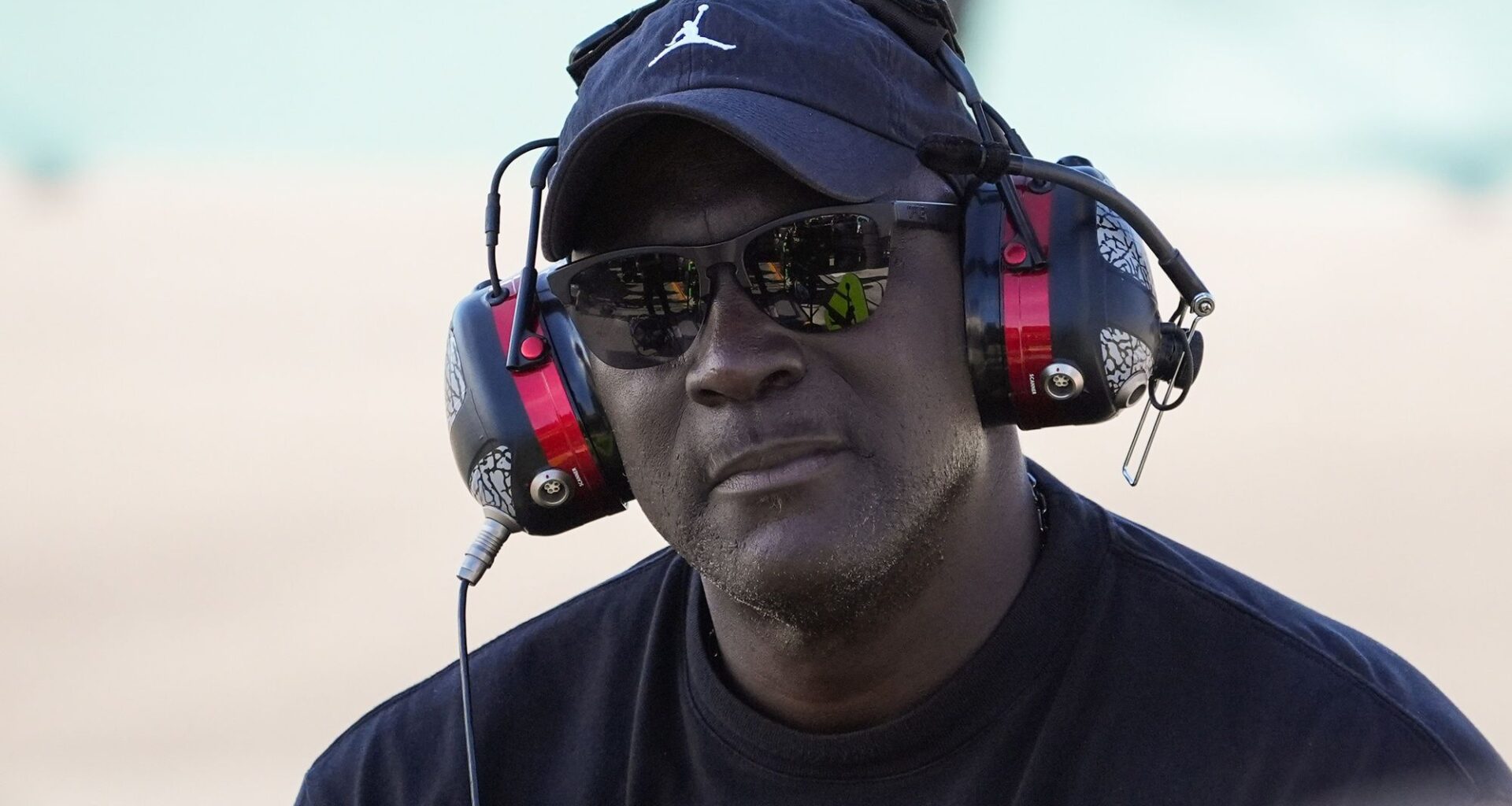
The lawsuit was filed by 23XI, co-owned by Michael Jordan, Denny Hamlin, and Curtis Polk, as well as Front Row, owned by Bob Jenkins. Their complaint targets NASCAR, overseen by Jim France, Lesa France Kennedy, and members of the France family.
At the core of the dispute is the teams’ refusal to sign NASCAR’s 2025–31 charter agreement after not receiving the protections they sought. Instead, they opted to sue under antitrust law, arguing that NASCAR maintains an anti-competitive system that forces teams into an economically unsustainable business model.
According to 23XI and FRM, NASCAR can exert control because it owns most major racetracks and requires exclusivity from the ones it doesn’t own. They argue that charter teams are bound by exclusivity clauses that prevent them from participating in competing series, while the mandatory use of single-source Next Gen parts imposes high fixed costs that cannot be offset.
In their view, NASCAR’s monopolistic control over venues, parts, and competition rules prevents rival leagues from forming, thereby giving the sanctioning body unchecked market power.
NASCAR disputes these claims, insisting it has not violated antitrust law. The organization maintains that its practices are standard for major sporting entities and that it does provide teams with a path to economic stability.
NASCAR points to increased charter payouts in the proposed 2025–31 agreement as evidence that it is not acting anti-competitively. It also notes the option for teams to run as open entries, free from exclusivity clauses, a change introduced during the course of the lawsuit.
What Outcome Can Be Expected and How Will It Impact Some Teams Survive?
A settlement remains possible at virtually any point during, before, or even after the trial, while the matter is under appeal. In terms of witnesses, neither side has yet made its list public, leaving uncertainty about who may testify.
The trial itself will unfold without the presence of cameras. Federal court rules prohibit televised coverage, and reporters are required to leave their cell phones outside the courtroom.
As the trial begins, the burden of proof rests entirely with the teams. They must convince the jury by a preponderance of the evidence that NASCAR’s actions violate antitrust law. If the jury rules in favor of 23XI and FRM, it will also be responsible for calculating monetary damages.
As reported by veteran insider Bob Pockrass, the amount could range from $1 to more than $300,000, covering only the past four years. The judge could then choose to triple those damages under federal antitrust provisions.
A victory for NASCAR would be devastating for the plaintiffs. Without charters, 23XI and Front Row Motorsports could continue operating as open entries, a financially untenable position. Pockrass believes they would likely shut down by the end of the 2026 season, if not sooner.
Regardless of which side wins, an appeal is almost certain to follow. Any appeal can only be made after the trial concludes.