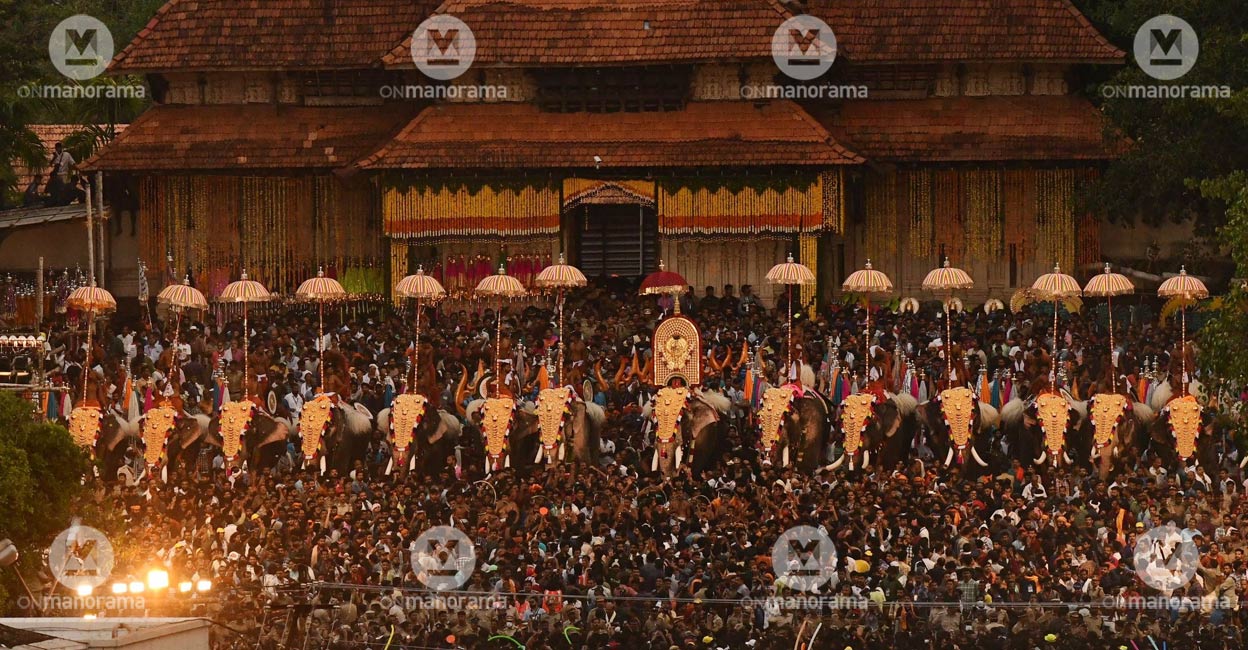
For the faithful mass in Kerala, the elephant is the Rolls-Royce or the Bugatti or the Mercedes. They want their gods and goddesses to cruise only on the tall, sturdy back of the tusked giant.
But is the elephant happy about being the God’s preferred limousine was the counter question that was hurled on Friday at the Manorama Hortus session ‘Are Elephants Necessary for Poorams”.
“Ancient texts like Bhargava Thanthram say that deities should be taken around only on elephants,” said Paramekkavu Devaswom president Rajesh Poduval. He said that other vehicles like chariots were not suited to the Kerala landscape filled with rivers, lakes and mountains.
Unwittingly, he also said that the ritual elephant ride was a remnant of the oppressive caste system. “There was a time when not everyone were allowed into temples. So on special days, the gods go out to meet them. And it is important that the deities are seated sufficiently high that everyone could see them,” Poduval said. Height, therefore, is the main attribute that makes this luxury brand of automobile called elephant seemingly so inevitable for temple rituals.
In a tone of defiance, Poduval said that the tradition of using elephants for pooram was part of ancient time-honoured rituals and would be persisted with.
Rajiv Menon Cherppu, who organises the Peruvanam-Arattupuzha pooram, like Poduval, wanted elephants to be used but admitted that the handling of these animals had weakened over the years. He said that a quarter century ago, the mahouts were over 50 and were mature and experienced. “Then the code among mahouts was ’80 words, 19 threats to strike and one smack’. Such was the restraint shown then,” Cherppu said.
He also said that the creative economy around the temple festivals would touch ₹1,000 crore in Kerala. “It is mostly the sellers of balloons and other toys, ‘vadyam’ instruments, and decorations like ‘nettipattom’ who gain from these festivals,” Cherppu said.
Journalist and green activist Manuja Mythri said that rituals were not ironclad. “Once upon a time, human sacrifice was a ritual. Then it became an animal sacrifice. It is foolish to say that elephants are required to save culture,” Mythri said. A person from the audience said that the long-held ritual of ‘poorappattu’ had now been stopped.
Mythri said that elephants have no sweat glands and therefore, could not stand under the sun for long hours. “They find the heat unbearable. When they vigorously flap their ears during ‘pooram’ festivities, don’t be under the impression that they are enjoying ‘panchavadyam’. These poor things are desperately fanning themselves,” Mythri said.
Then came the poser. “Has anyone asked whether the elephant enjoys standing in the sun for hours on end? We know what we want, but have we ever asked what the elephant wants?”
Mythri said that the kind of food, particularly palm fronds, these elephants were provided as part of ‘sukhachikitsa’ were causing serious gastrointestinal problems for them.
She said the kind of love the faithful profess for the elephant was toxic. “Will you put in chains the person you love? Will you physically torture your lover? Will you let your lover stand in the burning sun endlessly?,” she said.