
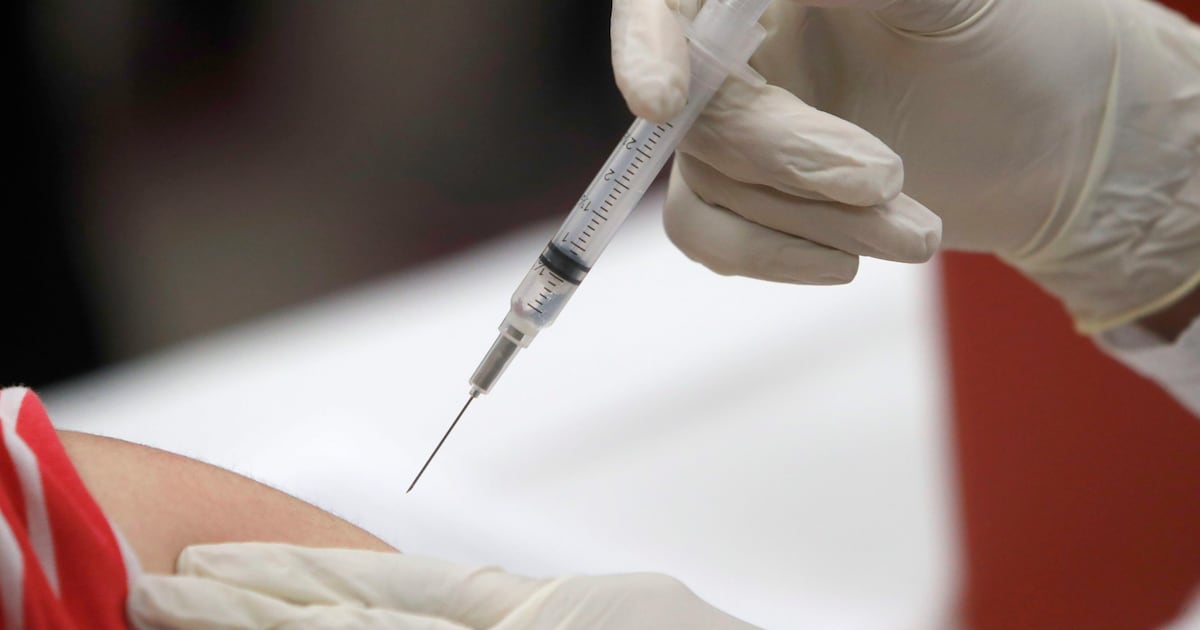
Sam Indrawes says he’s worried for his patients in need of flu shots this winter because he doesn’t have the supply needed to meet the demand.
Indrawes told CTV News Toronto on Friday that his pharmacy in Durham Region has run out of regular flu shot doses since October and it’s forcing him to turn patients away. He said he’s tried to get more from the Ontario Ministry of Health but to no avail.
“It really sad because we are trying to encourage people to get their vaccinations up to date, but with lack of supplies, we’re turning them away and just asking them to shop around for it,” he said. “I don’t understand why the government is making it so hard for pharmacies or doctors to ask or request whatever quantities they need.”
The Ontario Ministry of Health told CTV news Toronto on Friday that they identified an issue in the “distribution data that temporarily caused pharmacies to appear as though they had higher influenza inventory levels than they actually did.”
They added that ordering for those pharmacies was suspended to avoid possible wastage, but the issue has since been resolved. The government said pharmacies have been provided with the necessary information and are now able to place orders.
The Ontario Pharmacist Association and Indrawes both told CTV News Toronto on Friday that the problem exists beyond the temporary blip the government admitted to and that pharmacists have been dealing with a flawed vaccine distribution system.
“There’s no shortage of actual product. The challenge we have in pharmacy is a very convoluted and cumbersome vaccine ordering system,” Justin Bates, CEO of the Ontario Pharmacists Association, said.
“We think the way that public health has set this up is overly onerous and not flexible to meet the demands of patients going into pharmacies, and we would love to reform that ordering system.”
Bates explained the current “convoluted” system allocates vaccines at the beginning of the season based on historical trends of what the pharmacy has ordered and used in the previous season and its current stock, and that sets the maximum they are allowed to order weekly. He added that pharmacies are only able to order up to a certain amount once a week between Monday and Wednesday and the order arrives the following week.
Pharmacies that want to order more vaccines but still have supply from the previous order may be rejected and given a suspension notice, he said.
“Typically, they reject and suspend pharmacies from ordering when the system shows that they still have vaccine on hand. If you ordered 100 last week and you still have 50 on hand, then they would suspend you from ordering next week, because the system shows you still have vaccine,” he said.
If a pharmacy needs more shots, Bates added, they would need to make an exception order with the province.
“The override is supposed to be the exception process, so there is a mechanism available to get more vaccines, but it doesn’t aways work and is imperfect,” Bates said. “The way that the ministry has set this up to safeguard against wastage, and, I believe, has done this almost like an overcorrection or overengineered it.”
Indrawes said his issue began in October when he planned to run a clinic at a retirement home and needed 100 high-dose vaccines and submitted an order to the ministry. He said he was given a suspension notice instead for ordering more vaccines when he had not depleted his current stock of 30 high doses, which he had been saving for the retirement home.
“They wouldn’t send us any more even though I explained the situation. I gave them exactly the name of the home and how many doses I need, and obviously we didn’t receive any extra, and I ended up hiring a nursing organization to run a clinic,” he said.
“It’s just like getting full vaccines or additional shipments from the ministry is like pulling teeth … We’re first line here and they should make the rules a little bit more lenient with pharmacies in terms of reordering and getting additional stock.”
He added that even the doctor’s office next door to his pharmacy ran out of vaccines in early November and patients are being referred to his and other pharmacies. Indrawes said, at this point, he feels his hands are tied and does not know when he will get more shots.
Bates added that vaccine distribution to pharmacies should be like any other medication where pharmacies can make orders to the wholesalers as needed.
“We would like it changed so that it’s a more flexible ordering system from the government. So that they allow for basically on demand when I need it. That’s the ultimate goal,” he said. “We want to make sure that we get shots in arms and that we don’t turn patients away or not run clinics, because that means less people are getting vaccinated. That means people aren’t getting vaccinated and would potentially be getting the flu, and then the impacts of that, of course, could be severe, and the worst-case scenario could be death and or hospitalizations.”
Related Stories