
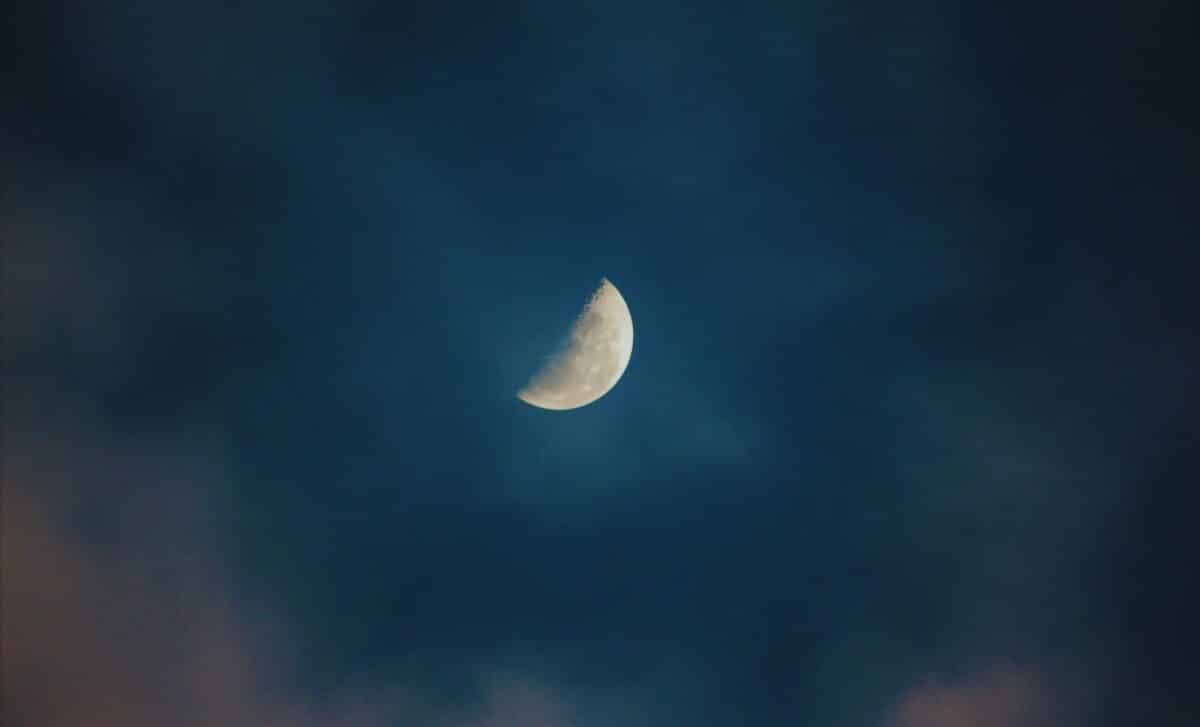
A half-lit Moon aligned with the constellation Aquarius and a bright Saturn stole the spotlight on November 27. The scene unfolded just after sunset, when Earth’s natural satellite reached its first quarter phase, glowing in contrast against the darkening sky.
This visually striking pairing drew attention for the ease with which it could be observed. No advanced equipment was needed, just clear skies, a view toward the southwest, and a bit of patience.
Rugged Shadows And Ancient Maria On Display
On November 27, observers were able to clearly distinguish the terminator line—the division between lunar day and night. According to Space.com, this area provided the best contrast for seeing craters and ridges along the Moon’s surface. With a basic pair of 10×50 binoculars or a modest telescope, viewers could explore a wealth of detail in the lower lunar hemisphere, where shadows enhanced the sense of depth and elevation.
Also, visible were the lunar maria, the darker, smoother patches known as “seas.” These are ancient basaltic plains, formed when lava flows filled large impact craters billions of years ago. Their contrast with the brighter highlands offered an unmistakable texture to the Moon’s face, one that even the naked eye could detect under favorable conditions.
Saturn’s Slim Rings Join The Scene
Adding to the lunar experience was the presence of Saturn, shining just above the position of Earth’s companion in the early evening sky. The gas giant, though far more distant, held its own in brightness. As highlighted in the same source, the ringed planet appeared near the stars of Pisces and could be easily spotted with the unaided eye.
Through a telescope, Saturn revealed its most iconic feature: the ring system, which is currently oriented edge-on from Earth’s perspective. This positioning makes the rings appear as a thin line. The effect, while subtle, marked a distinct contrast and added depth to the overall viewing experience.
Perfect Timing For Amateur Observation
The event took place under ideal viewing conditions—shortly after sunset, when the sky darkens, but the objects in question remain high enough above the horizon. This timing allowed a wide audience, from city dwellers to rural observers, to participate. The Moon and Saturn remained visible for several hours before setting.
This type of alignment is not rare in astronomical terms, but its accessibility—both in timing and in required equipment, made it stand out. While high-magnitude events often require early-morning hours or advanced tools, this scene invited people outdoors without much preparation.
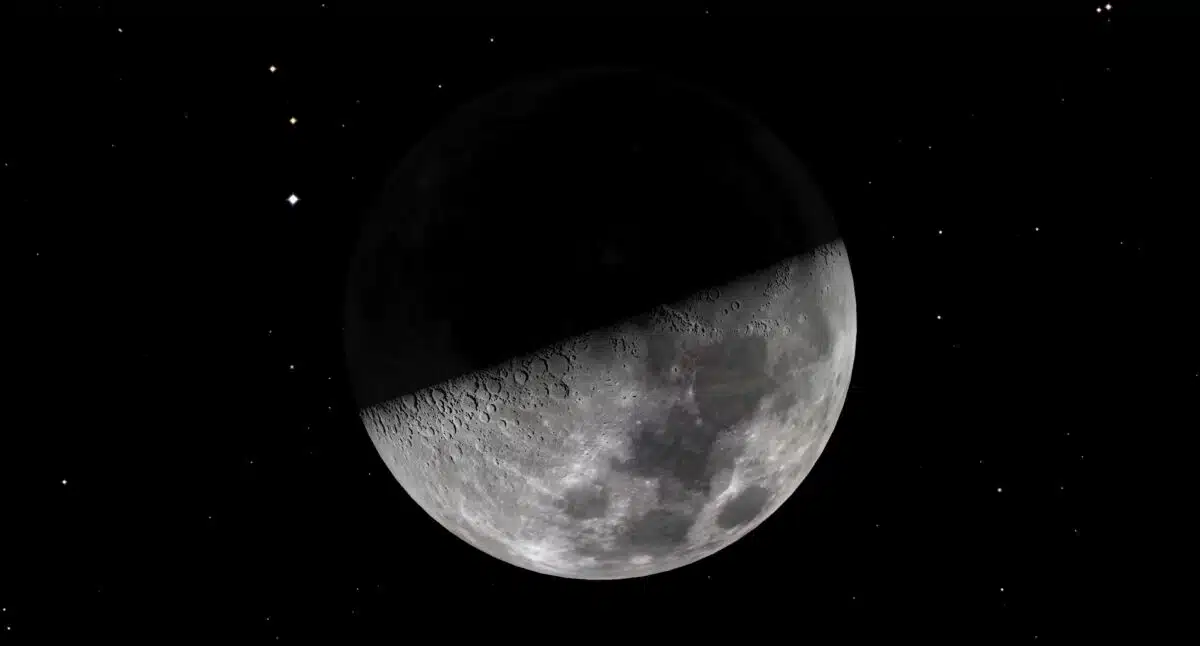 The first-quarter phase of the Moon occurs on Nov. 28. Credit: Chris Vaughan/Starry Night