
This article is an on-site version of our Moral Money newsletter. Premium subscribers can sign up here to get the newsletter delivered twice a week. Standard subscribers can upgrade to Premium here, or explore all FT newsletters.
Visit our Moral Money hub for all the latest ESG news, opinion and analysis from around the FT
Good morning — and after Belém where leaders again stressed the importance of tackling deforestation, Europe has offered a reminder of how difficult that ambition can be to translate into workable rules.
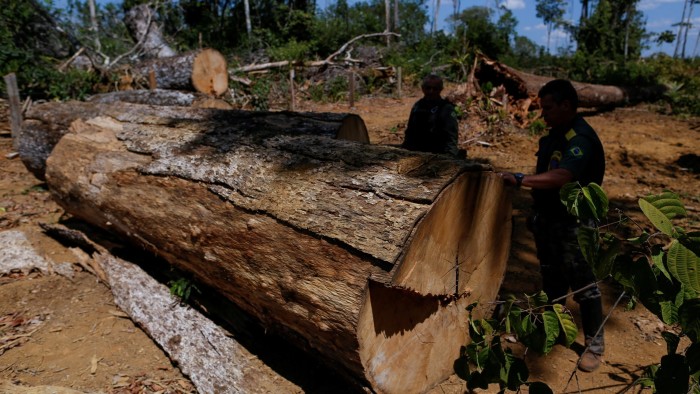
On Wednesday, the European parliament backed a one-year delay to the EU’s anti-deforestation regulation (EUDR), along with changes that ease several of its requirements. The shift doesn’t derail the law, but it does extend the period of uncertainty for companies that have been gearing up for a major tightening of supply-chain standards.
For readers who haven’t been following every twist of this, the EUDR is the EU’s bid to ensure that a wide range of imported commodities — including coffee, cocoa, soy, palm oil, beef and timber — aren’t linked to recently cleared forest. Its most distinctive feature is the requirement for precise geolocation data showing where each product originated. That would take the EU well beyond existing certification schemes, and many businesses have been preparing accordingly.
Those preparations are now on hold, or at least under review. Several traders and consumer goods groups have spent the past 18 months building new traceability systems, often at considerable cost. When I spoke to Francesco Tramontin of chocolate-maker Ferrero earlier this autumn, he warned that reopening the law risked setting off a political “free-for-all”, making it far harder for companies that had already invested to plan with confidence. This week’s flurry of amendments suggests that concern was not misplaced.
Environmental groups worry that the delay could weaken the political signal. The Nature Conservancy described the decision as a “blow to forests” and a missed opportunity for the EU to consolidate its position as a global leader on sustainable commodity trade. Earthsight, which has published investigations linking European supply chains to deforestation hotspots, warned that another year’s postponement risks leaving the door open to illegal production.
Investors, meanwhile, are weighing what the shift means for land-use risk. Some had viewed the EUDR as an important step towards reducing long-running opacity in agricultural supply chains — and a potential model for other major markets. While few expect the EU to abandon the core of the regulation, the extended timeline adds another variable to an already complex landscape.
One of the trickiest questions concerns the smallholder farmers who make up much of the global production base for the affected commodities. The EU’s aim was always to include them without imposing unreasonable burdens. Yet the longer the rules remain in flux, the harder it becomes for producers to judge what kind of investments — in mapping, record-keeping or monitoring — will actually be required. Some traders have begun prioritising suppliers with the most reliable data, regardless of the regulatory timetable, which risks deepening existing inequalities in market access.
The coming negotiations between EU institutions will determine how far the amendments go, and how closely the final framework resembles the ambitious version originally envisaged. The political direction of travel still points towards greater scrutiny of deforestation risk — but at a more gradual pace than many had expected.
For companies with significant exposure to forest-risk commodities, the task now is to decide how much momentum to maintain while Brussels works through its next round of compromises. With Brazil using the Belém talks to launch a new forest fund aimed at supporting producers and protecting ecosystems, the broader landscape of forest policy is shifting fast. I’ll be following how companies adapt to that wider picture.
Smart reads
Boardroom fears John Kerry says a surprising number of US chief executives have pulled back from green investment — not because they doubt the returns but because they fear political and legal retaliation under Donald Trump.
Pension pressure New York City’s comptroller has urged three major pension funds to pull a $42bn mandate from BlackRock, accusing the asset manager of failing to meet the city’s climate expectations. The move escalates a growing battle over how public pensions use their market power to push, or resist, climate action.
Recommended newsletters for you
The Climate Graphic: Explained — Understanding the most important climate data of the week. Sign up here
The AI Shift — John Burn-Murdoch and Sarah O’Connor dive into how AI is transforming the world of work. Sign up here