
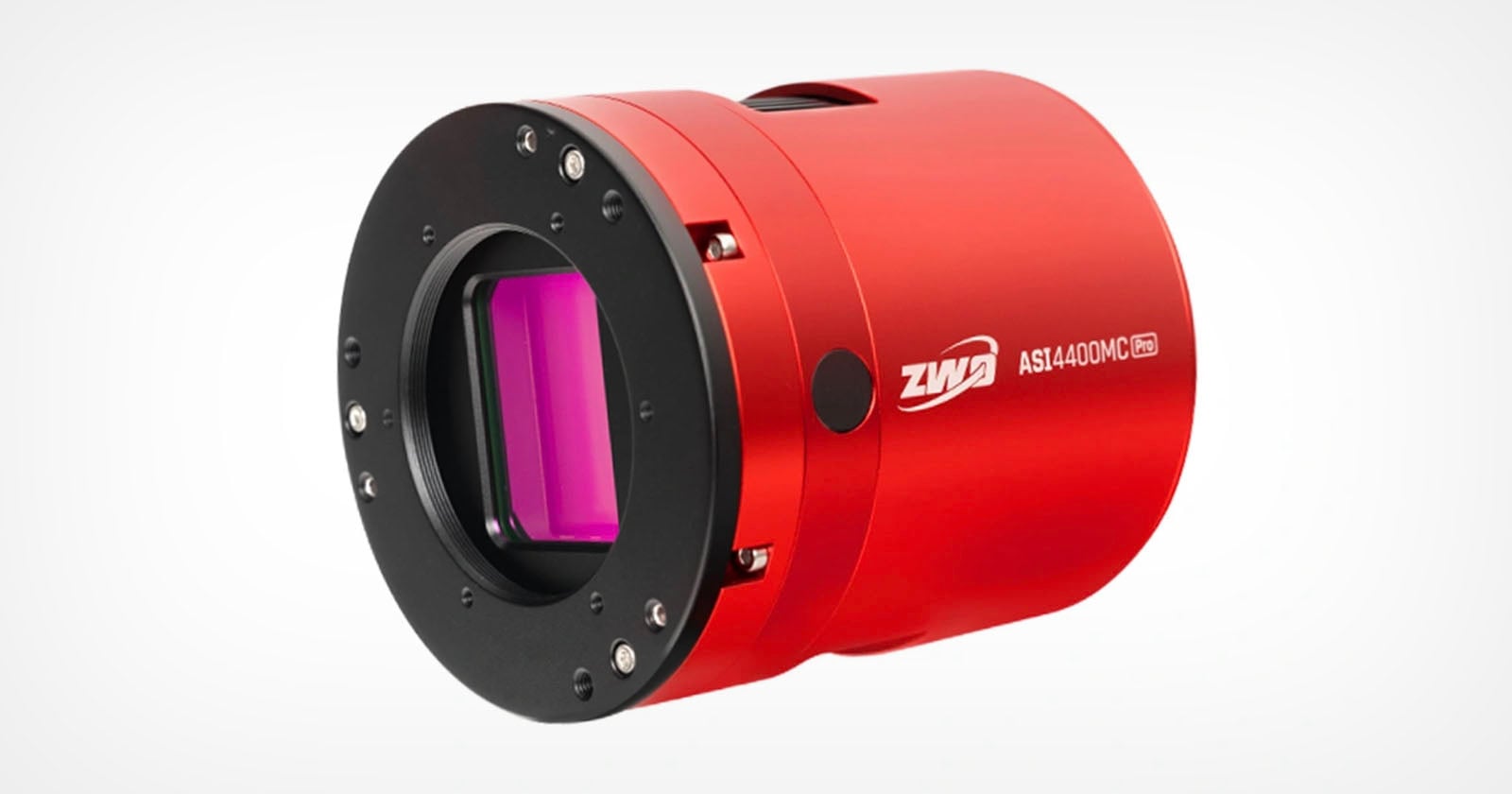
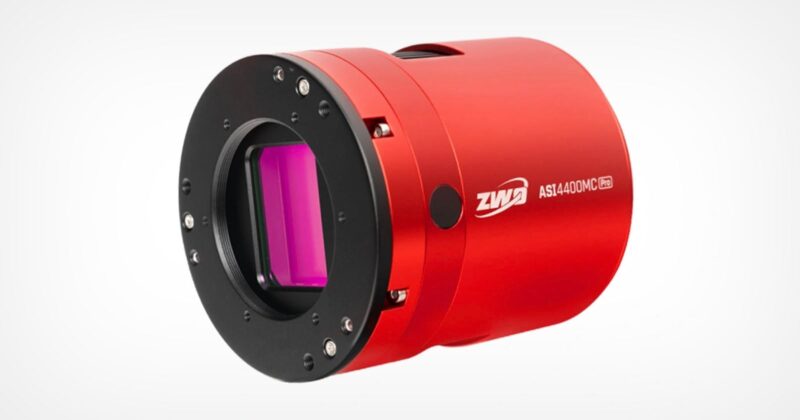
ZWO has announced a new 44-megapixel full-frame camera designed specifically for astrophotography, and its specs are impressive.
As reported by DIY Photography, the new ZWO ASI4400MC Pro is built for deep-sky astrophotography. To that end, it features a 44-megapixel back-illuminated full-frame Sony IMX366 image sensor, promising excellent detail and sensitivity.
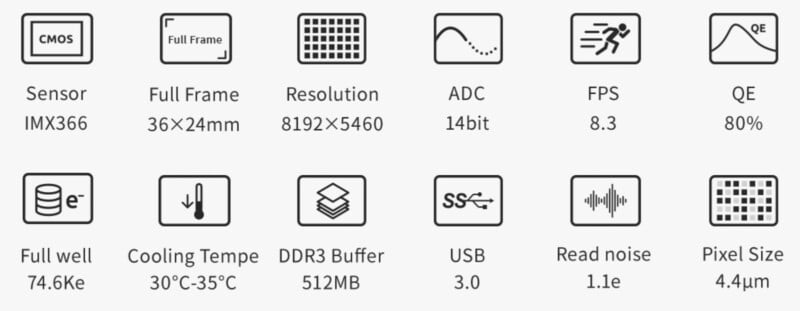
The image sensor has a 4.4µm pixel size, 1.1e read noise, and promises over 13 stops of dynamic range. ZWO notes that the sensor has a full well capacity of 74.6Ke (74,600 electrons) and an 80% quantum efficiency.
“The ASI4400MC Pro uses a full-frame, back-illuminated sensor measuring 36 × 24 mm with a 43.3 mm diagonal. With 44 megapixels and 4.4μm pixels, it delivers incredible resolution and light sensitivity in every shot. The full-frame format lets you capture the entire field your optics can deliver — no cropping, no lost edges — perfect for wide-field targets and large deep-sky objects,” ZWO says.
“Each pixel supports a full-well capacity of 74,600 electrons, providing exceptional dynamic range. Bright stars retain their natural color and detail, while faint nebula structures and galaxy arms remain beautifully visible. The result is cleaner, more balanced images with outstanding tonal depth across the frame,” the company continues.
ZWO notes that its new camera features the company’s proprietary Glow Suppression technology, which promises to control sensor glow and improve overall imaging performance. The camera also has a built-in high conversion gain mode that reduces read noise while maintaining full dynamic range.
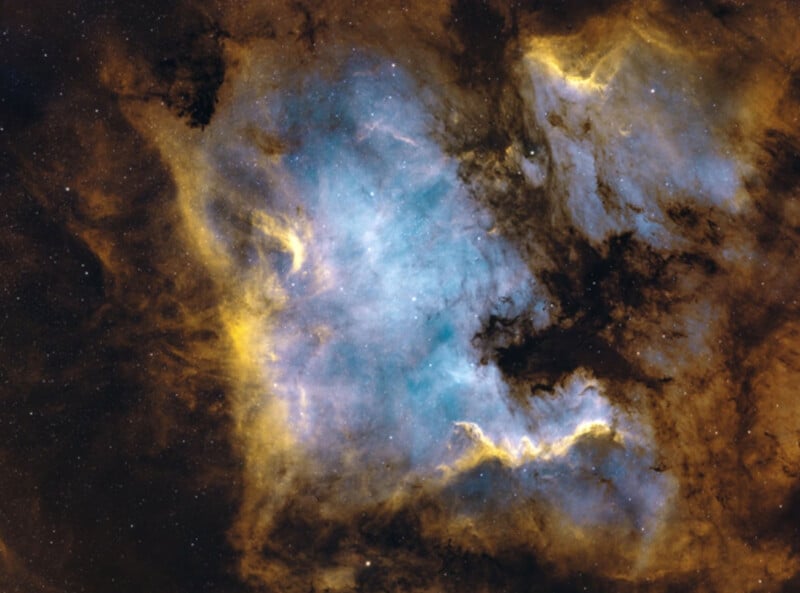 © Jose Serrato
 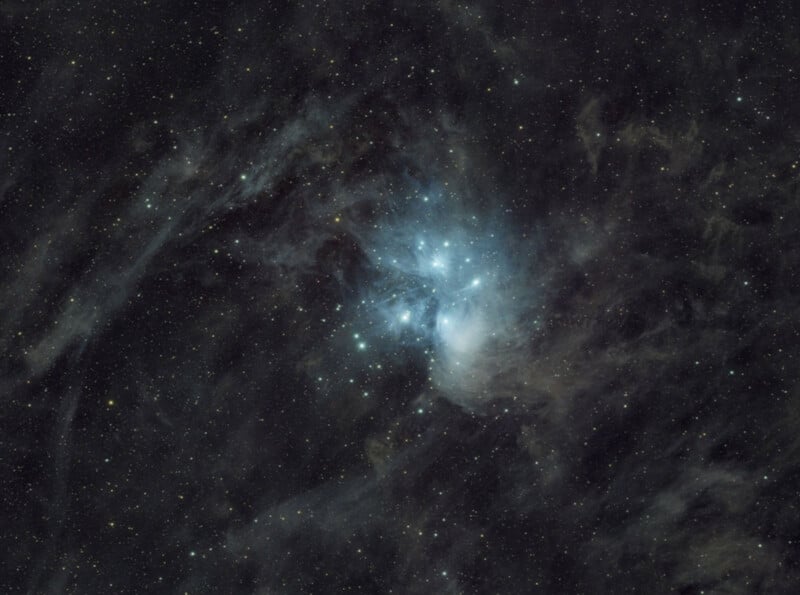 © Nico Carver (@ Nebula Photos)
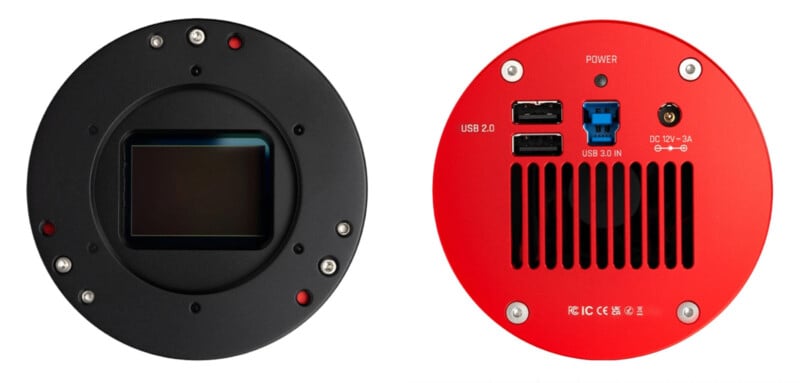
When doing long-term deep-sky astrophotography, controlling the image sensor temperature is vital. To that end, the ASI4400MC Pro has an advanced cooling system to keep thermal noise low for multi-minute exposures. The camera also includes sensor-tilt adjustment screws to fine-tune sensor alignment with a telescope’s optical axis, and a polyimide heater to prevent dew and frost buildup.
The camera has 512MB of DDR3 memory to handle the buffer and ensure smooth data transfer performance. The camera has a built-in USB 3 hub as its primary interface.
As a highly specialized tool, the ZWO ASI4400MC Pro does not come cheaply. The camera is $2,999 and will, of course, require separate optics and gear for optimal astrophotography performance, including a stable base and star tracker.
Photographers who are keen to get into deep-sky astrophotography should read PetaPixel‘s very in-depth article: “A Complete Guide to Deep-Sky Astrophotography.”
Image credits: ZWO. Real-world sample images by Nico Carver (Nebula Photos) and Jose Serrato.