
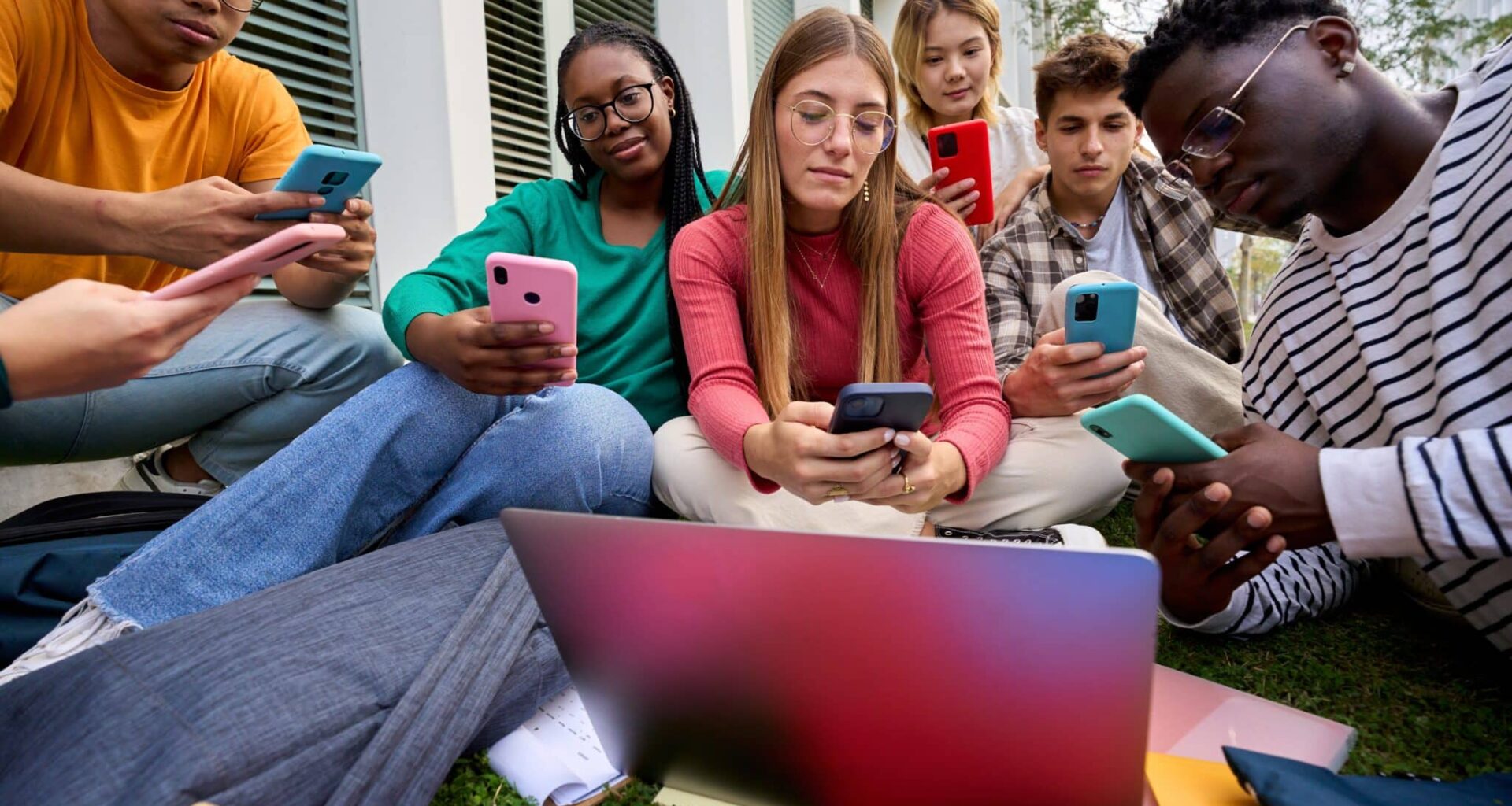

Where there’s a will, there’s a way…to keep scrolling. (Credit: CarlosBarquero)
In A Nutshell
What happened: Researchers tracked 295 young adults who quit Facebook, Instagram, Snapchat, TikTok, and X for one week, monitoring their phones to see what they did instead.
Key findings:
Participants cut social media use by about 9 hours per week but increased overall screen time by 15 seconds daily and spent 43 extra minutes at home each day
Depression dropped 25%, anxiety fell 16%, and insomnia decreased 14% during the detox week, but loneliness didn’t improve
Instagram (68% kept using it) and Snapchat (49%) were hardest to quit, while TikTok, Facebook, and X were easier to avoid
Self-reported problematic behaviors like comparing yourself to others predicted mental health issues better than total screen time did
Young adults who quit social media for a week didn’t swap scrolling for hiking or reading. They simply found other ways to stay on their phones.
A study tracking 295 participants aged 18 to 24 found that taking a break from Facebook, Instagram, Snapchat, TikTok, and X led to small increases in overall phone use. Screen time crept up by roughly 15 seconds per day, and participants spent an extra 43 minutes daily at home compared to their baseline habits. Simply removing social media apps doesn’t automatically translate into healthier digital behavior or more time spent outdoors, according to the findings.
Researchers at Beth Israel Deaconess Medical Center tracked participants’ phones through passive monitoring in a study published in JAMA Network Open, capturing exact usage patterns rather than relying on memory-based estimates. The findings challenge the common assumption that a digital detox naturally leads to more offline activities.
Instagram and Snapchat Proved Hardest to Quit
Researchers recruited 373 young adults through a national registry between March 2024 and March 2025. After two weeks of observation to establish baseline habits, 295 participants volunteered for a one-week social media detox. Most succeeded in cutting their social media time from an average of 1.9 hours daily to just 0.5 hours — a reduction of about 9 hours per week.
But the phones didn’t go down. Daily screen duration across all apps increased, even if only slightly. Time spent at home also rose, though the researchers noted these changes were small compared to how much participants’ daily routines naturally varied. One person might spend 347 extra minutes at home one day compared to another, making the 43-minute average increase less dramatic in context.
Not all platforms proved equally difficult to abandon. About 68% of participants continued using Instagram during the detox period, and 49% kept opening Snapchat. By contrast, about 64% reduced their TikTok use. Facebook and X had the highest compliance rates at 73% and 82% respectively.
The pattern hints at why certain apps grip young adults more tightly. Instagram and Snapchat both emphasize direct communication with friends and maintaining streaks or ongoing conversations. TikTok offers more passive entertainment that’s easier to replace with other content.
 Instagram proved to be the toughest social media platform to temporarily quit. (Photo by energepic.com from Pexels)
Mental Health Improved Despite Minimal Lifestyle Changes
The study couldn’t determine exactly what filled the void left by reduced social media time. Participants might have turned to streaming services, mobile games, texting, or other non-social media apps. The research team tracked communication patterns, sleep-related behaviors through phone activity, and physical movement through GPS data but found no other major behavioral shifts during the detox week.
Despite the lack of major lifestyle changes, participants still saw mental health improvements. Symptoms of depression dropped 25%, anxiety fell 16%, and insomnia decreased 14% during the week-long break. The gains were most pronounced among people who started the study with moderately severe depression.
Loneliness didn’t improve at all, a finding that highlights social media’s genuine role in maintaining connections. When people cut themselves off from platforms where friends and family interact, they may lose access to social support even as other mental health symptoms ease.
The gap between mental health gains and minimal behavioral change points to improvements coming from reduced harmful engagement patterns rather than from spending less time on devices. Earlier in the study, researchers found that self-reported problematic behaviors like constantly comparing yourself to others or feeling addicted to social media predicted worse mental health far better than raw screen time numbers.
Digital Detox May Not Be So Powerful After All
Prior research on social media and mental health has produced conflicting results, partly because studies typically asked people to estimate their own usage—a method known to be wildly inaccurate. This study instead used smartphone sensors to track actual behavior minute by minute, combined with daily check-ins about mood and functioning.

Young adults may not have been able to look away from their phones for long, but getting away from social media did appear to improve mental health. (Credit: Andrii Nekrasov on Shutterstock)
The research team collected data on how far participants traveled each day, how many texts and calls they made, when their screens lit up, and how long they stayed in one location. This approach revealed that even when social media use dropped sharply, daily routines showed enormous variation. Someone might take 6,500 steps one day and 11,000 the next, making it hard to pin down whether a detox truly altered activity levels.
The study’s participants were predominantly female (74%), college students (77%), and iPhone users (90%), which limits how well the findings apply to other groups. Most reported minimal depression and anxiety at the start, though many still benefited from the break. The research also lacked a control group that didn’t attempt a detox, so some improvements could reflect natural fluctuations in mood or participants’ expectations about feeling better.
Public health campaigns often tell young people to reduce screen time as if the number of hours alone determines mental health outcomes. This study adds to growing evidence that the story is more complicated. Two people might spend identical time on social media but have completely different experiences—one passively watching cooking videos, the other spiraling through comparison posts about classmates’ seemingly perfect lives.
The research also challenges the assumption that a digital detox automatically leads to a renaissance of face-to-face socializing and outdoor activities. Without deliberate plans to fill the time, participants simply shifted their attention to other digital offerings and spent slightly more time at home.
The study didn’t follow participants beyond the one-week mark, leaving open whether the mental health benefits lasted or faded once people returned to their regular social media routines. Short-term breaks might offer temporary relief without addressing the underlying patterns that make social media use problematic in the first place. For young adults considering their own detox, the findings show that deleting apps won’t automatically solve the puzzle of how to spend time more meaningfully.
Disclaimer: This article summarizes findings from a peer-reviewed study. Anyone concerned about their mental health should consult with a qualified healthcare provider rather than relying solely on information in this article.
Paper Summary
Study Limitations
The research has several important constraints. The sample consisted primarily of female college students with iPhones, which limits applicability to other populations. All mental health and problematic use measures relied on self-reports, which can introduce bias. Participants could reset their phone usage counters or use social media on alternate devices, potentially undermining adherence measurements. The study lacked a randomized control group, making it impossible to definitively attribute mental health improvements to the detox rather than to natural mood fluctuations or expectation effects. Passive sensing data had gaps, with only 59% of behavioral data points successfully collected. The researchers addressed missing data through statistical imputation, assuming data were missing randomly, though this assumption may not hold if people experiencing mood changes were more likely to turn off sensors or let phone batteries die. The study included no follow-up period to assess whether benefits persisted after participants resumed social media use.
Funding and Disclosures
The McChord Foundation provided funding for this research. Dr. John Torous reported receiving research support from Otsuka and personal fees from Boehringer Ingelheim outside the submitted work. No other authors disclosed financial conflicts of interest. The funder played no role in study design, data collection, analysis, interpretation, manuscript preparation, or the decision to submit for publication.
Publication Details
Authors: Elombe Calvert, MBBS; Maddalena Cipriani, BS; Bridget Dwyer, BS; Victoria Lisowski, BS; Jane Mikkelson, BA; Kelly Chen, MS; Matthew Flathers, BA; Christine Hau, MS; Winna Xia, MS; Juan Castillo, MA; Alex Dhima, BS; Sean Ryan, MS; John Torous, MD, MBI
Affiliations: Department of Psychiatry, Beth Israel Deaconess Medical Center, Boston, Massachusetts; Department of Psychology, University of Bath, Bath, United Kingdom
Title: Social Media Detox and Youth Mental Health Journal: JAMA Network Open Publication Date: November 24, 2025 DOI: 10.1001/jamanetworkopen.2025.45245
Study Design: Remote prospective cohort study with voluntary intervention Study Period: March 2024 to March 2025