
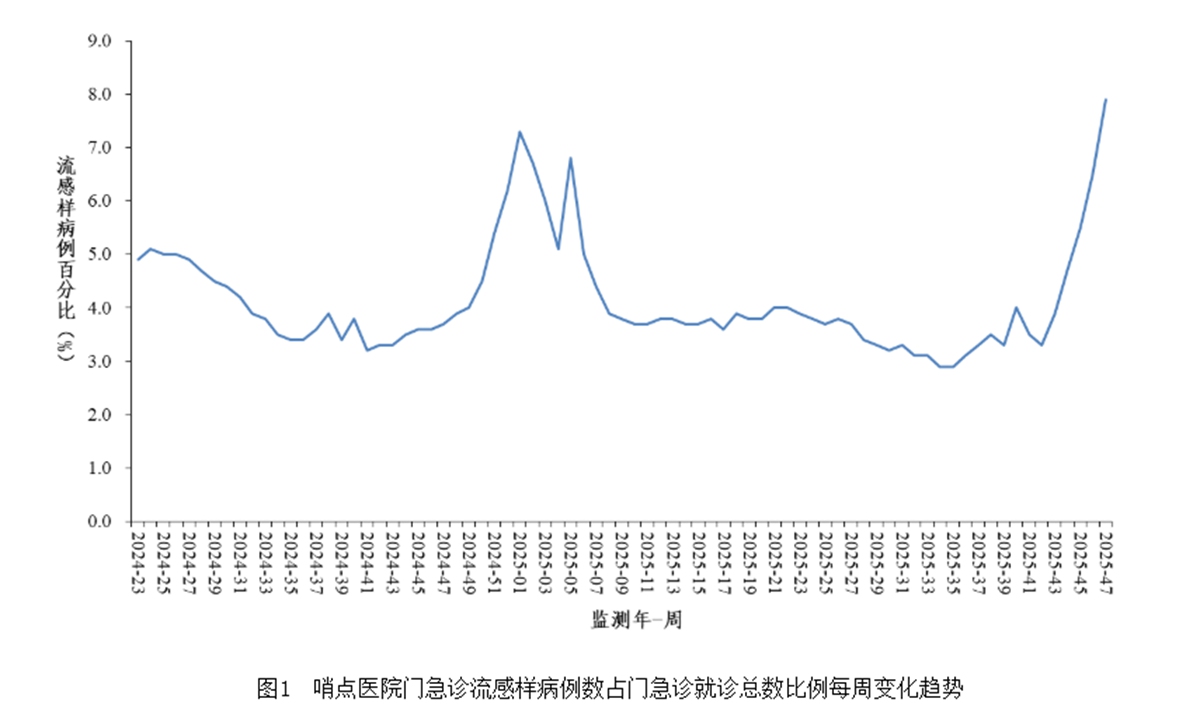
Weekly trend in influenza-like illness visits as a proportion of total outpatient and emergency cases at sentinel hospitals. Photo: Screenshot from the China Center for Disease Control and Prevention (China CDC)
The China Center for Disease Control and Prevention (China CDC) reported on Thursday that the influenza positivity rate among influenza-like illness outpatient and emergency cases nationwide has approached 45 percent. Overall, this indicates a moderate level of influenza activity, although some provinces have reached a high level, according to the report. Experts predicted the influenza season would peak in December and subside by early January.
To address public concerns over the peak period, clinical features, medication options and protective measures related to the current influenza wave, a reporter from People’s Daily Health interviewed Li Tongzeng, chief physician of the infection department at Beijing You’an Hospital affiliated with Capital Medical University, on Saturday.
Li said influenza activity is rising rapidly in both northern and southern regions. At the current pace, some provinces are expected to see the influenza peak in mid-December, while most will likely peak in late December. By early January, national influenza activity may begin to decline.
Li added that this wave is mainly driven by the influenza A (H3N2), and shows three notable features regarding symptoms, severity, testing and treatment.
First, most current cases are concentrated among adolescents. The latest report shows that school-based cluster outbreaks continue to increase, and the positivity rate in the 5-14 age group is significantly higher than in other age groups. Children generally have lower immunity to influenza, Li said, noting that the high density of classrooms, coupled with reduced outdoor activities in winter, increases the likelihood of cluster transmission.
Second, infections are gradually spreading from primary and secondary school students to university students and office workers, and may eventually reach middle-aged and elderly groups. Li stressed that elderly people, who often have fewer social interactions, may become infected later in the peak period by younger family members who have already contracted the virus. For elderly individuals with underlying health conditions, the risk of developing severe illness requiring hospitalization increases sharply after influenza infection. Vaccination remains the most effective preventive measure for middle-aged and elderly groups. The optimal vaccination period is from autumn through early winter each year; however, those who miss this period should still get vaccinated as soon as possible, particularly in areas where influenza activity has already surged. Timely vaccination can significantly reduce infection risk and the likelihood of severe illness.
Third, a wider range of antiviral medications is now available. Besides Oseltamivir and Baloxavir Marboxil, this year also saw the introduction of Baloxavir Marboxil for Suspension suitable for children aged 5-12. Several domestically developed antivirals—including Onradivir, Suraxavir Marboxil, and Favipiravir—have also been launched and are available from pharmacies and online. Patients should choose among these options in consultation with a healthcare professional, based on their individual circumstances.
For daily prevention, Li emphasized that traditional protective measures remain effective, including wearing masks, frequent handwashing, maintaining indoor ventilation and reducing visits to crowded public places. These simple actions can significantly reduce virus transmission and the risk of infection, and are recommended as daily habits.
Global Times