
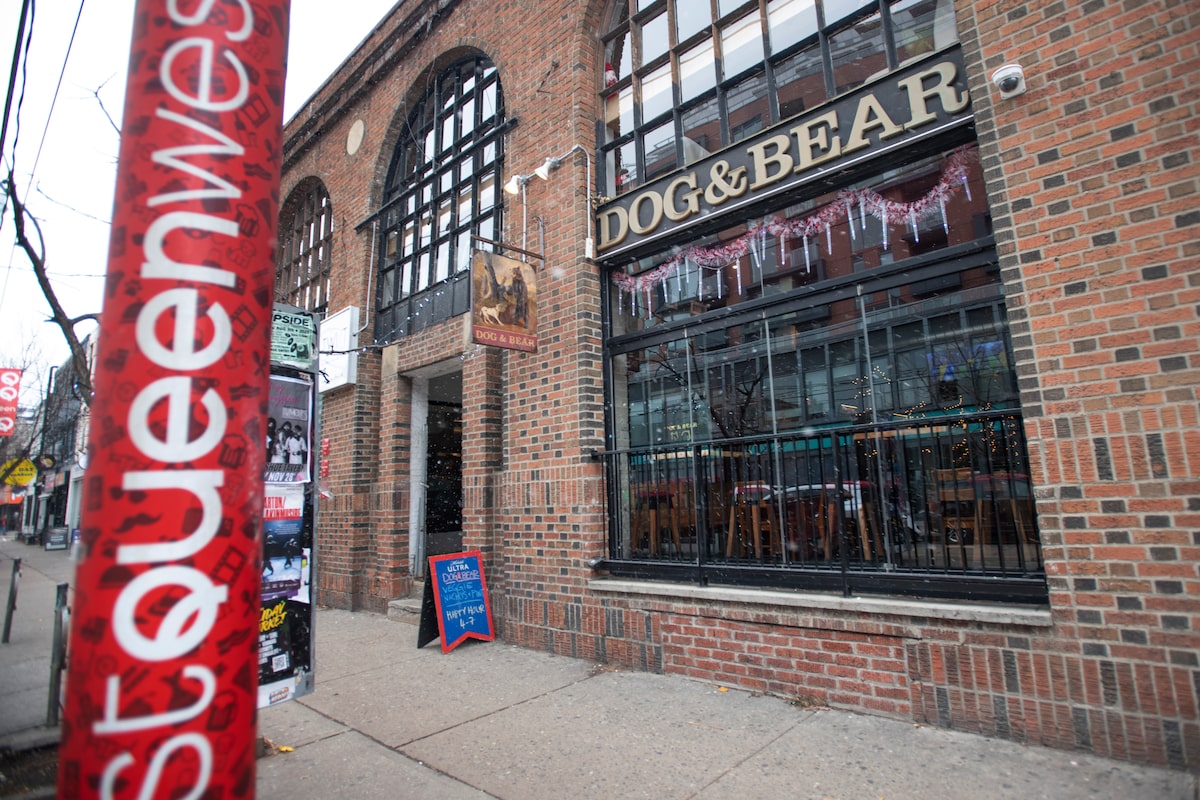
When the FIFA World Cup comes to North America next year, pubs such as the Dog and Bear in Toronto won’t be able to use the words ‘World Cup’ or other associated images or slogans.Fred Lum/The Globe and Mail
In June of next year, fans will pack into the Dog and Bear, a popular sports bar on Toronto’s Queen Street West, to watch countries battle it out in soccer’s greatest tournament, which is being co-hosted for the first time in Canada. Just don’t call it a “World Cup” watch party.
The 2026 World Cup is expected to be the most lucrative sports event ever staged, with FIFA’s revenues projected to be in excess of $14-billion, according to a recent report by a British marketing firm.
For the 16 Canadian, Mexican and U.S. cities that will be playing host to games, it will also be a test of their ability to protect corporate trademarks.
As part of their host-city agreements, Toronto and Vancouver are obligated to enforce the trademark rights of the International Association of Football Federation, known by its French initials FIFA, and create a two-kilometre-wide brand-exclusive “clean zone” around their stadiums for official World Cup sponsors.
That means municipal bylaw officers and volunteer brand-protection agents will be patrolling the streets around those venues, looking for signs of trademark infringement.
Some businesses in the affected areas may be surprised to learn that common terms or images associated with FIFA – such as the phrase “World Cup” or its iconic golden trophy – are off-limits in their advertising around the tournament, even if it’s just a sandwich board urging people to come inside and watch on TV.
“I can’t say the World Cup?” asked Richard Lambert, co-owner of the Dog and Bear pub, when informed of the restrictions for the first time.
To help businesses such as his, the city has produced a guide on words to use and avoid when promoting World Cup celebrations. He said the rules mean his bar will have to tiptoe around the obvious when it rents out its second floor to create a 600-person watch party for every game.
“I guess we’ll just have to say ‘football is being played here,’” Mr. Lambert said.
In addition to “clean zone” rules, Toronto and Vancouver are required by FIFA to patrol major routes into their stadiums, looking for any signs of non-FIFA-affiliated companies trying to cash in on the World Cup, and guarantee that airspace above their stadiums is ad-free. They must also keep any host-city events “free and clean of any visible third-party advertising,” according to the agreements.
Neither city could provide an estimate as to what these brand-policing efforts might cost, but Vancouver said it hoped to meet its obligations with existing bylaw resources. Saira Virani, a spokesperson for the City of Toronto, said the municipality was still “working with FIFA to define” what enforcement efforts would look like within the brand-protection zone” around BMO Field – which for the tournament will be called Toronto Stadium.
Under the agreements, the costs of policing FIFA’s trademark interests are to be carried by the host cities, which are also barred from generating any outside advertising revenue associated with the World Cup. The international soccer federation says this is “common practice for major international sporting events” and that it’s good for the game.
“The FIFA World Cup is one of the most iconic football competitions in the world. Investing time and resources to protect its brands is of paramount importance to FIFA in order to secure the revenue streams which enable us to support the development and growth of football, globally,” FIFA’s Alicia Diotte, head of public relations for the Canadian portion of the tournament, said in an e-mail.
FIFA is no stranger to the war waged by major sporting events against ambush marketing, a problem that dates back to at least 1996 during the Atlanta Olympics, when Nike blitzed every available ad space in the city despite not being a sponsor. During the 2010 World Cup in South Africa, FIFA officials ejected 36 Dutch fans from a stadium and had them detained by police after they showed up wearing orange dresses affiliated with a non-sponsor brewery.
Brand protection was also an issue at the Olympic Games in 2010, when the owner of Olympia, a Greek restaurant in Vancouver, was threatened with legal action over the use of Olympic rings on his business’s sign. The Olympic Organizing Committee finally backed down after thousands of people signed a petition in his defence.
John Furlong, head of the organizing committee for those Vancouver Games, said most businesses were co-operative, however, and there were not a lot of major trademark infractions.
Organizers need to use their discretion, he said, and do plenty of outreach so affected businesses understand the rules around trademarks and the reasons behind them.
“We tried not to be ridiculously heavy-handed,” he said. “You really need the public on your side.”
Canada men get first look at what could await them at draw for 2026 FIFA World Cup
The brand-protection efforts are not only demanded by FIFA, but also by the companies that partner with it.
Candice Kloes, a lawyer and expert in trademark law at Borden Ladner Gervais, said FIFA sponsors such as Coca-Cola pay many millions to be affiliated with the World Cup, and have a “reasonable expectation” that competitors won’t get the benefit of association with the brand for free.
Host cities receive a lot of economic benefit from the World Cup in the form of tourism and hospitality spending, so the cost of using municipal staff to protect FIFA’s brands and trademarks are worth it, she added.
It’s why cities are willing to enact bylaws to protect those brands – as Vancouver did this week – and why Canada enacted specific legislation in 2007 to protect Olympic trademarks ahead of the Vancouver Games.
Vancouver plans temporary bylaw changes ahead of 2026 soccer World Cup
The temporary bylaws introduced by Vancouver will allow the city to aggressively remove any graffiti and clamp down on unauthorized advertising related to the World Cup.
FIFA has shown that it will use the courts to protect its affiliated brands if necessary. It wants anyone considering ambush marketing at the World Cup to know that they face potential fines and other penalties, and will have municipal staff on the lookout, Ms. Kloes said.
For companies – or even the local pub planning to hold watch parties – that want to cash in on the excitement around the World Cup without paying for that association, it’s just not worth the risk, she said.
“These are very famous trademarks that come with a lot of reputation. And so, it’s difficult to be able to say that the small pub down the street can use it, but not the big guy up the road. It’s best to enforce it across the board,” she said.