
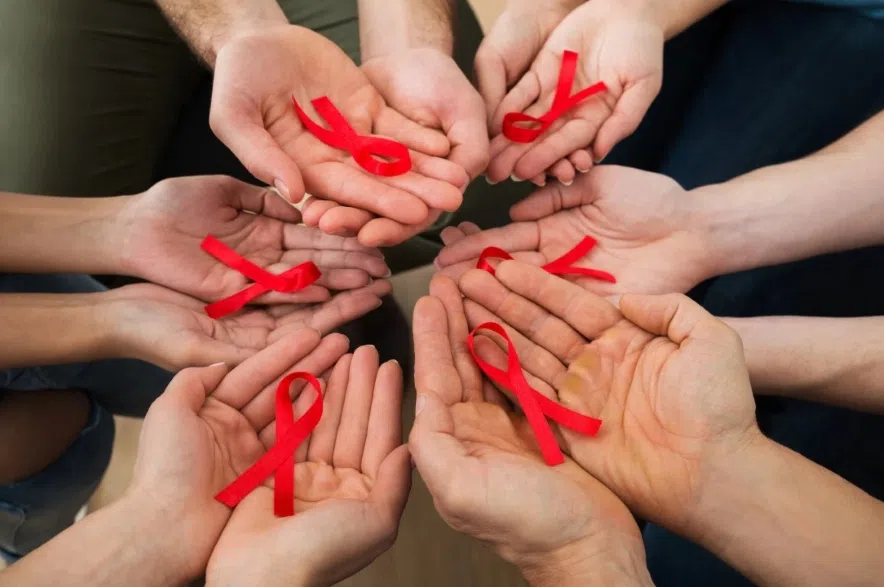
Every December 1 marks World AIDS Day.
Dr. Jasmine Hasselback, a medical health officer with the Saskatchewan Health Authority, said it’s a time to commemorate the lives lost but also celebrate the advancements made and people who are living strong, healthy lives with an HIV diagnosis.
Read more:
“It’s a time to think back on where we could have done better, but it’s also a fantastic time to come back and celebrate where we’re really pulling forward and really pushing into the future,” she said.
Hasselback said it’s also a time to start conversations and break stigmas and myths about the virus, like how HIV is not a death sentence.
She explains that HIV is the actual virus people become infected with, where AIDS is the “really bad response as a consequence of HIV infection.” She said AIDS can result in death without appropriate medical intervention.
But, thanks to good testing and treatment, Hasselback said with proper treatment some people living with HIV can become “untransmissible.”
“If you get your meds stabilized and you’re working well with your care provider, you can actually get to a point where you can be married and have sexual relations with your partner as if you didn’t have HIV,” she said.
“HIV is not a death sentence.”
Hasselback explains how stigmas can be harmful, and by default, anyone who engages in sexual contact or uses needles is at risk of contracting HIV.
“There’s no reason to ostracize anyone who has HIV. It’s just a chronic condition and they need help and care, just like someone who found out they had diabetes,” she said.
On top of breaking the stigma, Hasselback said improvements to education, prevention and testing can always be made, especially since Saskatchewan has a “concerning” rate of HIV/AIDS.
According to the Ministry of Health, “Saskatchewan’s HIV diagnosis rate was 18.5 per 100,000 people in 2023. The national average for first-time diagnosis was 6.1 per 100,000 by comparison.
“In Saskatchewan, I feel we’re in a place where we certainly know about a good number of our folks (who have tested positive for HIV), which we’re celebrating — we’ve got programs and services in place to help support those who’ve been diagnosed with HIV — but when we’ve got numbers like that, it always feels like it’s never enough, and we certainly could do better,” she said.
Hassleback said HIV also runs parallel with deficits in social determinants of health, like poverty, housing, food insecurity and colonialism.

The Sanctam Care Group cares for people living with HIV, or at-risk of acquiring HIV. (Katelyn Roberts/Submitted)
Need to address basic necessities
Katelyn Roberts, executive director and co-founder of the Sanctum Care Group, echoes Hassleback’s comments.
“Housing is health care,” Roberts said. “Until we house all of our citizens, we’re going to continue to kind of be at the top of the charts in this country, in terms of skyrocketing rates of syphilis, HIV, hepatitis C, homelessness, and addiction.”
The Sanctum Care Group provides care for people living with HIV or at-risk of acquiring HIV. The group recognizes the “interconnected challenges” their clients face, providing care for patients through “trauma-informed, culturally responsive and evidence-based interventions.”
She said now is the time for the province to turn those numbers around and prevent further loss.
“We have an opportunity to turn this around, and if we choose not to… we’re going to continue to see people die every day, and that’s what we’re seeing right now in our communities across this province,” she said.
Although the advancements in medication have helped people live long, healthy lives, Roberts said, without addressing underlying issues, it still remains a problem.
“Prescribing a pill once a day is a really easy thing to do when someone’s housed; it’s a whole other story when they’re unhoused,” she said.
“It’s really difficult to ask a population that’s just trying to stay alive, trying to find a place to live, to take their medications for HIV. But if we could take care of those basic necessities, the HIV would also take care.”
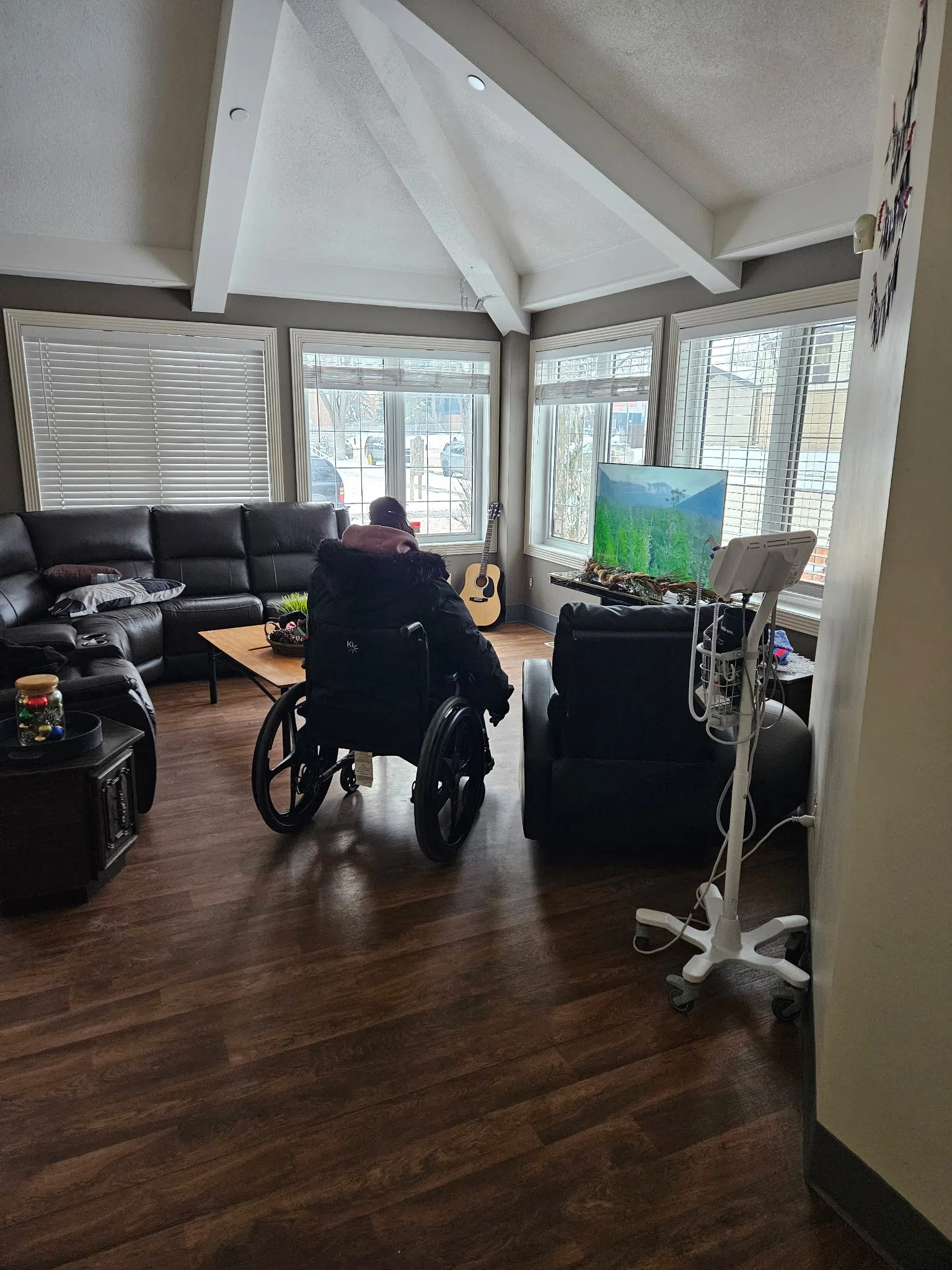
Sanctam1.5 offers care to high risk and HIV positive prenatal mothers and their babies. (Katelyn Roberts/Submitted)
Roberts said how we take care of our most vulnerable says a lot about our community, and it’s important not to turn a blind eye.
She wants to see the civic and provincial governments come together to come up with a solution.
“I think there’s a lot of back and forth between whose responsibility it is, but if we don’t come together and just own this, it will own us,” she said.