
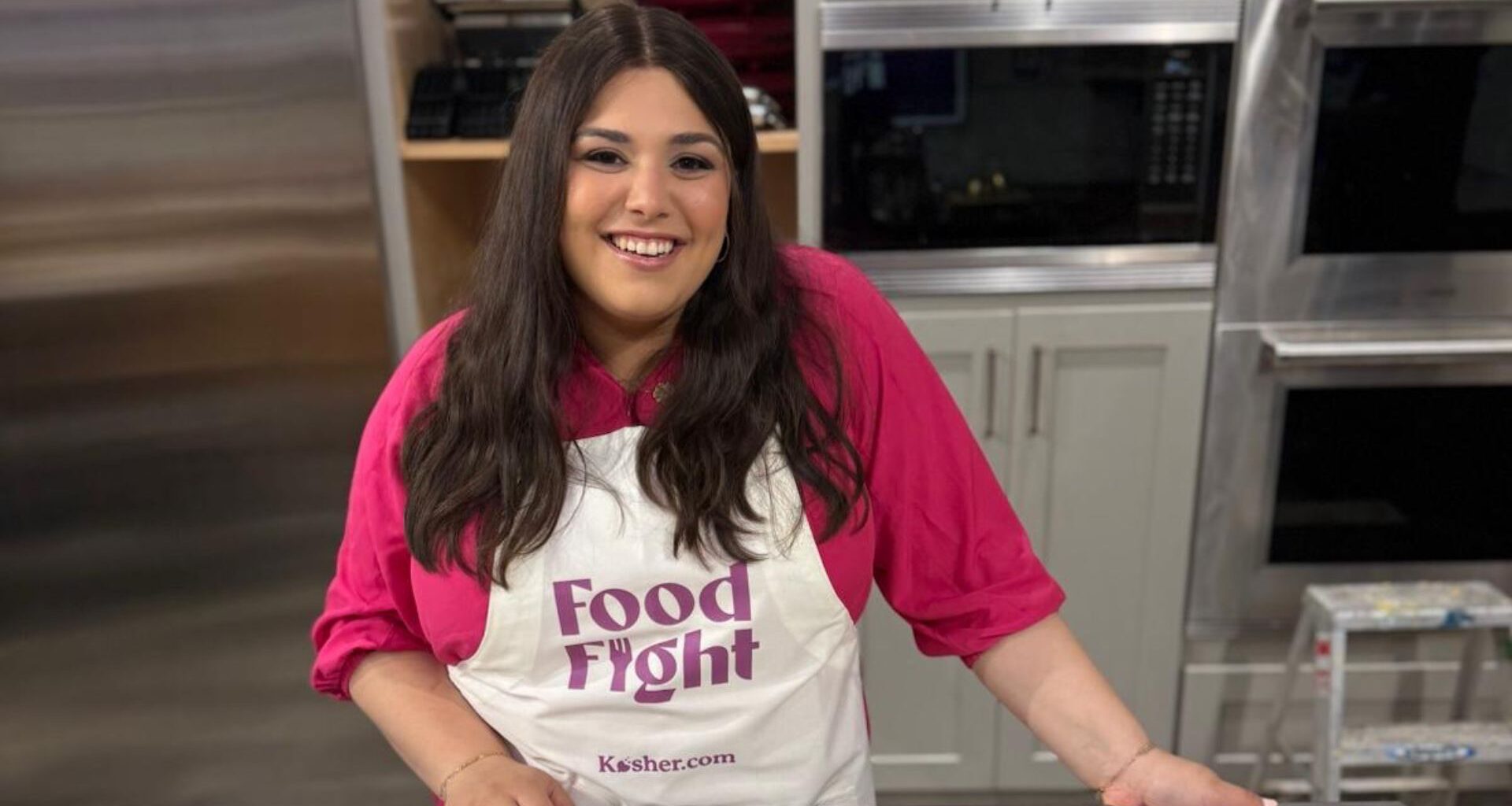
 St. Louis native Mushka Cohen
When Kosher.com brought back its hit competition series “Food Fight 2.0,” producers looked for contestants who could cook with skill, soul and story. Enter St. Louis native Mushka Cohen, who learned to cook for crowds in the kitchen at Chabad on Campus.
After years of helping lead Shabbat meals and cooking programs on campus, she stepped onto a professional set earlier this year to compete on a show that has already sparked national conversation about women’s voices in kosher media and the future of Jewish entertainment online.
From Chabad kitchen to competition set
Cohen now serves as Director of Learning and Student Engagement at Chabad at Washington University with her husband Rabbi Tzemach Cohen. She said cooking on campus shaped her approach to “Food Fight 2.0.”
“We host hundreds for meals so in some ways the ‘Food Fight’ kitchen actually felt easier,” said Mushka Cohen. “I only had to make four plates. Before we had our team at Chabad finishing before Shabbat always meant a real race to the finish line.”
She also tied her St. Louis upbringing to her cooking. “I am a proud St. Louis native and actually moved back home right after filming. Unfortunately, I did not get to make toasted ravioli on the show. Growing up in St. Louis we did not have many kosher restaurant options, so I learned to recreate the dishes I saw in restaurants at home.”
A show made by and for Orthodox women
The strong response to the new season has shown how much representation matters in kosher media, said Leah Gottheim, vice president of Kosher.com.
“There is so much media and entertainment out there, but this show is unique in that it is professionally produced by Orthodox Jewish women for Orthodox Jewish women. Everyone wants entertainment that is in line with their own values,” she said.
Gottheim said the conversations happening online have been just as interesting as the episodes.
“Women got involved in debating whether the judges were kind enough or if criticism was OK in the context of a competition,” said Gottheim. “It gave them the opportunity to discuss with each other what really matters to our community and refine and clarify their perspectives.”
She added that casting was open to anyone and resulted in contestants “from Brooklyn to the Midwest from Chabad to Syrian,” which she said reflects the depth of talent within the Orthodox community.
Filming and behind-the-scenes flavor
The season was filmed earlier this year with episodes now rolling out online. Cohen said viewers only see a slice of what the experience was like.
“The other contestants are genuinely amazing. They are talented in the kitchen but also just really special people. Filming takes a long time. What you see in a 20-minute episode is just a tiny piece of what goes into it,” said Cohen.
The winner will receive a $2,500 grocery shopping spree, a case of Herzog wines, a wig from Adele’s Salon, a set of Legend cookware and a recipe column in Mishpacha’s “Family Table.”
Gottheim said the show’s goal is to celebrate creativity while staying grounded in what kosher home cooks actually want and need.
“People want tradition, they want excitement and freshness and they also want quick and easy dinners that their kids will eat,” said Gottheim.
Bringing lessons home
For Cohen, the experience has already changed the way she teaches and cooks on campus.
“I am always cooking with students or teaching them how to make challah babka and other staples, so it has been fun bringing what I learned on the show back to campus,” said Cohen. “The judges taught me some incredible skills that I have already passed along. I have even recreated a few of the dishes from the show for students.”
For Cohen the heart of Jewish cooking remains the same no matter the setting.
“Cooking connects us,” she said. “It is a way of showing love of welcoming someone new. That is what Jewish food has always been about.”