
Published on Dec. 2, 2025, 11:17 PM
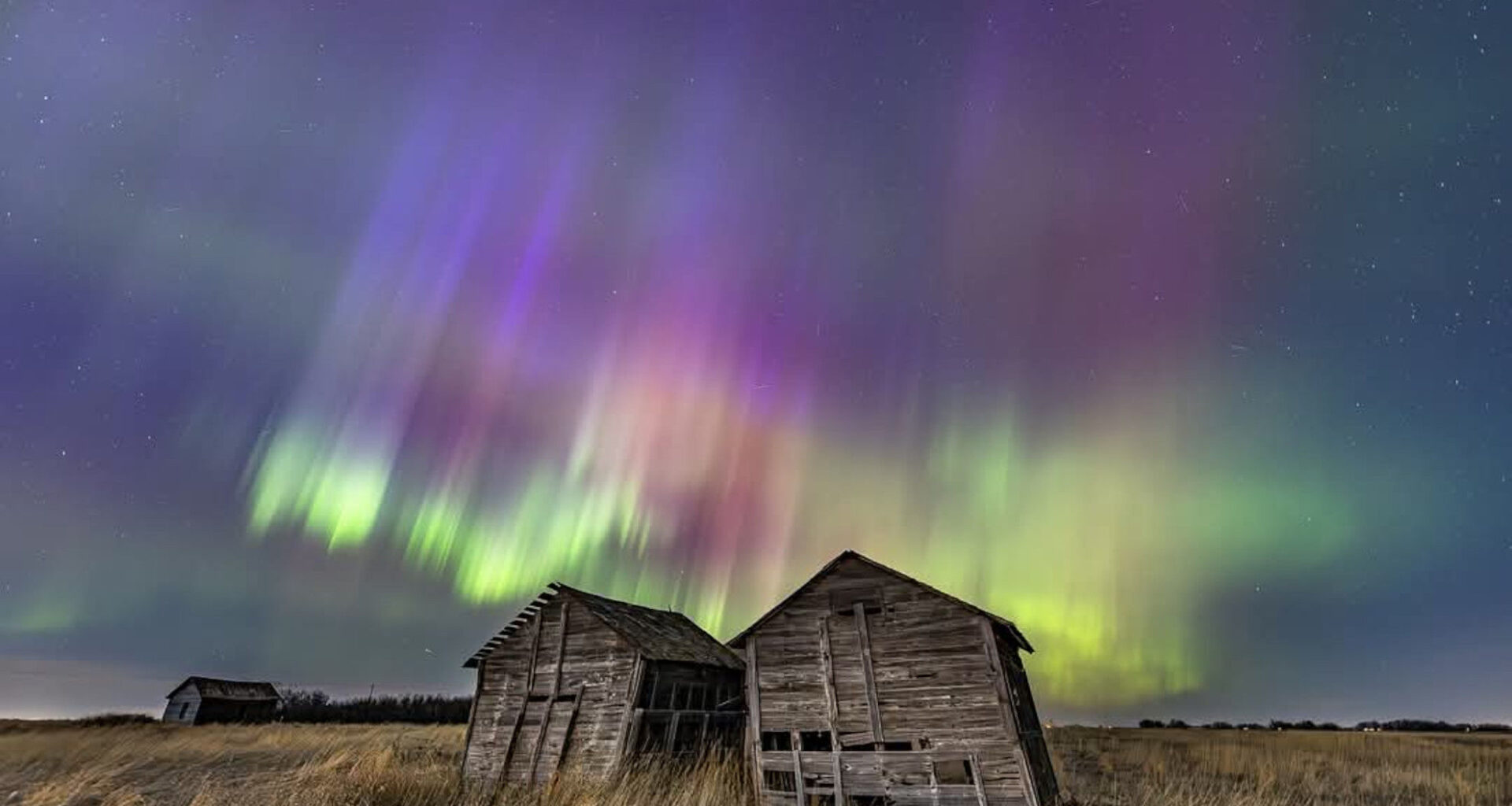
Check your sky forecast and turn your eyes to the north, as the Northern Lights may shine in our skies in the nights ahead.
The Sun has woken up again with the appearance of an immense string of sunspots, and we may see the first impacts, sparking displays of the Aurora Borealis, on Wednesday night.
Early on Monday, December 1, a powerful X-class solar flare exploded from the eastern limb of the Sun. In the aftermath of this intense flare, solar-observing satellites captured the eruption of an immense coronal mass ejection into space.
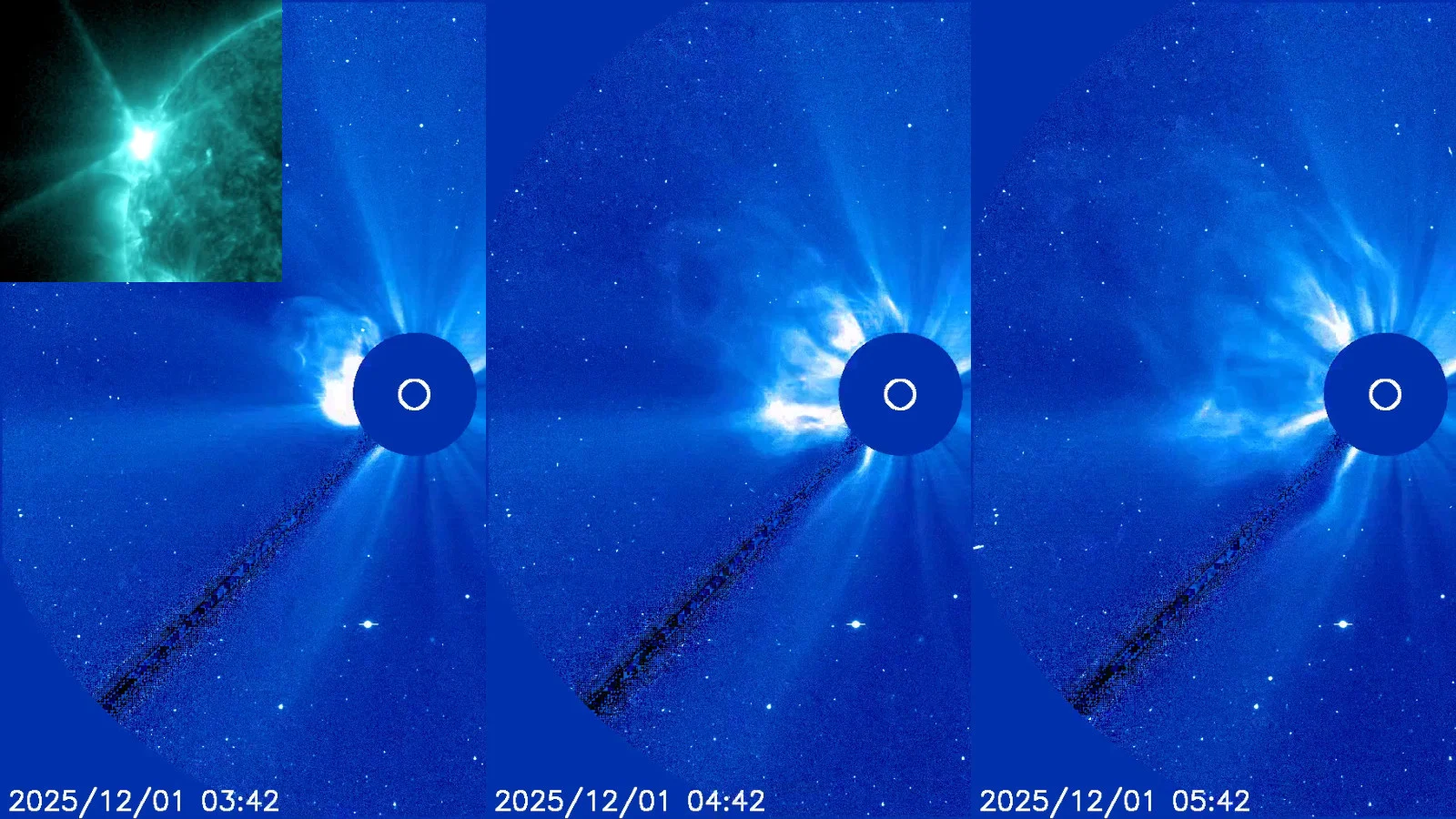
Top left: a view from NOAA’s GOES-19 satellite reveals the X1.95-class that exploded at 2:50 UTC on Sunday, December 1. Three views from the NASA/ESA Solar and Heliospheric Observatory are arrayed from left to right, showing the progression of the coronal mass ejection as it erupted into space over the next five hours. (NOAA, NASA/ESA)
The vast bulk of the solar storm cloud produced by this CME eruption is aimed away from Earth.
However, according to forecasters with NOAA’s Space Weather Prediction Centre, there is a chance the very edge of the cloud may sweep past Earth on Wednesday.
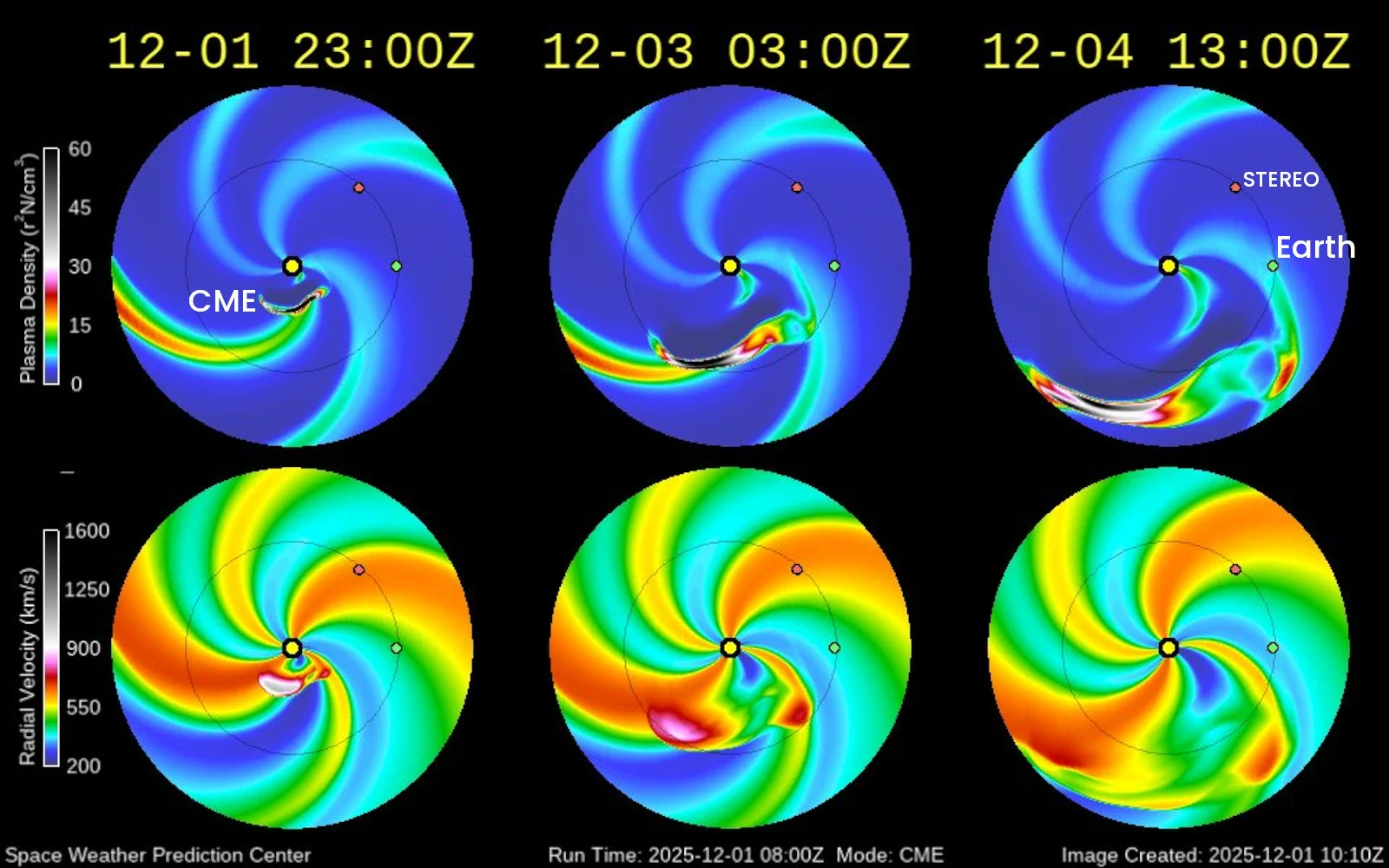
Three panels from the WSA-Enlil solar wind model depict the density (top) and speed (bottom) of the December 1 coronal mass ejection, shortly after it erupted (left), 28 hours later (centre), and on December 4, when the edge of the solar storm cloud may affect Earth (green dot). (NOAA SWPC)
According to SWPC, the CME is likely to make a ‘glancing blow’ on Earth’s geomagnetic field as it passes by later on Wednesday.
As a result, they have issued a G2 (moderate) geomagnetic storm watch for Wednesday evening, through overnight into Thursday morning.