
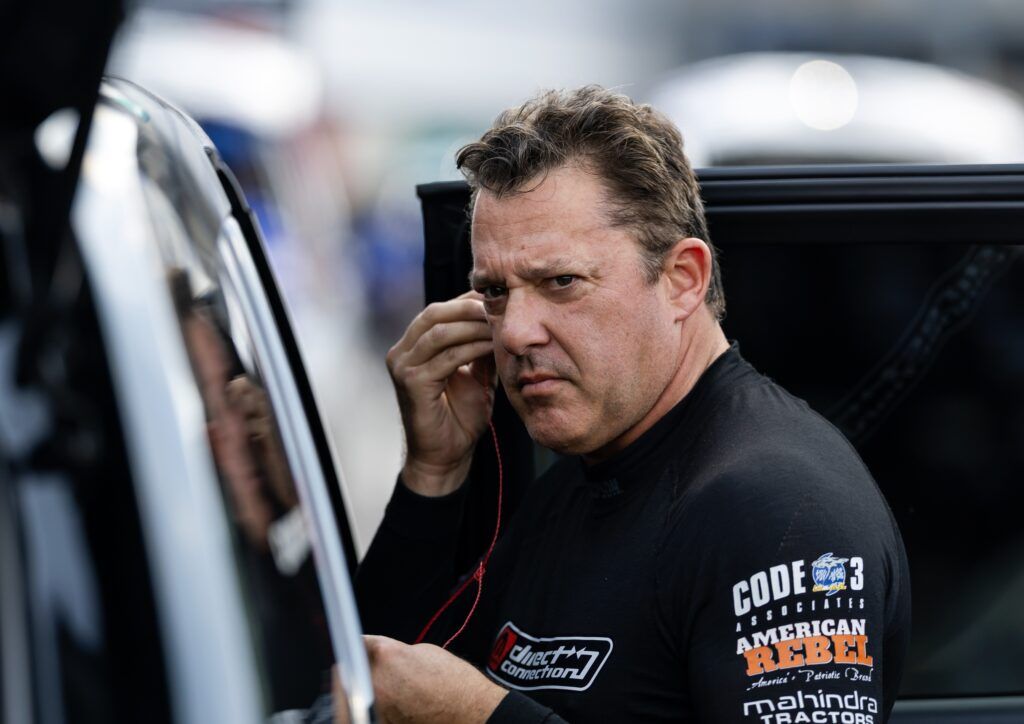
The second day of the antitrust trial once again did not end on a high note for NASCAR. Scott Prime’s testimony, the organization’s Executive Vice President and Chief Strategy Officer, detailed how NASCAR viewed Tony Stewart’s upstart series and the measures it employed to ensure SRX never became a viable threat.
During the cross-examination, Prime faced a barrage of questions as attorney Jeffrey Kessler pressed him on multiple points, including the internal maneuvers to limit the rise and reach of Stewart’s Superstar Racing Experience (SRX).
Inside the Legal Strategies NASCAR Used To Keep Tony Stewart’s SRX out of Its Territory
While on the stand, Prime confirmed that NASCAR had thoroughly evaluated SRX as a competitive risk from the moment the series was announced.
According to NASCAR journalist Dalton Hopkins’ reports, NASCAR’s internal risk assessment explicitly warned of the possibility that drivers and teams could migrate toward SRX, potentially using it as leverage or a pathway to break away from NASCAR’s ecosystem.
This fear, rarely acknowledged publicly, showed how seriously NASCAR viewed the emergence of a rival stock-car product built around star power, short-track racing, and national TV exposure.
To mitigate that threat, Prime testified that NASCAR leaned heavily on the charter agreement, the foundational document that governs team participation in the Cup Series. Within it sits a clause informally referred to as the “goodwill provision.”
According to reports, Prime stated that this provision effectively prohibited chartered team owners from participating in a competing stock-car series, thereby preventing established NASCAR teams from lending credibility or resources to SRX. In practical terms, it boxed SRX out of gaining cooperation/support from some of the sport’s most influential owners.
The cross-examination also delved into NASCAR’s relationship with Speedway Motorsports Inc. (SMI), which operates several major tracks nationwide. Attorney Kessler pointed to internal documents showing that SMI had shown interest in hosting SRX events, recognizing the series’ entertainment value and potential fan draw.
However, according to Hopkins’ reports, the existing contract between SMI and NASCAR contained a “sanction provision.” This clause barred SMI facilities from hosting competing stock-car series without NASCAR’s approval, effectively shutting the door on SRX’s chances of running at some of the nation’s top tracks.
This combination of the goodwill provision on the team side and the sanction provision on the track side painted a picture of clear structural barriers that severely limited SRX’s growth opportunities before it ever reached full stride.