
The Division scolaire franco-manitobaine (DSFM) has clarified its stance on how students should be using Artificial Intelligence (AI) in schoolwork.
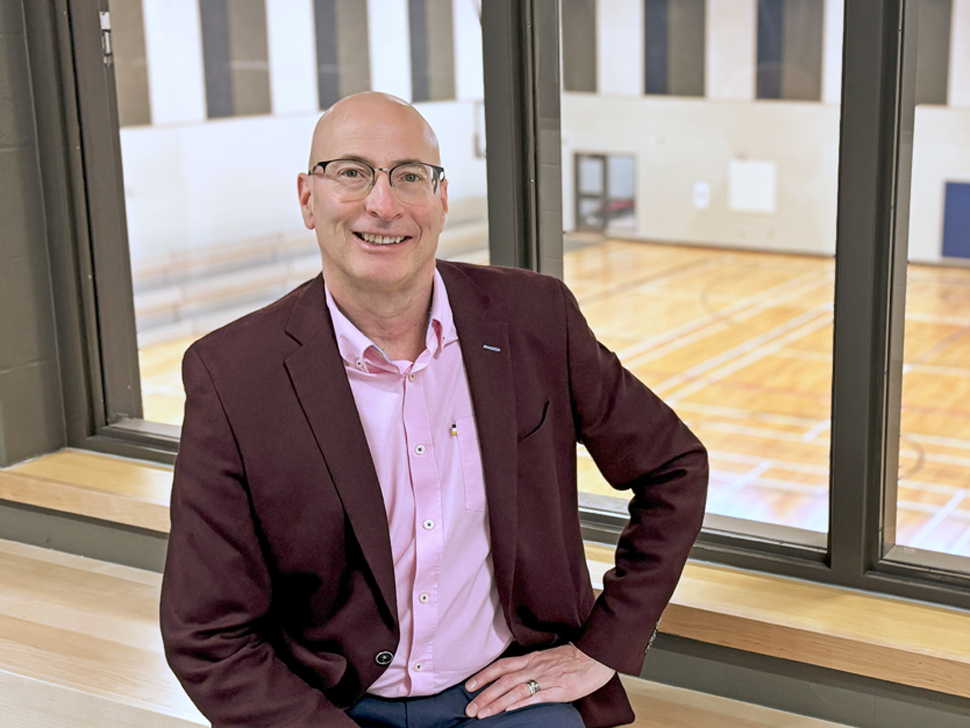
Superintendent Alain Laberge says the new direction was made earlier this fall and is meant to help students learn, not to punish them.
“The decision was made in September of this year,” Laberge says. “It was based on the use of AI in homework. I wouldn’t say that we had concerns, but little worries.”
Why the Division Acted
Laberge says the division noticed several patterns that pushed them to rethink homework and AI tools.
“We saw a large proportion of homework being handed back that was completed using AI, and always in English,” he says. “AI reduces students’ engagement and puts aside critical thinking. Students who usually need help completing tasks in class will tend to use AI without mastering the concepts.”
He adds that not all families have equal access to technology at home, which creates unfair gaps for students. And for DSFM, where French-language learning is the core mission, too much reliance on English-based AI tools can interfere with literacy development.
“In a minority setting, reading helps build literacy skills and curiosity, helps reduce stress, and helps students become lifelong readers,” he explains.
Laberge also notes that many families are already stretched thin.
“Several families are juggling extracurricular activities, family time, and schoolwork,” he says. “Times are changing, and the vast majority of families are sprinting from school or work to get home, have a quick dinner, then head to arts, sports, and other activities.”
Homework Isn’t Gone, But It’s Changing
Laberge stresses that DSFM has not banned homework.
“There’s a difference between finishing unfinished classwork at home and getting homework,” he says. “Teachers can still assign homework. But for K–8, it should never be about new material or concepts.”
The division is asking teachers to coordinate, especially in high school, to avoid situations where students have nothing one night and three assignments the next. And before assigning any homework, Laberge says teachers should ask themselves one simple question:
“Is it really worth it?”
He adds that students have also voiced their frustration about homework that ends up unused.
“Many told us, ‘There’s nothing I hate more than doing homework and finding out the next day that it will not be marked.’”
Will Teachers Know if It’s AI?
Laberge says cheating has existed long before technology and AI.
“Cheating is nothing new,” he says. “Twenty or thirty years ago, students wrote answers on erasers or on their wrists. Ten years ago, they used cell phones and called each other to exchange answers. It’s creative, but no different from using AI today.”
While teachers do have tools that can check whether AI generated an assignment, Laberge says those tools aren’t perfect, and they take time.
“Students’ work can easily be verified with AI tools,” he says. “But they’re not always accurate, and using them takes time, especially if you have 20 or 30 students.”
In the end, Laberge believes the best way to know if learning is really happening is still through personal interaction.
“What I’ve always told teachers is that the best thing is to test students in the classroom,” he says. “If you give homework, you can always ask questions the next day. If the work really comes from them, they’ll remember.”
What Parents Should Know
Laberge says parents play a huge role in supporting the division and their children’s education.
“Parents are an essential piece of the puzzle,” he says. “We want them to know that homework should be meaningful and should supplement what was done during the day.”
He also hopes families understand that DSFM is trying to balance academic expectations with students’ mental well-being.
“These social activities, sports, arts, everything, are essential in maintaining a state of well-being and positive mental health,” he says.
Most importantly, he emphasizes that DSFM isn’t against AI.
“The idea is not to demonize AI, au contraire,” Laberge says. “Students and teachers need to learn how to use it. And from there, it will be up to the teacher to give homework or not.”