
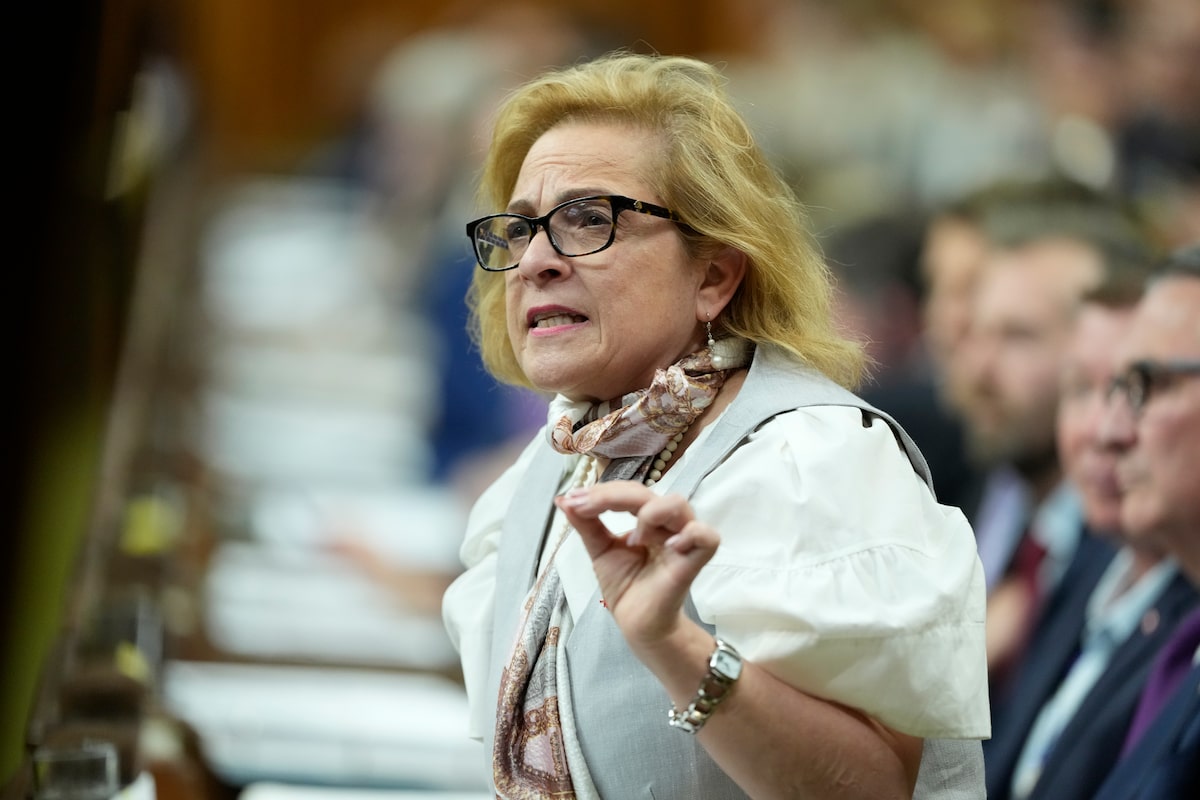
Immigration Minister Lena Metlege Diab warned asylum seekers against trying to take advantage of the Canadian system.Adrian Wyld/The Canadian Press
Immigration Minister Lena Metlege Diab is warning foreign nationals against abusing Canada’s asylum system, as other G7 countries tighten their refugee rules.
Britain and the U.S. have recently restricted their asylum regimes, raising concerns among immigration experts that this could divert some refugee claimants to Canada.
U.S. President Donald Trump announced he is halting asylum applications, while the British government is planning to end automatic permanent residence for refugees, and would require them to reapply every two-and-a-half years to stay in the country. Britain plans to make refugees wait 20 years for permanent residence.
Asked about the implications for Canada, Ms. Metlege Diab warned asylum seekers against trying to take advantage of the Canadian system.
“If you’re coming just because you think it’s a way to side-step our system, don’t do that,” she said in her first major interview since taking on the role.
“We are telling people, no matter who you are, where you are, the asylum system in Canada is here to protect those that desperately are [in need], not for everyone,” she said.
Trump’s halting of asylum claims prompts fresh calls to suspend Safe Third Country Agreement
She said the borders bill, also known as Bill C-12, which is now going through Parliament, would “tighten up” the asylum system and “ensure that those that are not eligible to apply are weeded out earlier.”
The bill, which would ban those who have been in the country for more than a year from claiming asylum, will “signal to the global community that Canada is not here for people to take advantage of,” she said.
Canada is known for its humanitarian efforts, and should “protect those that really need protection,” she said. But the country is also dealing with “capacity issues,” such as the availability of housing and healthcare.
In this year’s immigration targets, Ottawa dramatically cut the number of international students it plans to admit and effectively froze the numbers of permanent residents over the next three years. The cuts followed waning support among Canadians for increasing immigration in recent years.
Ms. Metlege Diab said “the mood of the country, going door to door,” has changed.
The government’s new immigration targets also scaled back the number of people who will be admitted through humanitarian pathways.
Opinion: The Trump administration is turning back the clock on refugee protections
People fleeing the civil war in Sudan, who are eligible to come to Canada through a family reunification program set up before the election, were grouped among those settling in Canada on humanitarian and compassionate grounds. The levels plan allocated 10,000 permanent residence spots in 2025 for groups in that category, which includes those who fled Ukraine, and 6,900 in 2026.
Sudanese Canadians have decried the long processing times that their relatives in Sudan are facing, with some applicants dying before they can join family here. Some have been told it could take eight years for their applications to be processed by Immigration, Refugees and Citizenship Canada.
An estimated 150,000 people have died since Sudan plunged into a civil war in 2023 and an estimated 12 million have fled their homes in what the United Nations has called the world’s worst humanitarian crisis.
Ms. Metlege Diab was born in Halifax but moved with her parents to Lebanon when she was 2. Her family later escaped the civil war in that country when she was 11, returning to Nova Scotia. The minister said the war in Sudan is “heartbreaking.”
“I have no words to describe it. I get very emotional when in the face of war. I’ve lived war,” she said. “And so it is incumbent on Canada to do what Canada can do to help – and help fast, given our capacity issues right now.”
Canada must fast-track Sudanese fleeing atrocities, says former justice minister Irwin Cotler
Ms. Metlege Diab said her department is prioritizing Sudanese applications, and that more people will be reunited with their families next year.
“They are being processed. People are coming. The numbers – you will see quite a bit coming in 2026,” she said.
Ms. Metlege Diab says she is prioritizing applications from those fleeing war-torn Sudan.Dave Chan/The Globe and Mail
Ms. Metlege Diab was Nova Scotia’s immigration minister before entering federal politics in 2021. She took on the federal immigration portfolio in May, her first cabinet role.
One of her priorities in Nova Scotia when she took on that role in 2013 was attracting more newcomers to the province to address population loss. She said schools there had been forced to close, and the population was aging with young people leaving. Part of her job was to attract more international students, as the province wasn’t getting its share at the time.
She said that since the COVID-19 pandemic began, public opinion on welcoming international students shifted. “Our communities then started to tell us we can’t sustain them.”
“Fast forward to our 2025 election, Canadians spoke very clearly that they needed to have control of our immigration numbers, whether it’s the permanent side or the temporary,” she said.
Deportations to be reported to Parliament each month under Conservative changes to border bill
In the federal immigration levels plan released last month, Ms. Metlege Diab cut temporary resident numbers overall and roughly halved the number of international students who will be allowed to come to Canada.
“We have an obligation, morally, to take care of people that come to Canada, but we also have an obligation to the Canadian population and the communities that are around them to ensure that we can house them,” she said.
Ms. Metlege Diab said she consulted widely before announcing this year’s targets, including with provinces.
Unlike in previous years, the annual immigration levels were announced as part of the federal budget by Finance Minister François-Philippe Champagne.
Far from feeling slighted, Ms. Metlege Diab said she thought it was “brilliant” to present the immigration levels as part of Ottawa’s economic blueprint.
While the role of the immigration minister is usually one of the most high-profile in government, Ms. Metlege Diab has kept a relatively low profile since being appointed six months ago.
“I don’t need the limelight,” Ms. Metlege Diab said, adding that she is proud of what she has achieved so far “with the help of excellent staff.”
She said her focus has been on implementing Prime Minister Mark Carney’s mandate to return overall immigration rates in Canada to sustainable levels, and to attract global talent to the country.
“It’s the roadmap of what I needed to do,” she said, adding: “I am there to get the job done as best as I can, knowing that I have the trust of the Prime Minister, because that is the most important thing for me.”