
CHARLOTTE, N.C. — NASCAR Executive Vice President and Chief Strategy Officer Scott Prime returned to the witness stand on Wednesday as an antitrust lawsuit trial continued.
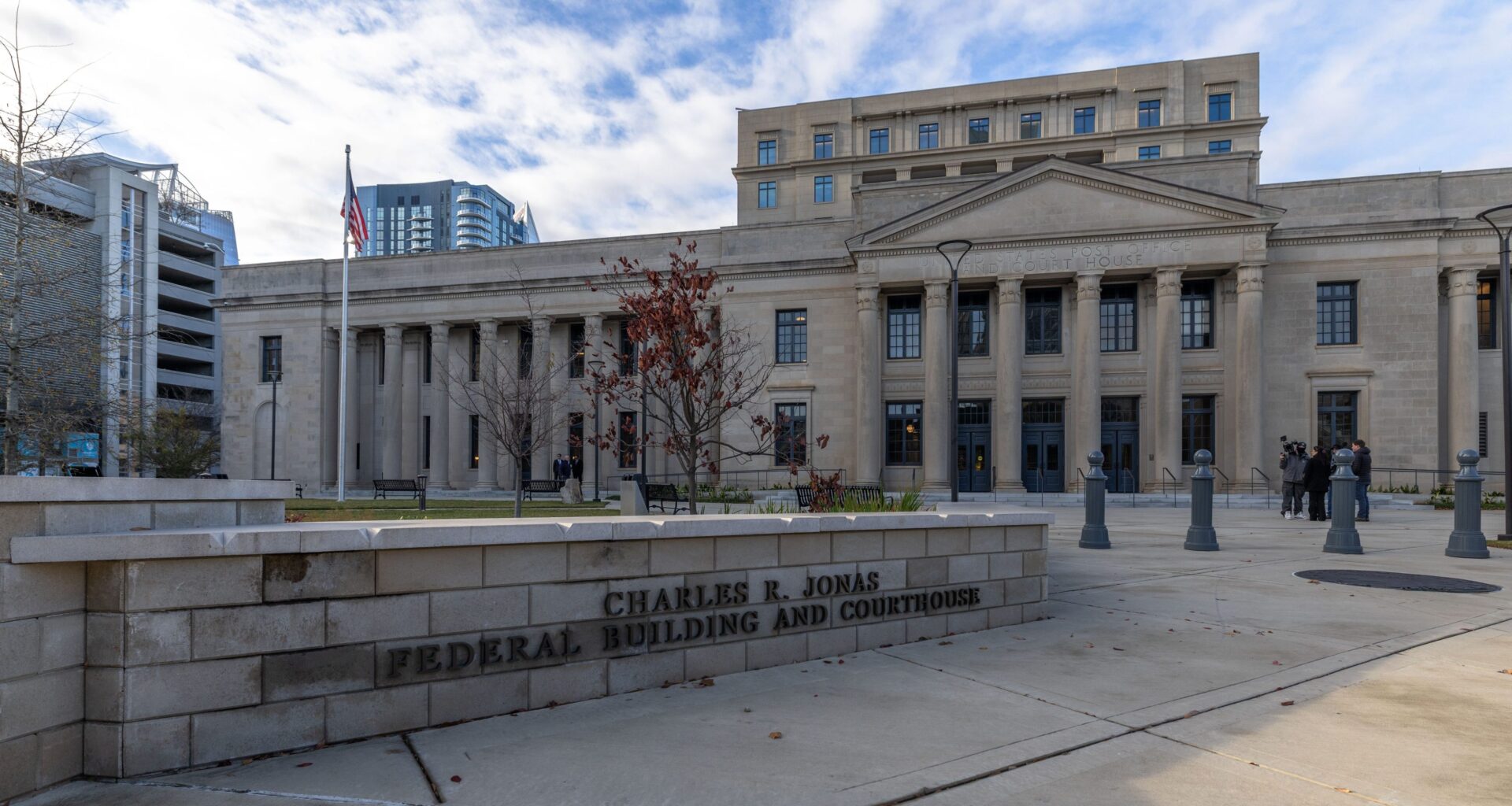
Front Row Motorsports and 23XI Racing filed an antitrust lawsuit against NASCAR and CEO Jim France in October 2024, alleging that they are an illegal monopoly that used anti-competitive acts to hurt teams while enriching the France family. A year of hearings, motions, and rulings led to this trial, which started on Monday in front of Judge Kenneth D. Bell.
Prime played a central role in the creation of the charter system, albeit in a different way. He previously worked for McKenzie, a consulting firm that NASCAR hired to examine the state of the sport and the financial data.
McKenzie interviewed 20 teams and ultimately expressed concerns about the longevity of the sport. Prime said that teams fell a total of $160 million short of a 10% profit margin. McKenzie and Prime suggested multiple paths forward for the sport, which included taxi-like medallions. These ultimately became the charters.
Prime did not remain at McKenzie. He actually joined NASCAR in November 2015 as teams and NASCAR engaged in charter negotiations. He became one of four main negotiators during the 2025 Charter Agreement negotiations along with Steve Phelps, Ben Kennedy, and Steve O’Donnell.
Several letters from Prime were inserted as evidence on Wednesday as the legal team representing Plaintiffs (23XI Racing and Front Row Motorsports) aimed to show proof of anti-competitive acts by a monopoly.
Options after teams did not agree to terms
One particular piece of evidence focused on contingency plans. After teams did not agree to NASCAR’s terms during charter negotiations, Prime came up with a list of options for NASCAR to use moving forward. He acknowledged that NASCAR had concerns about a breakaway stock car racing series.
The first option was to say they would go from 36 charters to only 32 on a first come, first served basis. The second option was to give a deadline to teams to sign after updating the draft language. If no team signed, NASCAR could offer the Charter Agreement to other interested parties. The third option would combine the first two.
The fourth option would be to simply end the charter system. All teams would go back to racing as Open entries. The fifth option was to use the Gold Codes contingency plan for a potential team boycott. This plan would feature NASCAR fielding all of the cars. Prime testified that the Gold Codes plan would cost NASCAR $610 million the first year and $500 million each year after.
Jeffrey Kessler, lead attorney for 23XI Racing and Front Row Motorsports, told Prime after highlighting these options that only a monopoly can tell the other side to take the offer or it will go somewhere else.
Scott Prime’s time on the stand has ended. It featured some eyebrow raising moments. Many statements under oath seemed to contradict each other based on who was asking the questions.
•acknowledged to Jeffrey Kessler that he had written options for teams not agreeing to terms.…
— John Newby (@JohnNewby_) December 3, 2025
High priority items for NASCAR
Another of these pieces of evidence featured proposed governance changes ranked by how much teams might push back.
One high priority item for NASCAR was to allow the France family to have ownership of charters. This was not allowed, but Prime’s document compared the situation to IndyCar, which Roger Penske owns along with a team. This high priority item made it into the 2025 Charter Agreement, but Prime said “with some protections.”
Another high priority item for NASCAR was removing the three strikes rule. This previously allowed the ownership council to vote on items that potentially increased their costs. The 2016 Agreement introduced the three strikes rule. The 2025 Agreement removed it.
The third high priority item mentioned during testimony was strengthening protections for the Goodwill Provision, which Kessler repeatedly called anti-competitive.
This provision and section 6.6 prevent team owners, control persons, and those with 10% ownership and direct involvement with the team from racing in or owning an equity interest in a stock car racing series that is held in the territory (North America). NASCAR wanted to expand this provision to include all motorsports except those specifically approved by NASCAR.
Negotiations for 2025 Charter Agreement
Prime spent extensive time doing cross-examination with Kessler. He also spent considerable time doing direct examination with NASCAR’s legal team about the negotiations leading up to the 2025 Charter Agreement.
Prime indicated that members of the TNC (Team Negotiating Committee) set up the first meeting in this process under false pretenses. He said that they had sent a letter in March 2022 requesting a meeting about media rights benefits.
According to Prime, this meeting featured Jeff Gordon, Dave Alpern, Curtis Polk, and Steve Newmark (former RFK Racing President). He said this group wanted to discuss Charter Agreement negotiations even though the early negotiating deadline was not until July 1, 2023.
Prime said this was a “we’re not happy meeting” with these team owners. The NASCAR executive said that Polk, in particular, was “adversarial and confrontational.”
The contentious nature of the negotiations continued with the meeting that the teams boycotted in 2023. Prime called this move disappointing and said that it was not in good faith. He said that Alpern called him before the boycott and gave him a head’s up but did not provide more details.
Kessler pushed back against this while saying that teams had requested Jim France and Lesa France Kennedy attend so they could negotiate. When they declined, the teams chose to boycott.
A frequently-discussed part of the testimony was the infamous deadline for teams to sign the 2025 Charter Agreement on Sept. 6, 2024.
The Plaintiffs have portrayed this as a “take it or leave it” offer where they received the draft at 5 p.m. and had until midnight to read through 112 pages and sign. If they didn’t sign, they would lose their charters.
Bob Jenkins, Front Row Motorsports owner, testified that NASCAR gave him and 23XI Racing an extension after they declined to sign the 2025 Charter Agreement. However, he said that then-NASCAR President Steve Phelps told him that they could ask any questions but that negotiations were closed.
One piece of evidence displayed on Wednesday featured a comment from Prime saying that it was “putting a gun to the heads of the teams.”
Prime testified multiple times and said that this was not a “take it or leave it deal.” He said that they just needed to plan for the 2025 season after more than two years of charter negotiations. He did not say if teams would lose their charters if they didn’t sign, but he responded with a different phrase.
“They had the ability to accept the deal or walk away,” Prime testified.
The trial will continue on Thursday as 23XI Racing and Front Row Motorsports continue calling witnesses to the stand.