
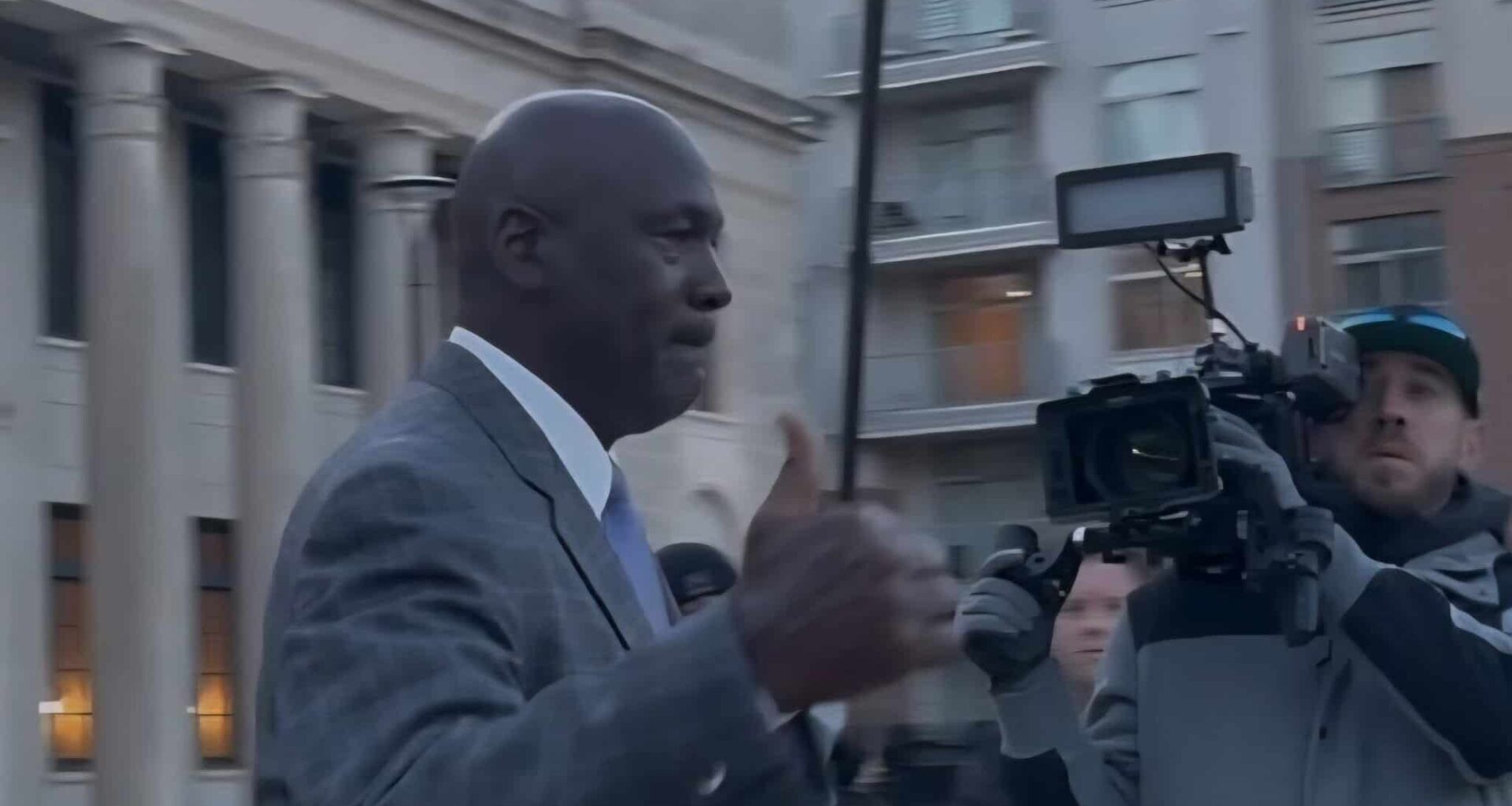
CHARLOTTE, N.C. — On its third day of trial, Bob Jenkins, owner of Front Row Motorsports, became the focus of court onlookers as he attended the 23XI/FRM v. NASCAR witness stand during the afternoon of Wednesday, Dec. 3.
He followed the near day-long examination of NASCAR’s Vice President of Strategy Scott Prime, who recounted many of the email messages between he and NASCAR leadership that were presented to the jury.
Both of which, seemed to have ended positively for the plaintiffs 23XI Racing and FRM.
NASCAR Vs. 23XI/FRM Lawsuit Day 2 Recap
The trial, which began on Dec. 1, has become the focus of the stock-car racing world. Hamlin and fellow 23XI owner Michael Jordan were joined by FRM in filing a lawsuit against NASCAR in late 2024 after both teams did not sign the sanctioning body’s charter agreements that guarantee them a position in the NASCAR Cup Series field.
Since then, both sides have yet to reach a settlement and have met in the west district court of North Carolina.
Day three began with the continuation of the initial plaintiff examination from 23XI’s attorney Jeffrey Kessler on Prime from Tuesday. One of the email pieces of evidence introduced by Kessler led to the questioning of the charter agreement deadline that occurred on Sep 6, 2024. Kessler, whose side is trying to prove NASCAR as a monopolistic company, asked Prime if the charter agreement was a, “take it or leave it” offer.
Initially, Prime did not answer the question directly but soon confirmed the offers finality as NASCAR had confirmed the negotiations were closed.
Following this, Kessler asked Prime, “Because you’re a monopoly, yes?” to which Prime responded, “We are the premier stock car series.”
Kessler further asked, “Because there’s no other one?”
Prime responded by saying, “‘Premier means there’s only one, yes.”
During the opening testimony Wednesday morning, Kessler introduced an email from Prime to NASCAR’s leadership that was a response to four “main demands” made by the Cup teams which included wanting 45% of the media deal revenue. The teams, according to the email, said if their demands were not met, they would “explore other options.”
In the email, Prime responded to them by saying “Overall, it is quite disappointing,” and appeared to take the teams exploration as a making of a breakaway stock car series and presented five courses of action to NASCAR executives in response.
Option one was to give the teams a deadline to sign the agreement.
Option two was to reduce the number of charters to 32 and create a first come, first serve charter agreement that would allow only the first 32 signers to keep their charters.
Option three was to combine the first two options.
Option four was to return the sport the open teams business model.
Option five was the gold codes project, which was a contingency plan drafted by NASCAR to acquire all of the charters itself and run the series with its own teams in the event that its current Cup teams left the sport altogether.
Phelps responded to the email by saying he agreed with the list of options, and that the teams were “playing with fire.”
Kessler responded to this email by stating that “only a monopolist” can tell someone to take their offer or no longer be in its business.
Ty Dillon Back in Cup with Kaulig Full-Time for 2026
Prime testified the charter agreement was drafted then finalized and sent to the teams on Friday, Sep. 6, 2024 at 5 p.m. with the deadline of midnight seven hours later.
Among the primary and secondary examination of Kessler on Prime were a number of contradictions that Kessler pointed out during the morning.
One piece of evidence was an email exchange with Steve Phelps, NASCAR’s Commissioner. In the email was a proposed change of the France family owning a charter to compete. Kessler pointed out that Prime had testified yesterday he had no memory of the France family trying to acquire a charter.
Another was the rule in the new charter agreement that Prime testified in the morning with Kessler in which he stated that if a team wanted to relinquish its charter and join another racing series, it would have to wait 12 months before joining that series. However, during the defense examination by NASCAR attorneys, Prime stated if a team wanted to relinquish its charters and start its own racing series, they could “start tomorrow.”
Additionally, Prime was asked by NASCAR regarding his knowledge of revenue sharing in Formula One, which he testified Tuesday was 50% to its 10 teams. However, upon being asked on Wednesday, he stated 50% is “not accurate” and, upon seeing new evidence, he didn’t know for sure if it was “higher or lower.”
NASCAR’s defense attempted to illustrate the charter negotiations were being done in good faith. To this end, Prime clarified that NASCAR never threatened to take away anyone’s charters and did not have the ability to do so in the first place.
Prime also testified that NASCAR wanted to eliminate the doubt of NASCAR’s ability to eliminate charters to the teams supporting its good faith argument.
However, Prime later testified in Kessler’s second round of questioning that NASCAR still reserved the right to end the charter system if the teams and NASCAR couldn’t reach an agreement.
It was approximately 2:20 p.m. ET. when Jenkins was called upon the plaintiff to the front of the courtroom on Wednesday.
Upon his arrival, Jenkins was questioned by one of the plaintiff attorneys about his background upon which Jenkins explained to the jury how he graduated college and purchased a fast-food franchise leading to acquire the amount of wealth he has today. Additionally, he illustrated how he acquired his interest in NASCAR racing at a young age and revealed he was a charter member of the Dale Earnhardt fan club.
Upon being asked several questions about his finances, Jenkins revealed FRM had spent $1.7 million on parts expenses from 2017 to 2021 before the Next Gen era. From 2022 to 2024, he revealed the cost increased significantly to $4.7 million.
Jenkins also recalled Sep. 6, 2024, when he first learned of the charter agreement deadline. He claimed he was out to dinner with his family and had little cell phone service. He did not learn of the midnight deadline until late that night when he returned home and his phone was “blowing up.”
Bringing the Heat: Reacting to Day 2 of the NASCAR vs. 23XI/FRM Trial
He also testified that none of the team owners were happy to sign the agreement, and when asking NASCAR for further negotiation, he states he never had an opportunity to negotiate the agreements further. He noted it felt like, “taxation without representation.”
Before being turned over to the defense by the plaintiff, he claimed that in 22 years of Cup team ownership, FRM has never made an operational profit.
Lawrence Buterman, the same defense attorney that cross-examined Denny Hamlin on Tuesday, began the cross-examination of Jenkins.
One of Buterman’s key questions seemed to be regarding the Long John Silver’s sponsorship of the FRM cars. LJS is a fast-food chain that is owned by Jenkins’ sons.
Jenkins stated the LJS design was only placed on a FRM car if the team did not have any sponsorship reserved for that weekend’s race. Buterman, while noting the nobility of Jenkins giving his sons’ business free advertising, asked if FRM would have made more money if he had charged LJS for sponsorship. After several questions, Jenkins had said it was his decision to charge LJS or not as it was his team.
It is worth noting that the jury seemed displeased with Buterman’s line of questioning.
There were some similarities between Buterman’s questioning of Hamlin and Jenkins. One of which was the question of FRM revenue share with its drivers and if it was comparable to that of a monopoly and NASCAR’s revenue share with the teams. Jenkins, however, responded the same way Hamlin had in noting that drivers are able to go to different teams if they wish unlike, he argued, his inability to race in other series of stock car racing.
Jenkins did at times speak positively of NASCAR, as well. At the beginning of the plaintiff questioning, he clarified that his lawsuit and testimonies were not, “about bashing the France family,” and he complimented the Frances’ success and intelligence. He also stated he believed the charter system was a good thing for the sport and explained it was the charter agreement he disagreed with.
Before the end of the day, a humorous moment occurred when Buterman asked Jenkins if drivers would make as much money as his co-plaintiff Hamlin does when they pay to drive his cars.
Jenkins responded by saying, “If they win the amount of races Mr. Hamlin does, they’ll make as much money as he does,” to which he was followed by chuckles in the courtroom and a thumbs up from Hamlin who sat behind the plaintiff desk.
Finally, before dismissing everyone for the day, the judge warned NASCAR’s defense team that they violated two rulings of the court. One of which was bringing up Jenkins’ financial accounts to the jury, which the judge warned about on Tuesday. Another was the introduction of quotes from Spire Motorsports owner Jeff Dickerson, who was not on the witness list and will not be able to testify his statement that was then stricken from the record.
The judge warned the team that anymore violations from them will result in “serious consequences.”
The trial is set to resume on Thursday, Dec. 4, at 9 a.m. ET.

NASCAR At Track Coordinator at Frontstretch
Dalton Hopkins began writing for Frontstretch in April 2021. Currently, he is the lead writer for the weekly Thinkin’ Out Loud column, co-host of the Frontstretch Happy Hour podcast, and one of our lead reporters. Beforehand, he wrote for IMSA shortly after graduating from Embry-Riddle Aeronautical University in 2019. Simultaneously, he also serves as a Captain in the US Army.
Follow Dalton on Twitter @PitLaneCPT