
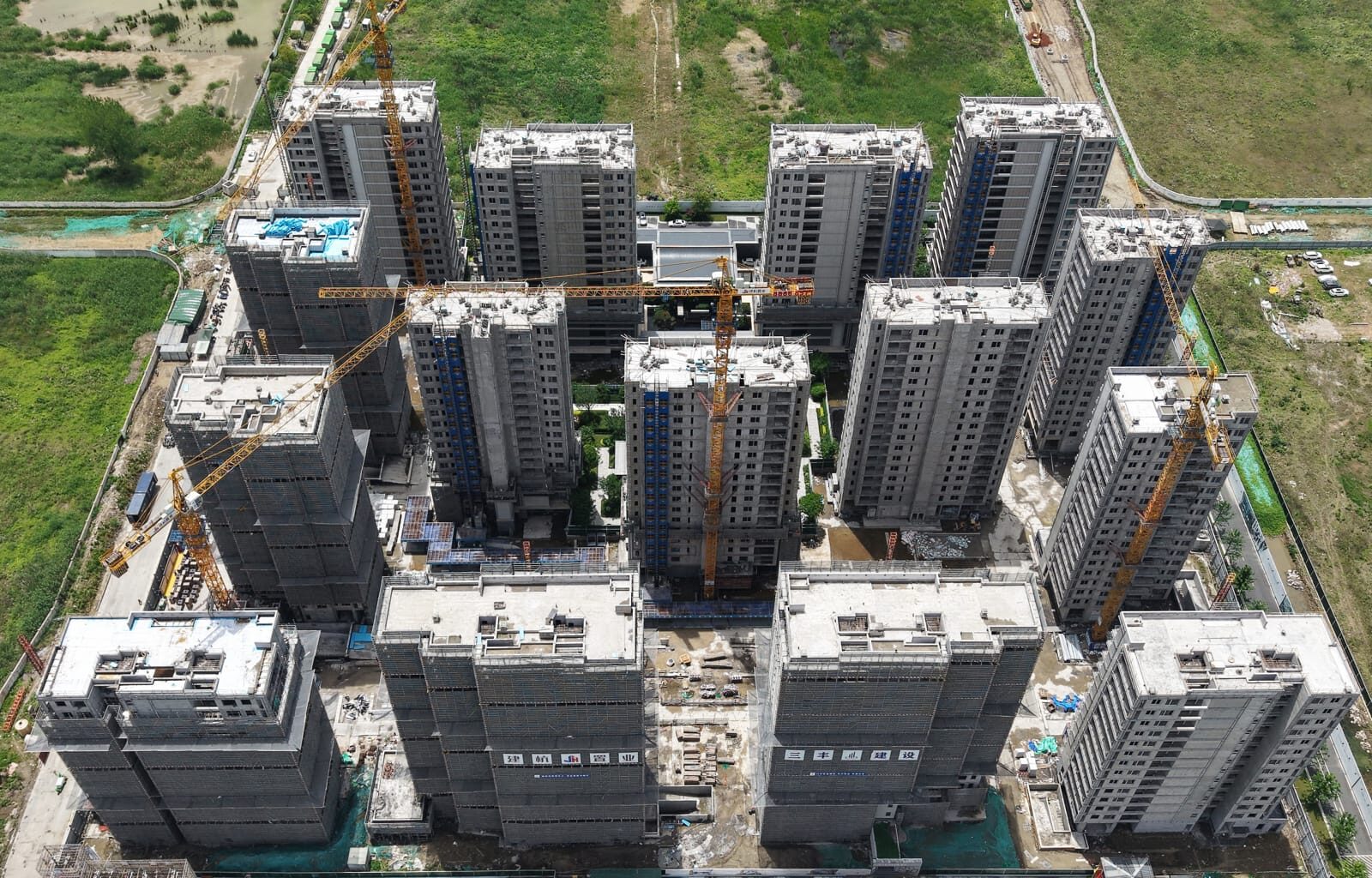
In 1994, the Communist Party of China undertook a monumental decision that radically altered the country’s fiscal federalism. Until then, provincial governments held the bulk of taxing and spending powers. After reform, these lower-level governments had to remit a far larger share of tax revenue to Beijing while still maintaining the same spending responsibilities.
Around the same time, as the Chinese manufacturing miracle took shape, average households began transitioning toward middle-class incomes. Yet, given financial repression and unpredictable markets, they needed a safe place to put their savings. In 1998, China legalised the buying and selling of residential property. Local governments urgently needed revenue, and households needed assets.
Real estate firms emerged as perfect intermediaries, selling government land. As Mike Bird argues in The Land Trap: A New History of the World’s Oldest Asset, these twin decisions unleashed China’s real estate boom. After 2008, cheap credit fuelled an enormous bubble that finally burst in 2021–22.
These two related analogies reveal something deeper than China’s real estate super-cycle. There is a tendency among external watchers to think that everything that happens in China is planned. Therefore, it is obvious that the decision to first monetise land in the 1990s and then to double-down on it through the 2010s, was an active decision made by the CCP elite in Beijing. But like most things in China, the actual policy outcomes are always a combination of intended and unintended consequences.
Given the scale of Chinese manufacturing capacity and industrial policy, the developmental model involving export-led growth has been effectively taken off the table.
As most commentators are increasingly concluding, the underlying issue is China’s political economy model. This model features financial repression – via low deposit rates and wages – and channels this differential to manufacturing industries in the form of incentives, subsidies, and loans. Through this model, decision makers in China prioritise export-led growth but by keeping the average household relatively poorer. It is not a static model. Once an industry reaches a point of saturation, the bulk of subsidies are directed to another one. And the ball keeps rolling.
Once China’s real estate bubble popped a few years back, the central and provincial governments redirected all that investment towards sectors such as high-speed rail, electronic vehicles, solar, battery, pharmaceuticals, autonomous vehicles, among other priorities listed in the Made in China 2025 plan.
Up until 2020, real estate accounted for an estimated RMB 6-7 trillion of investments, while the industry got around RMB 1 trillion.
Here’s the thing. The Made in China initiative was launched in 2015. But it was only around 2020-21, when the real estate sector crashed, that this investment was redirected to all the industries that now rule the Chinese and the global economy. By 2023, the industry’s share of investments had risen to about RMB 5 trillion, and the real estate sector was less than a trillion.
The scale of China’s industrial policy is staggering, and it is now actively leading to deindustrialisation across the industrial economies of the Global North. Meanwhile, the developing world finds itself in an even more dire position. Given the scale of Chinese manufacturing capacity and industrial policy, the developmental model involving export-led growth has been effectively taken off the table.
Chinese economy itself has not been able to escape the downsides of this investment-heavy economic model. Chinese economy is stuck in a profound deflationary cycle. Moreover, the problem of involution or “neijuan” across sectors has become dire enough that the Politburo and the government has had to officially take a stand against overcapacity, rampant price wars and a race to the bottom. From solar to EV to batteries – one sector after the other is experiencing involution, marked by growth in revenue and volumes (mostly exports), but next to no rise in firm-level profits.
The auto, especially the EV sector highlights the real political economy problem in China. Through 2025, the auto subsidies are estimated to account for 3% of total central government fiscal revenue and equivalent to 7% of aggregate auto sales. “The irony here is that the subsidies powering auto sales are themselves probably incentivising ‘involutionary competition’ among automakers and falling sales prices across the sector,” notes a report by the Rhodium Group.
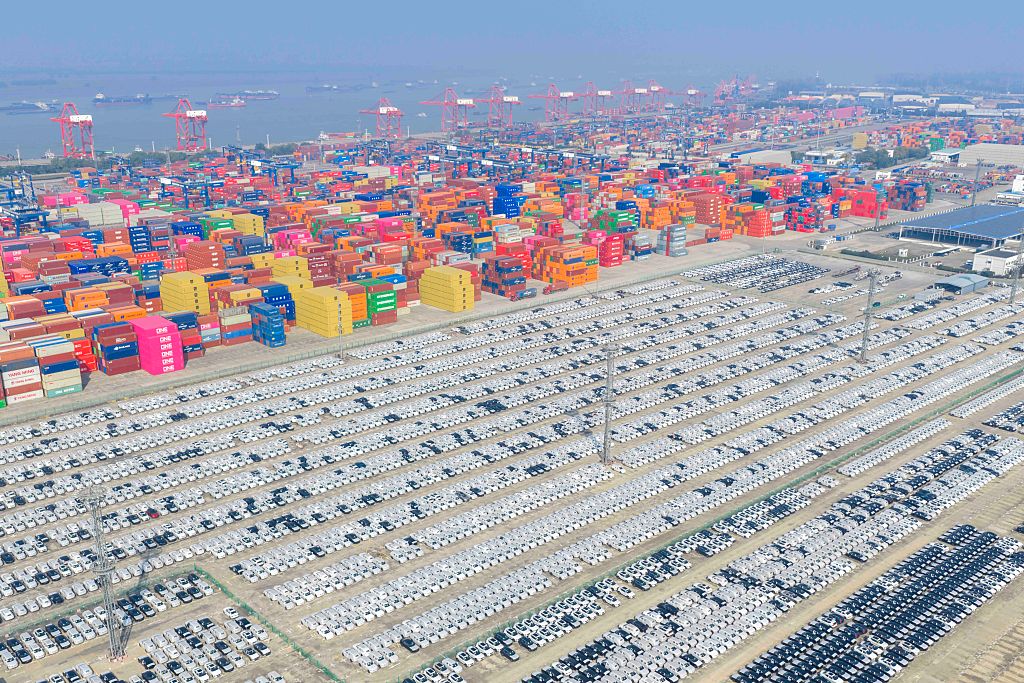
Vehicles waiting to be exported at Nanjing Port, 14 November 2025, Jiangsu Province, China (Shi Jun/VCG via Getty Images)
Here, it is tempting to paint Chinese policymakers as evil and blame them for both unleashing domestic deflation and more significantly, making manufacturing uncompetitive for the rest of the world. But China is now too large a share of the global economy for such straightjacketed rhetorical narratives. From CCP Standing Committee members to a township official in Hubei, Chinese policymakers just can’t imagine a world with an alternate developmental model. They fear the risk is too high and might unleash some form of mass political chaos if the alternate model doesn’t work or takes too long to materialise.
This leaves the rest of the world with a relatively brutal policy option: either do nothing or raise protective barriers against Chinese imports and embrace some good old inflation until supply chains reorient.
Yet, there does seem to be another option. Let’s assume that the Chinese model is unlikely to change over the foreseeable future. Now as one sector after the other saturates, countries should start anticipating towards which sector the government subsidies and bank loans are likely to be redirected towards. This is step number one.
The subsequent play is picking which of those sectors – say five years later – your own economy might have the capacity to become competitive at. For those selected sectors, the government should incentivise R&D, production incentives, and cheap credit – given the existing fiscal constraints. If necessary, trade protectionism should be used, but strategically, to ensure that necessary capital goods and inputs can be imported at competitive prices.
The second half of the 20th century involved most countries becoming like the US – even the industrial policy veterans including South Korea and Japan. It is increasingly obvious that the first half of this century will require countries to become more like China if they want to stand a chance to meet the aspirations of their citizens.