

Listen to this article
Estimated 4 minutes
The audio version of this article is generated by text-to-speech, a technology based on artificial intelligence.
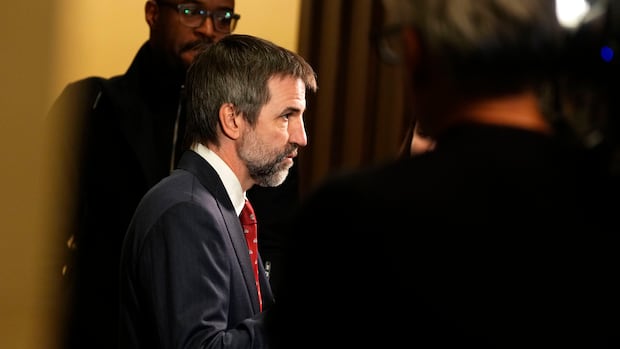
The federal government is stoking Quebec separatism by walking back its climate commitments — including in its recent deal with Alberta — Liberal MP and former cabinet minister Steven Guilbeault says.
“There is a feeling right now that by abandoning our climate goals we are fuelling the separatist movement,” Guilbeault said in an interview airing Sunday on CBC’s Rosemary Barton Live.
Guilbeault stepped down last week as minister of official languages, Canadian identity and culture — as well as Prime Minister Mark Carney’s Quebec lieutenant — after Ottawa signed an agreement with Alberta that jointly agrees on a path forward for a new bitumen pipeline to the B.C. coast.
As part of the agreement, Ottawa will suspend the proposed federal oil and gas emissions cap and remove Alberta’s requirements under the Clean Electricity Regulations — both of which were introduced when Guilbeault was environment minister under former prime minister Justin Trudeau.
WATCH | Guilbeault’s interview with Rosemary Barton: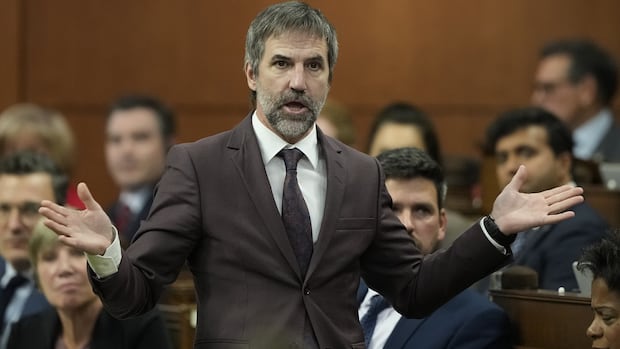
Guilbeault says energy deal is an attempt to ‘appease’ Alberta separatist movement
Chief political correspondent Rosemary Barton speaks to Liberal MP Steven Guilbeault about what drove him to leave Prime Minister Mark Carney’s cabinet.
Carney touted the agreement with Alberta as “an example of co-operative federalism.”
Guilbeault argued that the federal government has tried to appease Alberta in the past, namely by purchasing and completing the Trans Mountain Expansion pipeline — but he argued that failed to quell western alienation or support for Alberta’s separation.
“Using a solution that failed before, we’re trying to appease separatist movements in one part of the country by fuelling them in another part of the country,” Guilbeault told host Rosemary Barton.
The Montreal MP also suggested that the Quebec separatist movement is far more organized than the Alberta movement.
“There is clearly a sentiment by some Albertans that they don’t see themselves in the federation. But we also have to be careful, because we have a very strong separatist movement in Quebec,” Guilbeault said.
“It’s not just a movement. It’s a political party. It’s won elections,” Guilbeault said.
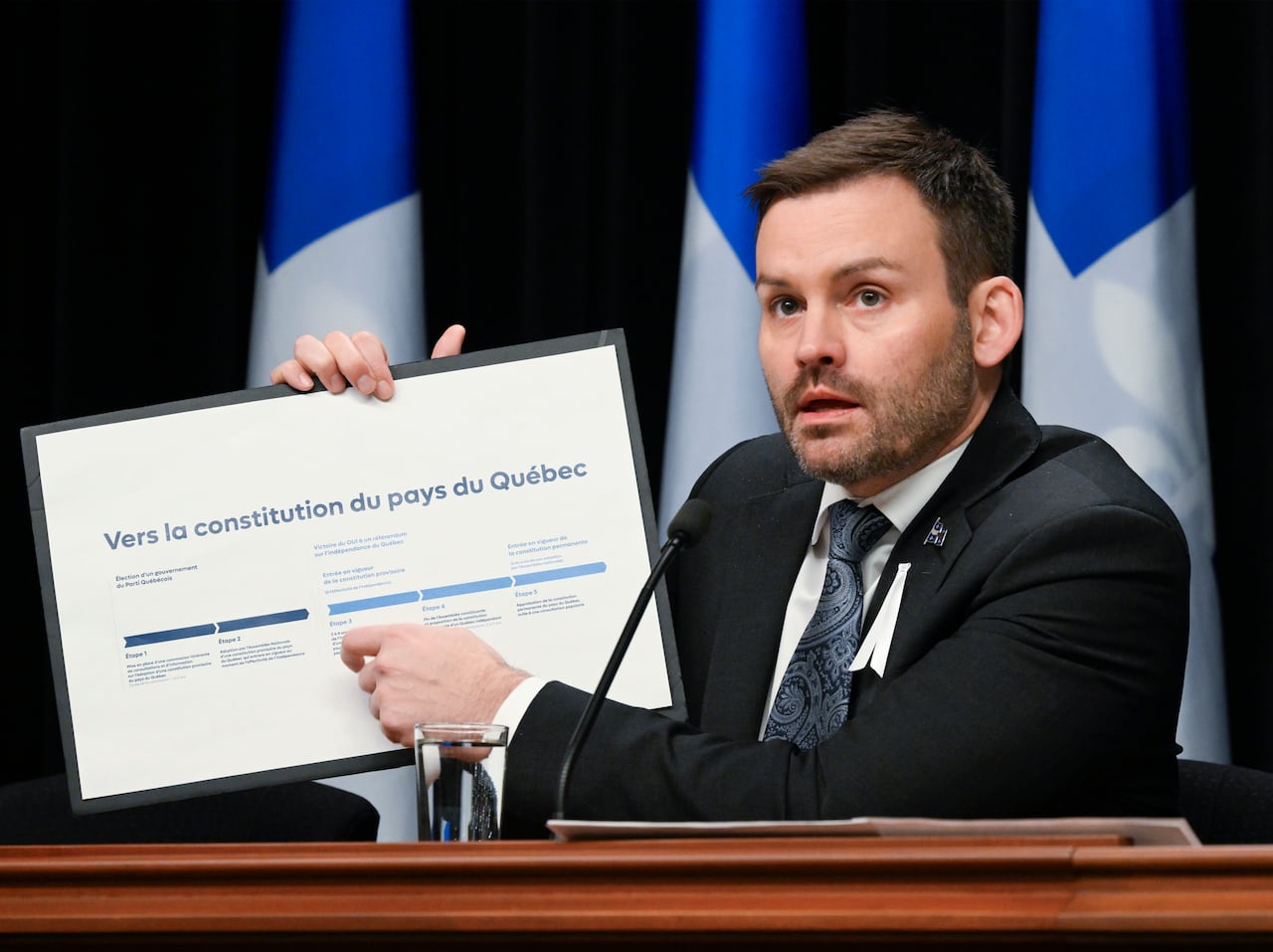 Parti Québécois Leader Paul St-Pierre Plamondon is promising a referendum on Quebec sovereignty if he wins next year’s election. (Jacques Boissinot/The Canadian Press)
The Parti Québécois has been leading in the provincial polls as Quebec is set for an election next year — and Leader Paul St-Pierre Plamondon is promising to hold a referendum on Quebec sovereignty if he wins.
Meanwhile, the federal Bloc Québécois is positioning itself as the only major party that is advocating for environmental policies in the wake of the Liberal government’s agreement with Alberta.
Quebec was one of the first provinces to put a price on carbon when it introduced a cap-and-trade system in 2013. That system is still in place even though other jurisdictions have removed their own.
Carney has walked back other Trudeau-era environment policies, most notably suspending the consumer carbon tax on his first day as prime minister.
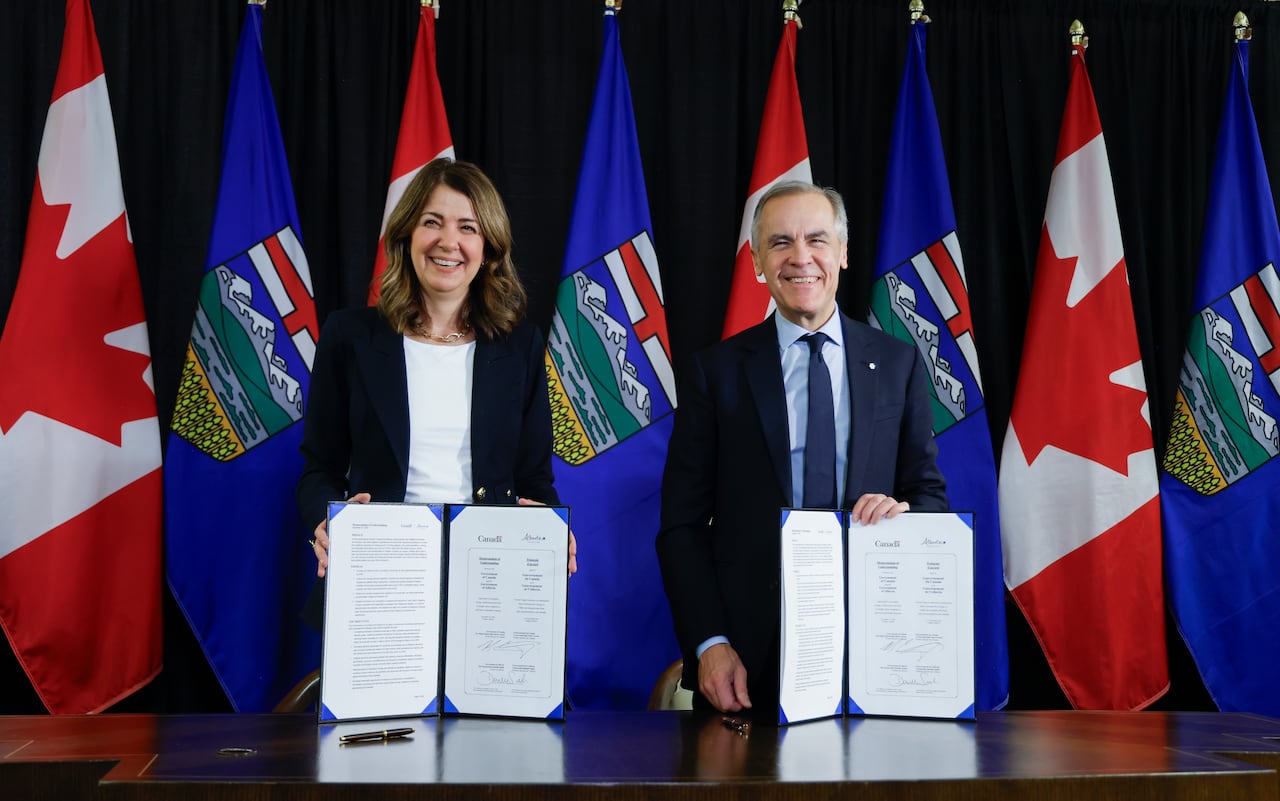 Prime Minister Mark Carney, right, and Alberta Premier Danielle Smith signed the energy agreement last month. (Jeff McIntosh/The Canadian Press)
The agreement with Alberta includes a commitment from the provincial government to enact a higher industrial carbon levy on emissions.
On Thursday, the Alberta government announced changes to its industrial pricing system, which environmental advocates fear will actually lower the price on carbon.
Guilbeault argued that Thursday’s move shows Premier Danielle Smith isn’t serious about raising the industrial price.
“I sincerely doubt that Premier Smith has any intention of making good on those commitments and yesterday’s example is one [that] screams volumes about her real intentions,” he said.
But Alberta’s Environment Minister Rebecca Schulz defended the changes to the industrial pricing system, saying that they were announced months prior to the province’s agreement with the federal government.
“These targeted updates make the … system stronger and more effective. We’re encouraging businesses to put dollars into cutting-edge technology and make site upgrades now, not later. This will lead to more emissions being reduced and a stronger system,” Schulz said in an emailed statement.