
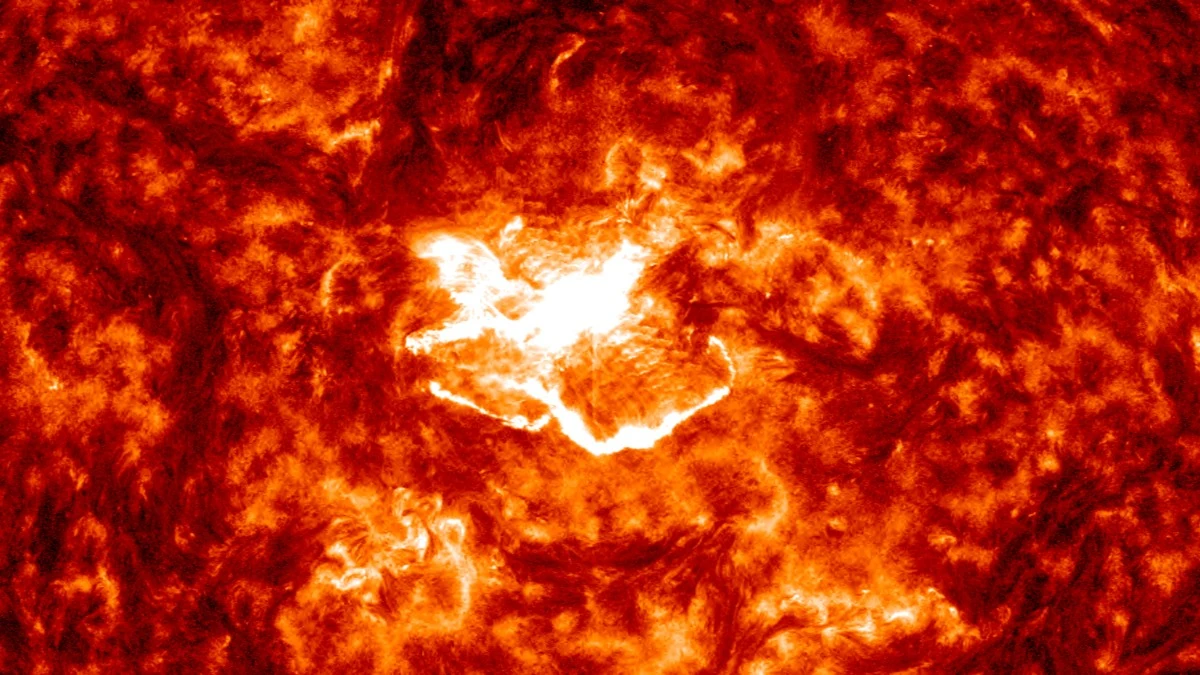
A strong solar flare measuring M8.1 erupted from Active Region 4299 at 20:39 UTC on December 6, 2025. The event started at 20:29 and ended at 20:49 UTC. A full-halo coronal mass ejection was produced, with impact expected early to midday on December 9, potentially causing periods of G3 – Strong geomagnetic storming.
A Type II Radio Emission with an estimated velocity of 1 143 km/s was associated with the event, suggesting a coronal mass ejection (CME) was produced during the event.
In addition, a 10cm Radio burst lasting 4 minutes and with a peak flux of 1 100 sfu was registered from 20:35 to 20:39 UTC. A 10cm radio burst indicates that the electromagnetic burst associated with a solar flare at the 10cm wavelength was double or greater than the initial 10cm radio background.
This can be indicative of significant radio noise in association with a solar flare. This noise is generally short-lived but can cause interference for sensitive receivers, including radar, GPS, and satellite communications.
M8.1 solar flare on December 6, 2025. Credit: NASA/SDO, Helioviewer, The Watchers
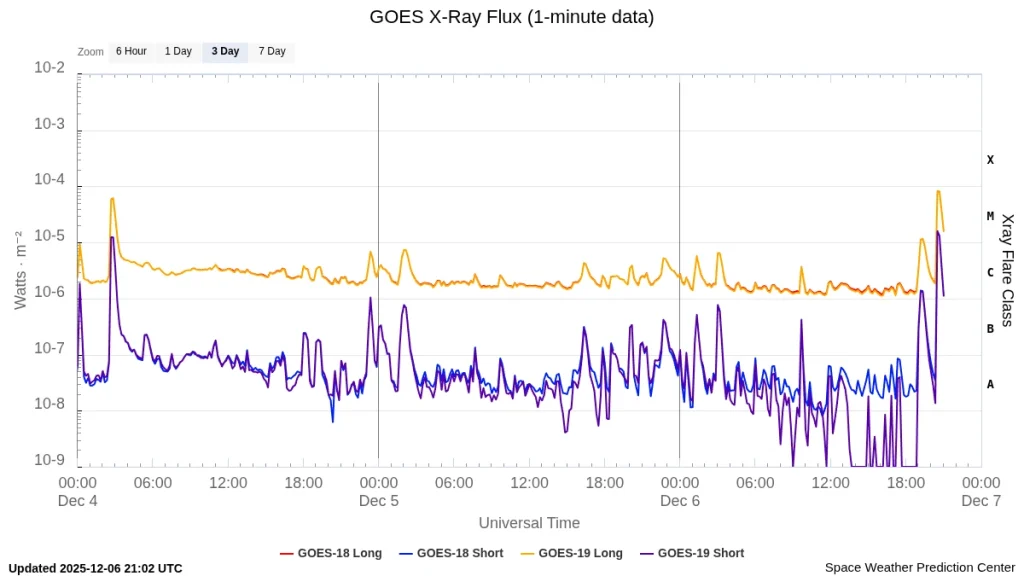 Image credit: SWPC
Region 4299 is located in a geoeffective position, suggesting CMEs produced by it are likely to be Earth-directed.
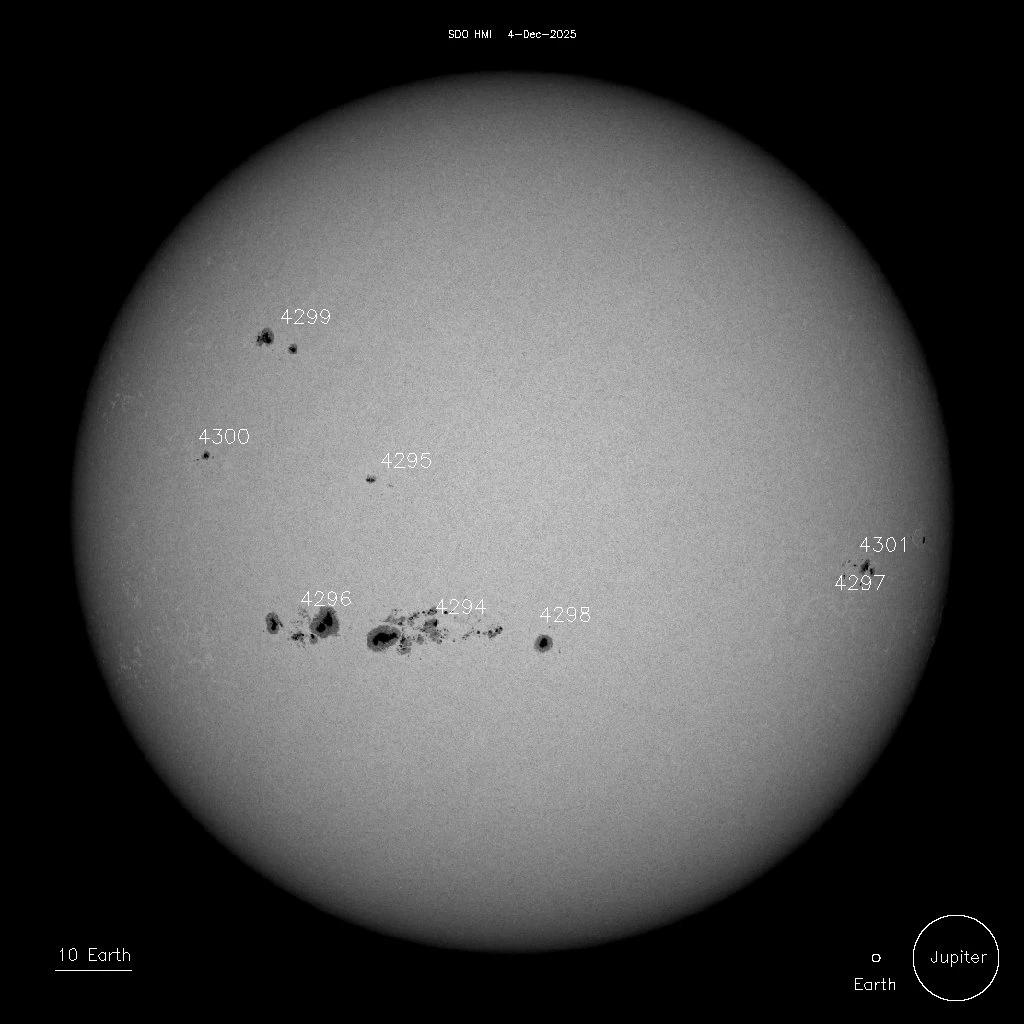 Sunspots on December 6, 2025. Credit: NASA/SDO HMI
The region has a ‘beta-delta’ magnetic configuration and is capable of producing more strong eruptions on the Sun. Earth-directed CMEs from this region are likely in the days ahead.
SWPC forecasters call for a 70% chance of M- and a 15% chance of X-class solar flares through December 8.
Update
07:40 UTC, December 7
The flare produced a full-halo CME, expected to impact Earth early to midday on December 9, potentially causing periods of G3 – Strong geomagnetic storming.
Halo CME associated with an M8.1 flare from AR 14299, which was right in Earth strike zone. It is hard not to predict it will hit us on December 9. I will upload a movie of AIA images shortly. pic.twitter.com/TtONZSHljN
— Halo CME (@halocme) December 7, 2025
According to SWPC, the effects are expected to be limited, with minor impacts to some technological infrastructure possible, but usually mitigable.
The aurora may become visible over many northern states and parts of the lower Midwest, extending into Oregon.
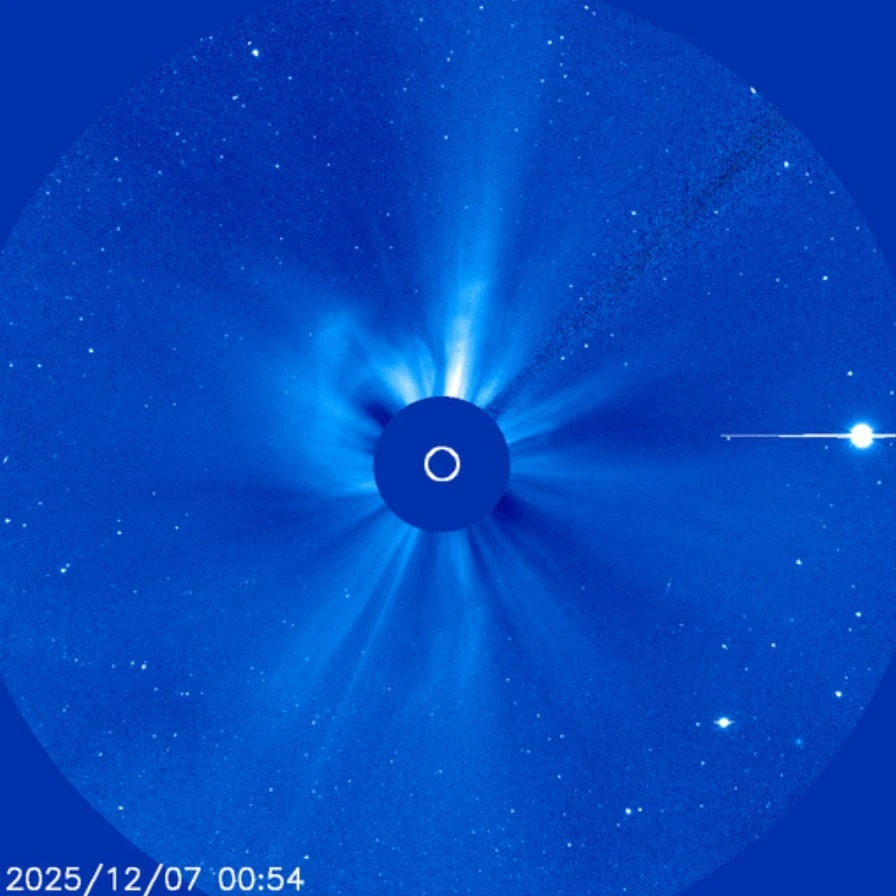 Image credit: NASA/ESA LASCO C3
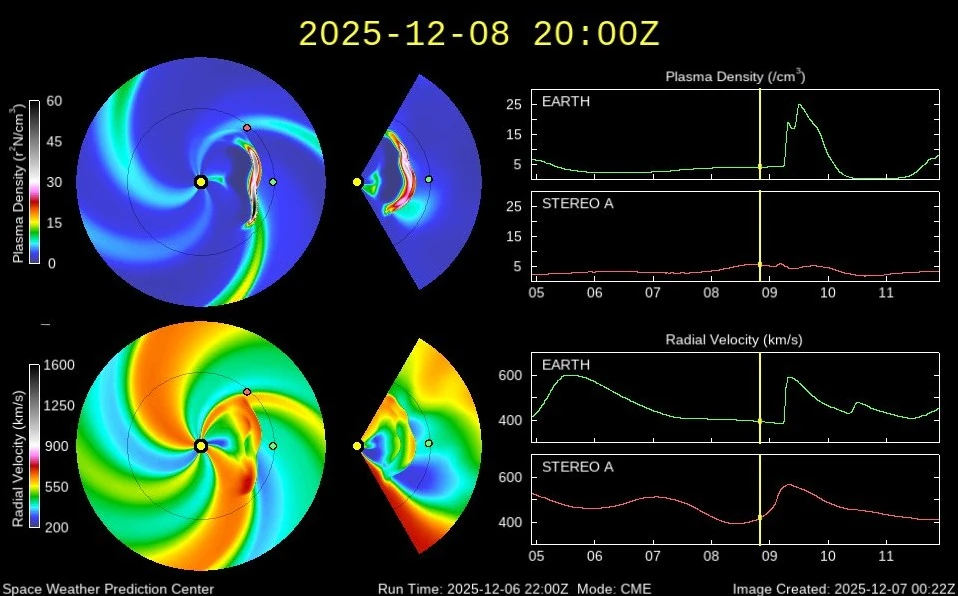 Image credit: SWPC