
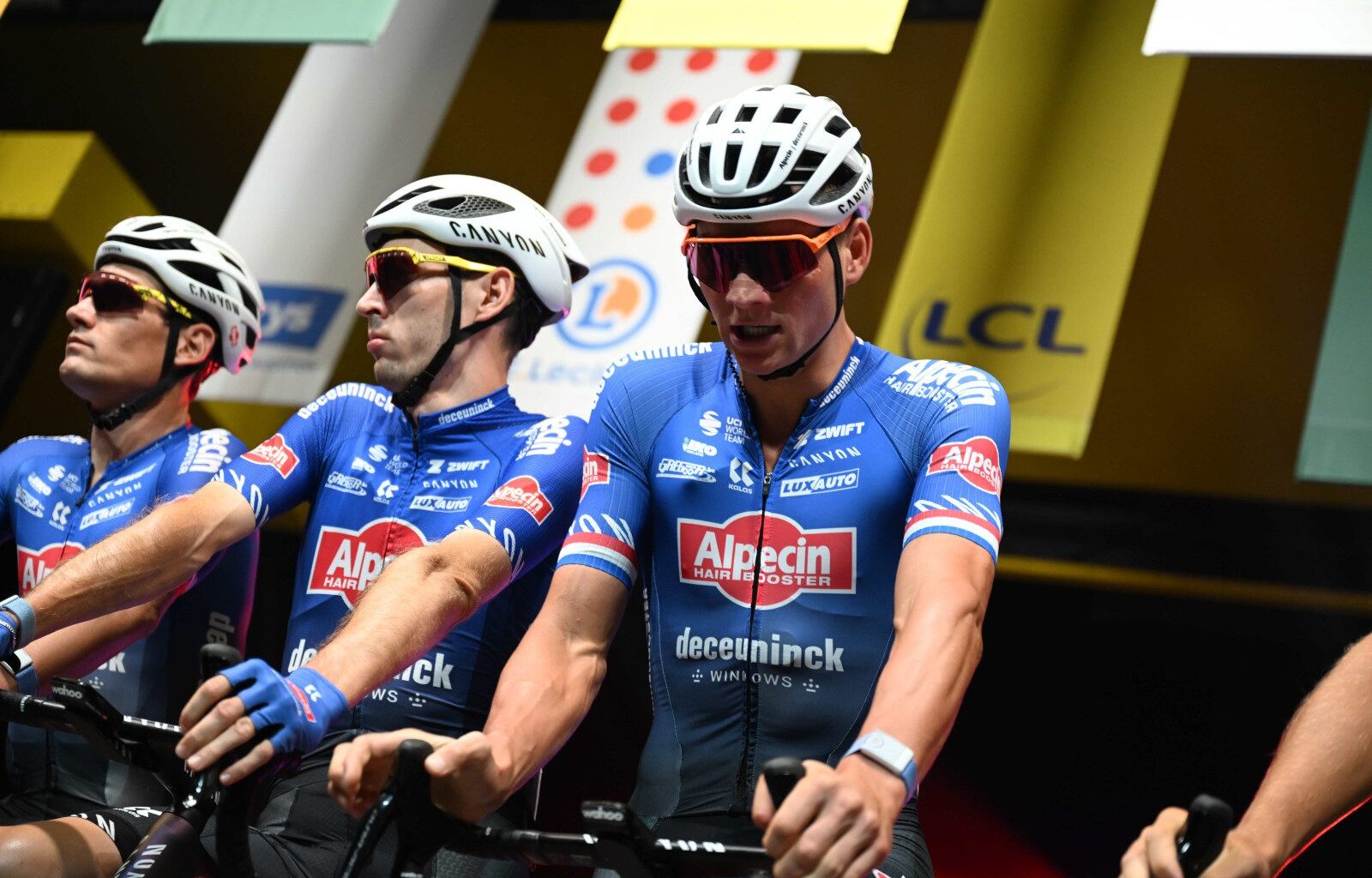
In a sport where long-term stability is rare and sponsorship battles are often fought in silence, brothers Philip and Christoph Roodhooft have once again managed to steer their program into calmer waters. The architects behind the Alpecin teams — home to stars such as Mathieu van der Poel and Puck Pieterse — have secured the future of their structure by extending Alpecin’s involvement and bringing Quebec-based Premier Tech on board as a new naming partner beginning in 2026.
It’s a significant move, especially with Deceuninck reducing its commitment. And it didn’t come easily, according to Dutch media.
Premier Tech, which recently cut ties with Israel–Premier Tech, was one of the most pursued sponsors in the sport this year. INEOS Grenadiers, Soudal–Quick-Step, EF Education–EasyPost, Astana, Picnic–PostNL and even the women’s team St Michel–Préférence Home–Auber93 were all linked to the company at various points. Yet it was the Roodhoofts who ultimately won the trust of Premier Tech CEO Jean Bélanger.
“There’s definitely relief,” Philip Roodhooft said, “but mainly joy and pride that we’ve managed once again to connect an important company to our project for the long term. Everyone knows it’s not easy — not for us, and not for many other teams. There have been a lot of interesting conversations these past months.”
Hugo Houle on his new team: Alpecin–Premier Tech
According to Roodhooft, discussions stretched longer than expected, to the point that the team briefly explored bridge solutions for 2026 built around Deceuninck and bike supplier Canyon. But when Premier Tech decided to commit, things fell into place quickly.
“In the end, Premier Tech was the perfect solution,” he said. “They’re a company that thinks long-term and shares our culture and values.”
A relationship that made everything easier
When word emerged that the Roodhoofts’ personal connection with Bélanger played a decisive role, Philip didn’t deny it.
“We’ve known each other for a while, and that does make things easier,” he said. “You don’t need weeks just to understand who the person is on the other side of the table. This kind of commitment involves large sums of money and a long horizon. If you barely know each other, it becomes a much harder story from the sponsor’s perspective.”
He added, switching briefly into Dutch, that Bélanger also appreciates the hands-on way the brothers run their team. “Christoph and I are very close to the day-to-day operations. I think that’s something he recognizes. Patience is a virtue — sometimes things fall into place, sometimes they don’t.”
A budget lift — and a clearer runway
With Premier Tech’s arrival, the team will see a modest budget increase in the first year, but the significant growth is built into the years that follow.
“That’s important for staying competitive,” Roodhooft said. “We’ll have a bit more, but the upward trend in the contract is what really matters.”
Does that mean calmer years ahead?
“We’ve had an incredibly busy year,” he laughed, “but I wouldn’t say the next ones will be calm. That’s not realistic.”
What this says about cycling in 2025
The hunt for a major sponsor dragged on for months — something several WorldTour teams are facing as budgets swell and the sport’s financial model remains fragile.
But Roodhooft cautions against writing cycling’s obituary.
“It hasn’t been easy in the past either,” he said. “People overlook the fact that Tudor came into the sport, that Decathlon and Red Bull came in, that Lidl expanded its support. As a whole, I don’t think it’s so bad. But yes, the model isn’t obvious. It never has been.”
He points out that disruption can also create openings.
“When things get more difficult, opportunities appear. Look at the Unibet Rose Rockets. In 2020, we had Mathieu van der Poel and Tim Merlier and still didn’t get Grand Tour invitations. Now Unibet can’t be left out of the Tour. If you can put together a good budget and tell a good story, you can climb very quickly in this sport.”
The billionaire question
Of course, the WorldTour is increasingly influenced by state backing and billionaire ownership — something fans often debate.
“That’s true,” Roodhooft acknowledged. “People have their opinions, but it’s a business model. It brings security and stability for some teams. But yes, it can also depend on the wishes of one person.”
Alpecin–Deceuninck (soon to be Alpecin–Premier Tech) remains one of the few major teams still operating in a more traditional model: owner-led, without a single wealthy patron to plug financial gaps.
“That’s the advantage — and the disadvantage,” he said. “Budgets keep increasing, and with that the risks get bigger if you don’t find the right partners. We’ve always believed it would work out, and it has.”
The future of the model
Which is better — the classic model or the billionaire-backed one?
“One doesn’t exclude the other,” Roodhooft said. “It can work this way, absolutely. But as a sport, we need to explore every initiative that could make cycling’s business model more stable. We have to keep working together to make that future possible.”
As well as Premier Tech coming into the fold, another Canadian has joined the squad. Former national champion and Tour de France stage winner Hugo Houle is now part of the team. He joins Noah Ramsay, who rides on the Continental outfit.