
Over the past year, most within the NASCAR industry have wondered what it would be like if the landmark antitrust lawsuit filed by 23XI Racing and Front Row Motorsports against the league made it to trial.
This once-far-fetched possibility is now a reality, as last week saw the start of one of the biggest moments in NASCAR history, a trial that could dramatically reshape the sport. The opening five days saw Michael Jordan, Denny Hamlin and more notable names take the witness stand inside a federal courtroom in Charlotte, N.C.
In advance of what should be an equally noteworthy week, The Athletic’s Jeff Gluck and Jordan Bianchi, who’ve been in the courthouse for every moment of the trial, offer both a look back at what’s already transpired and what’s to come.
Who has testified so far, and what did they say?
Jordan, who owns 23XI, was the headlining witness, and attorney Jeffrey Kessler made sure to save him for Friday afternoon before the jury went home to sit and digest their long week in the courtroom.
Jordan portrayed himself as a lifelong NASCAR fan who understands sports business models and realized NASCAR’s version was unfair. He said if NASCAR offered better terms to the race teams in a true partnership, all parties would benefit and grow together.
Hamlin, the three-time Daytona 500 winner who is Jordan’s co-owner at 23XI, had fiery and combative testimony to open the trial and made his displeasure for the France family and their rule of the sport clear — even saying he felt he had to recite talking points issued to drivers or would get a call from NASCAR.
The 23XI owners were also joined as witnesses by their co-plaintiff Bob Jenkins of Front Row Motorsports, who told the jury he has lost money every single year during two decades of Cup Series team ownership.
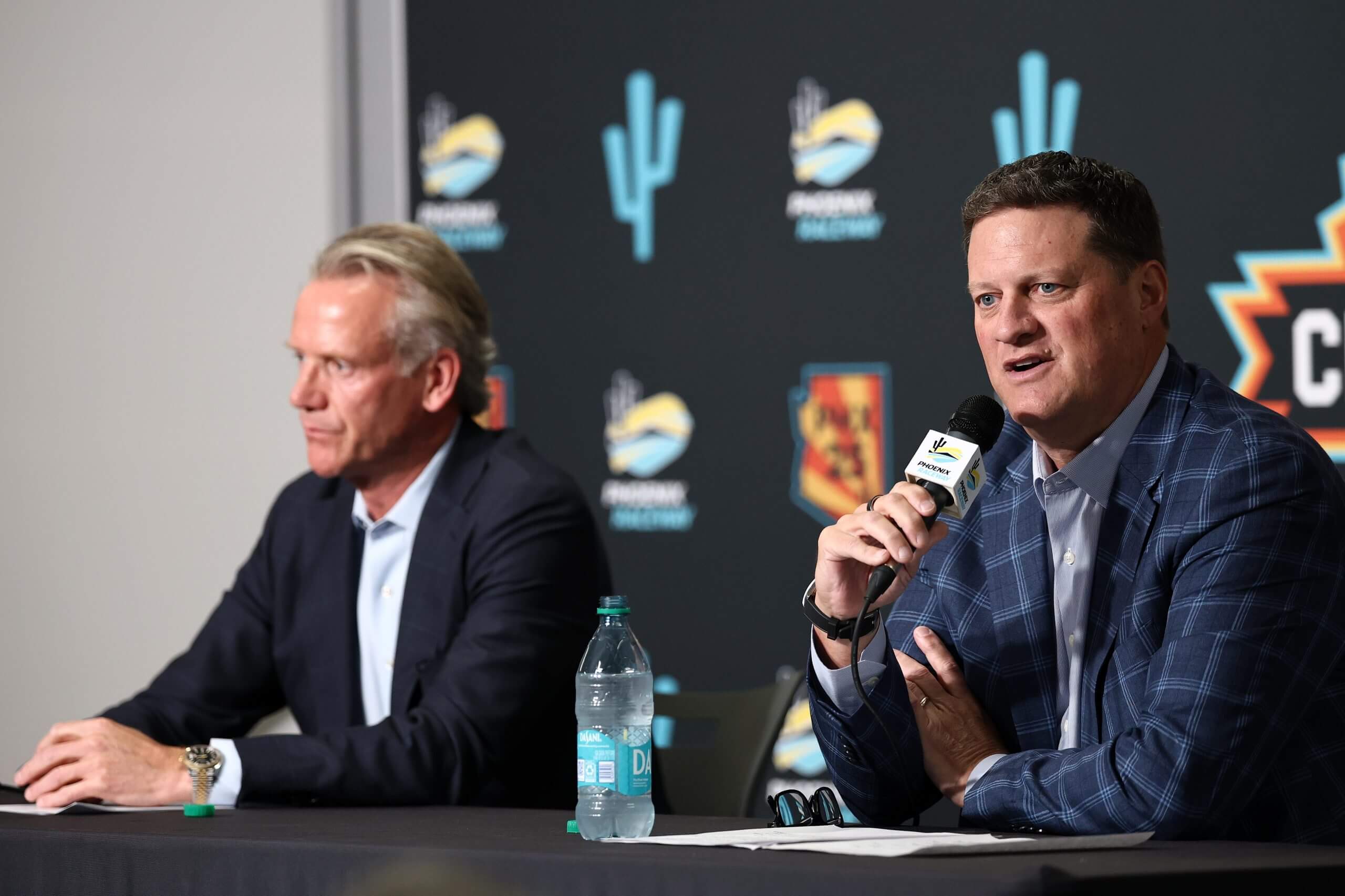
NASCAR commissioner Steve Phelps, left, and president Steve O’Donnell. (Jared C. Tilton / Getty Images)
NASCAR executives Steve O’Donnell and Scott Prime had lengthy sessions on the witness stand as their communications about the charter negotiations revealed NASCAR’s thinking about potential competitors and their problems convincing NASCAR’s board of directors and its chairman, Jim France, to cede some points to the teams.
Joe Gibbs Racing co-owner Heather Gibbs was one of the most effective witnesses, relaying to the jury how she had stepped in as an executive after her husband Coy’s sudden and tragic death in 2022 — only to discover her attempts at getting permanent charters for the team were rebuffed.
Gibbs painted a vivid picture of team owner Joe Gibbs pleading with France “don’t do this to us” after a take-it-or-leave-it deal left them with no choice but to sign or risk going out of business.
And finally, Race Team Alliance executive director Jonathan Marshall ended the week by telling jurors it was “impossible” to form a competitor stock car series based on how NASCAR had locked up all the desirable racetracks in the United States with exclusivity agreements.
Who are the witnesses yet to come?
Perhaps the main character of this story is not Jordan but France, the NASCAR CEO who is personally named as a defendant (alongside NASCAR) in the suit.
Though O’Donnell and Prime were grilled on the witness stand, much of their testimony revealed them as moderates who were trying to strike a compromise with the teams — but were continually met by a “brick wall” in France (as one of Prime’s text messages put it).
France is expected to be called by the plaintiffs during their argument, so he could appear early this week. How he fares on the stand could be absolutely crucial for the jury’s decision.
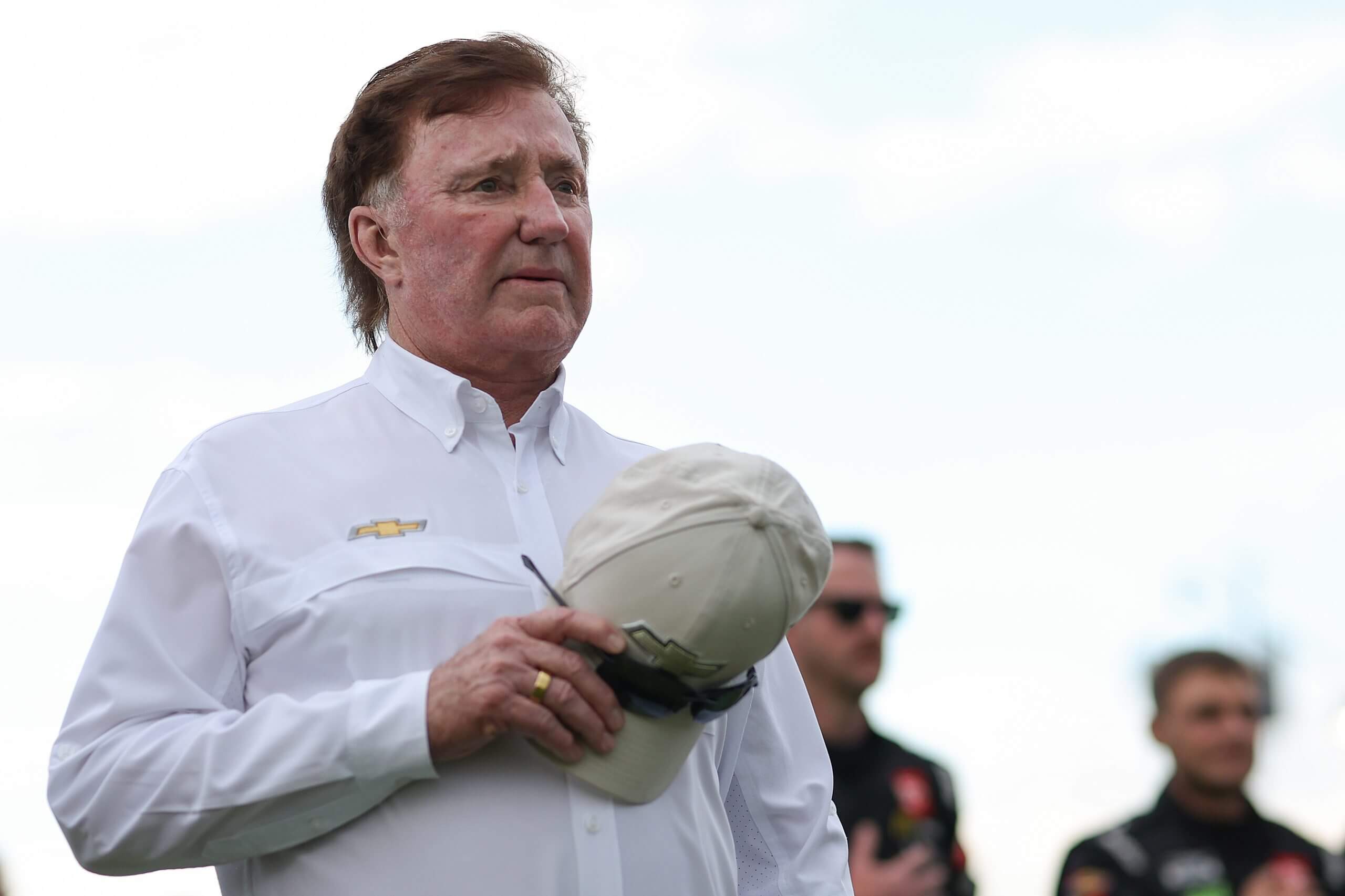
Richard Childress, owner of Richard Childress Racing. (Krista Jasso / Getty Images)
Another anticipated witness: Richard Childress, owner of Richard Childress Racing, who has backed the other teams in asking for permanent charters even though he reluctantly signed the charter deal in 2024.
Childress was recently incensed when text messages from NASCAR commissioner Steve Phelps, who was NASCAR’s president at the time, emerged calling Childress a “stupid redneck” who should be “taken out back and flogged,” among other things.
Those text messages will not be shown to the jury, but Childress threatened legal action over them and will likely be willing to take shots at NASCAR from the witness stand.
Phelps has also yet to testify, and NASCAR is expected to call team owners Rick Hendrick and Roger Penske during their portion of the arguments — though Penske’s availability is in doubt due to scheduling conflicts.
What are the teams trying to prove, and what have they shown so far?
Judge Kenneth D. Bell already ruled before the trial that NASCAR has a monopoly over its category, labeled as “premier stock car racing.”
Jurors will be asked to decide whether NASCAR abused its monopoly power by imposing anticompetitive terms on the race teams and trying to quash any potential competitors.
Kessler has employed a strategy of emphasizing the “gun to the head” teams felt they faced to sign unfavorable charter agreement terms — echoing words used in a text message from Prime — and showing they had no place else to race.
Another emphasis has been on the track exclusivity agreements, as Kessler showed evidence NASCAR denied what they viewed as a potential competitor series — the Superstar Racing Experience (SRX) — to race at a track, owned by Speedway Motorsports, that also hosts NASCAR events.
Our impressions
A lynchpin of the plaintiffs’ case is how NASCAR’s fear of a rival LIV Golf-type league would arise amid the owners’ frustrations over the prolonged charter negotiations, effectively offering an alternative for teams (and their star drivers) where they could operate outside of the France family’s control.
The threat of a possible rival series has always lurked in the background as NASCAR and owners struggled to reach a new charter agreement, but it wasn’t clear until recently how concerned NASCAR was about it. Evidence presented throughout the week focused on two key points.
The first is that NASCAR added exclusivity clauses in contracts it had with tracks outside its portfolio, limiting the types and quality of tracks any potential breakaway series could race, giving NASCAR a significant advantage. NASCAR also made it a point to strengthen its relationship with Speedway Motorsports, which has 10 tracks that host a combined 14 Cup Series races, lest Speedway decided to align with the teams.
Attorneys for the plaintiffs further demonstrated the heightened angst within NASCAR over the rising popularity of SRX, the stock car series co-created by former NASCAR driver Tony Stewart. At the onset of SRX, NASCAR executives supported a series they believed would be more “auxiliary” in nature, though this belief changed when more and more active Cup drivers began participating, even prompting one of NASCAR’s media rights partners to express its dismay that a similar looking series to Cup was competing on a rival network and at a greatly reduced price point. NASCAR later blocked SRX from racing at Speedway-owned North Wilkesboro Speedway.
According to the plaintiffs’ case, while SRX may have closed down after three years, its formation and subsequent success — albeit short-lived — was enough to further convince NASCAR that a rival racing league could be established and become a competitor.
Moment that jumped out
There have been so many. On Monday morning, it was the realization that this trial was actually proceeding. NASCAR was actually going to have to defend itself in federal court in an antitrust case, and its private business dealings would be made public. This was followed by Hamlin, who nearly won the Cup Series championship mere weeks ago, taking the witness stand to air his grievances pertaining to why he thought NASCAR’s tactics were illegal.
There has also been illuminating testimony from O’Donnell, Jenkins sharing his rags-to-riches story, and Heather Gibbs’ recalling what it was like behind the scenes at Joe Gibbs Racing when NASCAR made its final offer to the teams to sign the charter agreement.
Then there is Jordan, omnipresent throughout every moment of the trial, sitting in the front row for everyone to see. In the buildup to his testimony Friday, the courtroom was packed well in advance. Eventually, court security stopped allowing non-essential individuals inside. And when Jordan was called to the witness stand, you could feel the fixation on him. Here was arguably the greatest NBA player in history, and still one of the most popular figures in all of sports, about to explain why he was suing NASCAR.