
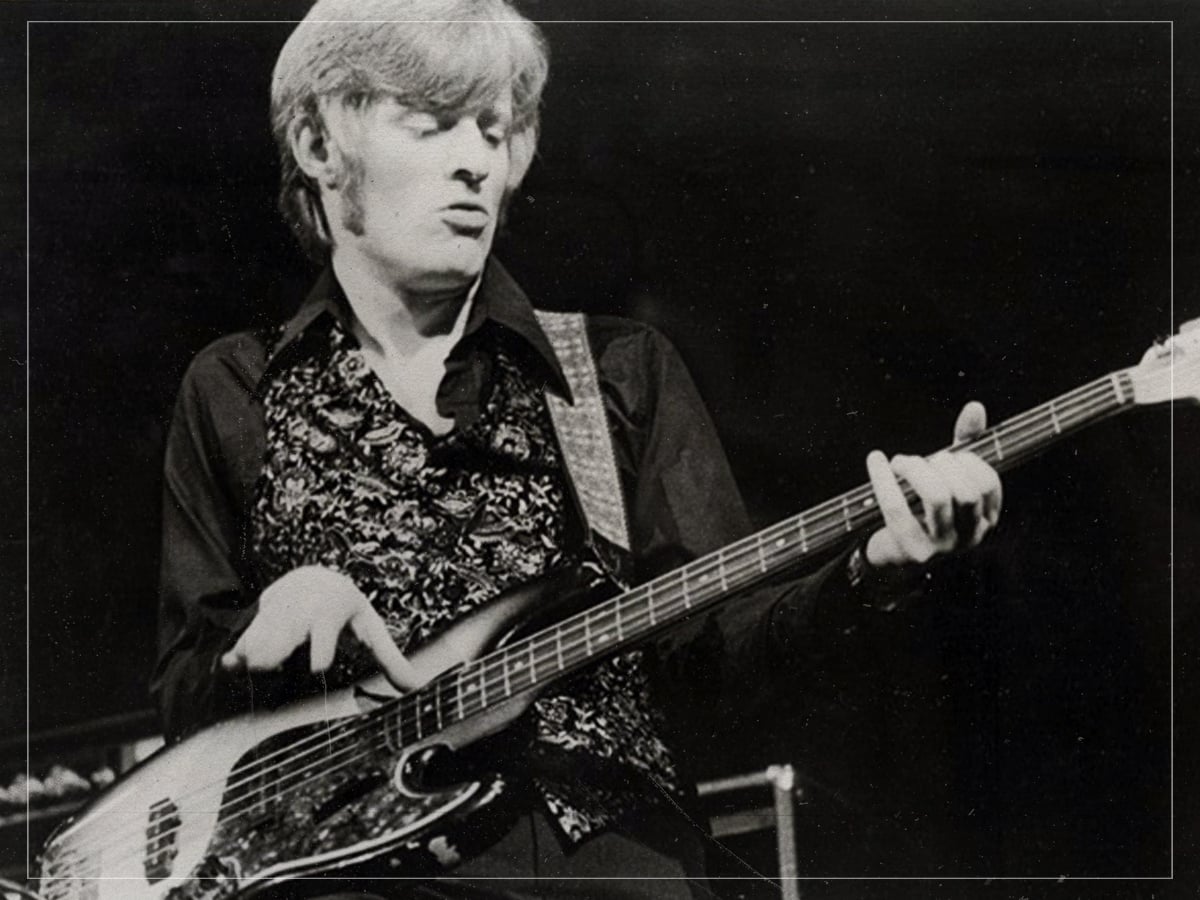
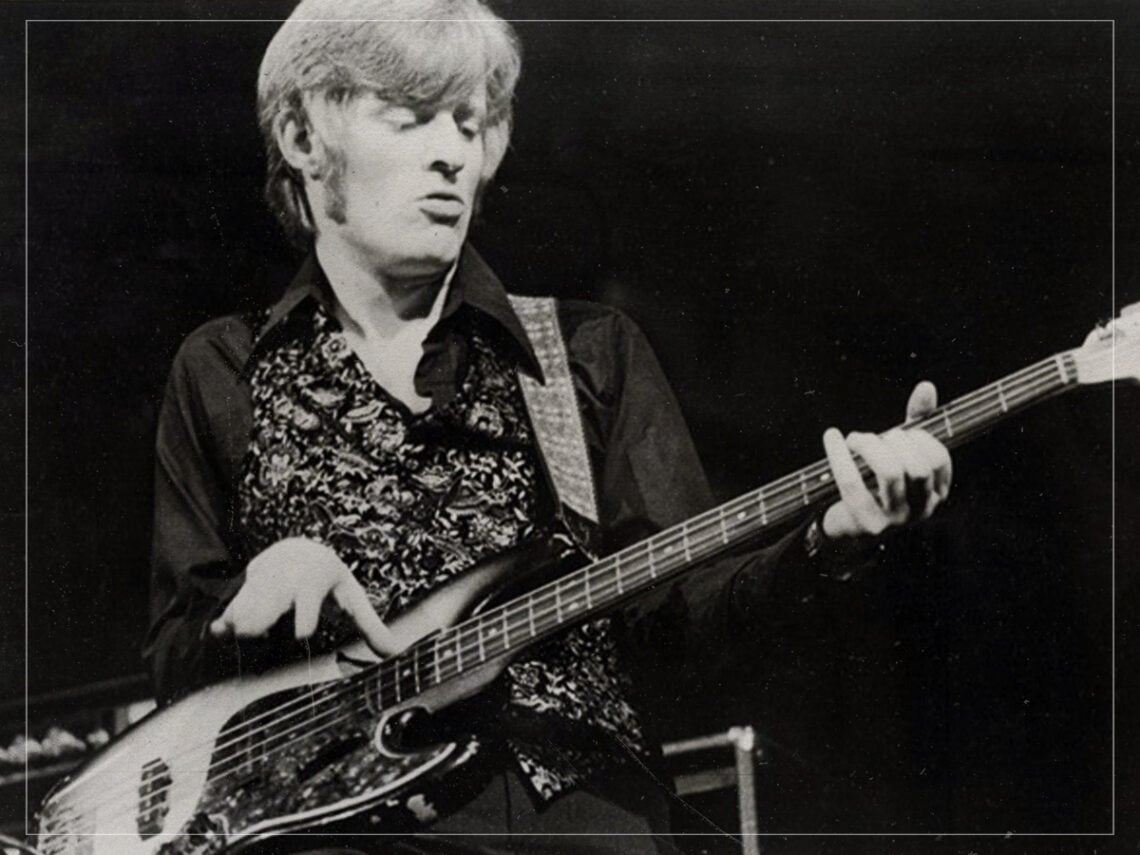
(Credits: Far Out / Led Zeppelin)
Sun 7 December 2025 16:53, UK
Every musician in Led Zeppelin could justifiably be described as a virtuoso. Being the first significant supergroup that the rock world had ever seen, Jimmy Page had assembled the best players in the English rock scene to fill out his new outfit after The Yardbirds, with every member bringing their sonic spice to the mix. Although Page may have been able to ignite a guitar riff better than most, he was always matched by the intensity of John Paul Jones.
Both veterans of the session world, Jones and Page were known to have different feels when working on Zeppelin’s signature tunes. While drummer John Bonham was known to play behind the beat most of the time, Page was slightly ahead of the beat, whereas Jones was right up the middle, driving the song forward at every turn.
Even though the bulk of Led Zeppelin’s debut was comprised of blues standards they had been playing for years around the London club scene, the few originals heralded the beginnings of hard rock. Across tracks like ‘Communication Breakdown’ and ‘Dazed and Confused’, the band were paving the way for what the next generation of rock stars would sound like, with Page pushing the guitar to its limits by using different bows across the strings.
Although Jones could manage to morph his sound into anything he wanted, the first track that fans heard from the new outfit was known to trip him up. Despite the basic bluesy structure behind ‘Good Times Bad Times’, Jones would remark how difficult it was to settle into the groove when first putting the track down.
Discussing the power of the song during the band’s reunion in 2007, Jones would tell Rolling Stone, “That’s the hardest riff I ever wrote, the hardest to play.” Jones wasn’t the only one who was thrown for a loop when putting the track together. “‘Good Times, Bad Times,’ as usual, came out of a riff with a great deal of John Paul Jones on bass’, as Page would recall in Guitar Greats, “It really knocked everybody sideways when they heard the bass drum pattern because I think everyone was laying bets that Bonzo was using two bass drums, but he only had one.”
 The legendary Led Zeppelin. (Credits: Alamy)
Returning to the track, it’s easy to see how the song could trip up even the most seasoned industry veterans. Despite the massive crunch of the riff being played by Jones and Page in unison, the string-skipping technique going on throughout the central riff is deceptively tricky, causing the player to go from straight arpeggios to open power chords at a moment’s notice.
While it may have been difficult for most to master, Jones approaches the riff like it’s second nature on the studio version. Since the bassist is responsible for holding down the rest of the band, Jones feels entirely at home in the groove, even laying some tasty lead licks when the entire band cuts out in between the choruses and before Page’s screaming solo.
Then again, this wouldn’t be the last time Jones contributed something complicated to the Zeppelin oeuvre. When working on their fourth outing, Jones would contribute the central riff for what would become ‘Black Dog’, being played in a complex time signature that almost makes the band sound out of sync before roaring back in on the downbeat together. John Paul Jones may have had advanced music knowledge compared to his contemporaries, but even he wasn’t exempt from writing songs that even he couldn’t understand at first.
Is it John Paul Jones’ favourite Led Zeppelin song?
Perhaps understandably, the track doesn’t rank among the bassist’s favourites. Though some musicians relish a difficult task, Jones isn’t one of them.
Two of those are ‘When The Levee Breaks’ and ‘Kashmir’, the latter being a song that almost every member of the group cited as their best. Another one of Jones’ favourites is the brilliant ‘What Is and What Should Never Be’, the bassist recalls: “The way the rhythm [section] comes in — the way the drums come in is just magical, that changing of gear.”
Related Topics
The Far Out Led Zeppelin Newsletter
All the latest stories about Led Zeppelin from the independent voice of culture.
Straight to your inbox.