
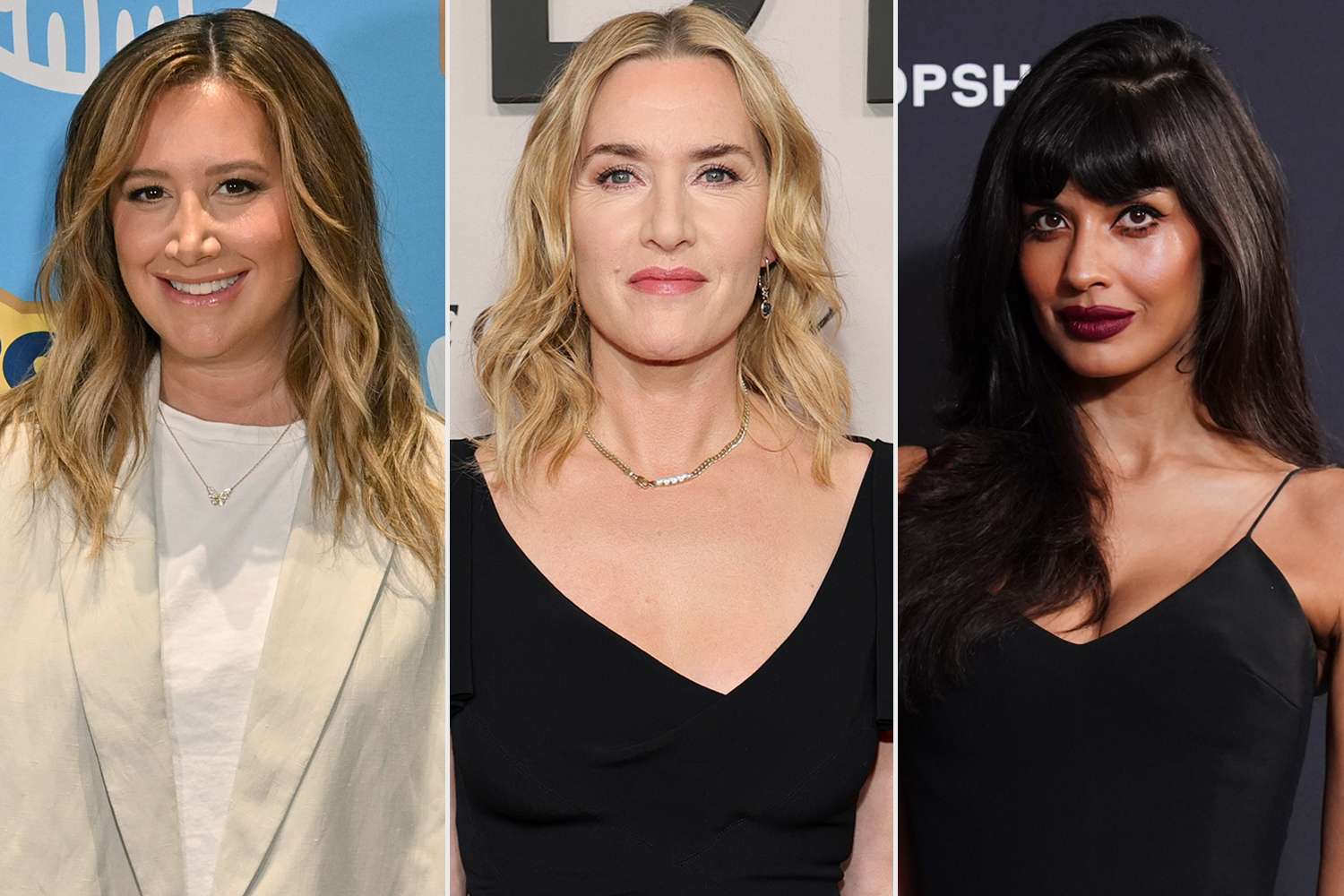
Over the weekend, Kate Winslet put a voice to a thought that has been rattling in my brain for quite some time: In the wake of the recent GLP-1-fueled weight loss trend that’s taken over Hollywood, how far is too far? And with the internet being, well, the internet, how are we talking about it responsibly — even outside of celebrity culture?
Winslet, who has long been a voice for body positivity in an industry focused on thinness at all costs, reacted strongly to the trend of stars using GLPs for weight loss, in some cases outside of the existing health issues for which they were initially designed.
“It is devastating,” the Titanic actress told the Sunday Times. “If a person’s self-esteem is so bound up in how they look, it’s frightening.”
She continued, “And it’s puzzling because I have moments when I think [the culture has gotten] better, when I look at actresses at events dressed how they want, whichever shape. But then so many people are on weight-loss drugs. It’s so varied. Some are making choices to be themselves, others do everything they can to not be themselves … And do they know what they are putting in [their bodies]? The disregard for one’s health is terrifying. It bothers me now more than ever. It is f—— chaos out there.”
She is not the first celebrity to voice concerns over Hollywood’s weight loss wave. In November, a TikTok video of Jameela Jamil sharing a similar sentiment went viral, with people applauding The Good Place star for addressing the topic.
“It is not body-shaming to comment on the fact that there is a rapid rise of the aesthetic of emaciation amongst women in Hollywood,” she said.
“Women in their 20s, 30s, 40s—50s, even—all of a sudden becoming so thin that you can see their ribs; you can see their hip bones jutting out…. No one’s saying, ‘Eww, they look disgusting….’ That would be body-shaming. What we are commenting on it for is because it’s so widespread; it’s so extreme, [and] it’s happened so fast,” she continued.
“What happened to the movement of women being allowed to eat and accept their bodies and accept growing older? What’s going on?”
Ashley Tisdale.
And before that, Ashley Tisdale, who’s been an actress since she was a teen, also shared her experiences, writing on her website that while off-label use of GLP-1’s may have been common for a while, she’s been shocked to see the cavalier way in which in which it’s now being discussed, with people openly admitting to taking the medication to even lose small amounts of weight.
The discourse has been interesting for me to watch as a person who grew up in the early aughts, a time in which starlets truly couldn’t win; they were either criticized for carrying a few extra pounds (absurdly so, if you look at photos from that time) or fielding eating disorder rumors.
When older interviews resurface on social media, the cringe is almost too great to bear; the questions asked to 17-year-olds about their bodies were grotesque, so it’s no wonder many of them opted not to speak on the subject, which then gave way to a culture of shame that permeated our everyday lives.
Jameela Jamil.
Jed Cullen/Dave Benett/Getty
In the years since, there has been a lot of dialogue and reassessment of that time period. Plenty of stars have emerged who are proud of not being sample size and have spearheaded the body positivity movement. Runways, magazine covers, TV shows and movies have opened up and are showing different kinds of bodies. We have a long way to go, but we certainly have improved.
But now, in spite of all that progress, it weirdly feels like we’re back in the same place again. Except now, because we know how bad the culture of body-shaming can get, things are even more awkward.
On one hand, people wouldn’t dare to ask a question to a celebrity who showed up looking significantly slimmer, because it’s none of our business. On the other hand, many stars now share their exact prescriptions on social media. And it’s not just total transparency about medication; stars are practically prescribing their precise body-altering procedures too. This year, especially, has seen several stars break down their cosmetic surgeries in unprecedented ways.
And to be clear: There’s probably a benefit to stars being so candid about these things. It does help to acknowledge that it’s not possible to look 30 forever without a certain amount of intervention. But I do think that, for the average person inundated by this information and seeing how “attainable” it all can be if they just find the right doctor, it begins to erode the idea that there’s also joy in embracing what seem, more than ever, to be perceived as flaws.
Kate Winslet.
Gareth Cattermole/Getty
Of course, we all want to go back to looking how we did at one point or another, but when is it okay to let our bodies just … be? When do we embrace that little bit of weight gain and accept that how we are now is never going to look like how we were in our 20s?
I sustained two foot injuries over the last two years, which meant my activity levels were limited. I’d be lying if I said that in the process of rehabbing and slowly getting back to the gym, the thought of just getting on a GLP-1 to shave off a quick 10 pounds and jumpstart my fitness journey hadn’t crossed my mind. And while GLP-1s are not a shortcut to weight training and working out, the fact that I considered it so quickly is the “terrifying” part Winslet is referring to.
I’ve said it in jest to friends in passing — the truth is I’m too scared to really pursue it — but the concern remains a constant in my mind: If every other day, your favorite celebrity is revealing or endorsing a GLP-1, what does that mean for the rest of us trying to fight everything we absorbed in the ’90s and ’00s to achieve basic body acceptance? Will true neutrality ever exist? I’ll continue to look to Kate Winslet to make sense of it all.