
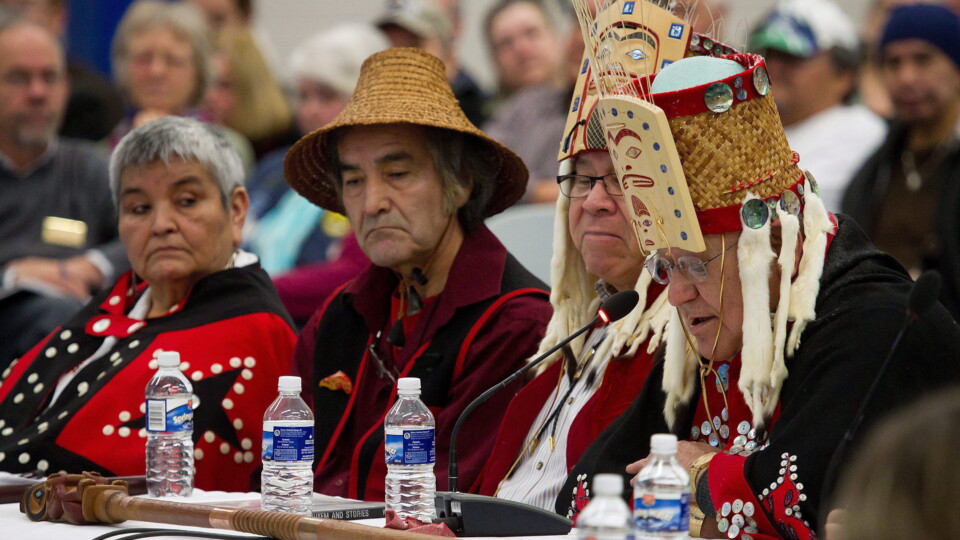
The political reaction from Indigenous groups to the new energy agreement between Alberta and Ottawa so far paints a seemingly unambiguous picture of fierce resistance to any plan for a new oil pipeline to the West Coast.
But that wall of opposition is not as clear-cut as it appears.
It’s true that the Assembly of First Nations (AFN), which advocates for more than 600 communities, voted unanimously to defend the northern B.C. tanker ban and to urge the federal government to withdraw the said memorandum of understanding (MOU) last week.
But look a little closer, and a more nuanced discourse starts to emerge, suggesting a complex, but not impossible, path forward for any such pipeline to materialize.
For John Desjarlais, executive director of the Indigenous Resource Network, which advocates for Indigenous participation in oil and gas, the AFN’s resolution was less about the merits of a hypothetical new line and more about the lack of consultation in developing the MOU.
“We all understand it came quick, it came hard, and then there it was,” Desjarlais said on The Hub’s Alberta Edge podcast.
“There are probably nations that voted unanimously [in the AFN resolution] that are actually involved in ownership, pipeline, and procurement activities,” he said. “And so [they] are not necessarily fundamentally against the idea, but more as a kind of political solidarity.”
In other words, there’s no unanimous “no” to a pipeline proposal.
“Indigenous people are just tired of being left out,” Desjarlais concluded.

He likened the response to the rollout of Bill C-5, when the federal government faced backlash over the summer for introducing sweeping legislative changes involving the fast tracking of major infrastructure projects with “very little to no engagement” with Indigenous communities. Yet a few months later, the Nisga’a Nation applauded Prime Minister Mark Carney for referring British Columbia’s Ksi Lisim LNG project to the very office C-5 created.
The reactions in June—and now—are more about process and respect.
Many First Nations expect early, good-faith engagement before federal and provincial governments make public commitments about a pipeline or potential tanker ban adjustments. The AFN vote reflects that frustration.
Besides, the AFN is a lobbying body—a powerful one at that—but not a rights holder. It cannot veto or grant consent to a project on behalf of individual councils.
Coastal nations vs. inland experience
An important nuance to keep in mind in this debate is geographic.
Coastal First Nations, such as Heiltsuk, Haida, Gitga’at, Lax Kw’alaams, and others, have been among the most vocal opponents of allowing crude tanker traffic on the North Coast, citing concerns around stewardship and harvesting rights.
Talks of a new bitumen pipeline seem to have only entrenched their opposition.
“All they see is risks,” Desjarlais said simply.
Meanwhile, the chief of Fort McKay First Nation, which sits north of Fort McMurray in northern Alberta, has already welcomed the MOU, calling it a “real opportunity for responsible development.”
And just last week, the Métis Settlements of Alberta publicly indicated interest in an equity share.
i
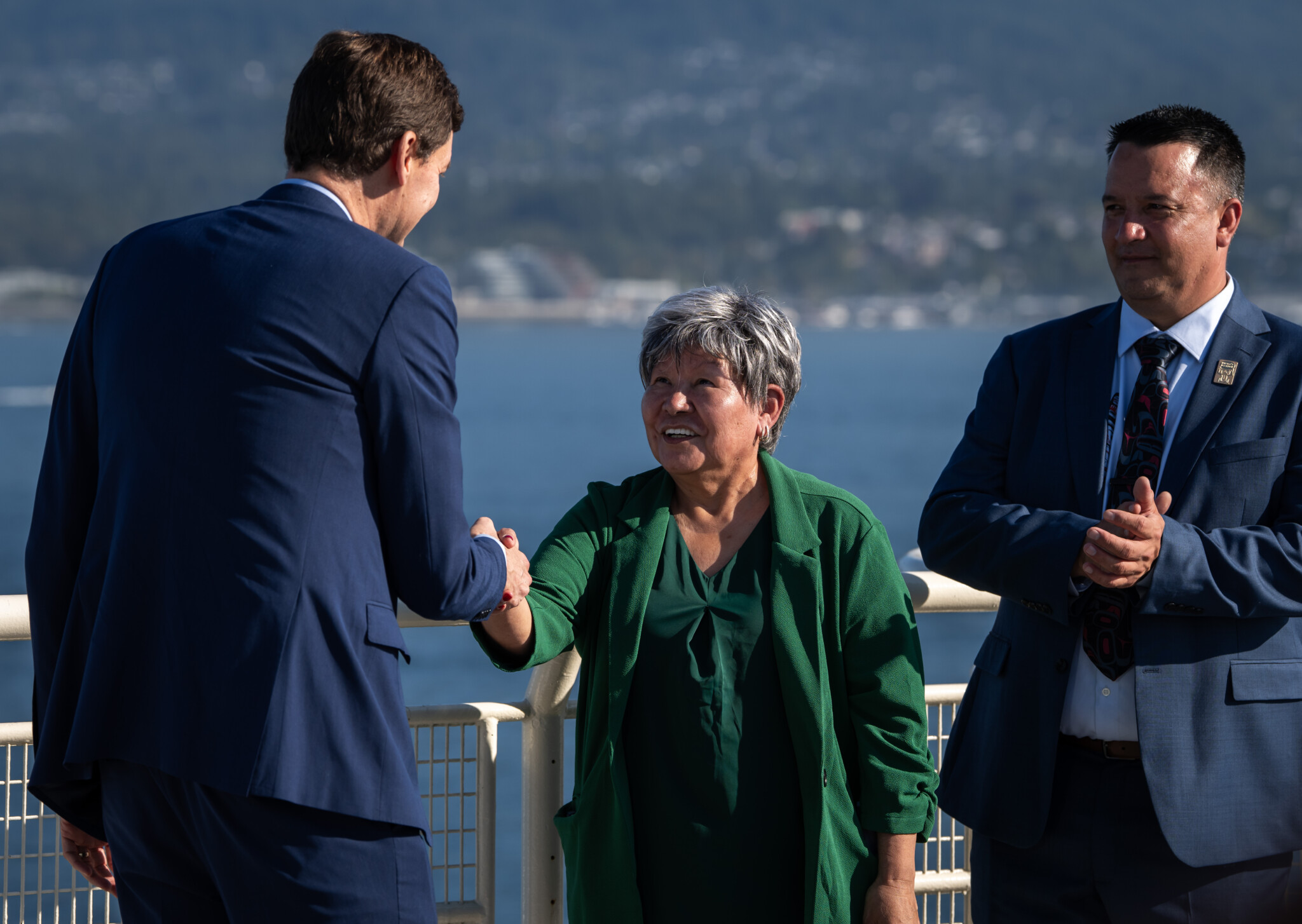
B.C. Premier David Eby shakes hands with Nisga’a Nation President, Eva Clayton during a Ksi Lisims LNG announcement of an environmental assessment certificate from the Government of British Columbia in Vancouver, on Tuesday, Sept. 16, 2025. Ethan Cairns/The Canadian Press.
Desjarlais says there’s an immediate change in attitude once you hit B.C.’s interior and head east. He believes it stems from decades of direct experience with oil and gas development locally. The communities farther inland have seen both the benefits and the shortcomings of these projects and are therefore more likely to take a pragmatic approach to negotiations.
And given that the MOU requires any new pipeline to be Indigenous-owned in part, it’s worth considering which nations might be open to saying “yes.”
It may even foreshadow a viable route.
During the Northern Gateway process, more than 30 First Nations—most of them inland—signed equity and related agreements with Enbridge. A number of those same nations, including Adams Lake Indian Band, Simpcw First Nation, and Enoch Cree First Nation, later backed the Trans Mountain Expansion (TMX).
Over the past decade, many First Nations in Treaties 6, 7, and 8 have repeatedly signalled that equity is an expectation in resource development. The strong uptake of the Alberta Indigenous Opportunities Corporation (AIOC) loan guarantees—which underwrote major equity stakes in at least nine projects, including the Athabasca Trunkline and Cascade Power Project—shows how deep that appetite remains.
So powerful is that co-ownership model, Alberta’s Energy Minister Brian Jean recently called it “the secret sauce to getting energy projects built, including a new pipeline to the northwest coast!”
How Indigenous co-ownership works
Before getting to the dollar amounts, it’s important to dispel a persistent misconception around Indigenous equity in major energy projects.
These arrangements are not charity or handouts.
i
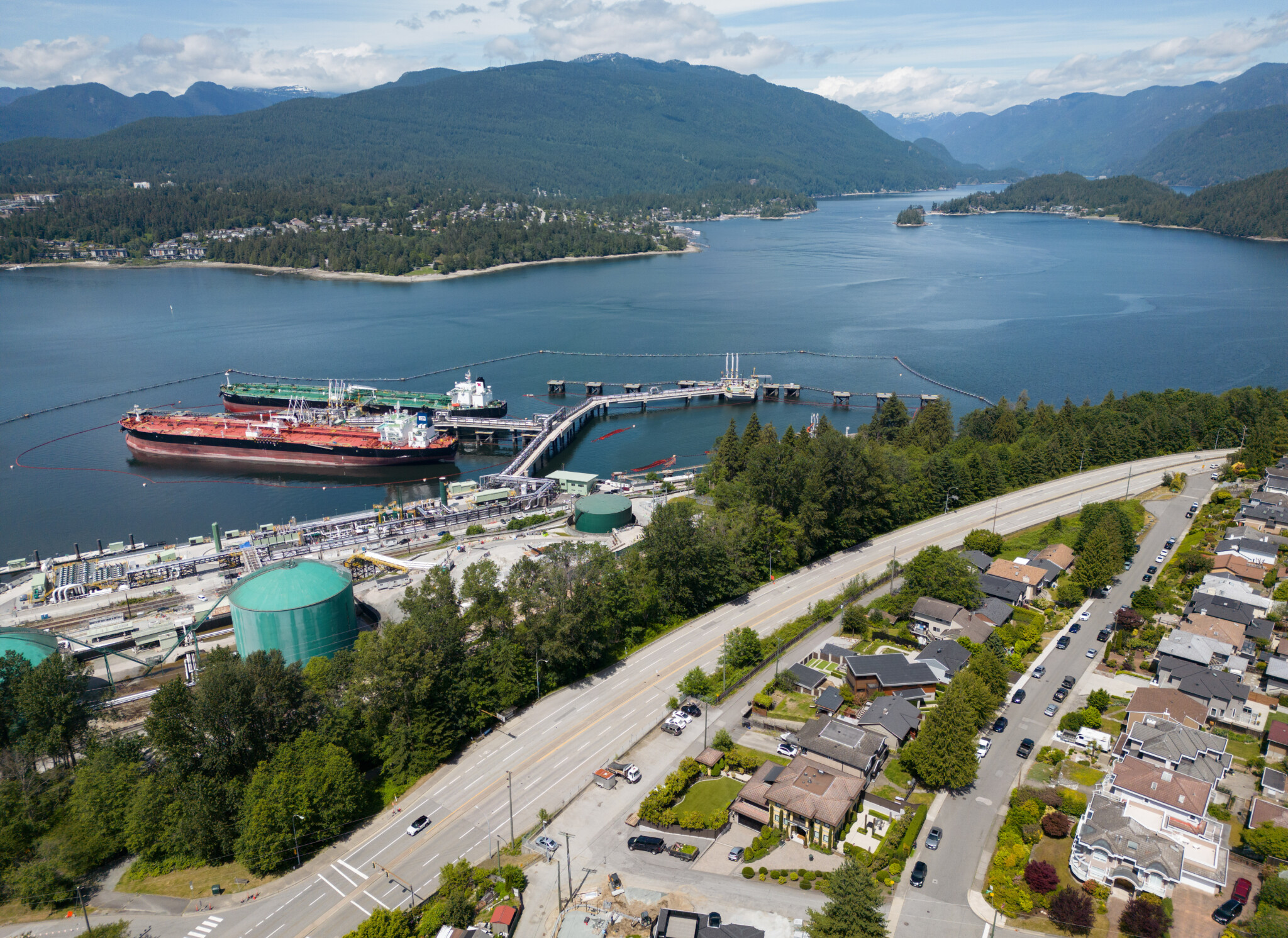
Crude oil tankers SFL Sabine, front left, and Tarbet Spirit are seen docked at the Trans Mountain Westridge Marine Terminal, where crude oil from the expanded Trans Mountain Pipeline is loaded onto tankers, near a residential area in Burnaby, B.C., Monday, June 10, 2024. Darryl Dyck/The Canadian Press.
They are real investments, with real risks, real debt, and real returns—structured like any other partnership between sophisticated capital investors.
Take the 2022 Enbridge deal in northern Alberta, for instance.
In what was described as a historic “landmark collaboration,”23 First Nations and Métis communities purchased a nearly 12-percent stake in seven Enbridge-operated pipelines in the Athabasca region for $1.12 billion.
The AIOC backed the deal with a $250-million loan guarantee—but that wasn’t free money, nor did it buy the asset. Under the Indian Act, bands can’t use reserve land as collateral, making it difficult to access large-scale commercial loans. The backstop simply reduced the cost of borrowing and gave lenders confidence.
The nations still had to raise the remaining capital, secure the loans, and carry the debt themselves.
Thus, like any investor leveraging debt to build long-term value, those 23 groups are whittling down what they owe gradually through the project’s cash flow. Enbridge executives confirmed this fall that “Project Rocket”—as the partnership is known—has already generated more than $25 million for those communities in its first three years.
“It is making significant differences for communities to have that stable revenue stream coming in—being able to invest back into their priorities,” Desjarlais explained.
“These are incredible dollar amounts for communities that are on shoestring budgets,” he said.
Other equity deals like Suncor’s East Tank Farm Development—a roughly $500-million investment in the bitumen facility north of Fort McMurray—now generate, by Desjarlais’ estimation, tens of millions for participating nations.
But the benefits aren’t just financial. Equity also shifts governance and control.
In practice, that can mean Indigenous representation on project boards or joint management committees. It can mean nations running their own environmental monitoring programs and deploying Indigenous guardians. The possibility of procurement guarantees for Indigenous-owned businesses adds yet another layer of incentives in the form of job growth.
“You don’t have as many [work] camps,” Desjarlais said about the benefits of employing more local workers. “You don’t have as many of the intermittent workforce. There’s not as much strain on the local infrastructure.”
Together, these mechanisms can turn “iffy” projects into viable businesses.
i
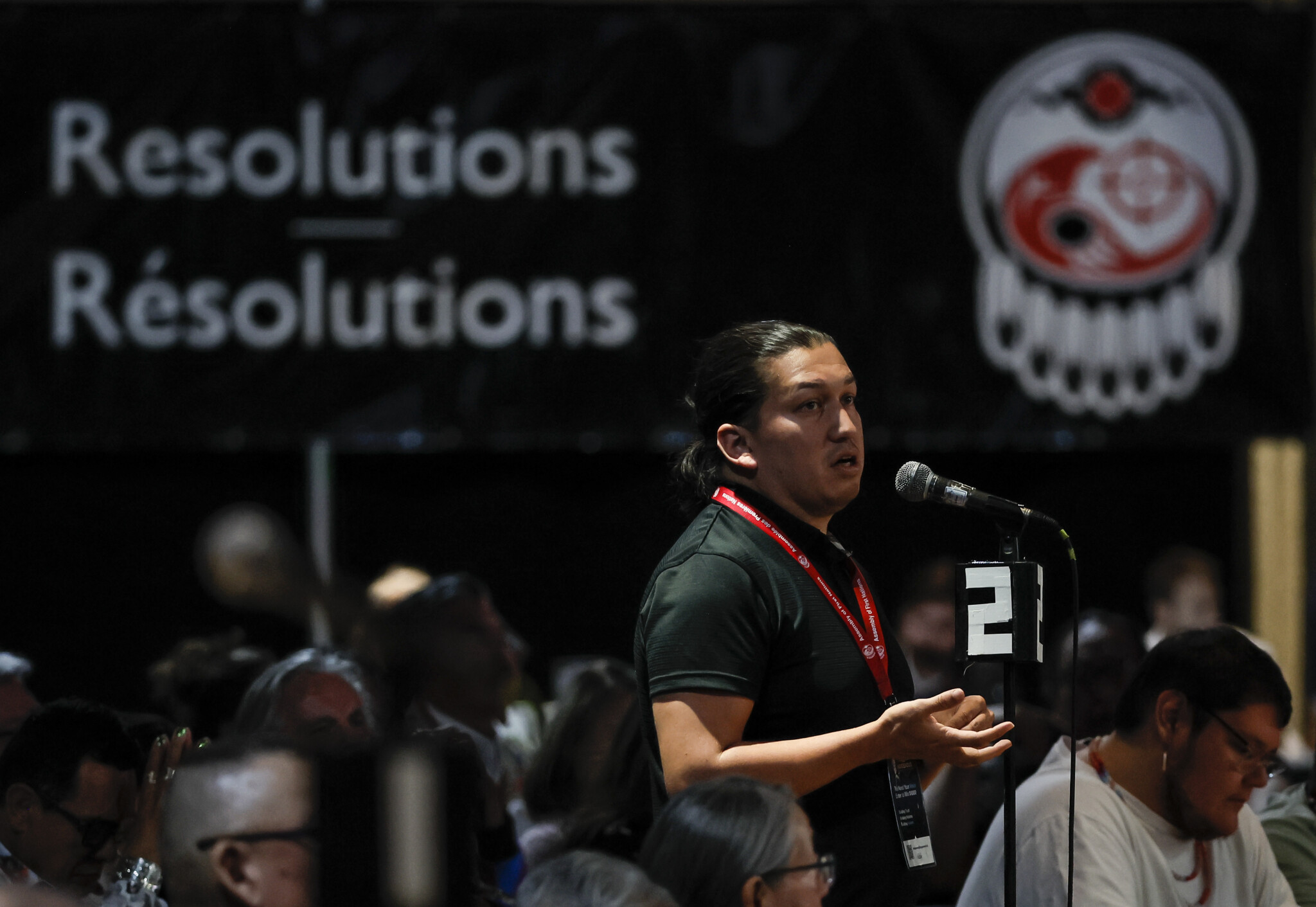
A delegate at the Assembly of First Nations Annual General Assembly in Winnipeg, September 3, 2025. John Woods/The Canadian Press.
How consultation has changed
When the Federal Court of Appeal struck down Ottawa’s approval of Northern Gateway in 2016, the ruling was blunt. It stated the government had failed to properly consult Indigenous groups, even though Enbridge itself had carried out extensive engagement along the proposed route.
The court found that the Crown’s final phase of consultation was “brief, hurried, and inadequate,” reducing Indigenous participation to a procedural exercise rather than a meaningful exchange.
“Consultation then was very procedural,” Desjarlais said. “It was a lot of box-checking, a lot of technical stuff that didn’t really get into the relationship side of things. It was very much about—did you send the letter? Did you hold the meeting? Did you share the document?”
In an interview with CBC’s Indigenous unit, Métis lawyer Bruce McIvor called that old model “more lip service than substance.”
Hayden King of the Yellowhead Institute pointed to the same structural problem. A letter in the mail, he noted, does not constitute consultation if a nation can’t engage in the process.
The TMX process demonstrated that when consultation is relational and backed by real accommodation, outcomes improve. But this involved doubling the consultation team to dedicate 60 people for the endeavour.
According to a former Canada Energy Regulator CEO, the former head of Trans Mountain famously gave his cell phone number to every chief along the route so they could raise concerns with the boss directly.
Desjarlais called that gesture “absolute best practice.”
But even TMX illustrates the point that deep consultation does not guarantee consent. Protests and delays still occurred.
It did, however, result in some very robust collaborations.
i
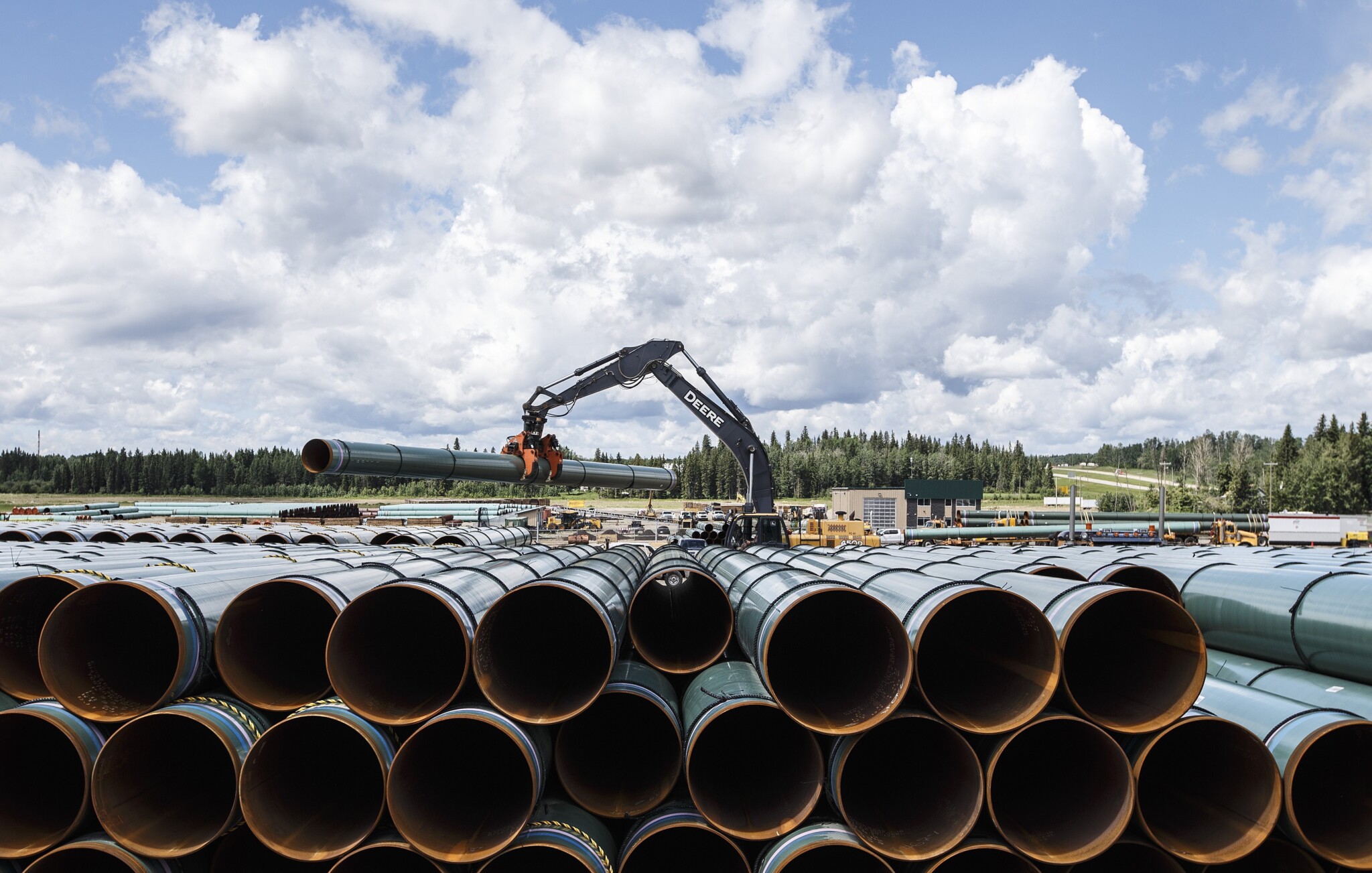
Pipe for the Trans Mountain pipeline is unloaded in Edson, Alta., June 18, 2019. Jason Franson/The Canadian Press.
There were also major cost overruns—not all of which were unrelated to consultation and accommodation, but every step added to a very long list of things to do and pay for.
“You can only, I guess, cut the pie so many ways,” Desjarlais said. “But I think one of the interesting things about [the current pipeline debate] is no one’s eating any pie anytime if we’re not going to build anything.”
Unanswered questions around a future deal
As B.C.’s own LNG ambitions have demonstrated, governments do not necessarily need blessings from every First Nation affected to move forward with an energy project.
But the Supreme Court of Canada has never set a numerical threshold for what constitutes “adequate” Indigenous involvement. Instead, it emphasized that the process of consultation sits on a spectrum: The stronger the asserted right and the greater the potential impact, the deeper the Crown’s obligation to engage.
It does not, however, mean that Indigenous groups have a legal veto. The “no veto” detail is mentioned five times in the official “how-to-consult” guide for federal officials.
Any politician who dares to say this part out loud, though, could be met with intense criticism. Just ask Justice Minister Sean Fraser.
So now, the feds are flipping the premise, leaning more on the consent side.
“There needs to be agreement from the province of British Columbia and of Indigenous Peoples, and we are not going to override the jurisdiction of our provinces, and we’re not going to override the rights of Indigenous rights holders,” Julie Dabrusin, minister of environment and climate change, said last week.
Legally, none of this is straightforward. If the Major Projects Office were to take on an oil pipeline submission, it could really test the power of Bill C-5.
The way forward is neither simple nor foreclosed. At least on that point, everyone agrees it begins with a conversation.
It’s exactly how Alberta Premier Danielle Smith has framed it so far. When asked about her recent meeting with leaders of two key communities on B.C.’s North Coast, she said it was the start of a dialogue.
Perhaps there will never be enough “yeses,” whatever that number might be. But the “nos,” at the very least, should be informed “nos.” That means giving the proponent—currently Alberta as the stand-in—a chance to make the case.

Falice Chin is The Hub’s Alberta Bureau Chief. She has worked as a reporter, editor, podcast producer, and newsroom leader across Canada…
Read more