
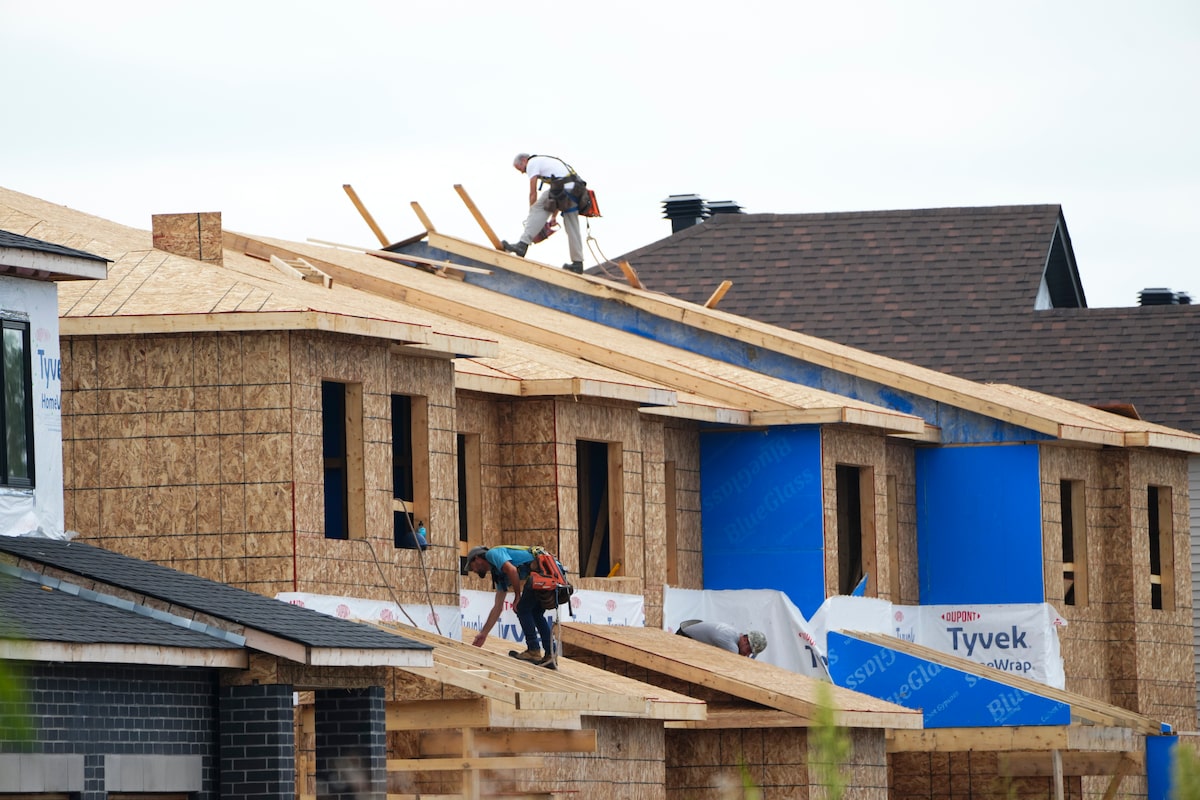
The federal budget released last month commits to improving Indigenous housing.Sean Kilpatrick/The Canadian Press
Carlyn Allary is a proud member of the Red River Métis, which is part of the Manitoba Métis Federation, and a research associate on the Indigenous Research team at the Canadian Climate Institute. Maria Shallard, who is of mixed settler/Pune’luxutth ancestry, is the director of the Indigenous Research team at the Canadian Climate Institute. Kayla Fayant, who is a member and resident of Fishing Lake Métis Settlement, is the energy efficiency projects manager on the Bringing it Home team at Indigenous Clean Energy.
Across Canada, nearly one in six Indigenous people live in housing in need of major repairs – a rate almost three times higher than for non-Indigenous people, according to Statistics Canada. Half of First Nation adults report mould in their homes, and our research found Indigenous people are more than twice as likely to live in crowded conditions.
The recent federal budget explicitly commits to improving Indigenous housing. But how Canada moves to address this problem matters. Housing, health, reconciliation, and climate change are interconnected and can be addressed in tandem. With the right policy changes, Canada can deliver benefits in each of those areas through better support for Indigenous housing. And those multiple benefits mean that the total benefits greatly exceed the costs.
Let’s unpack the stakes.
Inadequate housing is costly, both in human health and economic terms. Poor conditions drive higher rates of asthma, respiratory illness and mental distress. Asthma prevalence is roughly 40 per cent higher among Indigenous Peoples, and Inuit infants face some of the highest hospitalization rates for respiratory infections, with average costs totalling more than $60,000 per admission in Nunavut.
Indigenous-led private credit fund Keewaywin secures backing to build affordable housing
Climate change is compounding these vulnerabilities. Extreme weather events, shifting ecosystems, and unpredictable seasonal cycles increase risks for homes already in fragile condition. Poorly constructed and aging homes have a higher infiltration rate of wildfire smoke, exposing occupants to air pollutants and leading to higher rates of hospitalization and emergency visits.
Finally, buildings are a persistent source of national greenhouse gas emissions. New Indigenous housing can and should be consistent with Canada’s climate objectives. Energy-efficient homes can both improve health outcomes and reduce monthly bills and emissions.
Current policies aren’t well-suited to tackling these multiple problems.
Existing Indigenous housing policies are siloed, short-term and rigid. Overlapping government responsibilities and piecemeal funding programs can be difficult to access and fail to reflect Indigenous realities or enable long-term climate resilience. Amid growing pressure to build quickly, these barriers often lead to trade-offs between housing quality and speed.
The Healthy Energy Homes approach, on the other hand, is collaborative, long-term and flexible, providing transformative and lasting impact. It rests on three main pillars: energy efficiency, climate resilience and holistic well-being.
What that looks like will differ by community. It could mean using mould-resistant materials, installing heat pumps or building larger homes for intergenerational living. A good example of this is Indigenous Clean Energy’s Bringing It Home initiative, which helps communities design and track such integrated housing solutions.
These solutions can also save money in the long run. The British Columbia Aboriginal Housing Management Association estimates that for every dollar invested in Indigenous housing annually, the social return on investment is around $6.79. However, those benefits won’t be realized without addressing the considerable policy barriers to Indigenous housing. Governments continue to treat housing, health, energy and climate separately. Funding is often designed without Indigenous collaboration and communities face persistent capacity constraints.
Class-action lawsuit proceedings on First Nations housing on-reserve begins in Manitoba court
First, governments should work together to co-ordinate action on Indigenous housing, including by co-developing housing policies and programs with Indigenous leadership. Programs should be accessible and aim to build Indigenous community capacity. This effort can be supported by an intergovernmental working group to align funding, share best practices and track progress.
Second, governments should commit to long-term investment agreements and provide flexible funding options so Indigenous communities can choose the models that best fit their goals and needs. Canada’s National Housing Strategy represents an important opportunity to better support Indigenous Healthy Energy Homes initiatives.
Finally, governments should measure housing impacts and benefits more holistically – capturing social, cultural, environmental and economic impacts.
These recommendations can be keys to success, especially as momentum propels Canada forward following the creation of the Build Canada Homes agency. This is a critical opportunity to not simply build shelter, but to build more resilient and sustainable homes.
Getting Indigenous housing right means embedding the principles of Healthy Energy Homes into policy from the start to consider the distinct cultural, regional and community-specific realities of Indigenous rightsholders. That means establishing Indigenous co-development, flexible financing, long-term investment and co-ordinated governance to create a foundation for reconciliation, resilience and long-term well-being.