
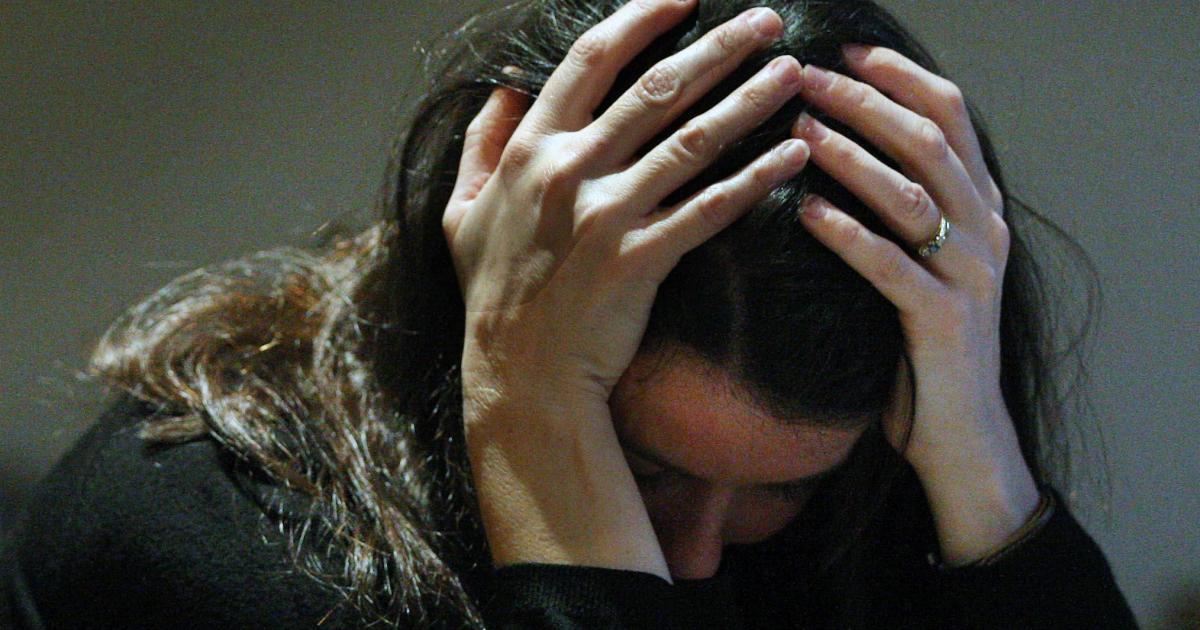
The mother, who is living in fear for both her daughter’s life and her own safety, describes looking into her child’s eyes during episodes of rage and seeing them turn ‘completely black’.
It is a terrifying reality where a mother is told to hide the kitchen knives and move the stools out of reach – futile advice for handling an agile six-year-old intent on taking her own life.
Now, while choosing to remain anonymous, the mother is begging for intervention, revealing that despite her daughter holding a blade and saying ‘say goodbye’, she has been turned away by mental health services twice because her child is considered too young to be suffering.
And she feels she is being passed from pillar to post with nobody able to really help her.
She said: “My concern is the lack of provision for mental health for children.
“I have begged for help. I am begging for help. Who says a child’s too young for mental health?
“She’s currently in the middle of a ADHD assessment and community paediatrics has put her forward for autism.
“But she has been having issues with displaying behaviours that are worrying.
“It got extremely worrying when she lifted a knife, a sharp knife. She held that knife towards herself and said, ‘say goodbye’.
“But CAMHS have refused to see her, saying she was too young. The school had already provided them with evidence that she is doing things in school, like saying she’s going to kill herself stabbing herself with pencils.
“And then it all exploded again because she said she was just going to kill herself. She wanted to kill me.”
The mum says she has been given advice that is impossible to put into practice and has questioned why a service set up to look after mental health in children is refusing to see her daughter.
She continued: “I phoned to speak to social services, and I was told, ‘you have to deal with it’.
“I was told; ‘You have to put the knife high’. This child is agile, she can climb. ‘Well, you need to move the stools’.
“She doesn’t need a stool to climb. I understand as a parent, I have to keep her safe. But there’s a place where it sort of stops becoming easy.
“When a child is doing things repeatedly that is obviously unsafe. I’m not trained in mental health. There has to be some sort of help.
“Mental health is mental health. That’s child and adolescent mental health. That’s CAMHS.
“But CAMHS won’t see a child, and then the social services are going, it’s all down to you.
“I have spent weeks of daily meltdowns where I have to remain completely calm. I have been hit and punched and kicked and nipped, spat at, by my own child.
“But my child’s not there. Her eyes are completely black. Prevention is better than cure. That’s a major thing.
“We take a flu jab to prevent the flu outbreak, but when a child is saying that they’re going to kill themselves or that they want to self-harm in any way, shape or form and it just ‘put the knives away and make sure that there’s no weapons’, but everything can be a weapon.”
A spokesperson for the Western Health and Social Care Trust said: “The WHSCT Child & Adolescent Mental Health Service (CAMHS) is unable to discuss or comment on individual cases due to confidentiality and privacy reasons.
“The Service is aligned with and upholds the Regional CAMHS Integrated Care Pathway, Working Together: A Pathway for Children and Young People through CAMHS (March 2018).
“The pathway is a person centred, evidence based framework co-produced with young people, parents, multi-agency providers and CAMHS professionals.
“The stepped care pathway sets out the standards that are applied regardless of whatever level of service is required in response to children presenting with emotional and mental health difficulties, the types of difficulties that may be appropriate and the range of services that are provided.
“The stepped care pathway is about helping young people get access to the right service at the right time.
“The WHSCT Child Adolescent Mental Health Service has robust processes and procedures around the screening and clinical triage of all referrals into the service.
“Each referral is individually triaged and the clinical need assessed within our stepped care model.
“This ensures that all young people receive the appropriate care and treatment in the best interests of the child. Clinical triage outcomes involves a number of clinical pathways depending on the mental health concerns of the young person.
“Clinical pathways also promote safety and timely escalation in accordance with the referral pathway and clinical concerns. This ensures all young people reach the most appropriate professional within the stepped care model approach.
“As part of the clinical triaging of referrals into the service the referral co-coordinator will also link with a wide range of statutory and voluntary services. The importance of linking with other services ensures that young people receive the right level of care and connect all services together and creates a no wrong door approach.
“The importance of signposting at referral point is also a key part of early intervention in ensuring the young person is referred to the service that meet their needs.
“If CAMHS believes that another service is more appropriate/better placed to help and support a child’s presenting needs at that point, CAMHS will share and explain this rationale with the referring agent and the parent. The stepped care approach is important for children as it begins with low intensity interventions stepping up to more intensive levels of support if required.
“By starting with the least intrusive and most appropriate level of care, this model improves outcomes and access to services for a greater number of children.
“WHSCT CAMHS aims to work collaboratively and proactively with parents and referring agents acknowledging that a young person’s presentation may change at any point in time and therefore would always advise that if any deterioration from a mental health perspective should occur direct contact is advised with a young person’s GP in the first instance.”