
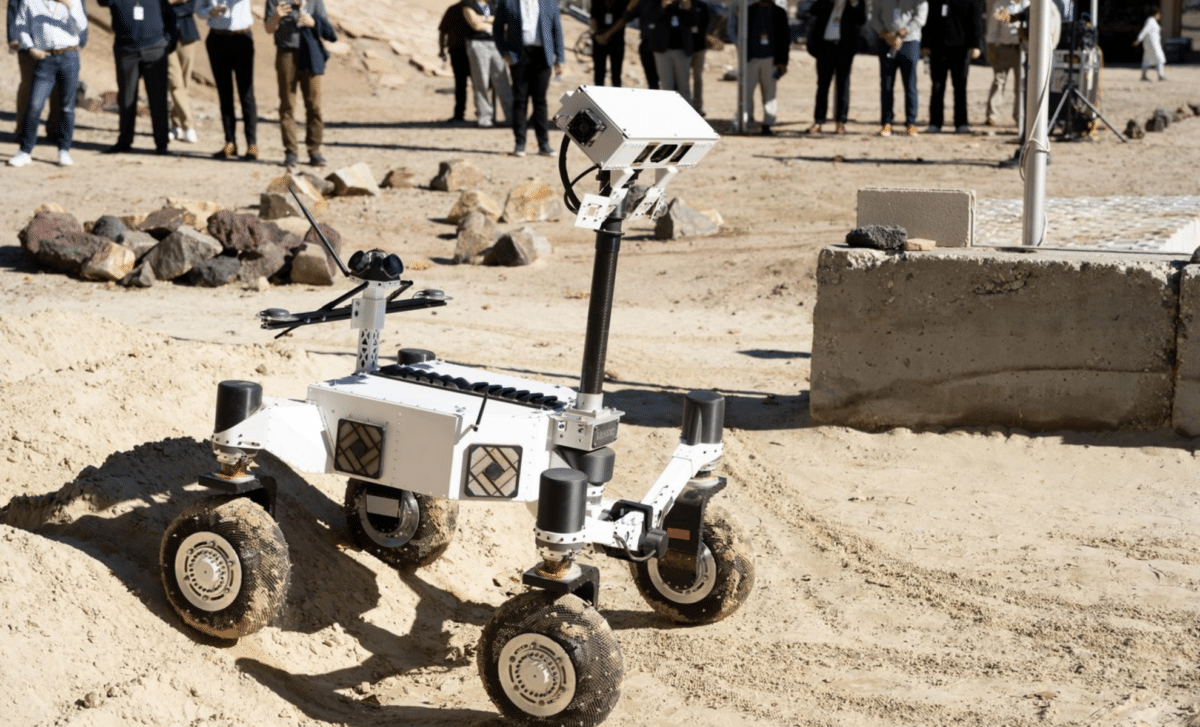
NASA’s Jet Propulsion Laboratory (JPL) recently unveiled its new Rover Operations Center (ROC), a groundbreaking initiative aimed at enhancing exploration of the Moon and Mars. This center, designed to integrate cutting-edge technology and AI with decades of rover mission experience, is set to accelerate future missions. Through strategic partnerships with industry and academia, the ROC will foster innovation to tackle the challenges of planetary exploration.
Revolutionizing Lunar and Martian Exploration
NASA’s Jet Propulsion Laboratory (JPL) is embarking on an exciting new chapter of exploration with the launch of its Rover Operations Center (ROC), a state-of-the-art hub focused on enhancing surface missions to the Moon and Mars. This facility aims to revolutionize space exploration by combining JPL’s vast experience with advanced technologies, including artificial intelligence (AI), to solve complex challenges. At the heart of the ROC is a goal to support future exploration missions through strategic partnerships with the commercial space sector, academia, and other space agencies.
The ROC was established to integrate the best of JPL’s expertise with emerging technologies, fostering an ecosystem where innovation can thrive. By bringing together world-class robotic capabilities and AI-driven tools, the ROC will not only improve NASA’s efficiency and mission cadence but also serve as a pivotal point for future partnerships that will enhance U.S. leadership in space exploration.
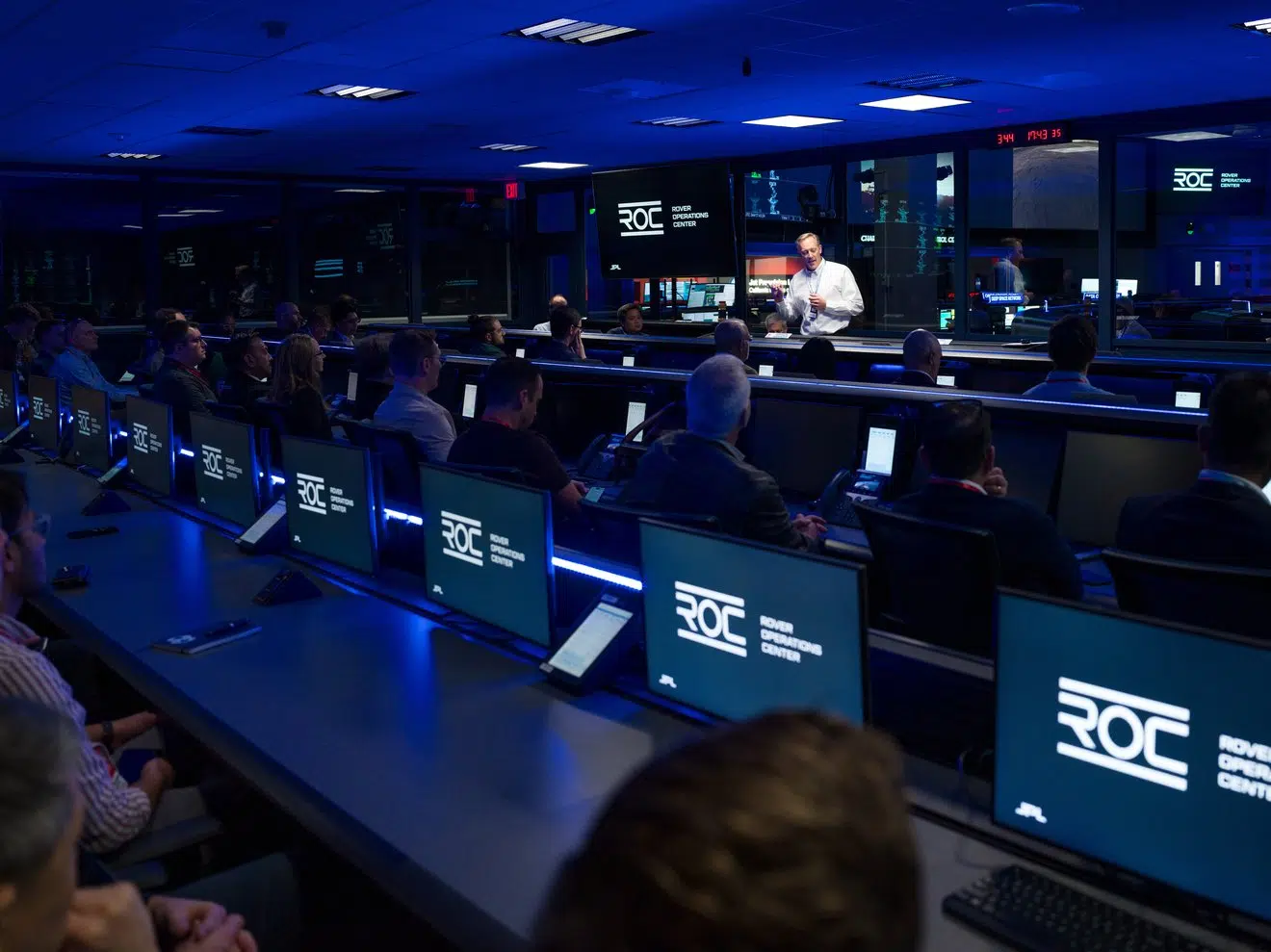 Michael Thelen of JPL’s Exploration Systems Office discusses the newly inaugurated Rover Operations Center in JPL’s historic Space Flight Operations Facility on Dec. 10.
Credit: NASA/JPL-Caltech
A Catalyst for the Next Generation of Exploration
“The Rover Operations Center is a force multiplier,” said JPL Director Dave Gallagher. “It integrates decades of specialized knowledge with powerful new tools, and exports that knowledge through partnerships to catalyze the next generation of Moon and Mars surface missions. As NASA’s federally funded research and development center, we are chartered to do exactly this type of work — to increase the cadence, the efficiency, and the impact for our transformative NASA missions and to support the commercial space market as they take their own giant leaps.”
Gallagher’s statement underscores the ROC’s role as a critical engine for accelerating innovation in planetary surface missions. The center’s ability to blend NASA’s specialized knowledge with emerging technologies like AI will be pivotal in ensuring that NASA remains at the forefront of space exploration, all while enabling new opportunities for commercial space ventures.
Building on Decades of Robotic Exploration Experience
JPL has long been a leader in robotic space exploration, with decades of experience in developing and operating surface missions, particularly to Mars. This legacy includes the development of sophisticated rovers like Spirit, Opportunity, Curiosity, and Perseverance, each pushing the boundaries of what robotic explorers can achieve. As JPL continues to enhance these capabilities, the ROC will serve as a central hub for innovation and collaboration, ensuring that future missions benefit from the best tools and most advanced technology.
According to Matt Wallace, head of JPL’s Exploration Systems Office, the stakes are higher than ever.
“Our rovers are lasting longer and are more sophisticated than ever before. The scientific stakes are high, as we have just witnessed with the discovery of a potential biosignature in Jezero Crater by the Perseverance mission. We are starting down a decade of unprecedented civil and commercial exploration at the Moon, which will require robotic systems to assist astronauts and support lunar infrastructure,” Wallace noted. “Mobile vehicles like rovers, helicopters, and drones are the most dynamic and challenging assets we operate. It’s time to take our game up a notch and bring everybody we can with us.”
With a decade of exploration on the horizon, Wallace’s statement highlights the increasing role of autonomous rovers, helicopters, and drones in the success of these future missions. The ROC is poised to enhance these capabilities and ensure that these robotic assets can continue to evolve in tandem with the needs of lunar and Martian exploration.