
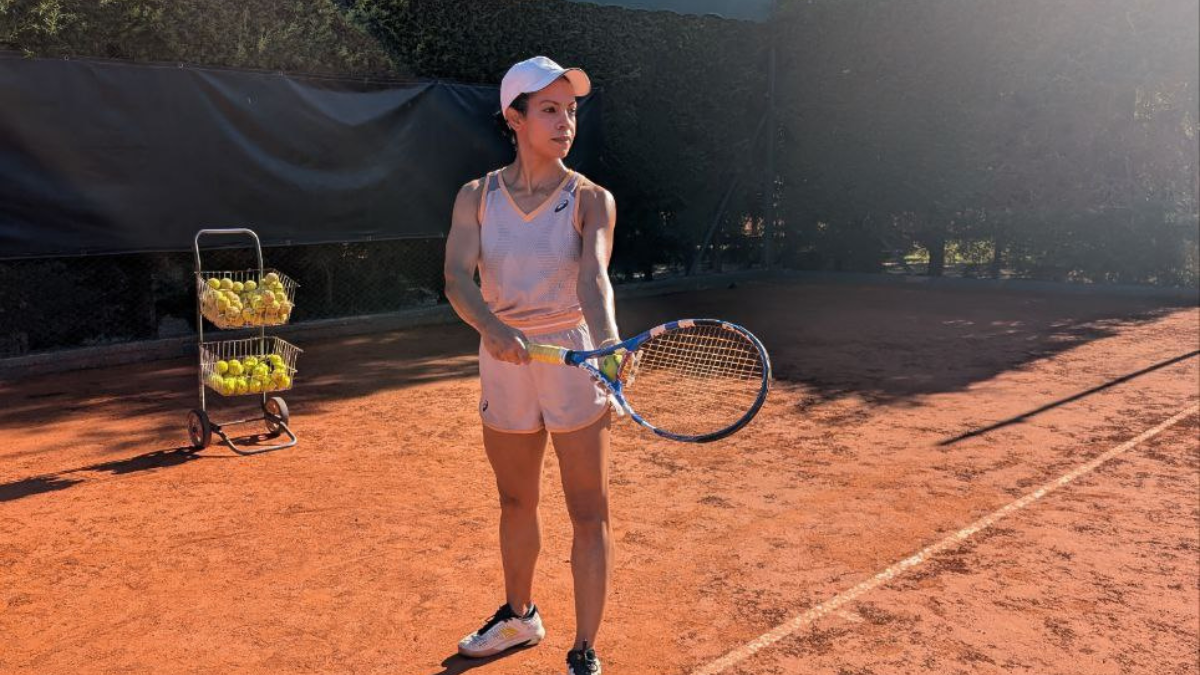
Buenos Aires is known around the world for its football fanaticism. Little did I know when I moved here that it is also a tennis lover’s paradise. In fact, I ended up becoming such a doubles fan that I had a phase of rejecting men who didn’t play.
Tennis came into my life as soon as I was old enough to hold a racket. Growing up in a British bubble in Dubai in the 1980s and 1990s, my brother and I wound up in tennis classes in part because my mother is a fan of all things classy, to the chagrin of my father.
This early exposure was interrupted when the family moved to Canada in the early 2000s. The sport was cost prohibitive back then. While I played indoor tennis occasionally, football became my sport of choice as an adult, first in Canada and later in the U.S. Returning to tennis in my early forties seemed a sensible pivot, especially after watching a handful of my former teammates suffer the agony of busted knees. For me, forced inactivity due to injury is a death sentence.
Upon settling in Buenos Aires, a little research revealed no shortage of tree-lined tennis clubs and multi-sport clubs with tennis courts across the city. CABA is home to over 100 well-maintained clay courts. Both courts and lessons can be secured at certain clubs without being a member. Eager to immerse myself in the Argentinian experience, I asked a porteño for a club recommendation.
Courts, kisses and asado
On my first day, the club’s tennis director assessed my game. “You have potential,” he said with a smile. Afterwards, he invited me to his office to get to know me, and I was struck by his genuine interest in my background. Beaming, he explained his philosophy: “We meet you for the first time and we greet you with a kiss.”
Initially I took tennis and fitness classes at the club. Before long, a handful of new members started a meme-filled Whatsapp group titled ‘Tenis 8am’ and we developed a system to set up regular matches. The group quickly grew after my tennis coach arranged asados at the club, bringing her students together.
I fell in love with playing on clay courts after playing on hard courts all my life. Here I am as an adult, indulging in a time out from being an adult, to play.
Soon, I found myself up against women in their seventies, who have a wealth of experience both on and off the court. “Don’t get worked up,” my seventy something team mate coolly tells me after I smack an easy return into the net and grow exasperated. The first time I scrambled on the court, arms flailing, failing to reach a slice drop shot, she mumbled: “I thought we were playing tennis, not interpretive dance.”
In several neighborhoods across the city, tennis rackets protrude from backpacks. Argentine tennis fever dates back to the early seventies, after Guillermo Vilas snagged his first ATP title against Björn Borg in 1973. I buy my balls and grips from independent tennis shops for the opportunity to talk tennis with the employees, their encyclopedic knowledge and dry wit a delight.
When the club took note of my eagerness to hit the court almost daily, they made sure I had no shortage of rivals. They gave me all kinds of tips on how to improve my swing while hitting the wall and how best to warm up and cool down. When I suffer injuries from overplaying, they check in.
Doubling up
Until I arrived in Buenos Aires I was a singles player. I looked down on doubles. I enjoyed playing outside midfield in football for the running. But the Argentines are a social bunch. So for a long while it was doubles or no tennis.
My disappointment in not getting my fill of running during doubles was short-lived. With doubles, the belly laughs during water breaks were tripled. And it turns out doubles gives you the training ground to become a stronger player all around, while quickening your reflexes, if you are brave enough to play at the net.
Before long, I was gently persuaded to join one of the club’s women’s doubles teams to compete in interclubes, the extensive, nearly year-long AMBA league where clubs compete on a rotating schedule of home and away courts.“Tournaments will improve your game,” they repeat at my club.
As I approach my third year in Buenos Aires, my obsession has only grown, and I’m now setting my sights on singles competition. Thankfully the city offers no shortage of leagues. The Argentina Association of Tennis, founded in 1921, facilitates play of tens of thousands of players in CABA across its junior, adult +25, +35, +45 leagues, all the way up to +75.
I have become a “team doubles” player, but I’m not quite Argentine yet — although the (tennis) fanaticism that’s taken hold of me suggests I’m halfway there. Regardless, I am grateful for the opportunity to return to the courts with some of the most playful and warm people I’ve ever met.