
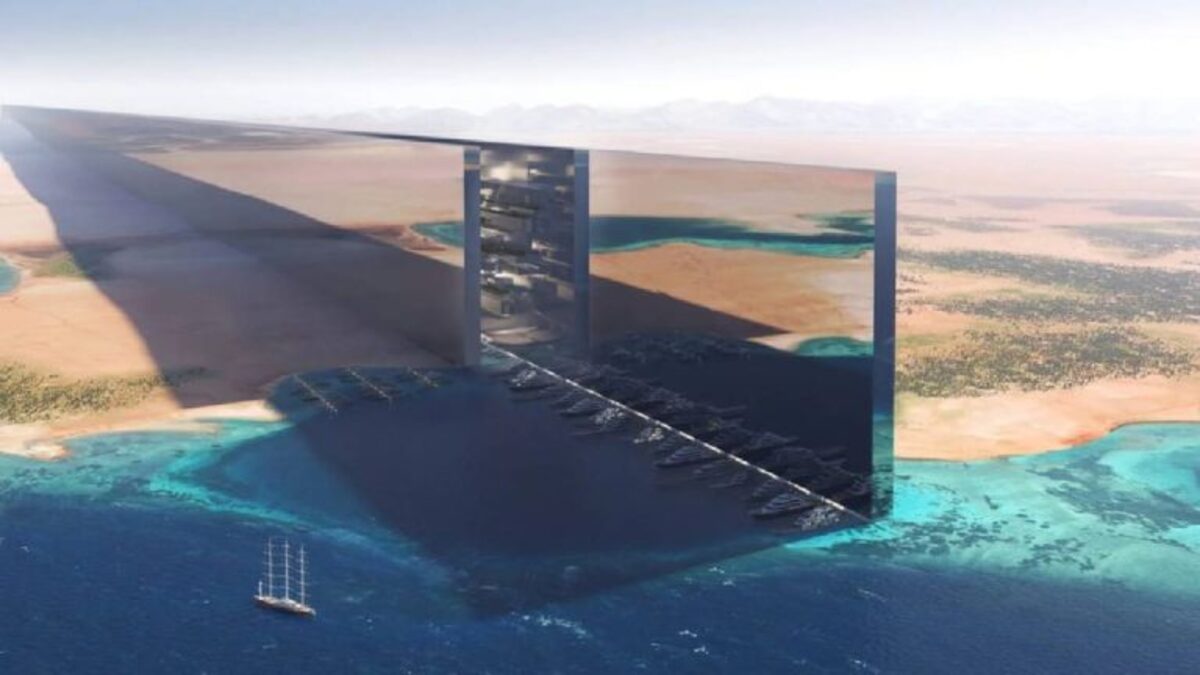
A radical experiment is unfolding in Saudi Arabia’s northwest: a mirror-walled city that compresses urban life into a narrow belt and promises zero cars, short walks, and high-speed transit. Its scale—and the questions it raises—could redefine how we imagine megacities.
In the middle of Saudi Arabia’s vast desert, something extraordinary is rising from the sand — a project so ambitious it feels more like a scene from a science fiction film than a real construction site. It’s called The Line, and when finished, it could become one of the most revolutionary cities ever built.
Designed to house up to nine million residents in a linear footprint roughly 170 km long, about 200 m wide, and up to 500 m tall, the concept aims to redefine how humanity lives, works, and connects.¹ Forget skyscrapers that pierce the clouds — The Line stretches them across the horizon instead.
What Exactly Is The Line?
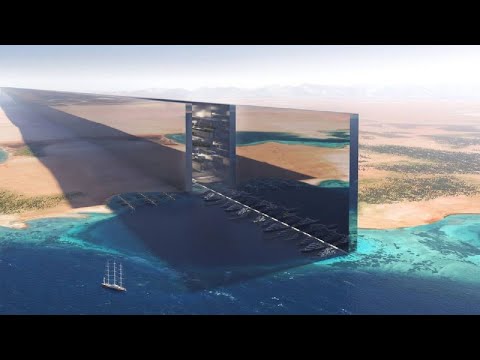
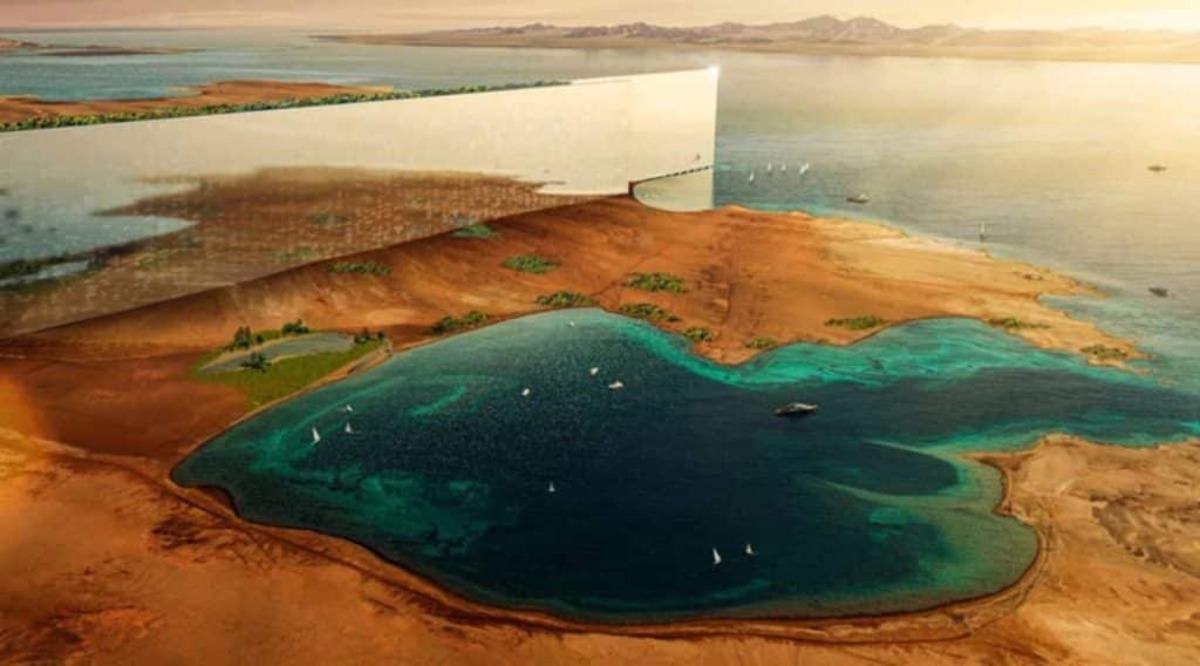
Imagine two shimmering walls of glass running side by side for about 170 kilometres, standing up to 500 meters tall, and only around 200 meters wide. Together, these parallel towers will form a city contained within a single, seamless structure. The two buildings will be offset slightly, creating a linear corridor of neighborhoods.
Every inch of the design serves a purpose. Inside, residents will find everything from homes and offices to schools, hospitals, and green parks — all within a five-minute walk. The Line’s creators envision a self-contained ecosystem powered by renewables and designed to operate without private cars. A high-speed rail spine is planned to carry passengers end-to-end in about 20 minutes.²
Did you know?
On paper, The Line’s transit “spine” is intended to make cross-city trips faster than many metro rides across a single metropolis.
It’s an urban planner’s dream: no cars, no long commutes, no local tailpipe pollution. But it’s also an engineer’s challenge. Cost estimates vary widely, with reporting placing potential outlays well into the hundreds of billions and even above $1 trillion, and noting Crown Prince Mohammed bin Salman’s 2022 statement that SAR 1.2 trillion (~$320 billion) would be needed for the first phase by 2030.³
Rethinking the Modern City
If traditional cities spread outward like webs, The Line flips that logic on its head. Instead of sprawl, it offers compression — a vertical community that stretches across the desert like a reflective ribbon. Supporters say it’s the answer to overcrowded, inefficient cities that eat up green space and choke under traffic.
For many, this marks a bold experiment in sustainable urban living. The Line’s planners promise an environment where nature and technology coexist, powered by solar, wind, and advanced recycling systems. It’s not just about convenience; it’s about reimagining how people interact with their environment.
Urban experts have described the project as “a potential blueprint for future megacities,” though whether it can deliver on that promise remains to be seen.
The Controversy Beneath the Glass
Of course, not everyone is convinced that this glittering city of the future comes without a cost. Environmental organizations and project documents have raised alarms that a mirrored wall along a key migratory route could kill significant numbers of birds unless mitigated.⁴
There’s also the human impact. UN experts warned in 2023 about forced evictions affecting members of the Howeitat tribe in the area earmarked for NEOM (the wider region that includes The Line), urging authorities to halt executions reportedly linked to protests over displacement.⁵ Separately, the April 2020 killing of tribal member Abdul Rahim al-Huwaiti, reported by international media, drew early global scrutiny to the project’s local toll.⁶
These issues highlight the moral and ecological dilemmas behind megaprojects of this scale — the tension between visionary progress and the lives and habitats that stand in its path.
A Glimpse Into Tomorrow
Despite criticism and shifting timelines, preparatory works and contract awards have been publicized, while subsequent reporting points to scaled-back near-term segments and evolving cost and delivery targets.³ For supporters, The Line represents a monument to human ingenuity — a glimpse of what life might look like in coming decades.
For skeptics, it’s a test of whether technology can truly balance with ethics and ecology. The world is watching to see whether this colossal city can deliver on its dazzling promise or become a cautionary tale about ambition running ahead of reality.
One thing is certain: The Line isn’t just another megaproject — it’s a bold bet on the future of urban life, shimmering in the desert sun like a vision from another world.
Footnotes
NEOM — “THE LINE: a revolution in urban living” — URL: https://www.neom.com/en-us/regions/theline
Railway Pro — “Webuild consortium wins Neom HSR contract” — URL: https://www.railwaypro.com/wp/webuild-consortium-wins-neom-hsr-contract/
Bloomberg — “Saudis Scale Back Ambition for $1.5 Trillion Desert Project Neom” — URL: https://www.bloomberg.com/news/articles/2024-04-05/saudis-scale-back-ambition-for-1-5-trillion-desert-project-neom
Business Insider — “Neom planners reportedly fear its huge mirrored structure called The Line will kill a ‘significant number of birds’” — URL: https://www.businessinsider.com/neom-the-line-mirrored-tower-birds-kill-saudi-arabia-2024-5
United Nations OHCHR — “Saudi Arabia: UN experts alarmed by imminent executions linked to NEOM project” — URL: https://www.ohchr.org/en/press-releases/2023/05/saudi-arabia-un-experts-alarmed-imminent-executions-linked-neom-project
Al Jazeera — “Saudi activists dispute official narrative on al-Hwaiti killing” — URL: https://www.aljazeera.com/news/2020/4/17/saudi-activists-dispute-official-narrative-on-al-hwaiti-killing
Similar Posts
Brian is a journalist who focuses on breaking news and major developments, delivering timely and accurate reports with in-depth analysis.
[email protected]
Find and win
A treasure is hidden in this article! Share it to start the game and try to uncover the secret word.
The first 10 people to submit it via the form that appears after you share will win a surprise prize!
Good luck