
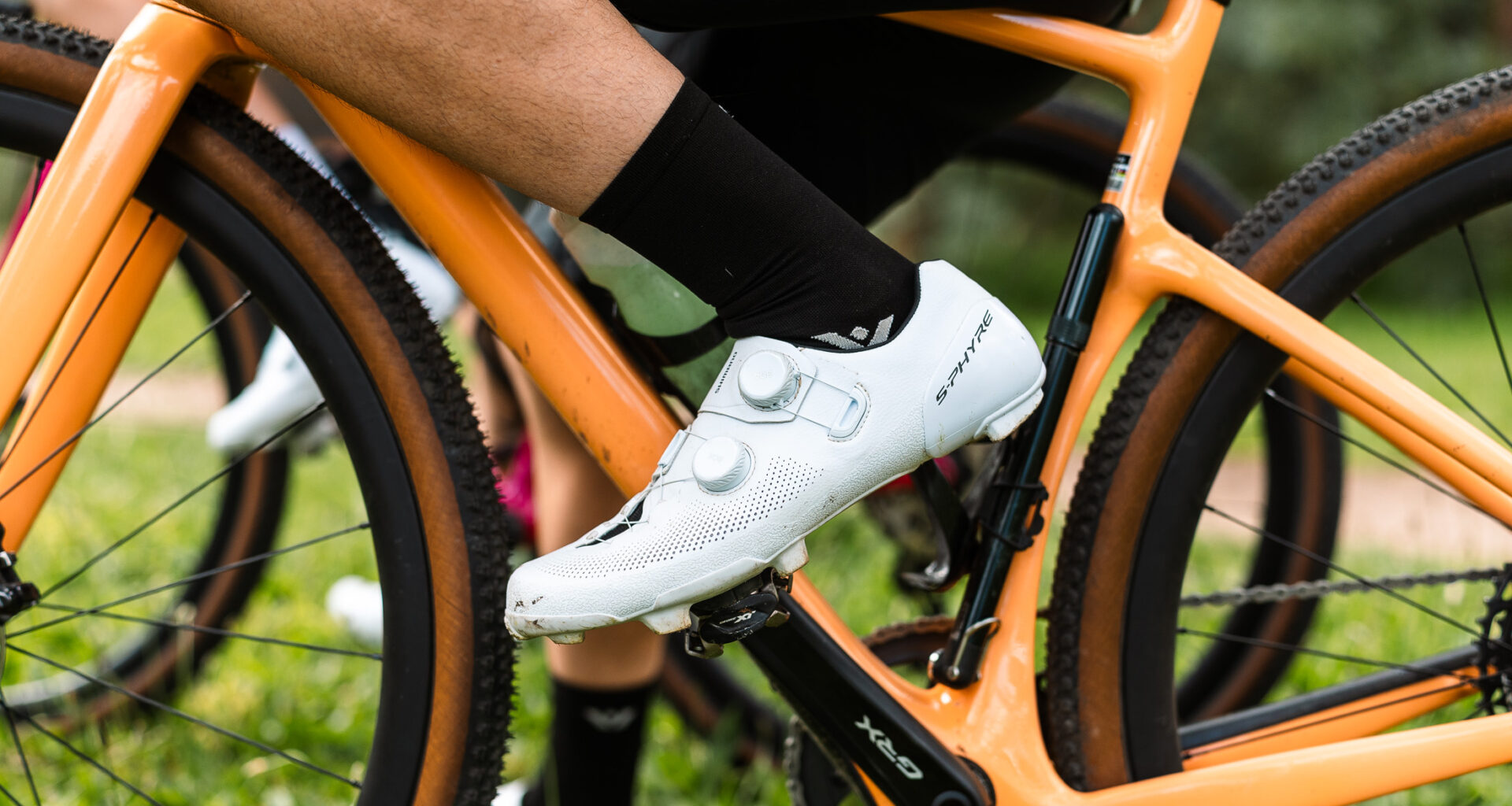
Why wouldn’t you just wear XC shoes?
Gravel shoes are a bit of an odd child. XC shoes will work just fine, but you don’t really need all that armour and protection, as you’re less likely to be fly-kicking rocks at high speed. Road shoes are lightweight and offer plenty of stiffness, but you’re up a creek without a paddle if you have to put a foot down or walk anywhere.
Gravel shoes aim to shoot somewhere in the middle, shedding off some armour and weight (in theory) you don’t need. The goal is to maintain the efficiency of a road shoe and the walkability of an XC shoe.
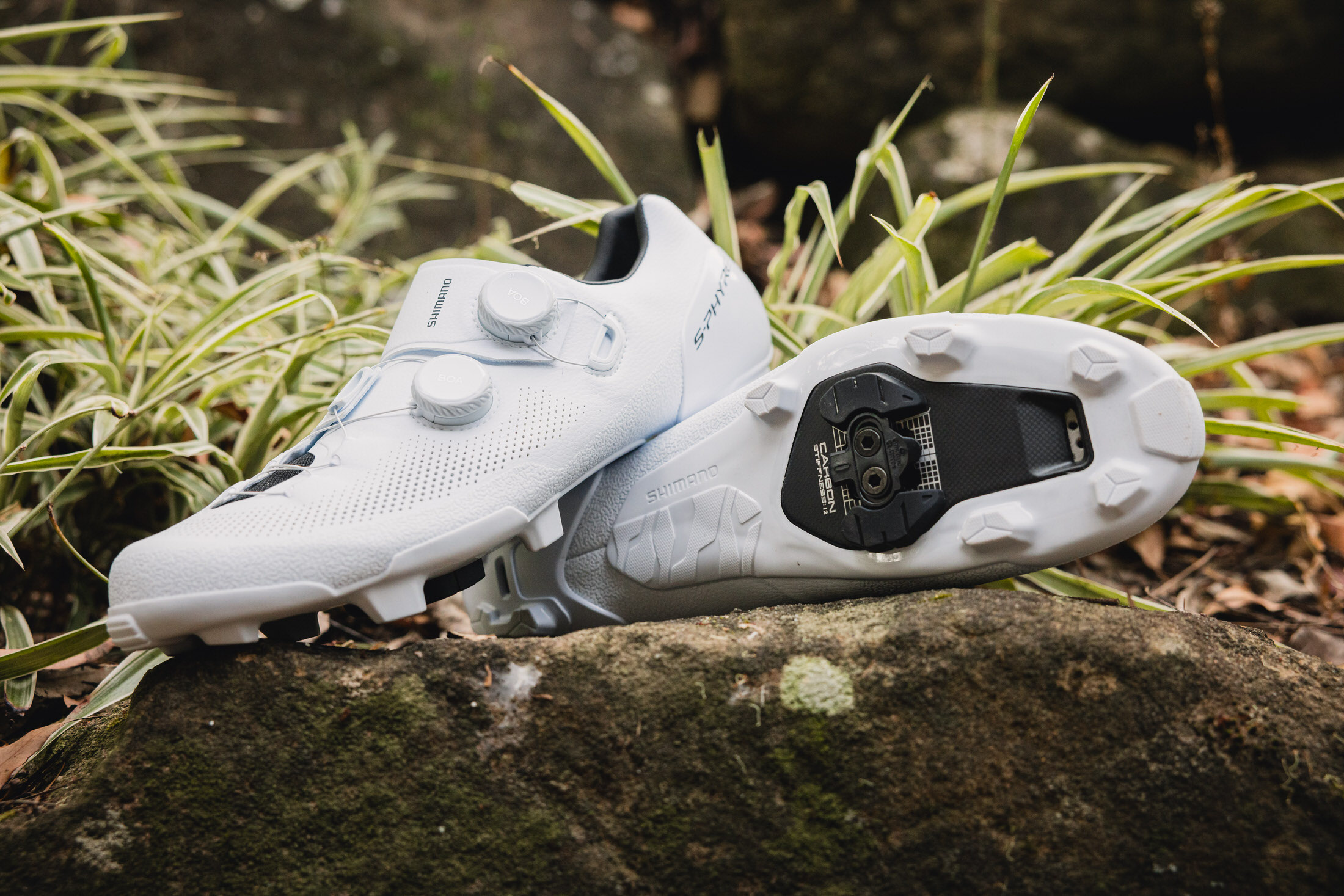 Gravel shoes have always elicited a bit of an eye roll; however, with the RX 910 and the Pontoon Cleat System, Shimano is bringing something unique to the table. Does it do anything, or is it a gimmick?
But why wouldn’t you just wear XC shoes? Well, Shimano thinks it has the answer with its Pontoon Cleat System that integrates the side lugs with the cleat to firm up the shoe-to-pedal connection.
Is this Pontoon just a gimmick, or does it provide a real benefit out riding? Let’s dive in.
Related:
Fresh Produce | Shimano XC shoes range from high-end to budget friendly
Shimano RX 910 S-Phyre Gravel Shoes Key Details
Sizing | EU 38-48, 38-47 wide
Retention Method | Dual BOA Li2
Sole | TPU with Potnoon Cleat System
Colours | Black, White, Blue, Deep Sea (green)
Confirmed Weight | 335g (per shoe), Size 45
Price | $529.95 AUD
The Pontoon Cleat
The main event of RX 910 S-Phyre gravel shoes is the Pontoon Cleat System. With the two-bolt cleat systems that are standard, a significant factor in the stability of a shoe and pedal system comes down to how the lugs interface with the pedal — in addition to providing purchase for walking and scrambling up and over steep pinches and obstacles.
As most shoes are designed to work universally across a variety of pedal systems, there is a bit of wiggle room to ensure your SPD, Crankbrothers, Time or Look cleats will fit without issue. Shimano has thrown that pretence out with the RX 910.
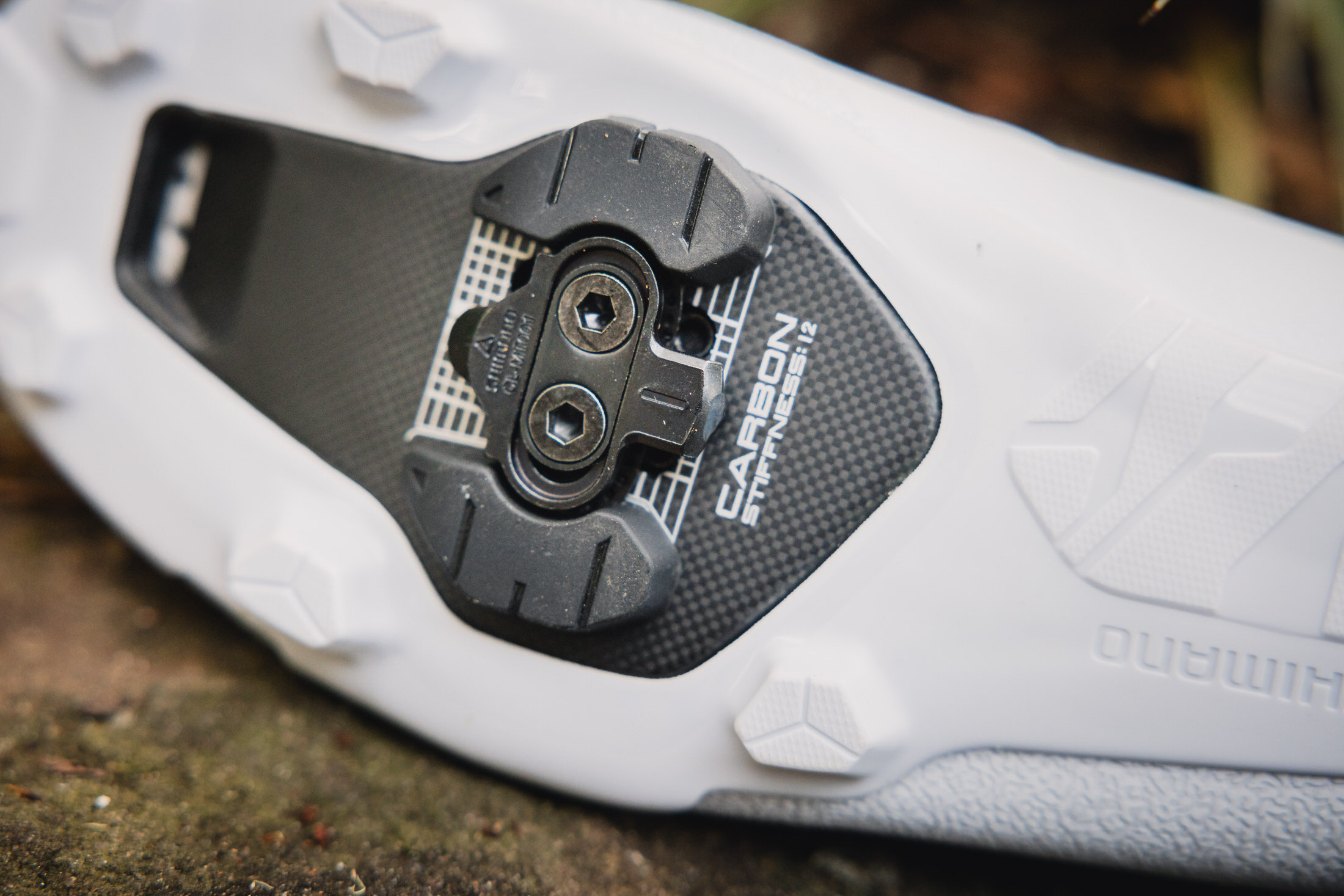 The Pontoon Cleat System ensures that the lugs on your shoe provide solid contact between your pedal and the shoe. But it will only work with an SPD cleat.
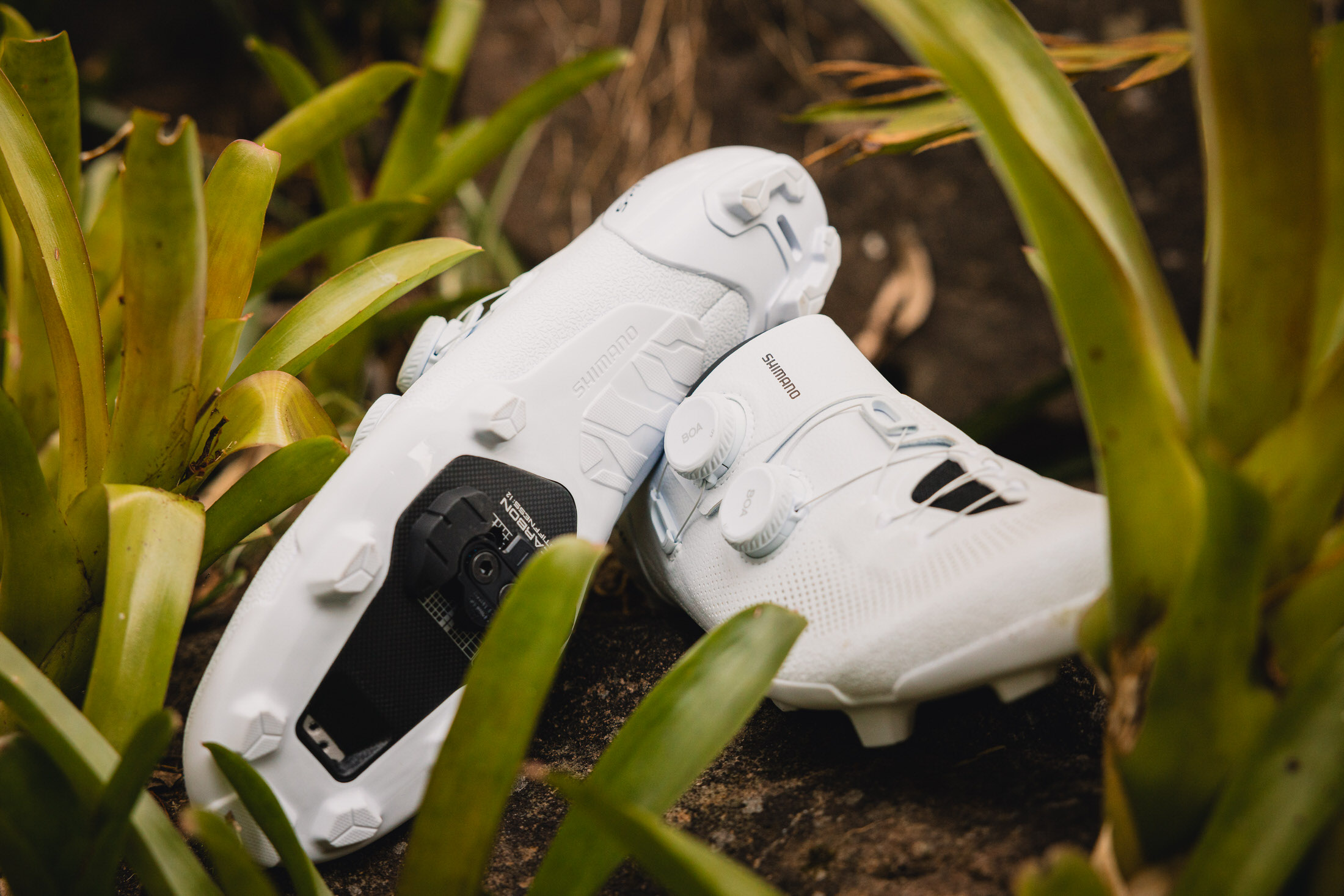
With the Pontoon Cleat System, the lugs surrounding the cleat move with it to ensure maximum contact between the pedal and the shoe. The Pontoon actually forms part of the mounting system for the cleat on the shoe, leaving about 1mm around the sides of the SPD cleat.
And as gimmicky as the pontoon sounds, the Japanese outfit is onto something here. The connection between your shoe and the pedals is rock-solid. I wouldn’t go as far as saying it matches a road shoe, but it’s not far off. The contact patch is significant, and the shoe is extraordinarily stable underfoot — especially when you go back to a set of XC shoes.
Unsurprisingly, they definitely work best with Shimano pedals. I can’t speak to how they will mesh with all SPD-compatible pedals, but they got along fine with my Favero Assioma pedals. Engaging and getting out of the pedal is a little different, and does feel to require a bit more force. A couple of clicks on the spring tension and a ride or two later, you’ll get used to it.
Shimano RX 910 S-Phyre
Beyond the pontoon cleat, at first glance, the S-Phyre gravel shoes bear an extremely close resemblance to their XC siblings, the XC 903 S-Phyre. There is a bit less protection on the toe, mid-foot, and sole, and the lugs on the bottom are TPU rather than rubber. TPU is a bit more durable than the gooey Ultratread rubber Shimano uses on its XC shoes, which prioritise purchase or outright durability.
Interestingly, you would expect that with less tread and armour, the RX 910 should weigh less than the XC 903, right? These size 45 S-Phyre gravel shoes weighed 335g per side, while the XC 903 in the same size weighed 322g per side.
The uppers are made from the same uber supple microfiber synthetic leather and see dual Li2 Boa dials to tailor fit. Unlike many high-end race-focused shoes, there was no break-in period, and the shoes were mostly hotspot-free from the jump.
Shimano has also taken livability into account with the RX910 option for insoles with changeable arch support wedges, and with good-sized drain holes in the sole. The latter is especially nice given that two of my close-to-home gravel loops have river crossings and low-water crossings (which are always flooded), so I always come home with wet shoes.
Shimano also deserves kudos for offering these shoes in standard and wide lasts in a full range of sizes — including half sizes.
That said, I do wish the Japanese outfit had opted against using white on the sole and toe bumpers, as it stayed white for all of three minutes. They come up pretty clean with minimal scrubbing; however, a darker colour would have been much appreciated for the areas that get dragged through the mud by design. For those who aren’t keen on washing their shoes as often as they clean bikes, the RX 910 comes in Blue, Black and Green too.
Shimano says the plastic anti-twist heel cup provides stabilisation and optimal foot positioning. It works well to augment the support offered by the sole and provides a bit of added structure to the shoe, keeping your foot securely planted as you grind away. I can also feel the edge of it dig into my heel, off the bike, scrambling up a horrendous pitch that’s too steep to ride.
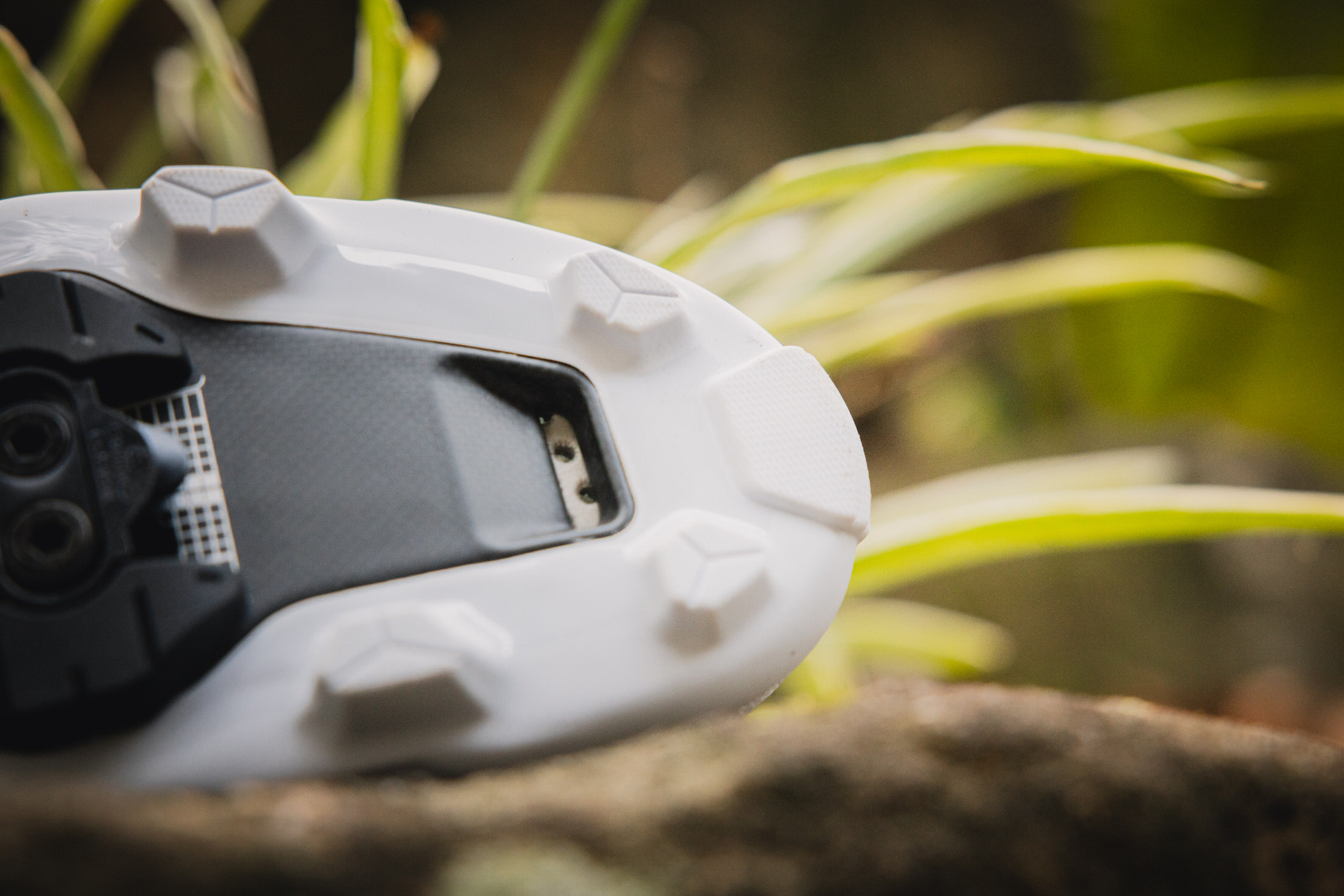 Drain holes may seem like a minor thing, but they are a severely underrated feature we’d like to see a heck of a lot more of.
Speaking of the sole, the carbon plate is rated 12/12 on Shimano’s scale — the XC shoes are 11/12. I can say, hand on heart, that I am not capable of delivering enough watts to feel the difference between a stiffness rating of 11 and 12 in power transfer. What I can say is that they are incredibly efficient without transmitting too much high-frequency buzz into the bottom of your feet.
Pedalling efficiency aside, they are definitely not the most walkable shoes I’ve ever ridden in, which I believe is a combination of the TPU lugs and the sole stiffness. They are lacking in that minuscule bit of flex — especially at the toe — and grip through the toe box that makes all the difference when you’re trying to hoof it up a climb you can’t pedal up.
 It would be easy to dismiss the RX910 as just another gimmick. But the Pontoon Cleat does offer a tangible improvement in the shoes’ stability and ride feel. And just because they are gravel shoes doesn’t mean you can only use them for gravel, either.
Flow’s take
The RX 910 S-Phyre have been a bit of a brain scrambler. The power transfer and stability you get when clipped in a pedalling is unmatched by any XC shoe I’ve used today. They are mega comfortable, breathe well, and the drain holes in the sole are *chef’s kiss.*
There is no such thing as a free lunch, and there are some compromises to be had. You can only use them with Shimano cleats. They are only guaranteed to work with Shimano pedals, and they definitely aren’t great for hike-a-bike.
So why not just wear XC shoes? I’m glad you asked. If your typical gravel ride rarely sees you having to push up a hill or scramble over downed trees or other unridable obstacles. You’ll love these shoes if your feet get along with Shimano riding clogs.
If your typical ride looks more like a mountain bike ride, it involves lots of time pushing, walking, climbing and scrambling, they will also work pretty darn well. But maybe better served with the XC version of this shoe.
And on the flip side, if you live and ride somewhere with trails that don’t have much rock, and you don’t need to jump off and scramble often, these would make for some ripping, ultra-efficient XC shoes too.